What is the Best Bike Sharing Software?

The best bike sharing software—such as Cartrack—will give you full control of your entire fleet, even if you have various branches across the country. As one of the best solutions on the market, it prevents scheduling conflicts, optimises the availability of vehicles, and lets you control who drives which bike and when.

According to Market Reports World, motorcycle sales exceed 61 million units yearly, with commercial use growing in Asia and Africa especially. Much of this has a lot to do with fuel costs going up. Fleets are finding ways to use bikes instead of cars wherever they can.

But when it comes to sharing all your bikes across an entire company, how do you do so efficiently to achieve the highest task efficiency? Cartrack will answer that question here, so keep reading.

What will the best bike sharing software actually help companies do?

A bike sharing software platform will unlock more potential within your company by increasing deliveries, optimising usage, and recording bike use. These may sound like small benefits, but cumulatively, they can transform your business into a service powerhouse that crushes the competition with a superior brand reputation.

Using your assets (motorcycles) more efficiently

The essence of bike sharing is the ability to schedule the use of your motorcycle fleet according to which rider needs it the most. It eliminates scheduling conflicts by showing everyone involved which bikes are available and which ones are booked. This is completely flexible and can change as the workday progresses.

Keeping a log of who drove which vehicle and when

You just found a scratch on one of your bikes. It wasn’t there yesterday, so who’s responsible? Check the bike sharing logs to see who drove it. It was Dave. Let’s have a word with Dave.

Scheduling your riders and matching them up with specific vehicles gives you more control over the WHO, the WHEN, and the WHAT. Your bikes are kept safe. Riders are held accountable for the bikes they use, making it easier for you to investigate problems.

Allowing your workforce to complete more tasks

When scheduling is handled smoothly, more customers are served. Your riders won’t be scrambling for the next available bike to make their deliveries. They’ll be assigned a vehicle at the exact time they need it.

Customers are happier because a speedy delivery is what they really want. They’ll order again and even recommend you to their friends & family.
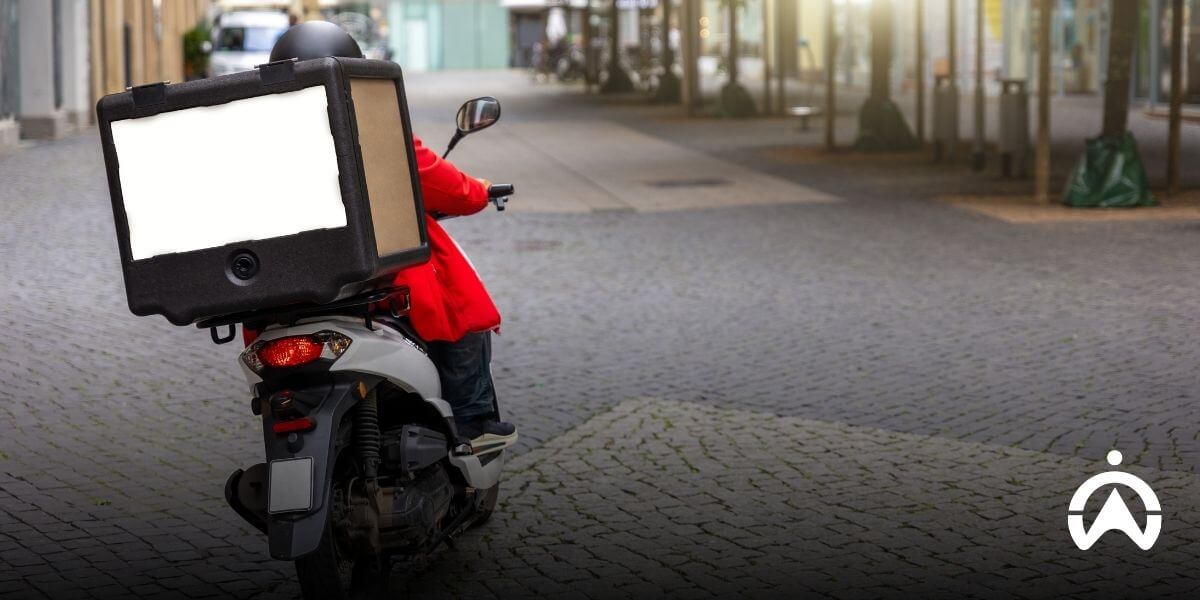
Delivery rider on a scooter with insulated box on a cobblestone street, illustrating bike sharing software for managing urban delivery fleets

What “big-picture” benefits will bike sharing software achieve?

The main big-picture benefit of using bike sharing software is an ultimate increase in profits. Other side benefits include staff retention, cost-to-value fuel use, and a better brand reputation. All of these contribute to your eventual bottom line, which is why fleets are converting to bikes rather than cars or vans for their logistics workflows.

As we often say at Cartrack Namibia, you shouldn’t buy software unless the monetary benefits exceed the cost. Let’s see how real-life situations of using bike software result in a company that’s well-run.

On-time deliveries: Your brand reputation

You’re probably competing with a bunch of other companies trying to impress your customers. By remaining consistent in on-time deliveries, you build a reputation for dependability. Customers are less fussy about price and more picky about who gets their delivery to them the quickest.

The result? PROFIT!

Asset optimisation: Getting the most out of your motorcycles

Bikes aren’t left on the sideline—they’re being put to use every minute of your workday. When one is dispatched, another is waiting for the next available rider. You’re getting the highest ROI out of the motorcycles you own, and your efficiency instantly goes up.

The result? EFFICIENCY!

Scalability: More customers, same efficiency

As your reputation grows, your customer base grows too. When more customers start utilising your services, you might start looking at purchasing additional motorcycles. This won’t hinder the best bike sharing software, because it’s designed to scale with your company. You manage everything from one point of control.

The result? GROWTH!

Staff morale: Less conflict, more productivity

Riders aren’t arguing over who gets to use the next available motorcycle. Their assigned vehicles are indisputable, and good structure is the order of every day. Your staff know what’s expected of them, and there’s a workflow with minimal interruption or conflict.

The result? PRODUCTIVITY!

Real-life examples of how bike sharing changes the way your company operates

We can all think of real-life examples of how bike sharing is put into practice. Perhaps you can relate to one or more of these scenarios. Most of us order pizza from time to time. Most of us also get packages delivered. And almost all of us have, at one time or another, received a grocery delivery.

Small delivery company: The pizza place down the block

A small pizza delivery place down the road has 5 bikes and 4 drivers. Two of the bikes are larger and use more fuel than the other 3. It’s more cost-effective for the owner if the three smaller bikes are prioritised for deliveries, but when things get busy, the other two are available.

Medium delivery company: The courier agent

25 motorcycles are owned by a courier company. Fuel costs too much to do deliveries with vans or cars, so bikes are the preferable means of dropping off parcels. As the order comes in, one of the 30 riders on staff must use a bike.

These riders don’t argue with each other when there’s a shortage of bikes because the schedule is clear on who gets to ride which bike and when. 

Large delivery company: The retail-level grocery vendor

A retail manager has 15 branches of grocery stores within a city. Each of these stores has a different number of bikes available for grocery deliveries. They also have variable numbers of drivers that use those bikes.

Sounds chaotic, but with the best bike sharing software, there’s a set schedule that eliminates confusion and keeps every bike on the road when it’s needed most. 
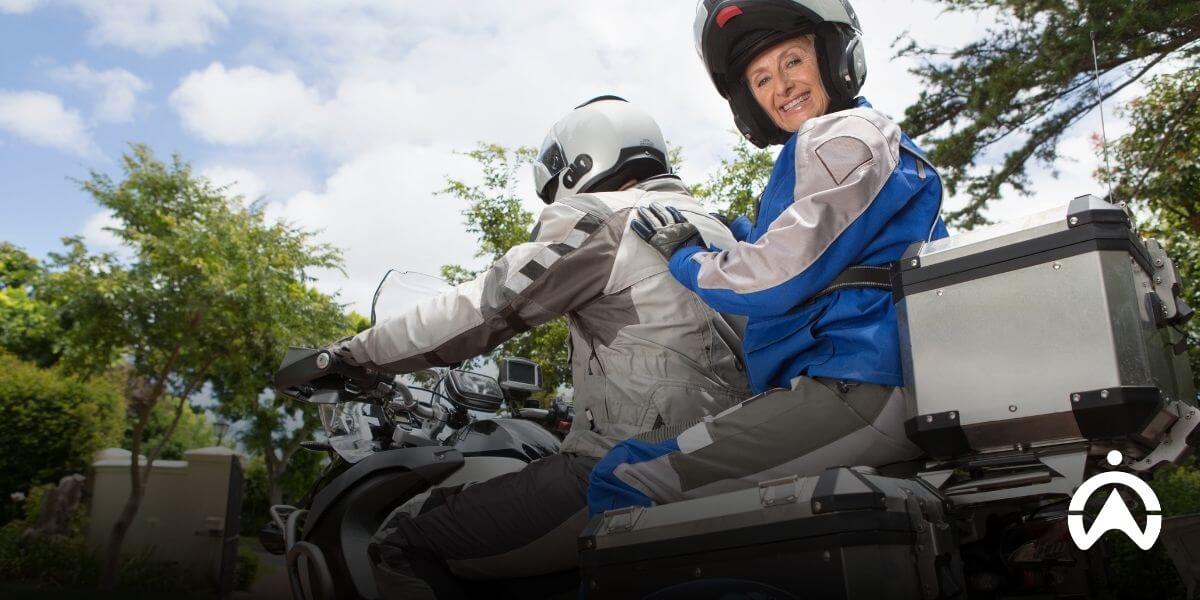
Two motorcyclists riding a touring motorcycle on a clear day, illustrating bike sharing software used for managing shared mobility and rental bikes

What other software features pair well with bike sharing software?

Other features that pair well with bike sharing software include GPS bike tracking (BikeTrack), workforce optimisation software (Cartrack Delivery), and predictive maintenance software (Cartrack Maintenance). Each of these are powerful optimisation tools on their own, but when combined, they help you to achieve a service & protection force that’s hard to beat.

BikeTrack

Bike theft happens all over the world, and recovering your bike if it gets stolen is one of the surest methods of protecting your assets. BikeTrack uses hidden GPS tracking devices to keep tabs on your motorcycles so that they can be pursued and retrieved if stolen.

Delivery

Delivery is Cartrack’s workforce optimisation software. It’s perfect if you’re in one of the many delivery or service industries. Not only will you get route optimisation for your riders, but you’ll also get confirmation every time a bike dispatches from your premises, your riders complete a service, and your bike returns.

Maintenance

Maintenance shouldn’t be done according to a set schedule. A much more economically sound way to manage it is to predict when the bike needs a service, and have our system automatically book it for you. AI powered predictive maintenance has become a game changer for fleets around the world, and bike fleets are no exception!

How does Cartrack’s bike sharing meet you where you are as a business?

If using motorcycles is a business move you’ve made to keep costs low and deliveries fast, Cartrack meets you with bike sharing software that’s world-class. Carpool from Cartrack has everything you need to keep your efficiency high and your costs low.

We’re in the business of making sure you get the most profit out of your motorcycle fleet, so contact a consultant to elevate your business and your brand image. 

Frequently asked questions about bike sharing software

What’s the most efficient motorcycle for fleets?

The Honda Ace 125 and the Honda CB500X are good choices as the most efficient bikes for motorcycle fleets. They have a reputation for dependability while simultaneously offering low fuel use. If economy is your main goal, you can’t go wrong with either or both.

Explain bike sharing software

Bike sharing software is a central system where you and other managers can seamlessly control who uses motorcycles, when they use them, and for how long. It also keeps a detailed log of each use to hold riders accountable for the condition of your assets.

Are motorcycles practical for delivery companies?

Yes, motorcycles are often the preferred choice for delivery companies. While it’s true that delivery vans can carry more goods and complete more deliveries in one trip, they often use up so much fuel compared to quick darts back and forth with a fuel-efficient motorcycle. Depending on your business structure, motorcycles are a good vehicle pick.
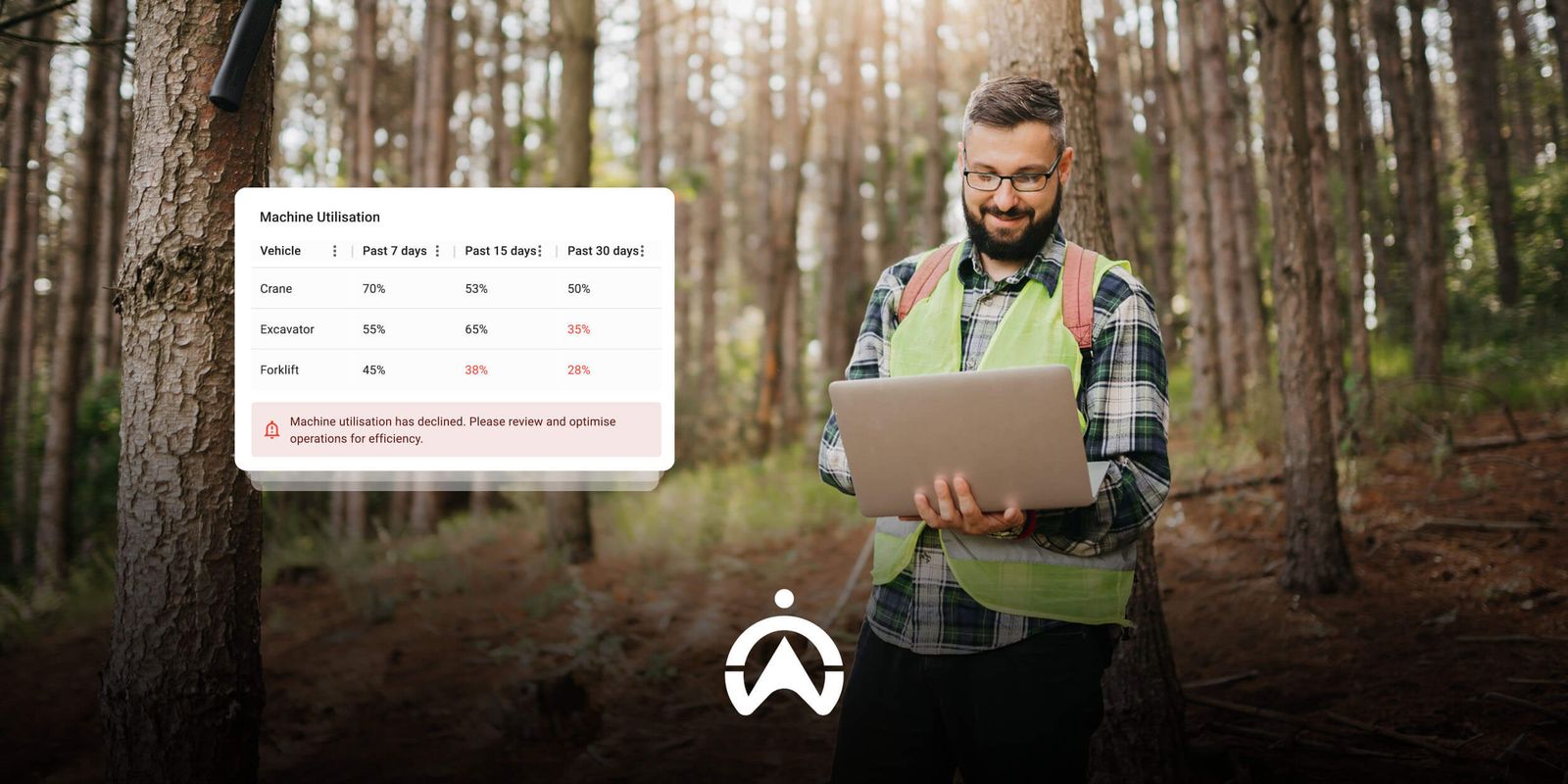

Top Fleet Management System for Your Forestry Management

To successfully manage your forestry operations, you need to invest in the top fleet management system available. A fleet management system can help your forestry operations by providing you with:

  • real-time tracking,
  • route optimisation,
  • fuel and driver management,
  • enhanced safety, and
  • overall operational productivity.

Fuel is a major cost for forestry enterprises, and with global tensions causing fuel to rise  a fleet management system is essential. An FMS can greatly assist with monitoring fuel usage in your entire forestry fleet, and this is only one of the perks of having one!

‍Cartrack’s fleet management system is designed to give your business complete operational intelligence. You’ll not only have eyes on your entire fleet, but also data to back up your operations. If you’re ready to learn about how Cartrack is the top fleet management system for your forestry operations, then keep scrolling.

Why do you need a fleet management system for forestry management?

You need a fleet management system for forestry management so that you can optimise your entire forestry operations. An FMS can ensure that your operations that are based in remote locations are running smoothly and safely while giving you data-driven insights into how your fleet is operating.

What are the core features of a fleet management system for forestry?

The core features of a fleet management system for forestry should be designed to handle the particular complexities that come with handling heavy machinery in remote and challenging environments. The system needs to assist forestry fleet management in tracking their fleet, equipment, fuel, maintenance, and driver behaviour.

Let’s break down the importance of all the core features of FMS and forestry.

Tracking in remote areas

A lot, if not most, of your team, equipment, machinery and vehicles will be working in really remote areas. Having advanced tracking devices installed on your vehicles, machinery and equipment is a great advantage for forestry fleet managers because you’ll have eyes on where your entire fleet is, no matter where you are.

Geofencing

Geofencing is a tool that can assist forestry fleet managers in creating virtual boundaries to prevent unauthorised operations, ensure that certain equipment and machinery stay in selected areas, and minimise illegal logging.

Monitoring fuel

Fuel is a major cost for forestry fleets, and the price of fuel is currently a precarious situation. Fleet managers in the forestry industry need to accurately track and monitor fuel usage within their entire operations. This is the only way you’ll be able to make proper decisions on how to save on fuel and how much to accurately budget for fuel costs.

Maintenance

In the forestry industry you have a lot of equipment and vehicles that need to be well maintained so they can perform at optimal levels at all times. An advanced fleet management system will keep track of all vehicle and machinery maintenance. It monitors their health and alerts you when they require maintenance so you can avoid unexpected downtime.


Driver/operator monitoring

It may feel like an impossible task to monitor every driver and operator in your forestry fleet, but there are tools you can implement to assist with this. Let’s check them out:

  • AI cameras: AI cameras in and around your vehicles will give you eyes on your drivers and their surroundings. You can spot fatigued or distracted driving and even if they’re smoking or not wearing a seatbelt. They’ll also get an instant alert to correct their behaviour.
    ‍
  • Panic buttons: These will help keep your drivers and operators safe in an emergency situation, which is especially useful in remote working spaces.
    ‍
  • Driver ID tags: This will assist with keeping track of who is using what vehicle/machinery at all times. You can also grant certain drivers permission to operate specialised machinery.
    ‍
  • Seat pressure sensors: You’ll be alerted when someone sits inside your vehicle’s driver and passenger seats, so you’ll know your vehicle’s/machinery’s occupancy rate at every point.

Environmental compliance

FMS can assist your forestry operations in achieving environmental compliance in the following ways;

  • reduce fuel usage
  • ensure that your machines and vehicles are running efficiently
  • prevent excessive idling
  • setting up geofences to prevent entrance into conservation areas, and
  • monitor logging equipment to stop illegal logging.

Route optimisation

FMS uses real-time data and advanced GPS tech to calculate, analyse and predict the most efficient routes for your fleets. FMS takes everything into consideration, from traffic conditions, road closures and vehicle capacity, to find the most efficient route.

Main problems in forestry and how Cartrack’s FMS solves them

There are few problems that forestry businesses face daily, and a lot of these problems can be solved if you have a top fleet management system (like the one from Cartrack) integrated into your operations. Problems like visibility, high fuel consumption, fuel theft, unexpected downtime, driver fatigue, overloading, and asset security.

Let’s take a deeper look into the problems forestry operations face and the FMS solutions!

Visibility in “dead” zones

Problem: Forestry operations are based in areas with little to no cell signal, thanks to dense forests. This means fleet managers often have “blind spots” and can’t see what’s happening with the machinery and vehicles.

Solution: Cartrack’s devices have offline data logging that automatically updates when they’re back online, meaning fleet managers will have no lost or missed data on their remote fleets.

High fuel consumption

Problem: Forestry operations have heavy machinery that already consumes a lot of fuel. Factors like poor routing, excessive idling and aggressive driving habits are all things that waste fuel.

Solution: Cartrack’s FMS will pull data reports on driver behaviour, so you’ll know exactly when your drivers and operators have been speeding, idling or braking & cornering harshly. With these insights, fleet managers are able to train drivers and machine operators, fully equipped with the data to back up their training sessions.

Fuel theft

Problem: The majority of logging operations are in secluded areas, and with ever-increasing fuel costs, your bulk fuel tanks and machine reservoirs are a desirable target for thieves.

Solution: Fuel calibration and fuel sensors. At Cartrack we have fuel sensors that are calibrated to each and every fuel tank, regardless of shape or size. We’ve got three sensors to choose from (fuel probe, CAN bus, and fuel analogue) that will give you data and immediate alerts on your fuel. This lets you account for every drop of fuel and easily detect fuel theft or even a leak.

Encroachments into protected zones

Problem: Your team accidentally logs in a protected ecological zone or moves into a neighbour’s property. These can end up giving your operations major fines as well as damage to your business’ reputation.

Solution: Cartrack has a cool feature called geofencing. This allows you to create virtual boundaries around specific areas, and when someone leaves or enters a geofenced area, an alert is triggered and fleet managers are immediately notified.

Unplanned downtime

Problem: When a machine or vehicle unexpectedly breaks down in the middle of a forest, it halts operations and affects the efficiency of the entire team. Causing fleet managers to lose time and money.

Solution: Cartrack’s FMS has a predictive maintenance feature. This system monitors mileage, engine health, tyres, and other wear & tear parts and will alert fleet managers when a vehicle or machine needs to go in for maintenance. Our system also allows you to create maintenance schedules and will send you automatic maintenance reminder alerts!

Driver fatigue & distraction

Problem: Logging drivers are often on long, remote, gravel routes. These routes are considered high-risk environments that experience many distraction- and fatigue-related accidents.

Solution: Cartrack’s AI-powered cameras can help with this. Our AI camera solutions monitor your drivers and pick up any distracted (eyes off the road) or fatigued driving (yawning and drooping eyelids). Drivers get instant in-cabin alerts, and fleet managers are notified on their fleet page. This way drivers can correct themselves and fleet managers can set up driver training.

Overloading & underloading log trucks

Problem: Many forestry operations face problems regarding the overloading or underloading of logging trucks. Overloading can lead to an increase in wear & tear on your vehicles, breaks, tyres and shocks. Underloading means your fleet is just “hauling air”, and this diminishes your profit per tonne.

Solution: At Cartrack we have a specialised sensor called ‘Cargo Protect Weight Management‘. This sensor is designed to monitor the weight of the cargo in a vehicle as well as detect any loading or offloading. Having this data means fleet managers will know exactly when a vehicle is being overloaded or underloaded and can efficiently recommend the ideal load.

Inefficient skidding & extraction paths

Problem: Forestry operations use machines called skidders that drag logs from the cutting area to the landing area for processing. When these machines take an inefficient path, they create soil buildup and waste fuel—not only for themselves but also for other vehicles in your fleets taking the same routes.

Solution: Monitoring these routes with Cartrack’s customisable route optimisation will allow you to know exactly which routes the skidders are using so you can find a more efficient route. You’ll also be able to train the rest of your team to use that alternative efficient route so they don’t get caught up in the skidders’ paths.

Unauthorised use of specialised machinery

Problem: A lot of machines and vehicles used in logging require specialised licences to be safely operated. Remote operations mean that fleet managers can’t always control who’s using these vehicles and machines.

Solution: Cartrack’s Driver ID tags let you control which driver is authorised to use which machine and vehicle. Each driver will get a unique tag that they have to tap on a sensor in the vehicle/machine for it to start. If they aren’t authorised to use it, the vehicle/machine won’t start.

Challenges in calculating cost-per-load

Problem: You don’t have enough data to know which logging compartments are profitable and which ones are costing you too much in labour and fuel.

Solution: Cartrack’s entire FMS is designed to give you complete operational insights. All the components work together to give you accurate data on every part of your fleet. You can get data & reports on:

  • Vehicle trip and location history
  • Driver performance
  • Fuel consumption
  • Vehicle health 
  • Driver vehicle inspections
  • Tasking and scheduling
  • Drivers & assets

Asset tracking & security

Problem: Forestry operations use very expensive assets often left overnight in remote work areas. These expensive assets are at a higher risk of being stolen.

Solution: Cartrack has world-class GPS trackers, remote immobilisation and stolen vehicle recovery (SVR). Our system lets you keep track of all your assets from the palm of your hand, no matter where you are. If your assets are taken, we’ll send out our highly trained team to try and recover them for you. Remote immobilisation allows you to shut down any stolen machinery to prevent it from working or moving.

A major component of a top fleet management system is a quality GPS tracking system. If you want operational insights and want to protect your fleet, you need GPS tracking. So let’s take a look into how this feature works with FMS and your forestry management.


How to successfully integrate GPS tracking into forestry fleet management software

To successfully integrate GPS tracking into forestry fleet management, it requires a more specialised method that includes an API-first approach and ruggedised hardware integration. This is because you’re not just tracking a fleet of trucks on the road; you need to track and monitor specialised vehicles and machinery that are in extreme and remote environments.

Ruggedised hardware integration

First you need to install hardware that can handle the rugged environment that your entire fleet will be working in. Cartrack has multiple types of tracking devices that are tamper-proof and designed to last in extreme environments.

API-first approach

Your forestry operations are made up of different vehicles, machines and equipment, each requiring specialised tracking units. The API-first approach is the only way this can be successfully integrated into your operations.

The API-first approach takes all your disconnected information and easily connects it. The fleet management platform you use should seamlessly integrate with most if not all of the systems in your forestry operations.

What are the benefits of real-time GPS tracking for logging trucks in Namibia

The benefits of real-time tracking for logging trucks in Namibia are an improvement in productivity, efficiency and safety. Having real-time GPS tracking means you can:

  • Keep your vehicles & stock safe
  • Give your drivers the most efficient routes to travel
  • Improve driver safety 
  • Save on fuel
  • Have better visibility

Having a fleet on Namibian roads is a stressful situation for any business. For forestry industries that have logging trucks, even more so. If a truck is hijacked and the logs are stolen, lost or damaged, it’s not something that can be easily replaced. Trees unfortunately don’t grow overnight.

A top fleet management system works with real-time GPS tracking to give you accurate data on where your logging trucks are at all times. Not only will you have added visibility on your fleet, but you’ll also have the tools to keep them safe. When you choose a tracking device from a world-class company like Cartrack, you’ll have a dedicated recovery team that will go out to try and get your vehicle back for you.

Namibian roads aren’t in the best shape, traffic congestion is a nightmare, and there’s always a robot out somewhere. Real-time GPS tracking can instantly and automatically provide your drivers with an efficient route, minimising fuel wastage, ultimately saving you time and money.

Final thoughts

The top fleet management system for your forestry management is one that gives you complete operational intelligence. This is why Cartrack comes out on top. We’ve got everything you’ve thought of (and things you haven’t) to make your forestry management efficient, compliant and profitable.

So get in touch with one of our friendly operators today to keep your forestry fleet evergreen! 

FAQs

How does GPS tracking work in remote forestry areas with poor cellular signal?

Most common GPS tracking works in remote forestry areas that have poor cellular service by using satellite-based systems to determine the location. Cartrack also has a device called the Cartrack Tag. It’s a wireless device that uses a proprietary Radio Frequency (RF) network that gives strong visibility even when your GPS isn’t working.

How can fleet management help prevent illegal logging?

Fleet management helps prevent illegal logging by making use of GPS tracking, telematics, and geofencing. Fleet managers can then accurately monitor the movement and usage of logging equipment in real-time, ensuring that logging activities are only happening in authorised zones.

Can the software help reduce the high maintenance costs of off-road equipment?

Yes, FSM can help reduce the high maintenance costs of off-road equipment by helping you move from a reactive approach to a proactive one. Predictive maintenance keeps track of specific components in your equipment and alerts you when they’re wearing out. This way you can plan for it to be maintained and avoid unexpected downtime.

What Type of Alerts Should Your Fleet Management Platform Have?

The alerts your fleet management platform should include (or should at least have the capacity for) are SMS alerts, driver alerts, panic alerts, and accident alerts. You can gain even more value from your FMS if it includes fuel fraud alerts, cargo monitoring alerts, and idling alerts.

Light delivery vehicles make up a relatively small but notable proportion of crashes, while trucks account for an even smaller share. And besides what these accidents cost their respective fleet companies, the loss of life or resulting disability is immeasurable.

In this article we’ll cover a total of 8 fleet management alerts that you should have to avoid these kinds of events. First we’ll cover what the alert is and how it works. Then we’ll move on to the ROI benefits of the alert. Finally, we’ll show you how Cartrack Namibia has developed a system that makes these alerts possible, accessible, and highly functional.

What are 8 alerts every fleet platform should offer?

The 8 alerts every fleet platform should offer are:

  1. Driver monitoring alerts
  2. SMS alerts for task completion
  3. Panic alerts
  4. Alerts for idling
  5. Collision alerts
  6. Fuel-related alerts
  7. Cargo door sensor alerts
  8. Temperature fluctuation alerts for cargo containers

These alerts solve a range of issues from cargo protection to full-on accident prevention.

Let’s take a look at each one more closely. 

Driver monitoring alerts

An alert warning you about bad driver behaviour is an essential tool in any fleet management system. Not only do your drivers represent your brand, they also affect the safety of other motorists on the road. But most importantly, bad driving puts THEIR OWN SAFETY at risk, which is something you want to avoid.

What is it and how does it work?

Driver monitoring is somewhat multi-layered.

Layer 1: Monitor what the vehicle is doing and receive alerts when there’s speeding, harsh braking, or aggressive cornering.

Layer 2: Use AI vehicle cameras to watch drivers and make sure they’re not:

  • Getting distracted
  • Falling asleep
  • Smoking, eating, or drinking

Layer 3: Use the above vehicle & driver data to coach each driver. Keep track of these training sessions and get alerted when agreed-to corrections aren’t being adhered to.

It’s a helpful system. You could be at home, in the office, or on the road yourself and STILL get alerted to what’s going on with your drivers hundreds of kilometres away!

What are the ROI benefits of having this alert?

Driver safety holds massive financial returns. If your drivers are keeping to sound driving habits, they’re protecting your vehicles, themselves, and other motorists.

The result? Your vehicles experience less wear & tear. Your use of fuel goes down. Fatality and accident risks go down. Your insurance premiums might even go down! It’s an all-round win for your fleet.

How can Cartrack Namibia help?

Cartrack Namibia offers all 3 of these layers. Speak to us about getting a CAN Bus reader attached to your vehicles so you can monitor vehicle behaviour.

Optional: Go a step further and ask us about free installation on our AI vehicle cameras where you can watch your drivers in real time and even get alerted to when they’re compromising their driving.

Also optional: Now go all out… and get Cartrack’s driver coaching setup, making sure your drivers stick to habits that save you money and minimise fleet risk.


SMS alerts for deliveries

Much of what you do as a fleet manager is based on the logistics and tasks of your drivers. It’s a big-picture job that can feel a bit ‘blind’ at times (since you’re not there to direct your drivers on every aspect of their jobs). SMS alerts solve this issue.

What is it and how does it work?

SMS alerts give you small details on delivery processes. This is especially helpful with last-mile deliveries but can also benefit any fleet where the drivers complete “tasks” of any kind. SMS alerts give you updates at every stage of each process.

Stage 1: A parcel (or cargo) is being picked up (or loaded).

Stage 2: It’s on route. The ETA is approximated and sent to you. SMS Received… How convenient!

Stage 3: The driver has arrived. The package is delivered. The cargo has been offloaded. Signatures are recorded. Photos have been taken as proof. Services have been rendered. Done and dusted… Now on to the next one.

What are the ROI benefits of having this alert?

The ROI of getting SMS alerts is EFFICIENCY. The more efficient your drivers are, the better you manage them. The better (and quicker) you manage them, the more deliveries they accomplish in a day.

Simply put: Less time with blind management = more revenue for efficient deliveries!

How can Cartrack Namibia help?

Cartrack Namibia helps you crush the competition by offering a delivery and field service app where every driver is managed semi-automatically. You get a big-picture view of what’s going on with each driver and how they all fit together into your day’s schedule.

It’s workforce optimisation at its finest, and it costs less than you think. Ask us about it. 

Panic button alerts

Keeping your drivers safe is an essential investment within your fleet. Why? Because a lot of crime happens on the roads. Theft. Hi-jacking. These are real threats—not just against your drivers & vehicles but to your bottom line as well.

What is it and how does it work?

A panic button is installed discreetly within each vehicle. Only the driver knows where it is, and pressing it alerts our control centre to danger. You also receive a panic alert, keeping you abreast of risks while your driver is on the road.

What are the ROI benefits of having this alert?

Don’t get security features that cost money unless they SAVE & MAKE you money in return. The return on investment for panic button alerts is obvious:

  • Less unresolved theft
  • Safer drivers
  • Less downtime
  • Potentially lower insurance

How can Cartrack Namibia help?

The point of panic alerts is ACTION. Cartrack Namibia has emergency teams and recovery teams on standby, and they’re always ready to spring into action when danger or breakdowns threaten your drivers and the logistics of your cargo.

Prolonged idling alerts

Idling results in an obscene amount of money out of your fuel budget. Getting alerts to prolonged idling gives you more control, and the power to DO SOMETHING ABOUT IT.

What is it and how does it work?

Once again, CAN Bus is the hero of this story. A clamp is attached to the ‘nervous system’ of your vehicle, detects idling, times how long idling occurs each time, and alerts you to it immediately.

What are the ROI benefits of having this alert?

Imagine the cumulative effects of less idling across your fleet. Those small idling sessions build up over time and can potentially result in thousands of rands over a 12-month period.

Saving this amount of money is a game changer for fleets, so wouldn’t you want to take control of it to lower your overheads?

How can Cartrack Namibia help?

Cartrack Namibia offers a comprehensive fuel monitoring platform that puts usage and waste into perspective. But we also give you the control of getting alerted to idling so you can take steps to curb it or make it less frequent.

Collision alerts

Getting emergency help to your drivers when they’re far away from you as the fleet manager is an invaluable feature that every fleet management platform should include. Your vehicles are important, but your drivers even MORE so.

What is it and how does it work?

You’ll get alerted to any collision, whether severe or insignificant, and we will too. Coupling these alerts with an emergency reaction team gives you extra peace of mind while your drivers are out on the road. You’re prioritising their safety, and you’ll be aware of a collision event when it happens—not hours after.

What are the ROI benefits of having this alert?

Not enough is said about the ROI benefits of protecting fleet drivers. Keeping them safe plays into driver retention, giving you the ability to build a strong team of individuals who feel protected.

If a collision does occur, your drivers will get expert emergency services on the scene as quickly as possible!

How can Cartrack Namibia help?

Even with vehicle safety features, collisions can have devastating effects. Cartrack Namibia adds an extra layer of driver protection by alerting you to accidents so you can contact your driver to see if they’re okay. If they can’t be contacted, we’ll be there to investigate and help where we can.

Want to learn more about collision alerts? Contact one of our consultants, and we’ll show you how to implement this into your fleet—along with all the other alerts on this list. 


Fuel monitoring alerts

With fuel prices on the rise, even the smallest wastage builds up over time, affecting your fleet budget negatively. Not to mention the larger fuel anomalies that take place like theft, fraud, or leaks. A fuel alert lets you know when any of these three things is happening.

What is it and how does it work?

Sensors are placed within the fuel tanks of your vehicles. These sensors give readings that are way more accurate than the standard tank sensors your vehicles are equipped with.

The readings are then fed to a fuel monitoring software platform, algorithms are run, and pertinent information is sent to you to analyse or investigate.

What are the ROI benefits of having this alert?

Detecting fuel waste comes with massive ROI benefits. The larger your fleet, the more cumulative these savings become. Fuel is expensive, but it’s likely to go up even more! Are you doing everything you can to use fuel sparingly?

How can Cartrack Namibia help?

Cartrack Namibia provides and installs state-of-the-art fuel sensors that connect to our fuel monitoring platform. Our system is also scalable, so it continues to save you money as your fleet grows!

Cargo door alerts

If your cargo isn’t monitored as efficiently as your vehicles and your drivers, you run the risk of suffering loss from the compromise of your most valuable products. This isn’t just about keeping cargo contained for quality purposes; it’s also about protecting it from being tampered with or stolen. 

What is it and how does it work?

Door sensors are great on their own, because they alert you every time your cargo doors are opened or closed.

But you can add even more security to this feature by seeing exactly what’s taking place every time the doors open—IN REAL TIME. Cameras can be coupled to door sensor alerts, so you can tune in to what’s occurring by watching it LIVE.

What are the ROI benefits of having this alert?

This system protects your cargo from theft, border patrol tampering, and he-said-she-said disputes. You’ll have a record of exactly what time the doors were opened, and with cameras you’ll have video evidence of what transpired.

How can Cartrack Namibia help?

Door sensors are a valuable installation provided by Cartrack Namibia. We’ll also advise you on cameras if you want those too. These only activate when the doors open, giving you a relevant series of footage that can be used if your cargo is compromised.

Temperature alerts

Got temperature-sensitive cargo? You could save on a lot of waste if you were monitoring cargo temperatures at all times. This goes beyond door sensors by checking and providing the real-time temperature of your containers. It’s perfect for food delivery, as well as medical supply cargo carriers.

What is it and how does it work?

If the temperature rises, you’ll know about it. You can set limits that reflect the bare minimum or maximum temperature your cargo needs to remain at. This works with specialised sensors that feed to a trigger alert, and that alert goes straight to you when something isn’t quite what it should be.

What are the ROI benefits of having this alert?

Having this alert might not be necessary for every fleet, but if you deal with perishable food or medical supplies, IT’S A MUST!

Tonnes of food is wasted in the delivery process every year. Do you want to carry those costs, or are you prepared to put measures in place to prevent it?

How can Cartrack Namibia help?

Cartrack Namibia develops these sensors within Namibia, and our software and alerts system is compatible with your mobile device & PCs. We’re standing by to schedule a full temperature monitoring system for your containers that carry heat- or cold-sensitive cargo.

What’s the main idea behind fleet alerts?

The main idea behind getting fleet alerts is AWARENESS. Being in the know about what’s going on with your drivers, your vehicles, and your cargo results in high ROI, more efficiency, and an overall stronger brand reputation.

Knowledge is POWER in the world of fleet management. Take control back and get the most essential alerts directly on your phone.

In today’s fleet arena, it’s the only way to REALLY manage effectively.  

Frequently asked questions about fleet platform alerts

Are Cartrack alerts sent to my phone or my computer?

Many of Cartrack’s alerts are sent straight to your phone, but Cartrack also has various software packages that receive alerts too. Think of our platform, FleetWeb, as your control centre. Whatever software package you subscribe to, adds a channel to it, allowing you to manage a fleet category. SMSs can be activated with some, but others are platform-based.

Which fleet alert will save me the most money?

The fleet alert that will save you the most money will depend on your fleet structure & size, but the strongest contenders are fuel alerts and driver monitoring alerts. These relate directly to your largest costs (fuel & salaries), so keeping an eye on them will ultimately save you on costs.

What devices are used to generate fleet management platform alerts?

The devices used to generate fleet management alerts are fuel sensors, AI cameras, various sensors for doors and temperature monitoring, and CAN Bus clamps. These often work well together to give you a full picture of what’s happening in your fleet, but they’re also individually helpful if related to the specific nuance of YOUR fleet.

How to Successfully Manage Cross-Border Logistics

To successfully manage cross-border logistics, you must harness technology to alleviate the fears that come with cargo vehicles being “out of reach”. Knowing you have eyes on your assets is the best way to keep them safe, protect your drivers, and boost your insurance coverage.

It’s a daunting and stressful thing for fleet managers when their trucks are doing cross-border long-hauls. A feeling of no control can bear heavily on you when you’re the one who’s responsible for the truck, the cargo, and the driver. In addition to bad roads and driver fatigue risks, the Annual State of Cross-Border Operations Report of 2022 reports that border customs stops are a major challenge in cross-border logistics.

It’s an industry that certainly isn’t without its concerns, but Cartrack Namibia is here to walk you through the best ways to successfully manage these challenges without compromising on your profits or service delivery quotas. In fact, with our help you’ll almost certainly improve on them!

What obstacles stand in the way of successful cross-border logistics management?

The top obstacles that hinder successful management of cross-border logistics include customs & border patrol, driver fatigue & irresponsible driving, Namibia’s road conditions, and fleet managers resisting digital transformation. By overcoming these obstacles, fleets that deliver across the border will greatly improve their logistics management and set themselves up for quicker deliveries.

As we look at each of these more in-depth, pay close attention to how Cartrack Namibia has foreseen these obstacles and made accommodations for fleet managers like you. 

Road conditions

While road repairs are in effect, they’re often few and far-between. Long-haul truck drivers and vans still have to navigate potholes and other road obstructions due to poor maintenance of our roads.

When roads ARE being repaired, this can also cause massive delays in even getting to the border. And once your drivers are there, new challenges arise when they’re faced with border officials and customs. (But more on that later)

The condition of Namibia’s roads is something your drivers have to deal with. But this still amounts to a great deal of stress for you as the fleet manager. You’re not there to keep an eye on things, which can leave you feeling a lack of control coupled with a lot of anxiety.

What should you do to successfully manage bad road conditions? When it comes to the safety of your drivers and your vehicles, there’s not much you can do about bad road conditions. But you CAN make sure you avoid them if possible, and you CAN collect evidence if an accident occurs due to bad road conditions.

How?

With Cartrack’s route optimisation, both broken roads and roadworks can be avoided by rerouting your drivers according to the best routes available. This is done on both the roads and the countries your vehicles traverse to & from their delivery points.

Cartrack Namibia also foresaw that bad roads can’t always be avoided. That’s why we worked hard to create high-quality dashcams and vehicle cameras to record instances where damaged roads caused an accident.

Customs and border patrol stops

The point of long border point delays was greatly emphasised in the report we linked to earlier. Some drivers have had to wait 12 hours or longer just to get past these points. And the worst part is… you’re not there to take control of the situation. Frustrating!

What should you do to manage border delays as a fleet manager? In the case of this very common cross-border logistics challenge, there are no guarantees. But there is a way you can greatly reduce delays and even minimise the times your drivers are delayed at the border.

  • Digitising your admin is the first step to ensuring all your documentation is in place, correct, and accessible.
    ‍
  • Using Cartrack’s Mifleet to manage costs and keep track of your expenses is another great option to make sure your inventory & spending are accounted for.
    ‍
  • Compliance is also an important aspect of successfully navigating customs at the border. If there’s even one infraction on the vehicle or the driver’s record, this can cause hours of delay.
    ‍
  • Pre-clearance is possible through the NamRA e-filing portal. Getting this done before your drivers arrive at customs can save you, your customers, and your drivers a lot of hassle.
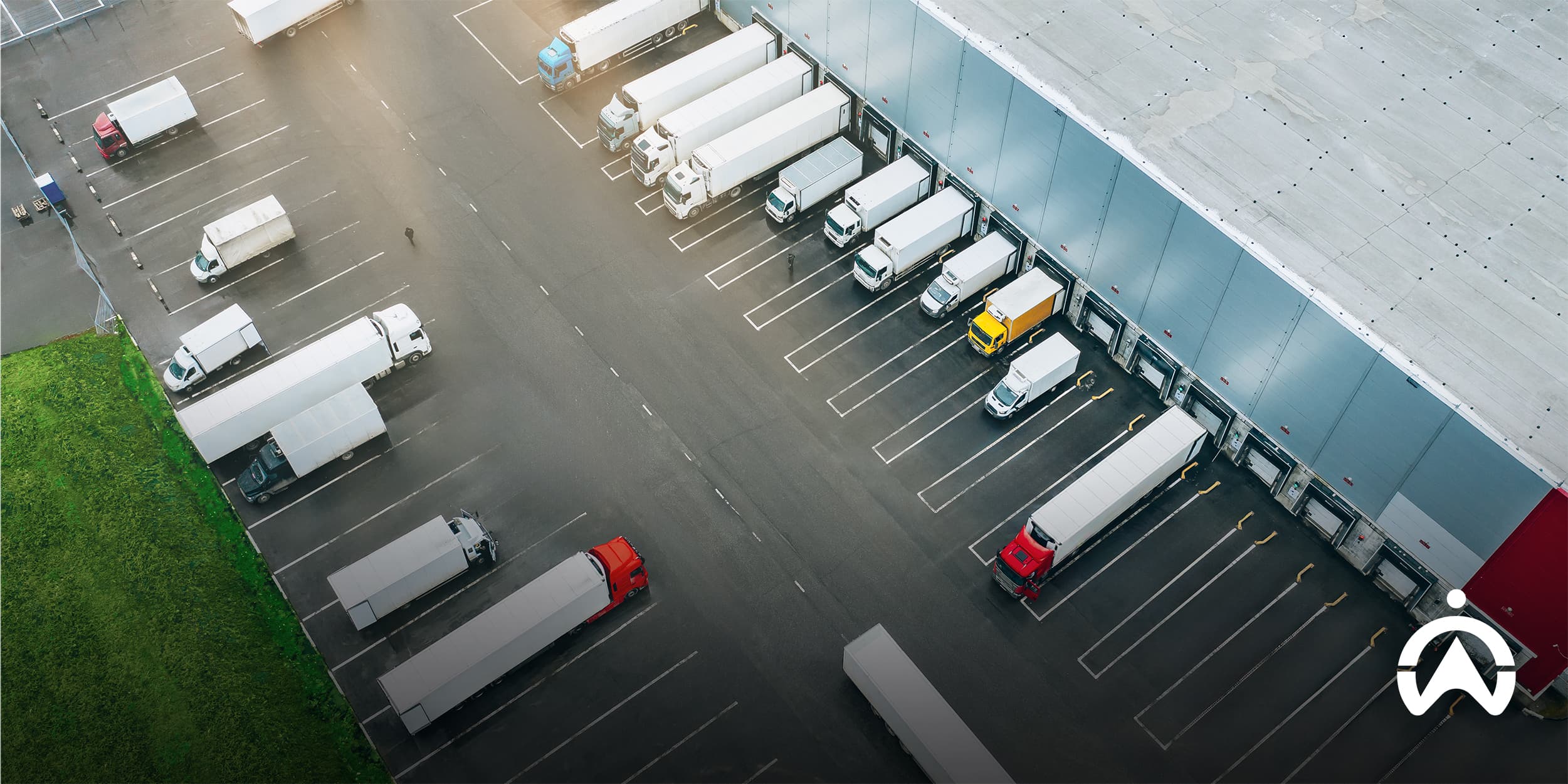
Aerial view of warehouse with trucks at loading docks, showing how to successfully manage cross-border logistics and distribution operations

Lack of driver responsibility

We can’t completely exempt your drivers from the many causes of stress you experience as a cross-border fleet manager. There are many risks associated with long-haul drives, and driver fatigue is commonly understood as top-of-the-list.

How should you deal with bad driver behaviour and driver fatigue? This is one problem that Cartrack Namibia has spent much time solving. Check it out:

  • Seat vibrators that alert drivers to signs of fatigue
  • Combined AI cameras with a comprehensive driver coaching platform
  • Loud buzzers that alert drivers to bad driving habits and fatigue

Much of our software options focus on driver coaching and driver safety. 

Technology aversion

The last culprit who might be stressing you out is… YOU!

If you’re one of those fleet managers who thinks fleet technology is just a passing trend, THINK AGAIN! 

It’s now an integral part of doing your job successfully—especially if you’re in cross-border logistics. Technology of different kinds (digital tools, IoTs, AI, SaaS, etc.) is discussed throughout this article, so be sure to explore the options discussed here if you’re REALLY interested in successful logistics.

How to manage risks associated with cross-border logistics

Camera telematics is one of the best ways to manage the risks associated with cross-border logistics. That’s because footage doesn’t lie. Whether there’s corruption taking place at the border points, or dangers of any kind while driving, vehicle cameras will pick up everything, giving you and the authorities access to invaluable evidence.

Why is this such an essential component to successfully managing your cross-border logistics? Let’s see.

Invest in an “extra pair of eyes”

You’re not there. You can’t be. Still, you need some record of events in case something goes wrong. This is essential risk management in cross-border logistics, which many fleet managers in SA still haven’t employed for the good of their companies.

Boost your insurance coverage

Insurance companies deal with claim disputes all the time. And you can believe that every insurance company LOVES it when your vehicles are fitted with vehicle security cameras. This resolves things very quickly when you put in a claim for damage, an accident, or even a false claim against your driver.

Manage the reality of driver fatigue

AI-vehicle cameras from Cartrack Namibia come with built-in AI that detects fatigue and other bad habits like eating & drinking, smoking, or distraction. Not only are the cameras keeping your vehicle safe, they’re also protecting your driver!

Manage theft risks

Cameras can also be set up to record suspicious activity while the vehicle is parked. They automatically start recording when there’s movement around the vehicle, and this footage is accessible to you—in real time. This includes what’s happening at the border. You get to see it all.

Cargo risk management

Let’s not forget about the cargo your vehicles are carrying. Cartrack offers cargo cameras and door sensors. The doors open, the cameras switch on. You’re always in the know about what’s going on with your cargo, and (if applicable) how often your cargo doors are being opened.

Semi-trucks lined up on a highway at sunset, representing how to successfully manage cross-border logistics and long-distance freight movement

How should long-haul logistics companies deal with border-based customs?

When dealing with customs at the border, long-haul logistics companies should consider a few proactive strategies that include:

  • Sorting out clearance ahead of time (pre-clearance)
  • Keeping a digital archive of all relevant documents (and making these accessible to drivers when they need them)
  • Having inventory declarations in check
  • Keeping you updated so you can notify your customers of any delays

Find the right partner to help you manage cross-border logistics like a BOSS!

The above checklist is good to have, but do you have the tools to actually put any of them into practice?

Our software makes it easier. We also automate much of the tedious admin for you!

Contact Cartrack Namibia to see just how much we can help with your cross-border management, and how our tools end up saving you so much that they MORE than pay for themselves.

Frequently asked questions about cross-border logistics

What does NamRA have to do with fleet border clearance?

When it comes to customs and excise in Namibia, the Namibia Revenue Agency (NamRA) manages the process and provides importers and recipients with the necessary systems to declare goods. All products must be legally cleared, which usually involves the payment of duties and taxes where applicable. NamRA is responsible for enforcing these regulations, and in many cases, goods can be pre-cleared through their online e-services platform before arrival at customs to help reduce delays.

Do truck cameras record audio in case of bribery attempts at the border?

Yes, many truck cameras nowadays do record audio. This is another reason why getting vehicle security cameras for your trucks or vans is so important, because if your drivers are intimidated to pay a bribe, the cameras will record this.

How do you manage cross-border shipments?

Managing cross-border shipments is a little easier today than a decade ago. With digital tools abounding, inventory management & documentation procedures can be done without human error. So to manage cross-border shipments properly, you should adopt digital tools and AI to (at the very least) be on par with your competitors.

How to Increase Driver Retention and Save on Recruitment Costs

To increase driver retention and save on recruitment costs, you must create an environment that emphasises the wellbeing and upliftment of your drivers. The two core reasons why businesses see a high turnover rate are that drivers feel underpaid and unappreciated, and addressing this can make all the difference.

As of 2026, the financial impact of high driver turnover has begun to significantly affect fleet sustainability in Namibia. Studies indicate that replacing a single truck driver places a considerable financial burden on companies, increasing operational costs and putting pressure on long-term fleet efficiency and stability.

Don’t drown your business in hiring costs; change the way your business operates and shows care for its employees. In this blog, you’ll see how you can improve driver retention, what you can do to protect your overall gain, and how Cartrack can help you achieve a positive business environment.

What can you do to maintain driver retention and avoid financial loss?

To maintain driver retention and avoid financial loss, you should transform the way your business treats its drivers. If you’re facing a high turnover rate, you must be able to take a step back and re-strategise, thinking carefully about the ways you can enhance your approach with drivers. Most importantly, value their feedback and be willing to listen.

Truck driver shortages have been an ongoing issue for years now, and they’re heavily impacting the supply and transportation sector. This kind of shortage has a ripple effect, damaging businesses like yours and hurting the industries in connection to them. Maintaining driver retention is more important than ever.

What is driver retention?

Driver retention means keeping your drivers loyal to your company, so much so that they stay on for a long time. Retaining drivers means you’re going in the right direction, keeping your drivers happy enough that they choose to remain a part of your team. Most drivers move on to different companies because they feel unhappy, underpaid, or overworked.

According to extensive research studies, it’s believed that most drivers leave their positions because compensation doesn’t match their expectations. The second most common reason is largely that they feel disrespected and unappreciated. This is why, beyond pay & benefits, a positive, nurturing environment is the key to retaining your drivers.

What’s the true price of hiring a new driver instead of retaining one?

When you hire a new driver instead of taking measures to retain one, you’re not just faced with the hiring costs. Every time a driver leaves, you have to invest in so much more than the recruitment process. More than that, you might end up with a bad hire that could cost your business even more than anticipated.

Consider these other contributing costs:

  • Advertising and marketing for the role
  • Onboarding and training
  • Insurance (which tends to be greater with high turnovers)
  • Loss of productivity/downtime
  • Loss of unused equipment/assets (diminished equipment)
Delivery driver in a red uniform handing over a package from their van, illustrating strategies to increase driver retention.

What are the top ways to increase driver retention?

The 7 ways to increase driver retention include:

  1. Paying drivers competitive salaries and offering valuable benefits
  2. Putting driver safety and wellbeing first
  3. Engaging intentionally with drivers
  4. Investing in good-quality tools and technologies
  5. Maintaining open communication
  6. Introducing strong mentorship, training, and development programmes
  7. Implementing incentives and rewards

Let’s break these crucial points down for you.

1. Paying drivers competitive salaries and offering valuable benefits

This is one of the most important points to consider. Do your research carefully and understand the market value for drivers. Even if you do have an interested driver, you might lose them the moment you present a weak compensation package. Keep a competitive edge and remember that the market has shifted post-pandemic.

In addition to pay, offer valuable benefits. Think about offerings like medical aid, performance bonuses, and other benefits that could make your compensation package stand out above the rest of them. Also remember to be completely transparent about the salary and benefits structure. You want to support your drivers, not catch them out.

2. Putting driver safety and wellbeing first

Drivers work extremely long days and are the foundation of your business, so invest in their wellbeing. Put their mental health first and offer enough time off. When you do this, your drivers have a far better quality of life with better sleep, less chance of chronic health issues, and a better outlook on their job. This then encourages a positive cycle and work/life balance.

Safety is also a massive point here. Ensure that you’re compliant and meeting safety measures to the best of your ability. Invest in the right tools to make safety processes simpler, ensure that your drivers are properly trained, regularly review your safety protocols & policies, and check that your equipment/assets are well maintained and meet safety standards.

3. Engaging intentionally with drivers

Be intentional about your engagement with your drivers. Really listen to them when they’re giving you feedback or expressing their grievances. You can encourage things like regular check-ins or focus groups so that drivers are engaged and feeling heard.

When you take the steps to make those changes, you’ll likely leave your drivers pleasantly surprised and feeling valued, transforming the vibe of the workplace.

4. Investing in good-quality tools and technologies

When you have the best in fleet and safety technologies, this not only ups the safety factor for your drivers, but also makes everything far easier for everyone involved. Automated processes and AI-powered tools mean your drivers can focus on driving and not be held back by other tasks, especially admin-related ones.

When you use the tools at your disposal, especially through a fleet platform like Cartrack’s FleetWeb, then you’re a step closer to a smoother, better-functioning environment. This takes the stress out of daily tasks for both you and your drivers.

5. Maintaining open communication

This point brings together general safety, intentional engagement, and good-quality technologies. As an owner or fleet manager, it’s important that you’re on standby and ready to help if an emergency happens while drivers are on the road. With a sophisticated fleet platform and advanced technology, you can make in-cabin calling and react swiftly if your driver encounters issues on the road.

Achieving this shows your drivers that you’re attentive and there for them when something goes wrong. Again, it pushes forward the notion that you care about their safety.

6. Introducing strong mentorship, training, and development programmes

Mentorship and development programmes can take your drivers far. These initiatives show that you’re invested in the growth of your drivers – not in stagnancy – and therefore in business development. Offering mentorship can also help your drivers (especially new ones) feel confident and less withdrawn about doing tasks and even engaging with you as management.

Ensure that your drivers have a clear and comprehensive onboarding process, so that you and the drivers are feeling confident from day one. It’s also best to keep regular training an ongoing thing, especially if you intend to keep your software and tools updated.

7. Implementing incentives and rewards

Few things encourage employees more than incentives and rewards. Whether it’s public recognition or tangible prizes, these are supportive, motivational, and engaging ways to show appreciation for your drivers that go above and beyond. This also creates healthy competition between drivers, because they’re motivated to adopt better driving habits, knowing that their efforts will be recognised and rewarded.

Gamification is one of the best strategies to implement here. You’ll be able to use actual insights to drive game-like mechanics like leaderboards and prizes. Drivers are often far more involved with a gamification approach; it’s a smarter, safer, and more entertaining approach.

Delivery driver standing confidently by a loaded van, representing high driver retention and reduced recruitment costs for logistics businesses.

How does Cartrack help you retain drivers?

Cartrack can help you retain drivers by giving you the comprehensive, accurate data needed to propel your retention strategies. From driver scorecards to metrics for gamification, we provide you with the tools required to transform your business environment and keep your drivers happy. Our comprehensive and insight-driven fleet solutions are where you need to start.

We have AI-capable camera solutions for your fleet, which capture distracted or reckless driving. We have driver scorecards, which keep track of how your drivers are behaving on the roads. These can help you monitor and reward drivers who are exhibiting responsible behaviours. The recorded AI events can also be used for coaching, so that drivers get valuable feedback for improvement.

Our optimised processes, like routes and real-time dispatching, lead to quicker and safer journeys for your drivers, all while allowing you to efficiently handle unexpected changes. In that same vein, you can ensure instant communication between you and your drivers through our in-cabin calling options or in-app messaging.

Your drivers can also focus on driving instead of being burdened by other tedious tasks. Everything is made hassle-free; not only is our app user-friendly, but manual entries are a thing of the past thanks to automated scheduling, proof of delivery submissions, and more. With monitored vehicle health and proactive maintenance, the chances of your drivers getting stuck on the road are massively reduced.

Final takeaway: More retaining, less recruiting

Changing your mindset, genuinely tuning into your drivers, and equipping them with the right tools and support is what will make your business. You’ll build a team of drivers that not only shares your commitment to success, but is also dedicated and loyal. Don’t just stop at keeping your trucks on the road; let your true empathy shine through. It’s a highly effective, proactive way that safeguards your company’s culture and profits while keeping you connected to your drivers.

Let Cartrack get you on the right path. We’ve got everything you need to ensure your drivers stay motivated and educated. And with happy drivers, you’ll have a much happier business environment and bottom line.

Want to keep your best drivers behind the wheel? Speak to our Cartrack professionals today for actionable tips on improving driver engagement and minimising high turnover.

Frequently asked questions about driver retention

What is the best way to reduce driver fatigue?

The best way to reduce driver fatigue is to:

  • ensure your drivers are getting enough sleep before long trips (at least 7-9 hours),
  • you’ve enforced a regular breaks-and-stops policy, and
  • ensure that drivers are well hydrated and eating light, healthy meals (because heavy, fatty-rich meals cause sleepiness).

How to reduce recruitment costs?

To reduce recruitment costs, you should:

  • use tools and technology to help you better sort through the process,
  • hire internally where possible,
  • utilise career & social media pages,
  • incentivise referral programmes, and
  • ensure that your job description is as clear as possible (to avoid receiving resumes that don’t match).

What is the 80/20 rule in hiring?

The 80/20 rule in hiring, otherwise known as the Pareto Principle, is the idea that 80% of your success in hiring candidates comes from the top 20% of applicants. So, instead of looking at every applicant evenly, you focus more on those with the best skills across the board and take it from there

Car Safety Features That You Should Have Today

Car safety features that you should have today include collision prevention & detection, GPS tracking, high beams, braking systems, and a host of other advanced additional options. While unbelievably important, you can no longer stop at seatbelts and airbags. In today’s world, all car safety features go beyond the traditional ones.

The Insurance Institute for Highway Safety (IIHS) 2026 Safety Benchmark shows that cars with Automatic Emergency Braking (AEB) and Forward Collision Warning (FCW) brought down the number of car wrecks by 50%. The number of injuries is also reduced by just about the same percentage! This shows just how important tech-forward car features can be.

Familiarise yourself with the importance of safety for both you and your car, but also consider key features that are more than just the in-vehicle perks. In this blog, we’ll let you in on the most crucial car safety features, how features have evolved, and what Cartrack can do to maximise your car safety.

What safety features are important for a car to have?

Safety features that are important for a car to have are things like seatbelts, airbags, and windscreen wipers, but also Automatic Emergency Braking (AEB), Electronic Stability Control (ESC), and adaptive cruise control (ACC). The best in care safety should always be a combination of traditional features and newer, more tech-advanced features.

What is a safety feature?

A safety feature is something that’s been created or designed to protect you from harm and prevent potential damage. These technologies are designed to predict potential risks and react appropriately, help you during distressing moments, and ensure the safety of you & your family.

What is the most important safety feature on a car?

This question is a bit tricky to tackle with total confidence. Firstly, there isn’t just one “most important safety feature”, and secondly, you have to look at this question from different perspectives.

Are you trying to measure safety by prevention, survivability, or both? Either way, it’s generally believed that seatbelts and airbags are the most important safety features.

Following this, it’s the headlights and windscreen wipers. And from an advanced tech perspective, look for Automatic Emergency Braking (AEB) systems, which predict a potential crash and slow the car down. Electronic Stability Control is another important modern consideration, which stops you from losing control when your car skids.

Aerial view of a highway with cars and a smartphone interface displaying essential car safety tracking features.

What are the top safety criteria for your vehicle checklist?

Here’s a quick and easy checklist for your new car purchase or car inspection:

Collision protection and impact prevention

  • Seatbelts: Ensure your seatbelts pull and retract easily and that they aren’t frayed. While traditional, it’s still important to mention, especially given how frequently people forget to buckle up before hitting the road. Seatbelts help by massively reducing injuries and stopping dangerous ejection from the car.
    ‍
  • Airbags: Verify they’re in place to protect you and your passengers from hard surfaces in the event of an accident. Airbags started with two in the front seats, increasing to about six in the early 2000s. Now, we see anywhere from seven to sixteen airbags installed carefully around the interior of the car.

ADAS (Adaptive Driver Assistance Systems)

  • ACC: Always check that these detection systems are working before you drive off. Adaptive Cruise Control automatically slows down your car to keep a safe distance, usually matching the speed of the car that’s in front of you. It’ll use something like a camera, radar, or sensor to comfortably adapt to the change in speed.

Collision avoidance

  • AEB: Check that your car is equipped with this emergency function and can initiate braking. Automatic Emergency Braking is a system that brakes or slows the car down if it detects that a crash is about to happen. It’ll also detect that you’re likely not responding quickly enough.
    ‍
  • ESC: Confirm that this is present in your car. Electronic Stability Control stops you from losing control when the car skids. It works by looking at the angle of the steering wheel & the direction your car is going in, then quickly recalculating and adjusting if the car starts to swerve.
    ‍
  • Blind spot monitoring: Look for sensors or cameras that can give you alerts when there are vehicles in your blind zones. Blind spot monitoring warns you about cars that are out of view. There are different ways for the alerts to show up, but they usually manifest as a beep or an icon that flashes in your sideview mirror.

What cars have good pre-installed safety features?

Cars that have good pre-installed safety features include compact sedans, compact SUVs, and mid-sized luxury cars. Beyond the successes in crash and safety tests, these cars are typically considered the safest because of the advanced tech used in their safety features.

  • 🚗 Compact sedans: These are usually praised for their rear seatbelt reminders, ADAS, lane assist alerts (lane-keeping & lane departure), high-beam lights, and collision intervention warnings.
    ‍
  • ‍🚙Compact SUVs: These are praised for their strong structural designs, numerous airbags, and integration of advanced technologies (like ACC, collision warnings, & the like), even in their most basic models.
    ‍
  • ‍💎Mid-sized luxury cars: These typically set quite the standard when it comes to high-quality and precise safety features. Most models are pre-equipped with all the safety benefits you could want in a car, with the most recent models also including perks like more airbags (especially side & knee ones), AEB, and driving assist features (distance control & curve management).

How does modern technology support older drivers?

Take a look at how modern technology supports older drivers with this problem vs. solution table:

The pain point The safety solution How does this help?
Fragile bodies in an accident Airbags and extra padding/support on headrests and seats They do much of the heavy lifting, absorbing the impact in a collision and cocooning the fragile bodies of elderly drivers.
Impaired visibility Driver & vision assist features (lane keeping assist, left-hand turn assist, blind spot warnings, and reverse cameras) Visual & audio indications for these features keep elderly drivers vigilant, especially when head turning is difficult.
Disorientation Live GPS tracking This can provide peace of mind and keep family members connected to elderly loved ones while they’re on the road.
Arthritis & mobility issues Convenience technology Larger steering wheels, push-to-start buttons, power boot/tailgate buttons, and power seat buttons remove physical strain.
Slow reaction time or reflexes AEB Most modern cars include pedestrian detection and large animal detection, in case an obstacle suddenly appears.

Although these safety features may be important regardless of age, we must keep our elderly drivers at the centre of the safety conversation.

Natural age-related changes start to happen as time passes, like vision becoming poorer, reaction times becoming slower, and loss of muscle strength. The safety features in a car must accommodate those changes while keeping drivers comfortable.

How can you protect your senior loved ones on the road? Speak to a Cartrack professional about our safety solutions and perks.

Much like children, the elderly are extremely vulnerable people when they’re on the roads. Their vulnerability makes them prone to serious injury and a loss of direction sense, which is why it’s important to pay attention to and consider certain safety features.

Person in a black mask using a tool to break into a vehicle, highlighting the need for modern car safety features.

EVs vs ICE cars: Which wins on safety?

When looking at EVs (electric vehicles) and ICE (internal combustion engine) cars, it’s EVs that truly win on safety. When you break it down, EVs are less likely to catch on fire, are sturdier and stronger in their build, and their safety technology features tend to be far more advanced.

Here’s why:

  • ‍Extra crumple space: EVs don’t have an engine in the front of the car like ICE vehicles. Because of this, we see an advanced energy-absorbing structure. In the case of a head-on collision, the car crumples in a more effective, less impactful way, ensuring better protection for the cabin and passengers.
    ‍
  • ‍Stability and anchoring: EVs have heavy battery floors, which create an anchor that has a very low centre of gravity. This design makes EVs nearly immune to rolling over in an accident, which is something traditional ICE vehicles are prone to.
    ‍
  • ‍Fire hazard chances: Despite popular belief, recent data shows that ICE vehicles are actually more likely to be a fire hazard compared to their EV counterparts, thanks to the former’s highly flammable fuels and hot exhaust systems.

Can Cartrack help you keep your car safe?

Cartrack can absolutely help you keep your car safe. We understand that safety extends beyond in-vehicle alerts and warnings, and while pre-installed safety measures are great, they’re not always enough. We take security and protection to the next level, adding onto what’s already existing and giving you complete peace of mind. This is where we excel.

Why should you choose us?

When you choose Cartrack as your provider in car safety, you’ll get access to the Cartrack app and its many features. Secure your vehicle for a low monthly fee—plus free tracker installation! The app will show you where your car is at all times, thanks to our live GPS tracking. 

You can location-share with loved ones, and they can reach you quickly if an accident or incident occurs. Our app is easy to use, making it ideal for you and all members of your family.

What Cartrack-specific safety options are available to you?

We have numerous safety and security solutions that go beyond standard features. Our Vision solutions add an extra layer of security, offering Road and Dual Vision dashcams. The Road is a simple road-facing dashcam, while the Dual option is both road- and cabin-facing.

Invest in our backup wireless tracking device, the Cartrack Tag, which is immune to remote jamming. All of our traditional hardwired GPS tracking devices have anti-jamming detection, and in the case of remote jamming, the signal will switch to the Tag, which works on a radio frequency that alerts our control room about your car’s movement. This helps our teams move in to retrieve your car even quicker!

What about accidents and car recovery?

Our safety and security measures for you also extend to the car itself, and in the case of theft, we have extremely responsive stolen vehicle recovery (SVR) teams all across the country that are ready to help you.

Knowing your car’s exact location means there isn’t an uncoordinated scramble to get emergency services quickly enough.

Final takeaway: Getting the best protection for your car

When you’re choosing a car, you’ve got to direct your focus towards the latest in safety tech, but for the right reasons. The right tech isn’t just to flaunt; it’s about securing complete confidence and calm. Specialised & sophisticated features that were once seen as expensive extras are now the most crucial tools for you and your family.

Cartrack lifts you to new safety heights. Your car’s features manage some aspects of on-road safety, and we manage the others. We give you all the extra safeguards and benefits that go beyond just driving, giving you total visibility, solid support, and complete satisfaction.

Drive smarter, drive safer, and ensure you and your family are completely protected. Chat with our dedicated professionals today and choose a package that suits your needs!

Frequently asked questions about car safety

Can you drive a car if you have Parkinson’s?

Yes, you can drive a car if you have Parkinson’s; it depends on how far along your diagnosis is and what symptoms you’re exhibiting.

To check if driving is a safe option, look into these important factors:

  • Sleepiness (dizziness, drowsiness from medications)
  • Multitasking (managing many tasks at once)
  • Tremor level (tremors and slow movements)
  • Vision (light sensitivities and impaired vision)

What are things I should always have in my car?

In your car, you should always have:

  • The right paperwork, like your licence and car manual
  • Emergency tools, like your spare tyre, reflective triangle, first-aid kit, etc.
  • Other important safety items, like a petrol can and repair tools (wrench, screwdrivers, etc.)
  • Personal emergency items, like a power bank, blanket, water, etc.

What car is hardest to steal?

The cars that are hardest to steal are certain EVs and luxury SUVs. This is because they tend to have very sophisticated security systems with many layers to them, along with many cameras that can scare thieves away. Some newer models also have remote immobilisation and tamper alerts that get sent directly to the owner’s phone.

The Impact of Fuel Price Volatility and How to Manage It in Your Business

Managing the impact of fuel price volatility in your business is about adopting a fleet management system and smart strategies to help you stay operational. The impact is typically seen in reduced profits and increased operational costs. When you manage fuel volatility, you optimise processes, save on fuel costs, and keep yourself and your drivers in tune with fuel-saving techniques.

As of April 1st, 2026, Namibia experienced a fuel price increase, with petrol rising by about N$2.50 per litre and diesel by N$4.00 per litre. This increase adds pressure to transport costs, making it important for individuals and businesses to manage fuel expenses carefully.

Don’t let your business suffer. Read through our blog to manage volatile fuel prices, empower your staff to implement fuel-saving tips & tricks, and let Cartrack help you save more effectively.

How do you handle fuel price fluctuations when they affect your business?

When they affect your business, you handle fuel price fluctuations by maximising the technologies available and implementing smart, practical strategies like optimising processes or implementing fuel hedging. Taking a proactive and cautious approach is the only way to ensure you protect your business, especially in a time when world tensions are causing much uncertainty.

When you’re not prepared, you put your operational costs and profits in serious danger. Fuel, typically being the highest expense in a fleet, will have prices that quickly and unexpectedly shoot up. This then creates a domino effect, driving up overall monthly expenses and ultimately leading you to increase the prices of your goods or services.

What are the best fuel price risk management tools for Namibian companies?

The best fuel price risk management tools for Namibian companies include:

  • An advanced fuel management platform that’s equipped with telematics, offering numerous fuel management tools that will help you optimise operational processes and maximise savings. This includes route optimisation, driver monitoring, comprehensive reporting, and more.
    ‍
  • Fundamental hardware, like fuel sensors and durable GPS tracking devices.
    ‍
  • Fuel cards to better manage your fuel use and keep track of consumption and transactions.

What impact does fuel price volatility have on your business?

The impact that fuel price volatility has on your business includes:

  • Lowered profits
  • Greater operational costs
  • Disrupted operational processes and pressure on the business
  • The inability to properly plan and budget for the business
Two yellow semi-trucks with red and orange trailers parked on a rural road, illustrating the impact of rising fuel prices on business operations and transport costs

What are some strategies for small businesses to budget for unpredictable fuel prices?

Some strategies for small businesses to budget for unpredictable fuel prices include:

  • ‍Implementing a fleet management solution: This is the first and most important step. There’s a general misconception that fleet systems are only for larger enterprises, but this simply isn’t true. A fleet platform assists with a whole host of things, particularly monitoring, reporting, and detailed insights—all of which are just as important for small businesses. A platform, like Cartrack’s FleetWeb, can help you optimise routes, monitor your drivers’ extreme driving habits, and help you schedule maintenance and keep your vehicle in top condition. Carefully managing all these aspects results in actual, visible fuel cost savings.
    ‍
  • ‍Looking into hedging: Fuel hedging is when a company looks to buy fuel from a supplier and locks into a contract with them instead of buying at the pump every day. This means the price of the fuel is a set price for as long as the contract is in effect. Although this can be frustrating if fuel prices decrease, this is an incredible way to protect your business overall and navigate fuel increases when they occur.
    ‍
  • ‍Taking advantage of tax incentives: Ensure that all expenses that can be claimed are properly recorded for submission to the Namibia Revenue Agency. This way, you can get tax deductions, and the total you owe overall can be greatly reduced.
    ‍
  • ‍Using fuel cards with a fixed rate: Much like fuel hedging, fuel cards let you buy fuel at a fixed price, no matter what increases or fluctuations occur. Fuel cards, when integrated correctly, also offer detailed reports on transactions, so you can easily identify any unusual or mismatched transactions.
    ‍
  • ‍Considering buying fuel in bulk: Buy fuel in bulk so that fuel volatility has less of a negative impact on your business. But, only do this if storage space allows for it.

Are there suppliers that offer fixed-price contracts to reduce volatility risks?

Yes, there are suppliers that offer fixed-price contracts to reduce volatility risks. Fixed contracts are quite common and popular among businesses, especially for clients in sectors like energy, logistics fleets, and farms. These contracts can be designed carefully with your business in mind, offering personalised solutions that work with your specific company needs.

These types of contracts are extremely popular thanks to their nature of effective risk management. They ease out the pressures of price uncertainty and protect your business’ bottom line. This also means you’re more in control of your finances; beyond saving money,  your budgeting is far more predictable, giving you total financial foresight.

How do I apply for a commercial fuel card for my business?

To apply for a commercial fuel card for your business, you typically:

  • Select the bank that you’d like to go with, because they’ll be your provider for a card. Most bank-connected fuel cards have their own loyalty programmes and reward structures, so check out each bank’s deals to see which of them work well enough with your savings goals.
    ‍
  • Collect all the documents you’ll need for a successful application. These documents will include business registration forms, proof of business turnover, tax statements and compliance records issued by the Namibia Revenue Agency, national identification documents, proof of shareholder holdings, and any other applicable KYC (Know Your Customer) or regulatory documents required depending on your business type and structure in Namibia.
    ‍
  • Get your application form online, complete it, and submit it via email or go directly to the bank branch. The bank will then carry out a background check.
Fleet of white trucks parked beside a warehouse with a laptop displaying Cartrack fleet data, showing how businesses monitor operations to manage the impact of rising fuel prices on business

How does Cartrack help you save on fuel costs?

Cartrack helps you save on fuel costs by providing one of the most comprehensive fleet management platforms with features and resources that’ll keep your fuel savings in place. With FleetWeb, you get access to advanced, automated, and AI-assisted insights & tools. You also have access to numerous hardware and specialised sensors to take your fuel savings even further.

Route optimisation is one of the simplest but most effective fuel-saving benefits of FleetWeb. Our software uses algorithms to determine the best and most efficient route for your drivers, factoring in disturbances like traffic, weather conditions, and delivery priorities. The best routes equal more savings, because you spend less on fuel and ultimately less on maintenance and running costs.

MiFleet is a cost management tool on FleetWeb that takes out the human handling of fuel monitoring and data output. It reviews all transactions and matches them with uploaded receipts, it sends alerts about unusual drops in fuel levels or potential fraud, and it cuts out the need for manual admin.

Linking back to fuel levels, our specialised fuel probes can be placed inside your fleet vehicle fuel tanks to carefully monitor levels in real time. Our readings are accurate, with the results transmitted to our platform so you can keep an eye on them and generate detailed fuel usage reports to analyse costs.

We have smart camera solutions and detailed driver monitoring features, like driver scorecards, so you can ensure drivers are implementing those fuel-saving techniques. Our AI-enabled cameras keep track of your drivers’ habits and record events like distracted or aggressive driving, so they can be quickly corrected through coaching. Aggressive driving and idling are fuel-wasting driving habits.

Final takeaway: Fight the fuel-increase blues

There’s very little we can do about the world’s tensions and disturbances, but there’s a lot we can do to fight against the fuel volatility that comes with it. Careful planning, combined with partnering with the right fleet company platform, can make a world of difference in your savings goals.

It’ll likely be impossible for experts to accurately predict what’s going to happen in the future, but in the meantime, Cartrack can help you prepare for anything that comes your way.

Stay ahead of the turbulent fuel market; don’t just react to it. In this time of uncertainty, let Cartrack help you stay one step ahead. Call us today!

Frequently asked questions on fuel volatility and your business

Who benefits from oil price increases?

Naturally, oil suppliers & companies, governments, and alternative energy source companies benefit from oil price increases. Oil companies excel and profit from demand when prices go up. Governments in most countries receive a fixed fuel tax cut, which rises with price increases. Alternative energy providers see an influx of people looking for other options to fuel use, driving up their profits.

What is fuel volatility?

Fuel volatility refers to how fuel vapourises when it’s being burnt in an engine. This is how traditional ICE (internal combustion engine) vehicles work, and fuel volatility is necessary for petrol cars to operate. Fuel volatility is usually measured in Reid Vapour Pressure (RVP), which measures the pressure. This distinguishes between a slow and sputtered or easy car start.

Is oil going to crash in 2026?

Whether or not oil is going to crash in 2026 is a difficult question to answer because it’s based on geopolitical tensions and whether they continue or resolve. If disruptions continue, it might crash, especially because supply routes (like the Strait of Hormuz) have been blocked for certain countries. This is what leads to volatility and uncertainty.

GPS Tracking for Electric Vehicle Companies

According to Auto Evolution, electric vehicles are stolen significantly less often than regular internal combustion engine (ICE) vehicles. So why the need for GPS tracking on these greener vehicles? Cartrack has designed GPS tracking for all types of cars, but why bother with electric vehicles? Isn’t vehicle tracking a theft prevention method?

The answer is, “Yes”, but not exclusively. GPS tracking actually has a vast range of uses other than vehicle recovery, which is why we emphasise the need for it in electric fleets. Let’s have a look at 6 reasons why electric fleets need GPS tracking, and how these vehicles benefit from technology that ISN’T included in their default designs.

Is GPS tracking necessary for electric vehicle companies?

We’ve noted that electric vehicles are less vulnerable to theft, but this doesn’t mean they NEVER get stolen. Most car theft is done with the intention of selling parts rather than having the stolen car. For this reason EVs are less likely to be stolen because the parts aren’t desired on the black market.

But we should mention that this is likely to change in the near future. While car brands like Tesla are among the least likely to be stolen, they are in a sense vulnerable to being ‘hacked’.

How do thieves target electric vehicles?

Thieves that do want to target an EV will do so through a high-tech relay attack. This involves two devices that ‘tie’ a signal together in order to access the vehicle. They can unlock and start the vehicle and easily steal the car.

But if not for the parts, why steal an electric vehicle in the first place?

Why do some electric vehicles get stolen?

This may not seem like relevant information for fleet companies, but it is! EVs will most likely be targeted for their cargo rather than the vehicle itself. If you own EV trucks or vans, keeping your vehicle’s cargo safe with GPS tracking is a MUST!

As more companies undergo electrification of their fleets, GPS tracking becomes essential in keeping cargo AND vehicles safe. But actually, it goes beyond theft prevention. Keep reading.


Beyond tracking: GPS for EV fleet management

Fleet managers mistakenly think that GPS tracking is a service that only pertains to vehicle recovery in case of vehicle theft. While this is how it all started back in the late nineties, GPS tracking has presented multiple other uses like telematics to help make better fleet decisions.

In the case of EVs, GPS also assists with valuable management points like battery data, range anxiety, and vehicle maintenance.

Integration with telematics

Managing an electric vehicle fleet without telematics means going back to the days where fleet managers used a pen & clipboard to assign their drivers. Those days are long gone (or at least they should be), and have made way for digital fleet management.

Telematics is the data you get from your vehicles. Fleet management software is what translates that data into valuable insights that enable you to excel in your decision-making processes. The base for all this data? Yep, you guessed it: GPS tracking.

EV fleets are no exception, as you’ll soon see.

EV battery data

Trip information and battery data go hand in hand. An EV battery status must correspond with how much driving a vehicle has been doing. GPS tracking for electric vehicles is an inseparable part of managing battery data and spotting battery issues.

Charging stations (range anxiety)

GPS tracking is at the core of route optimisation for any fleet. Getting your vehicles to their respective destinations quicker means more efficiency and a stronger reputation for reliability. A nice byproduct of route planning & optimisation for EV fleets is the ability to plan charging sessions by pinpointing charging stations.

This eliminates what’s known in the industry as “range anxiety”. Just one more reason to get GPS tracking for your electric vehicle company.

Maintenance for electric vehicles

Electric vehicles need significantly less maintenance than ICE vehicles. It’s a great selling point, but what about when they DO need maintenance? The truth is, we’re not as familiar with electric vehicle health because this technology is relatively new.

GPS tracking works as an integral part of predictive maintenance scheduling. And yes, it’s exactly what it sounds like: software that predicts when your vehicles will need to go in for a service. So instead of guessing when your EVs need maintenance, you’ll have a booking schedule that’s accurate to the condition of each vehicle—all thanks to GPS tracking and other IoT devices.

GPS tracking is also used for coaching

The third reason EV fleets should adopt GPS tracking is for the purpose of driver training. While GPS tracking might not be the obvious hero in this technology, it works in the background to make it possible.

Driver monitoring for EV fleets

You can’t exactly monitor your drivers for targeted driver coaching if you don’t know where they are most of the time. GPS tracking tells your fleet software where each driver is, and combined with vehicle cameras, tells you what they’re doing.

Vehicle monitoring to save costs

GPS tracking also plays a part in vehicle diagnostics to help you understand what each driver is doing with regards to the vehicle they’re driving. Are they idling too long? Are they driving recklessly? Did they make it to their destination? Thanks to GPS, you can manage your drivers much better and even coach them on driving habits.

Last-mile benefits of GPS tracking for electric vehicles

Cartrack has a superb last-mile application called ‘Delivery’. It’s an optional part of our software offering that helps to finalise deliveries or fleet-related tasks. This application relies heavily on GPS tracking because it helps you manage schedules, locations, and routes for your drivers.

An increase in electric scooter fleets

More and more companies are electrifying their last mile processes with electric vehicles like battery-powered scooters and bikes. As these fleets grow larger to accommodate more customers, the fleet itself becomes harder to manage.

Where does GPS tracking come in?

To keep costs down and productivity up, fleet managers are turning to applications like Cartrack’s Delivery. GPS tracking devices have to be fitted to each vehicle to optimise the function of this application. Not just to keep those scooters safe from theft, but to help manage one of the most important delivery processes of the company—the last mile.

Thanks to GPS tracking for EV fleets, the last mile (notorious for being the most expensive part of the delivery process) can be optimised through:

  • Better route planning for increased range
  • Avoiding traffic and damaged roads
  • Better communication with customers on delivery progress
  • Fewer breakdowns

Maximised ESG goals

If you’ve made the shift to electrify your fleet, you’ve already taken a huge step to raising your ESG score. This puts you ahead of your competitors because you’re leading the way within your industry and making a real difference in the impact fleet companies have on the environment.

But it’s possible to FURTHER enhance your ESG results. Check it out.

Is ESG worthwhile? What’s in it for you?

ESG isn’t just about being compliant with a set of new rules. Pursuing ESG sincerely WILL put your company ahead of its competitors long term, because many companies will (and already do) only do business with those that are perceived as responsible corporations.

ESG is also worthwhile when you consider how it impacts the safety and wellbeing of your staff. This is the social aspect of ESG (the “S”), and this aspect has become a financial strategy that’s continuously paying off in terms of staff satisfaction, productivity, and retention.

The role of GPS tracking in ESG

Where does Cartrack come in? What’s the connection between GPS tracking for electric vehicle companies and ESG?

  • GPS tracking is the basis for conceptualising accountability in your drivers
  • GPS tracking is the starting point in determining your carbon footprint on the environment
  • GPS tracking is what forms the foundation of driver coaching
  • GPS tracking is necessary for better route optimisation (which means less mileage)
  • GPS tracking gives you the data you need to make better decisions and manage corporate risk better

Tracking the safety of MORE than just the vehicle

The 6th and final reason electric vehicle companies should adopt some form of GPS tracking is because it’s not just the vehicle you’re tracking. As a fleet manager or company owner, it’s vital to protect your drivers and their passengers.

Remember: GPS tracking falls into the background when it comes to other driver safety components, so as we consider any fleet safety feature from Cartrack, bear in mind that GPS tracking forms the skeleton for them all!

How does GPS tracking protect EV drivers?

Leaving out important driver safety features like AI cameras and collision detection, GPS tracking further protects electric vehicle drivers as follows:

  • It allows for faster responses in emergency situations
  • It sends you alerts when your drivers are in certain high-risk areas
  • It calculates safer and quicker routes

GPS tracking | The skeleton of EVFMS

It’s safe to say that fleet management software wouldn’t exist as we know it today without GPS tracking.

It’s the lifeblood of so many applications that have become INDISPENSABLE to EV fleets across the globe.

Do EVs in Namibian fleets need GPS tracking?

YES, EVs in Namibia should absolutely implement GPS tracking into their fleets. Not only is it an integral part of almost all other fleet management strategies, but it also keeps your assets & drivers safe in a country where crime is an everyday reality.

Whether you’re electrifying your fleet or already have, contact Cartrack today to optimise your business and get more out of your electric vehicles.

Frequently asked questions about GPS tracking for electric vehicle companies

Should I get a GPS tracker for my personal EV?

Yes, adding a GPS tracker to your personal electric vehicle is an extra layer of security. Even if you have insurance, a tracking device gives you a better chance of recovering your car if it gets stolen. Bear in mind that it’s not just your car you’re tracking, it’s often you and your family too.

Do some EVs come with built-in GPS?

Yes, almost all EVs come with a built-in GPS for purposes of navigation and smart range estimation. The default GPS used in electric vehicles is a mechanical necessity, but it doesn’t come with a recovery service, so getting a tracking device installed from a company like Cartrack is a sure way to recover your car if it does get stolen.

Does Google Maps have an EV mode?

Yes, Google Maps has a mode specifically designed for EV. It prioritises charging stations (and their availability) and AI navigation (for quicker routes to save your battery). As EVs become more popular, Google continues to update their EV Map mode to accommodate new charging stations and other navigational priorities.

What type of tracking device is best for electric vehicle fleets?

The best tracking device for EV fleets is one that collects quality data for the purpose of operational efficiency and informed decision-making. It should also integrate with existing EV technology, other fleet management systems, and built-in EV features. Most importantly, it should come with a vehicle recovery service in case of theft.

How to Detect and Stop Your Truck Drivers from Moonlighting in Your Fleet Business

Detect and stop your truck drivers from moonlighting in your fleet business by adopting a comprehensive and sophisticated fleet platform. By having this, you’ll be able to clearly detect any inconsistencies and back up the evidence you present when you approach your moonlighting driver.

Over the years, side-hustle ventures have grown exponentially, leaving fleet owners in quite a bind. Research by Frost & Sullivan shows that exploring the benefits of a fleet system, like GPS monitoring and fuel accountability, can reduce unauthorised vehicle use by as much as 35%. This directly tackles the hidden costs that often arise from employees engaging in side gigs with company resources.

Don’t be left facing a ‘blind spot’. Get a better understanding of moonlighting, understand how to combat it (especially when it involves your company assets), and see how Cartrack can help you effectively address it.

How do I address moonlighting by my truck drivers?

You address moonlighting by your truck drivers by remaining calm, being professional, and refraining from an accusatory tone in your approach. Always collect all the evidence before approaching the driver, remind them of the policies in place, be strict about reinforcement, and give them a chance to speak for themselves.

If moonlighting drivers are using the company’s assets or vehicles for their side gigs, it needs to be dealt with as soon as possible. At the same time, as a manager or owner, it’s important to remain mindful of the fact that some employees might be doing this out of necessity or financial need.

To stop (or better control) moonlighting, you can:

  • review and renegotiate your driver’s salary to encourage them to stay loyal to your company, while offering growth opportunities,
  • require that drivers disclose their other jobs in writing, and
  • ensure that your policies and contracts are clear about not allowing/having strict boundaries regarding moonlighting.

From a legal perspective, you can:

  • launch a formal investigation and give the driver a warning or initiate the process of termination, depending on the level of violation of policies,
  • put together a performance plan if you intend to retain your driver, and
  • ensure you’re in line with local labour laws and not unfairly dismissing your driver.

What is moonlighting?

Moonlighting is when an employee has another job or ‘side hustle’, other than their primary job. This is usually to make more money and is often done after the hours of their 9-to-5. Most people moonlight in order to meet the demands of rising costs, especially post-pandemic, but some even do it to fulfil passions and dreams.

Some examples of moonlighting include a driver working as an e-hailing driver in the evenings after their primary job, or an employee who takes freelancing gigs outside of work hours.

Are there different types of moonlighting?

Yes, there are four different types of moonlighting. When referring to side gigs or side hustles, it’s typically things like consulting, freelancing, odd jobs, e-commerce, and starting a new business venture.

The four types of moonlighting are as follows:

  1. ‍🌑Full moonlighting: This is when an employee is spending a great deal of time on their second job or side hustle, so much so that it might compromise their primary job. This second job could also be full-time, but this isn’t always the case. The side hustle might require just as much energy & dedication as the primary job, leading to an employee who’s burnt out and inattentive.
    ‍
  2. ‍🌗Half moonlighting: This is when an employee works on their side hustle but isn’t giving as much time and effort as full moonlighting. It still requires a lot of time & dedication and could possibly cause an issue. Again, employees often do this to earn extra so that their needs (rent, food, and bills) are met.
    ‍
  3. ‍🌖Quarter moonlighting: This is when an employee works on their side hustle after hours, but it doesn’t impact their ability to do their primary job. This is also an approach that many moonlighters take as a means to boost what is perhaps a low source of primary income. You’d see this with employees who maybe freelance in addition to their primary job.
    ‍
  4. ‍🔵Blue moonlighting: This is when an employee takes on another job or side gig, but it’s not necessarily because they’re unhappy with the amount of money earned from the primary job. They’re likely taking on this gig because they aren’t feeling fulfilled in their primary work. This type of moonlighting usually doesn’t interfere with the primary job.
Fleet driver in plaid shirt taking a selfie by a white truck, illustrating how to detect moonlighting in a fleet business.

What are the ethics behind moonlighting?

The ethics behind moonlighting are quite a heavy topic of discussion, with talks circling the matter of employees and their ability to freely do what they want in their own time. Simultaneously, you as the manager or employer have every right to be concerned about conflicts of interest, whether the moonlighting will affect the work your employee does for you or if your assets are being used.

Your drivers might argue that they’re free to do whatever they like in their own time or grow their skillsets, especially when considering the ever-rising costs of living. But if they haven’t disclosed or are using your company’s resources in their own time without permission, it’s unethical no matter which way you look at it. You have every right to take action.

Ultimately, the best way to manage any moonlighting situation is to work by the book, be as transparent as possible, and ensure that your policies are totally clear. Transparency is the best direction to take, whether it’s from you as a manager or from the employee. If a professional conversation can take place, then there can be a sense of trust.

HR professionals argue that clear policies on regulating moonlighting could be the best route to take, rather than banning it completely. But, if your company takes the complete-ban route, don’t leave space for confusion or misunderstanding. Ensure your policies are airtight and your contracts clearly state that moonlighting is not allowed.

Is there a difference between ‘personal use’ and ‘moonlighting’?

Yes, there’s a difference between ‘personal use’ and ‘moonlighting’. One is usually done for the purpose of commercial/financial gain. In the case of drivers who’re using company assets,  ‘personal use’ suggests the vehicle is being used for something small and particular, like driving to the shops. ‘Moonlighting’ suggests that the vehicle is being used to make money, but in the employee’s personal capacity.

What are the financial implications of the ‘side job’?

The financial implications of the ‘side job’ usually centre heavily around the wear & tear, insurance, employee burnout, and (most importantly) brand reputation. Unfortunately, there are rarely positive outcomes for you as the primary employer, so it’s important to understand what the potential implications are.

Let’s look at these further:

  • ‍Wear & tear: This is one of the major tangible costs for your business. If your driver is using your company’s vehicle outside of working hours, it’s likely that those vehicles will have to be serviced or repaired more often. Not only does this add to maintenance costs, but it also depreciates the vehicle’s value.
    ‍
  • ‍Insurance: If any incident occurs while your driver is using your company vehicle, and you plan on putting in a claim, then you might be out of luck. If your insurer finds that the incident or accident took place while your driver was moonlighting on their own time, they likely won’t cover it. What’s worse? There’s a good chance your company will still be included if this escalates into a court matter.
    ‍
  • ‍Employee burnout: When your employees are full or half moonlighting, this could massively impact their output during their work hours for your business. This means they’re coming to work exhausted and unfocused, which means they’re not doing their work to the best of their ability. As drivers, this is a big no-no, especially because exhaustion could mean dangerous consequences.
    ‍
  • ‍Brand reputation: If your driver is using your vehicle for their own side gigs and something happens, i.e., they do a poor job or they behave badly on the roads, then it’s your company’s brand name that’s on the line.
Truck driver inside his cabin using a smartphone to coordinate a side job, illustrating how fleet managers can detect driver moonlighting.

What can Cartrack do to help you address moonlighting in your fleet?

Cartrack can provide you with a comprehensive fleet platform that has everything you need to identify and stop moonlighting in your fleet. From detailed reports to immediate alerts, you’ll have everything you need to investigate efficiently and approach your drivers with confidence. If there are policies and rules around moonlighting, especially with company vehicles, you have to approach this carefully.

With Cartrack’s FleetWeb, our GPS tracking and telematics carefully track the movement of each fleet vehicle. You can monitor the whereabouts of your vehicles, seeing any route deviations and improper use. You can also export detailed reports, which will reflect oddities in vehicle use, show longer driving hours, and so much more.

You can set up automated alerts for almost anything to suit your operational needs. In this case, you can get alerted to after-hours vehicle use or even movement in and out of company-set geofenced areas. Fuel monitoring is another way to carefully monitor your drivers; thanks to our fuel probes, you can keep track of fuel use and identify strange patterns or fluctuations.

Our AI-powered camera solutions won’t only catch drivers using the vehicles outside of work hours, but they’ll also detect events like signs of exhaustion (which is typical of moonlighting drivers) or the presence of unauthorised passengers. Our DiD tags, with unique IDs for each driver, also keep track of which drivers are using which vehicles and when.

Final takeaways: Finding a balance between control and trust

We understand that wanting to detect and stop moonlighting is more about safeguarding your business and resources, rather than just being Big Brother. But, with the help of the right tools and platform, you can stay in control and handle moonlighting professionally, even nipping it in the bud before it costs you more than it already has.

Cartrack’s solutions can help you communicate better and let your drivers understand the ‘why’ behind moonlighting policies. When you’ve made your policies strict & clear for your drivers, you can manage and stop drivers from moonlighting, especially with company assets.

Protect your business, conserve your resources, and minimise your liability by keeping improper vehicle use at bay. Book a demo today to see how our solutions can give you total fleet visibility.

Frequently asked questions about truck driver moonlighting

Is it legal for my drivers to use company vehicles for side jobs?

No, it’s illegal for your drivers to use company vehicles for side jobs. Unless your driver has spoken to you and you’ve given them clear permission, it’s misconduct at best and illegal action at worst. If you grant your drivers permission, make sure you’ve drawn up an agreement so that there’s a record of this.

How do you tell if your car is bugged or tracked?

You can tell your car is bugged or tracked by carrying out a careful inspection of your car. You need to look in conspicuous parts of your car, like under the car, below the seats, behind the cubbyhole, or even by the battery. A visual inspection, with the help of a light source, is usually enough to find a tracker.

What is the punishment for moonlighting?

The punishment for moonlighting really depends on the company and how serious the situation is. Some companies might issue a written warning, while others might find these grounds for dismissal. This could even escalate to legal matters and end up in court.

How to Start an E-hailing Business and Be Profitable

To start an E-hailing business and be profitable, you first need a solid business plan. When it comes to starting an e-hailing business, you have two options:

  1. Start a new e-hailing business from scratch or
  2. Build a fleet with an existing e-hailing company.

Either way, with the right planning, you can be successful and profitable.

According to market data from Statista, the ride-hailing market in Namibia is expected to grow at a compound annual growth rate (CAGR) of around 4.5%, reaching approximately USD 4.1 million by 2030, up from about USD 3.3 million in 2025. This shows that while the market is steadily growing, it remains relatively small and still developing. This suggests that starting an e-hailing business in Namibia can be profitable—but only if it is done strategically, taking into account factors such as market size, competition, and regulatory requirements.

At Cartrack we can’t get you drivers or cars, but we can offer you all the right technology you need to keep your e-hailing business zooming past all of your competitors. We have GPS tracking, AI dashcams, panic buttons, fuel management and driver behaviour monitoring, to name a few.

So if you’re ready to start your e-hailing business and make a profit, keep scrolling because the team at Cartrack is breaking it all down for you.

How to start an e-hailing business

To start an e-hailing business, you need to understand the intricacies of this market, specifically in Nmaibia. It’s not just about getting a customer from one place to another; it’s about creating a travel experience that keeps customers coming back.

If you want to create long-term success, create a business plan, which is important even if you want to join an existing e-hailing company. In your business plan you need to decide on a few factors that’ll help guide you.

Identify your target audience

You need to decide who your customer base is going to be: are they daily commuters, tourists, students, professionals, or all of the above? When you know exactly who your ideal customers are, it’s easy for you to tailor your services to match their needs.

For example, let’s say you want your client base to be tourists only; you need to make sure you:

  • Are based close to airports and hotels
  • Have a vehicle that’s big enough for big groups and has enough boot space for luggage
  • Have water and local snacks available in your car
  • Have tourists’ attraction pamphlets in the car
  • Know your city well enough to give recommendations
  • Have a decent command of the English language

Set your pricing

If you’re starting your own e-hailing company from scratch, you’ll have to set up a pricing structure. Will you have lower or similar pricing to your competitors? Are you going to have added benefits with premium plans so that you can charge higher fees? All of these factors need to be considered, as this is how you’ll make money.

What’s your USP?

The most important thing you need to determine is what your unique selling point (USP) is. This is what will set you apart from other drivers or other e-hailing services. Without this, you’ll disappear into the traffic of transportation options and are most likely to be forgotten by the e-hailing giants or just be another driver that’s completely unremarkable.

What you provide and how you deliver it will be what you’re remembered for, and this can either make or break your business. So ask yourself, what are you going to do that sets you apart from others? 

Here are some niche e-hailing options you could look into:

  • Pet-friendly 🐶
  • Elderly-friendly 👵
  • Woman-for-woman 👯‍♀️
  • Eco-friendly ♻️
  • Sober chauffeurs 🤵
  • Family-friendly (car seats available) 👨‍👩‍👧‍👦
  • Suitable for disabled people 🧑‍🦽‍➡️
  • Subscription-based ✅
  • Corporate staff transport 💼
  • School runs 🎒

Make sure you’re compliant

The most important thing to ensure your e-hailing business is successful is to make your business compliant with Namibian laws. In Namibia, public transport operators are required to obtain an operating licence (permit) before transporting passengers for reward, as regulated under the Road Transportation Act.

Additionally, this act states that all e-hailing services must make sure that:

  • Every vehicle is clearly branded or has a sign indicating that it’s an e-hailing vehicle
  • All driver and vehicle details must be visible in the app
  • All vehicles have panic buttons installed
  • Drivers and vehicles are compliant and must have the proper documentation readily available

Vehicles in your business

You need to decide which vehicles you’re going to use in your e-hailing business. Do you own them? Are you renting them? Do they belong to your drivers? Are you using electric vehicles? This information is vital to know how your operations are going to run.

So how do you decide?

If you’re worried about the volatile fuel situation, then perhaps you should look into electric vehicles for your business. EVs have been seen to reduce maintenance costs and completely eliminate fuel costs, boosting net income by 15–20%!

If you want your e-hailing fleet to consist of the latest models, then leasing vehicles will be the best option for your business! Just make sure you adhere to the mileage rules and requirements.

Don’t have the capital to get your own vehicles? Then get drivers with their own cars! Make sure you have each vehicle checked for roadworthiness so you’re still meeting legal compliance regulations.

Joyful woman with curly hair waving while holding her phone on a sunny street, illustrating customer demand and opportunities when learning how to start an e-hailing business

What technology do I need for my e-hailing business?

The technology you need for your e-hailing business, if you’re starting one from the ground up, is a user-friendly app, quick and easy payment systems, and advanced GPS tech. On top of these three things, you should also have AI cameras, panic buttons, advanced fare calculators, analytics and customer-support tools.

User-friendly app

The most important technology you’ll need to have a successful e-hailing business is to build a user-friendly app. This is the first touchpoint for your possible customers, and if they can’t navigate your app, or if it’s slow and complicated, they’re just going to hop off it, delete it and go back to the e-hailing companies they’re used to.

Payment systems

The payment systems you use should be simple and easy to use. You should also give multiple payment options, like PayPal or Apple Pay. Using systems that people already know and trust will make customers feel more confident when they’re paying you.

Real-time GPS tech

Having real-time advanced GPS technology in your e-hailing fleets doesn’t just show your drivers where to go; it gives you, as the owner, eyes on your entire fleet, 24/7. You’ll know where all your drivers are, know where the best spots are for your drivers to wait for possible clients, save on fuel costs, and create safer rides for drivers and passengers.

Having real-time GPS tech in your operations will allow you to provide your customers with accurate ETAs and your drivers with smoother journeys. Real-time GPS tracking can see how a vehicle is behaving on the road (speeding, harsh braking, aggressive cornering). When your drivers know that you have eyes on them at all times, it’ll ensure they make safer driving choices, which ultimately makes your customers feel safer.

You and your drivers can save on fuel with GPS tech because you’re able to find the quickest and most fuel-efficient route.

An added perk of having real-time GPS tracking (from Cartrack) is the reassurance that if your vehicle is stolen, we’ll go out to try and get it back for you!

AI cameras

Having dashcams is incredibly important for e-hailing drivers, and having AI ones is even better. A normal dashcam is great; it can record inside, and some of them can record outside the vehicle as well. Dashcams make your drivers and passengers feel safer. These will also assist with any false claims and make insurance investigations go faster.

However, AI cameras take this one step further for e-hailing owners. You’ll have eyes on your drivers, and you can track driver behaviour in real time. Your drivers will get in-cabin alerts if they’re:

  • Fatigued
  • Distracted
  • Smoking
  • Speeding
  • Not wearing their seatbelts
  • About to hit a vehicle in front of them
  • Covering the camera

All these features not only enhance the safety of your fleet and your customers, but you can make sure your drivers are being safe on the road and aren’t giving your company a negative reputation on the road.

Panic buttons

Having a panic button installed in your e-hailing vehicles is no longer just a nice-to-have; it’s a must-have—by law!

Panic buttons are great for drivers and your passengers because in an emergency situation (accident or hijacking), they’ll feel safer knowing that emergency services have been alerted.

Fare calculators

You need an accurate fare calculator, because unpredictable pricing is a sure way to turn customers away. Namibian roads are known for having traffic throughout the day thanks to broken traffic lights. When you connect your fare calculator to an accurate GPS system, you can make sure your drivers know exactly how long a trip will take, and your customers will know exactly how much they’ll be paying.

Real-time analytics

As the fleet manager, you need insights into your entire fleet—this is where telematics comes in. Cartrack’s telematics system will give you operational intelligence into your fleet. This is what you get:

  • Know which vehicles are idling or speeding
  • Know when a vehicle needs maintenance done
  • Insights into how drivers are behaving on the road
  • Set driver schedules and routes
  • Track fuel usage
  • Spot fuel theft
  • Automate admin
  • Set up geofences
  • See all vehicle trip histories
  • Log book reports

Customer support tools

Last but not least, a piece of tech you’ll need is customer support tools. If your customers experience a rude driver, you’ll want to know about it. If they’ve experienced any issues with any of your drivers or vehicles, they need a platform to voice their issues.

Smiling man driving a car and looking back over his shoulder, representing how to start an e-hailing business with a positive and confident driver experience in a bright, relaxed interior

How does Cartrack keep your drivers, fleet and customers safe?

Cartrack keeps your drivers, fleet and customers safe with AI cameras, real-time GPS tracking, panic buttons and driver behaviour monitoring. On top of that, we offer 24/7, 365 support, we have a dedicated recovery team, and we provide you with operational intelligence so you can keep your business safe and compliant.

Here’s how Cartrack can help you 👇

Compliance-ready panic buttons

Panic buttons are a great tool to keep your driver and passenger safe. As previously stated, they’re now a legal requirement for e-hailing businesses as well.

At Cartrack you can get a panic button that’s attached to your camera that’ll automatically send live footage to our control room when pressed. Or you can get an in-cabin panic button placed in an easy-to-reach (but discreet) location of your choosing within your vehicle.

Predictive maintenance

E-hailing vehicles will experience significantly faster wear & tear on their vehicles compared to an average driver. This is why you need predictive maintenance for your e-hailing fleet.

Cartrack’s fleet management system gives you immediate alerts for any engine faults, worn brake pads, low oil & water and any other diagnostic faults detected so you can take action before they unexpectedly affect your operations.

Our system also allows you to schedule maintenance for your vehicles so you’re able to easily track maintenance and avoid any unplanned downtime.

Fuel management with MiFleet

One of the major costs to any fleet, especially e-hailing businesses, is fuel. And if you, as the owner, are covering the costs of fuel for your fleet, you need insights into every drop.

MiFleet is a value-added service from Cartrack that can easily cross-reference fuel receipts with the vehicle’s actual location and the tank’s capacity. This allows you to accurately monitor fuel usage and make sure no one is stealing or wasting fuel.

Top-of-the-range cameras

Cameras are a must for every vehicle that’s part of an e-hailing fleet. They provide protection and indisputable evidence in any situation.

Cartrack has a wide range of cameras for you to choose from! Our AI camera systems can give you and your drivers real-time alerts to any dangerous driving habits, use cloud-based storage and allow you to effectively coach your drivers.

GPS tracking and recovery

GPS tracking is the most important thing your e-hailing business needs. And if it comes with a recovery team in case your vehicle gets stolen… even better!

Cartrack’s GPS tracking gives you:

  • Real-time visibility on all your vehicles 
  • Smarter and more efficient route planning
  • Insights to when vehicles are being misused
  • Accurate arrival times
  • A dedicated and highly trained recovery team
  • 24/7, 365 support team

Driver behaviour monitoring

Your drivers can make or break your e-hailing business. If they’re driving recklessly and making your clients feel unsafe, your business will fail before you even make a profit.

Cartrack can provide you with a full driver monitoring system. This system consists of cameras, GPS tracking and driver scorecards.

  • Cameras: Visually keep an eye on drivers and make sure they’re not using their phone while driving, smoking in the car, or driving fatigued.
    ‍
  • Telematics: Alerts you to reckless driving like harsh braking & cornering and excessive speeding.
    ‍
  • Driver scorecards: These work with the telematics and allow you to rate driver behaviour, and then you can coach them on problematic issues.

If you’re ready to start your e-hailing business and be profitable, then contact our team today to get your e-hailing vehicle optimised for success!

FAQs

What hidden costs should I budget for when starting an e-hailing business?

The hidden costs you should budget for when starting an e-hailing business are an increase in wear and tear costs, high insurance premiums and operating fees. You should also ensure you have enough capital to keep your business afloat for at least the first three months.

How do I handle dangerous customers in my e-hailing vehicle?

Handle dangerous customers in your e-hailing vehicle by doing the following:

  • Verifying the customer’s name before they get in your car
  • Keep doors locked until you’ve verified it’s the right person
  • Pull over when safe and cancel the trip
  • Don’t engage with rage-baiting clients
  • Press the panic button
  • Report the incident immediately after it happens

Should I buy or lease a vehicle for my e-hailing business?

Buying or leasing a vehicle for your e-hailing business completely depends on daily mileage and cash flow needs. Buying is best if you have a lot of daily trips and if you want complete ownership. Leasing gives you lower monthly premiums, and you’re able to upgrade to newer models, but you have to stick to the mileage limits.