How Predictive Maintenance Helps Save Fleets Thousands

Predictive maintenance helps save fleets thousands by notifying fleet managers of worn-out or faulty vehicle components before they worsen and cause breakdowns. Unexpected repairs usually cost more than the expected ones because they require immediate attention. This means you won’t have enough time to research and compare quotes; plus, it delays productivity.

The growing cost of fleet operations needs you, as the fleet manager, to find better ways to cut costs. With maintenance being one of the major expenses, predictive maintenance technology is what you need. According to Fynd statistics, predictive maintenance can reduce fleet maintenance costs by up to 30% by 2030 through early fault detection and good servicing schedules.

Let’s have a look at the positive changes predictive maintenance technology will bring to your fleet and why you need it.

Major ways in which predictive maintenance saves fleets thousands

Predictive maintenance can save you thousands by:

  • Preventing costly breakdowns
  • Reducing downtime
  • Extending vehicle lifespan
  • Reducing fuel consumption

If your business solely depends on fleet operations, your vehicles and drivers are your business’ greatest assets. This means that poor handling and maintenance of your vehicles will directly impact all other areas of your business.

Let’s get into more detail on how predictive maintenance technology helps you spend less:

Preventing unexpected breakdowns

Unexpected breakdowns dent the budget in so many ways. From the roadside assistance call-out fees and paying the mechanic, to the cost of outsourcing vehicle parts that might not be immediately available. You also face the possibility of getting financially penalised for late deliveries.

The early detection of mechanical failures or wear and tear through predictive maintenance software helps you avoid all these expenses caused by surprise breakdowns. In the long run, the money you’ll spend fixing vehicles early will be less than what you could possibly spend if you just wait for them to start falling apart.

Reducing unscheduled downtime

Every hour a fleet vehicle is off the road, there’s a loss in revenue. For many fleet businesses, there are peak and off-peak periods. Imagine owning a fleet of 50 delivery vans, and 10 of them suddenly need emergency repairs during the festive season. This will result in a significant loss in revenue, as it’s the busiest time of the year for delivery businesses.

Predictive maintenance insights allow you to plan and schedule repairs during off-peak hours, giving you minimal disturbances.

Extending vehicle lifespan

Spotting issues with vehicles early protects critical components like the engine, which results in vehicles lasting longer before the need for a replacement. It also helps you know which vehicles will soon need replacing, so you’ll have enough time to plan and budget vehicle acquisition.

Improving fuel efficiency

Things like worn-out brake pads, clogged air filters, and low tyre pressure lead to the engine having to work harder, which then requires more fuel. With fuel being another major fleet running expense, saving fuel costs in all ways possible is a must. By picking up issues of wear & tear early, predictive analytics help decrease fuel consumption. A better fuel economy equals more savings.

Preventing safety-related incidents

According to DSC Attorneys, the top five mechanical failures that cause car accidents are:

  1. Tyre issues
  2. Faulty brakes
  3. Steering defects
  4. Defective headlights and lights
  5. Worn-out windscreen wipers

Since predictive maintenance technology can pick up some of these ahead of time, it helps prevent such accidents from happening, saving the lives of your drivers and other people on the road. Fewer accidents also mean fewer insurance claims, so by reducing the risk of accidents, you appear more reliable to insurers, which then results in lower premiums in the long run.
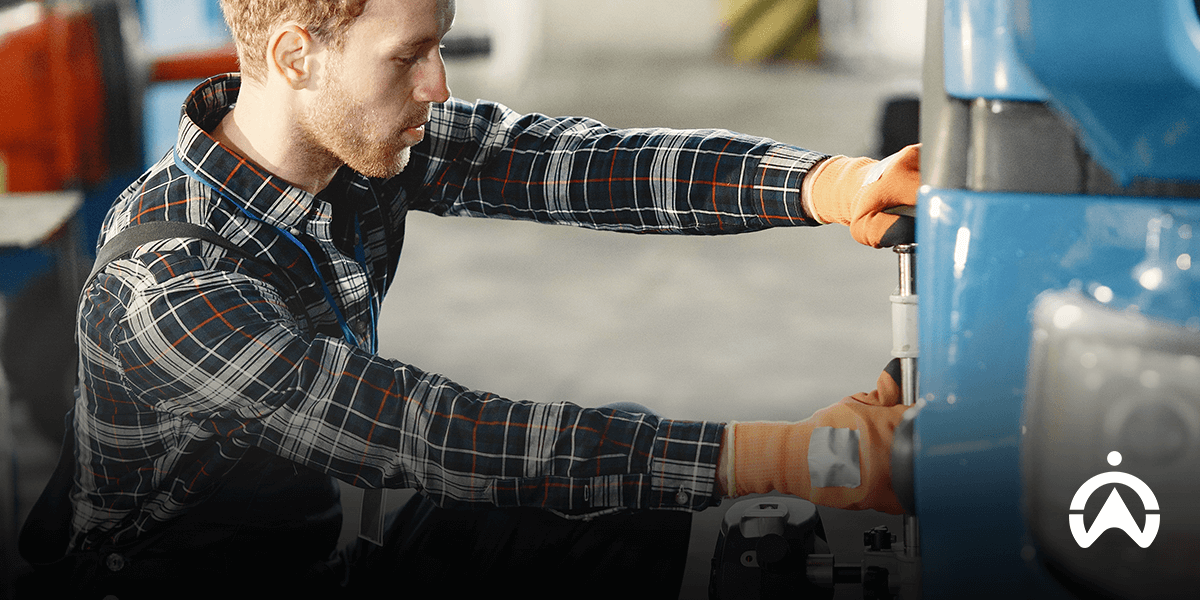
Worker repairing vehicle in garage as part of predictive maintenance.

How does predictive maintenance work?

Predictive maintenance works through data analysis. The data comes from telematics devices and sensors. Through these technologies, the system can follow the patterns of different components to notice unusual behaviour, which could be an early sign of wear & tear. The system then sends out alerts of these faults, so you can attend to them before they cause breakdowns.

Let’s look at the three main components of predictive maintenance.

Telematics data

Telematics systems collect a vast amount of data from the vehicles to the central system. Through this, you can get more information on things like odometer readings, driving habits, engine conditions, battery health, and tyre pressure.

Internet of Things (IoT)

IoT sensors make it possible to continuously monitor critical vehicle components. They typically keep an eye on things like the temperature, pressure, or vibration of certain parts. You’ll often find IoT sensors around the engine, brakes, suspension system, or the electrical circuit. They work together with telematics devices for the transmission of information.

Artificial intelligence (AI) and machine learning (ML)

You’ll find AI technology in nearly every smart innovation these days, and preventive maintenance is no exception. AI analyses sensor data and looks for patterns in order to predict potential failures. This part of AI that focuses on learning the patterns of vehicle components is known as machine learning.

Are preventative maintenance and predictive maintenance the same thing?

No, the terms ‘preventative maintenance’ and ‘predictive maintenance’ are often used interchangeably, but they aren’t the same thing. The difference between the two is that preventative maintenance focuses on sticking to service reminders to keep your fleet in top shape. Predictive maintenance is about anticipating vehicle issues through sensors, AI, and telematics devices.

So basically, predictive maintenance can be seen as a type of preventative maintenance method.

Cutting fleet costs with Cartrack’s predictive maintenance

At Cartrack, we offer remote diagnostics and real-time maintenance alerts to help you cut down fleet costs and improve productivity. With us, you get an entire preventative maintenance system, which includes things like scheduling reminders and risky driving alerts.

Here’s a closer look at how our system works.

Remote vehicle diagnostics

Remote vehicle diagnostics simply means that our system can collect data using sensors and onboard computers from various vehicle components, like the brakes, transmission, and engine. From there, you’ll get alerts of faults from those vehicle parts and take necessary action. For example, if your brakes are worn out, the system will notify you, and you’ll be able to replace them before they fail.

Digital inspection forms

With our fleet maintenance system, you can create vehicle inspection forms that drivers can access via the Cartrack App.  Each driver can then fill out the form to check for worn-out parts of the vehicle they’re using for the day. This can be done before starting a trip or afterwards.

Drivers can even take photos of the worn-out parts and upload them to the app. You’ll receive all the submitted forms and all other supportive evidence so you can see which vehicles have parts that need to be repaired or replaced.

Service reminders

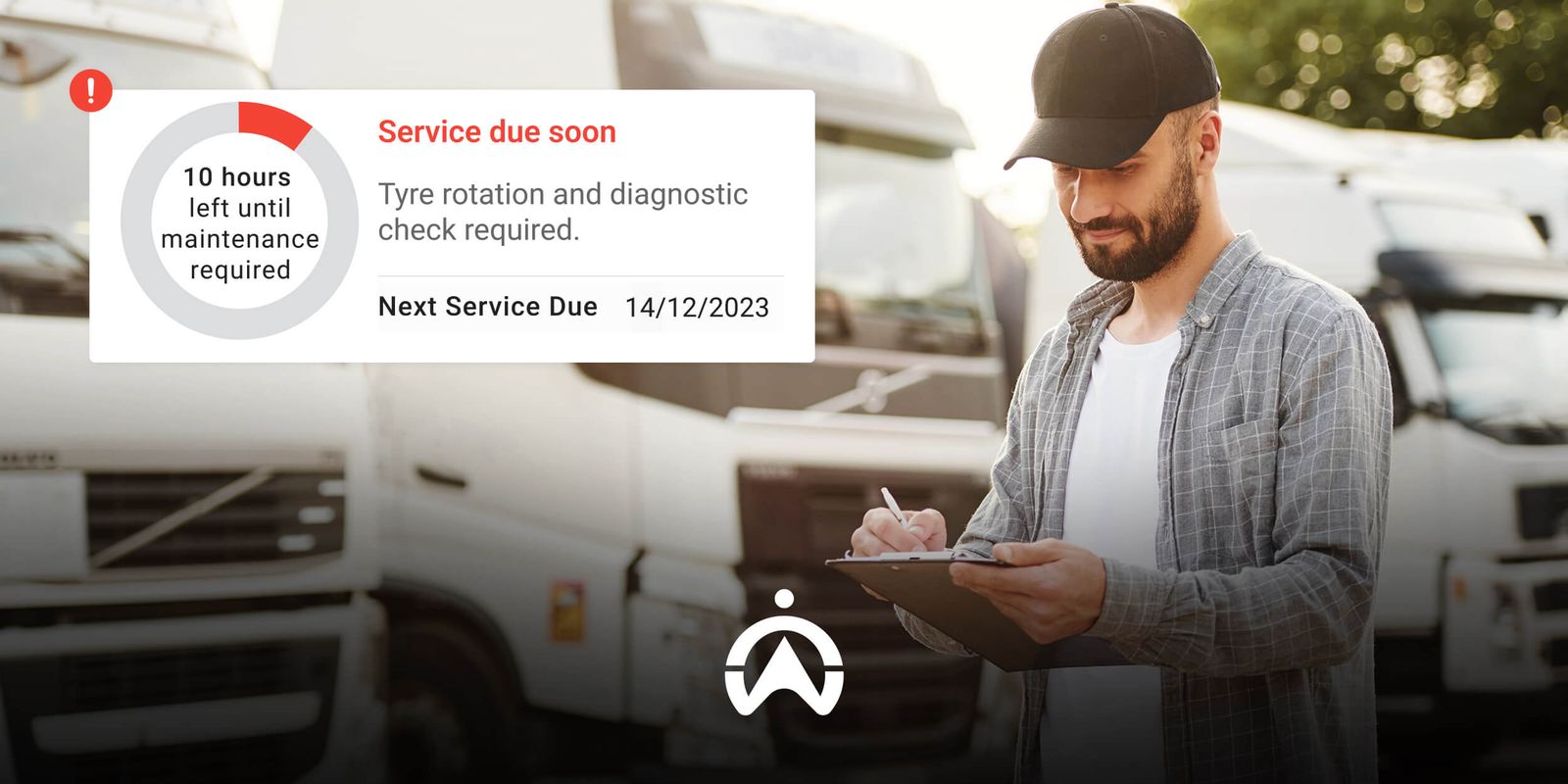
You can import the owners’ manuals for all your vehicles and their service history reports into your system so you can have a digital record of service dates and get reminders. This ensures that you have all your vehicle maintenance-related information on one platform, instead of having to search through spreadsheets and emails to keep up.
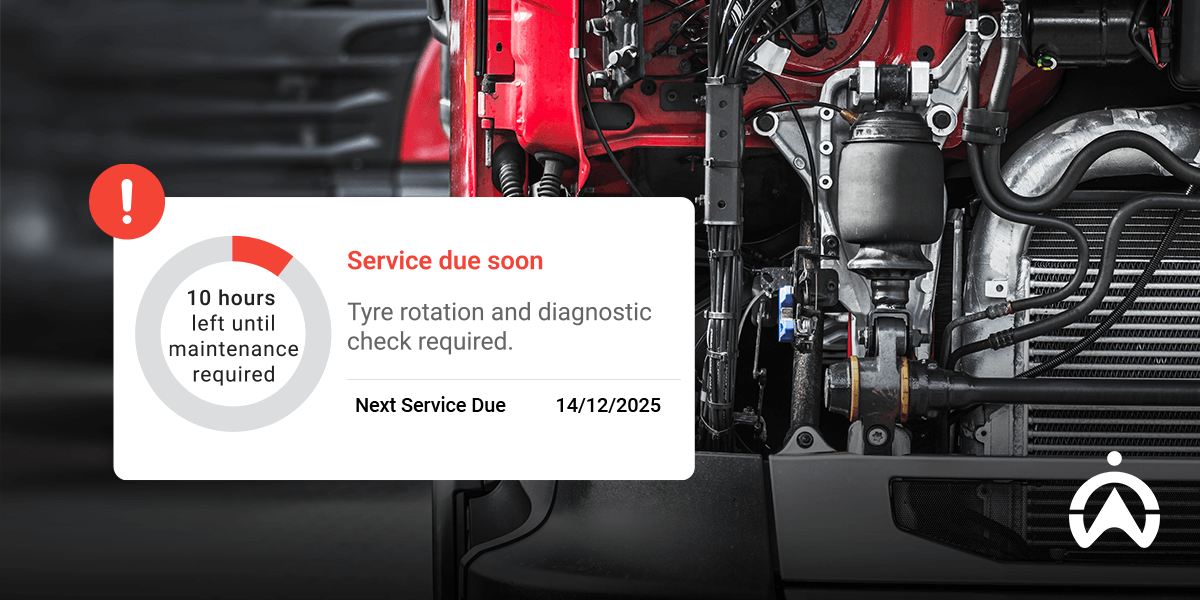
Vehicle maintenance alert showing service countdown for predictive maintenance.

Case study: How Wisani Burial Society uses our maintenance services and other fleet management tools

Wisani Burial Society is a funeral business that was established in 1995. Their main goal is to offer affordable and reliable funeral services to diverse communities. They rely on their fleet’s efficiency to provide high-quality funeral services.

Wisani Burial Society had challenges with making timely deliveries. Things like hot weather, traffic, and vehicle breakdowns have serious repercussions, given the sensitivity of the contents they transport. They needed a system that could help them easily locate their vehicles and avoid delays so they could meet customer needs. So they invested in the Cartrack fleet management system.
‍

Here’s how we helped them:
‍

Control room assistance

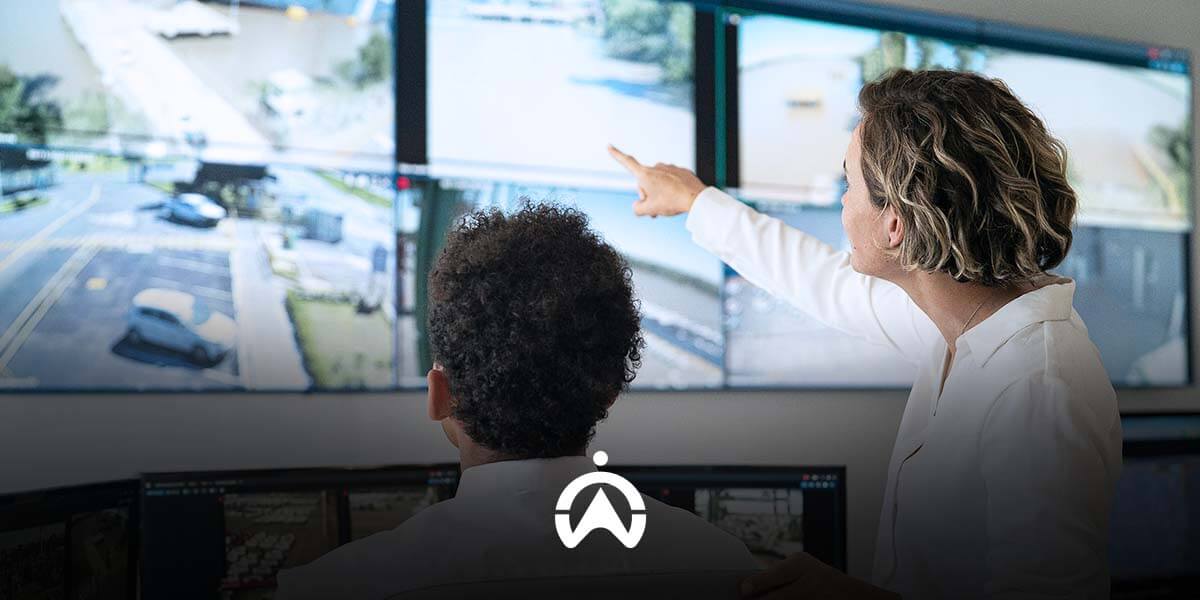
At peak times, Wisani Burial Society can monitor over 300 vehicles simultaneously through their control room using our web platform. They can see the exact whereabouts of all vehicles and track productivity. It also makes it easy to quickly dispatch assistants in case of a breakdown.

Real-time vehicle diagnostics

Our real-time vehicle diagnostics and scheduled maintenance reminders help them quickly see which vehicles need maintenance and when. This way, they can reduce the chances of breakdowns and optimise vehicle usage.

Minimise breakdowns and save thousands with Cartrack’s predictive maintenance solutions

Our predictive maintenance tools and preventative maintenance system make it easier to stay in touch with fleet upkeep, saving your business from setbacks that can cost thousands. You’ll not only save costs but also the lives of your drivers. Reach out to us and get a vehicle maintenance system you can trust.

Frequently Asked Questions about predictive maintenance

What role does fleet maintenance play in optimising productivity?

Fleet maintenance plays the crucial role of minimising delays due to breakdowns, which optimises productivity. It ensures that your vehicles are always running on the days they should be, improving reliability. With proper fleet maintenance, there are fewer accidents caused by mechanical failure, which improves driver safety and efficiency.

Can AI improve predictive maintenance?

Yes, AI can significantly improve predictive maintenance. It is one of the vital components of predictive maintenance technology. AI analyses machine data to predict breakdowns and gives warnings before the situation worsens. This improves your maintenance planning, ensuring your vehicles are scheduled for repair ahead of time.

What is the 10% rule of preventive maintenance?

The 10% rule of preventive maintenance states that preventative maintenance should ideally be done within 90% of the scheduled time period and no more than 10% past the due date. For example, if one of your vehicles requires servicing every 100 days, the maintenance should happen within 90 days or no later than 110 days.
Best Fuel Management System in Namibia

The best fuel management system in Namibia is Cartrack’s Fuel Management Software, giving you the accuracy and insights you need to make impactful changes in your business. Between fuel prices constantly climbing and the risk of petrol theft looming, keeping your fleet’s fuel consumption under close inspection is so necessary. That’s why a reliable fuel management system is vital to your business.

The ‘best’ fuel management system for your business is one that delivers on every front, intelligently addressing fuel theft issues, performance matters, fuel card integrations, and more. A study on industrial fleets revealed that using AI systems to optimize driving behaviour can cut fuel consumption by 12–15%, showing how the right system can help transform your business.

In this blog, we’ll inform you on what to look for in a top-notch fuel management system and explain why an advanced option always beats a basic one. Once you’ve got a complete picture, you’ll begin to understand why Cartrack’s solution is your perfect fit.

What defines the best fuel management system in Namibia?

The best fuel management system in Namibia is defined by its ability to give businesses accurate, advanced, and complete control over fuel consumption in their fleet. Cartrack’s MiFleet is the perfect example of this, providing sophisticated systems and comprehensive results.

Cutting-edge systems like MiFleet take fuel monitoring to a whole new level offering features that include trip history and data, fuel card insights, instant notifications, and more. Your business’s ideal system should consider local-specific variables, including measures to tackle issues such as fuel theft and power disruptions.

What makes a fuel management system “the best” for your business?

What makes a fuel management system ‘the best’ for your business are features like reliable hardware, adaptability across industries, and quality automated reporting.

Here’s what the right system should offer you:

  • Suitability across industries: There’s transport, construction, logistics, field services, and more. The right system should be able to suit any business.
  • Scalability: This is especially true for mixed or growing fleets. The fuel system should work just as well for bikes and vehicles as they do for yellow machinery.
  • Reliability of hardware and precision of sensors: The best insights are accurate ones. Reliable sensors and quality hardware ensure your readings stay precise, no matter the conditions.
  • Quality of automated reporting: Automated reports make it much easier for you to read information and quickly identify anomalies. They also minimise human error.
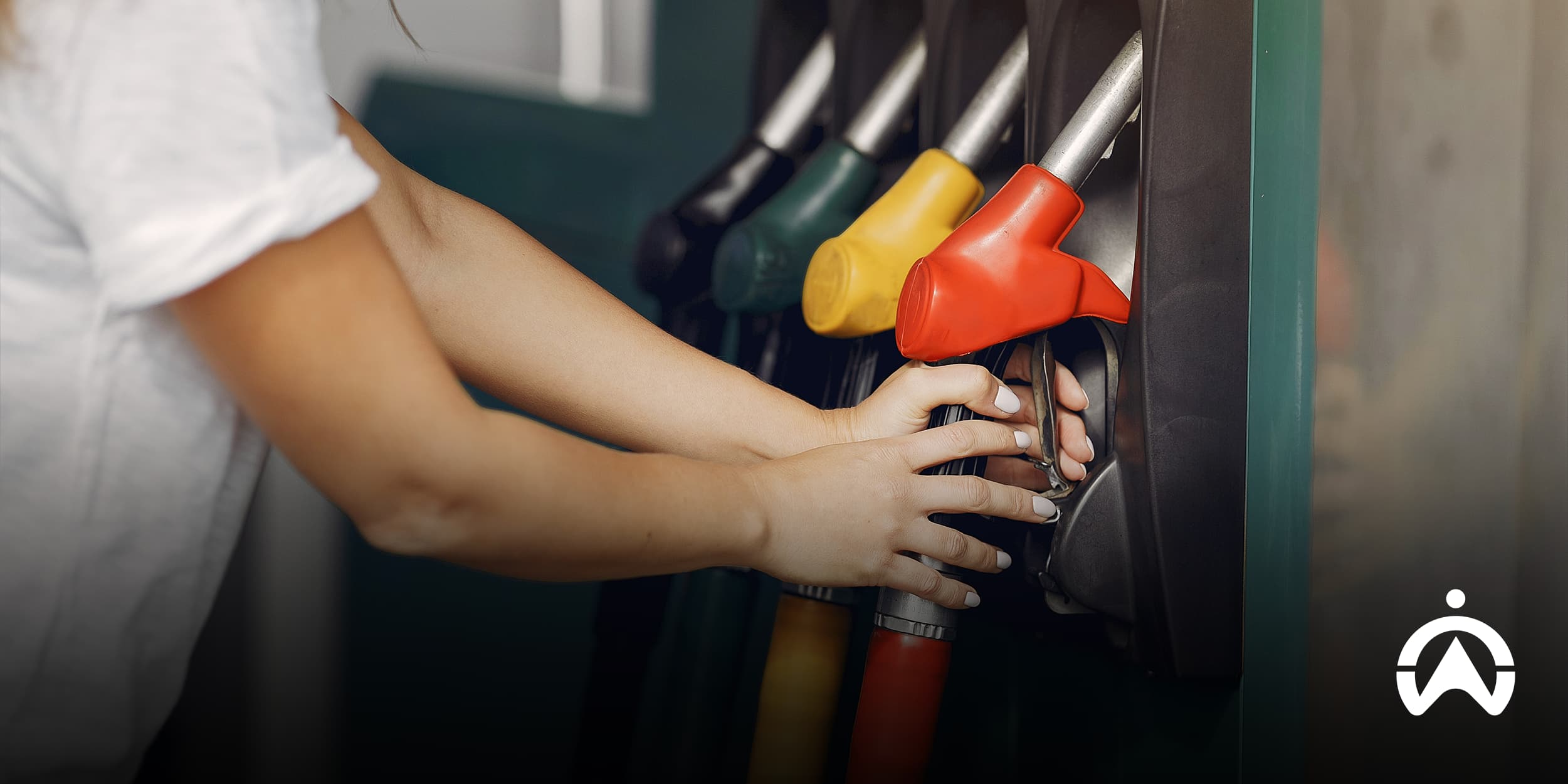
Person reaching for fuel nozzle at station, highlighting fuel management system South Africa.

Why do Namibian businesses need fuel management now more than ever?

Namibian businesses need fuel management now more than ever because of the demand to tackle serious operational risks. These include rising running costs and threats to fuel safety.

These are the challenges and threats that need to be tackled:

  • Rising fuel prices and operational costs, especially considering that fuel makes up the bulk of running expenses.
  • Fuel theft incidents, syphoning, and invoice-mismatch issues, because even the smallest oversights here add up very quickly.
  • Automated processes that reduce human error, because automated data fills potential data gaps and brings about better accuracy.
  • Data-driven insights that offer business savings, transparency, and stability; these trends and patterns can help maintain predictable budgets and help reduce expenses.

Comparison table: What does the best fuel management system include?

The best fuel management system includes features like driver insights, trip histories, and theft prevention functions. Your business shouldn’t accept just a glimpse of what’s happening; you need a thorough system that provides accurate insights into every part of your fuel usage.

Look at this quick comparison breakdown that highlights the importance of an advanced system:

Feature / Capability Basic fuel monitoring tools Advanced fuel management system (recommended for businesses)
Real-time fuel levels Sometimes ✔️
Automatic alerts (drain, refuel, abnormal use) ❌ ✔️
Fuel-card integration ❌ ✔️
Driver behaviour insights ❌ ✔️
Route and trip reporting ❌ ✔️
Maintenance and vehicle health ❌ ✔️
Automated audit-ready reporting Limited ✔️
Theft-prevention tools Limited ✔️

Practical ways businesses save with advanced fuel management

The practical ways in which businesses save with advanced fuel management include optimised routes, reduced theft, and better dispatching.

A system like MiFleet could benefit your business through:

  • Reduced theft and misuse
  • Less idling and inefficient driving
  • Controlled fuel budgets
  • Fewer unnecessary trips
  • Predictive maintenance tools
  • Improved dispatching
  • Minimised administrative load

Vital features to look for in a fuel management system

The vital features to look for in a fuel management system include accurate fuel reporting, instant notifications, and a smooth web & mobile app user experience. While you seek out the solution that best matches your business needs, always remember to focus on the one that helps you easily understand and improve fuel-related matters.

Key capabilities include:

  • Consolidated fuel-use reporting to help you quickly spot fuel waste, but also support budgeting and expense estimations.
  • Vehicle health and maintenance insights to help you keep track of issues that could add to fuel waste, like flat tyres or overdue servicing.
  • Tamper-proof data logs that are secure and set to support compliance matters.
  • Web and mobile app accessibility to allow you and your drivers to take action from anywhere.

How to choose the best fuel management system for your fleet

To choose the best fuel management system for your fleet, start by looking at your fuel-related pain points, deciding what your operational needs are, and then looking at aspects like pricing and hardware. You’ll want to pick a system that’s going to give you the most value and long-term success.

Follow these steps to choose the best fit for your business:

  • First, look at fuel-related pain points and examine where the losses or inefficiencies are.
  • Discover your operational needs: do you need better fuel card control, or does there need to be more focus on fuel theft?
  • Check the quality of hardware and data accuracy, because proven accuracy should really anchor your whole system.
  • Evaluate the fuel management platform so that you’re confident and comfortable using the tools at your disposal.
  • Make sure your integration options work and that third-party systems link to encourage data consistency.
  • Prioritise local support, training, and onboarding, because effective implementation is just as important as the tools themselves.
  • Confirm transparency on pricing and infrastructure so that you have a clear understanding of costs and where your money goes.
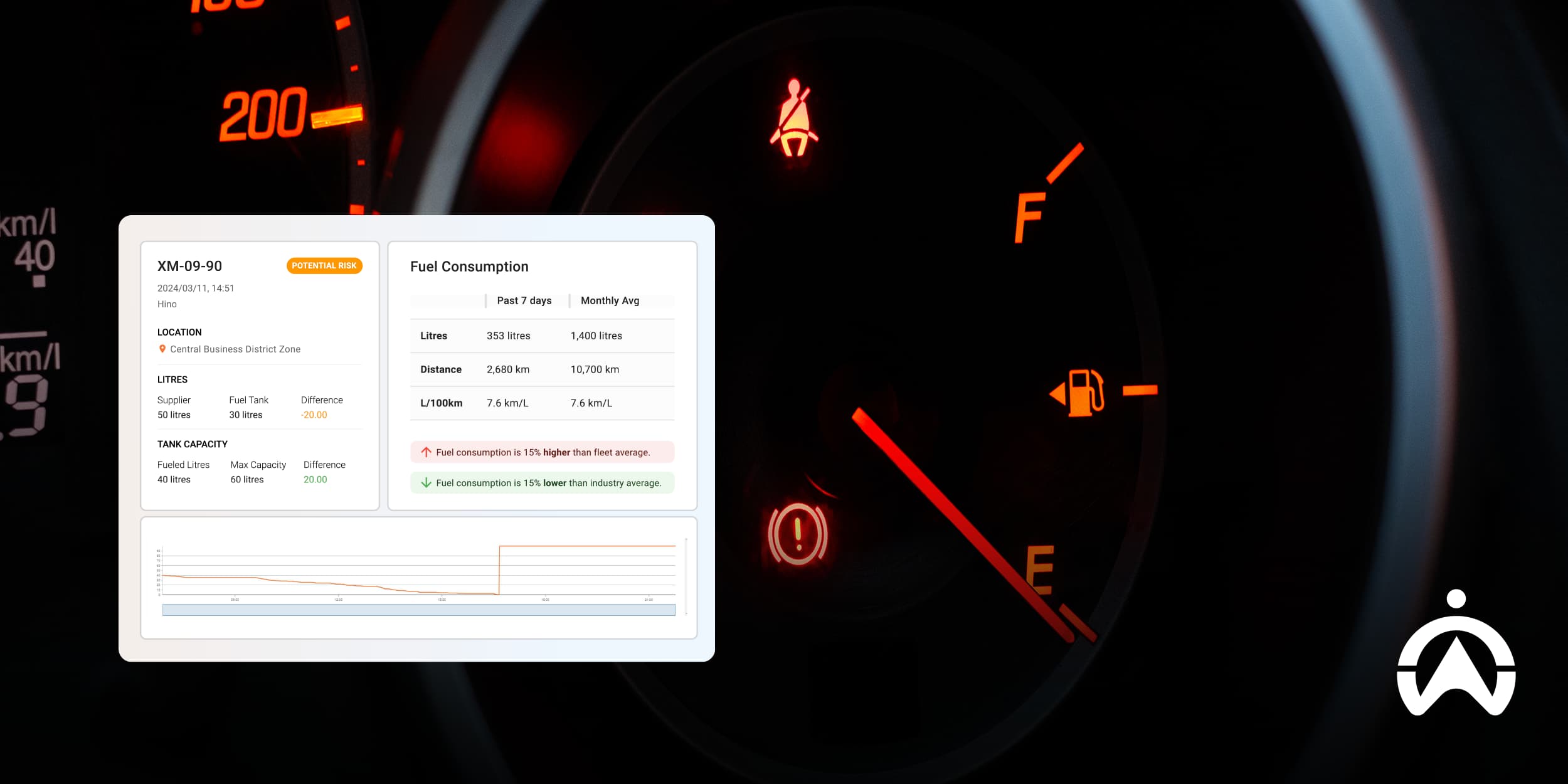
Vehicle dashboard showing fuel data and alerts for fuel management system South Africa.

How Cartrack delivers one of Namibia’s leading fuel management systems

Cartrack delivers one of Namibia’s leading fuel management systems through being specifically designed to give you full oversight and total control. At the core of our fuel management system is telematics, which guarantees accurate tracking of fuel consumption and refuelling habits.

IMPORTANT!! With MiFleet, you get a complete overview of your costs, which can be broken down not only into fuel but also into tolls, fines, maintenance, and more. Carefully manage your insurance, maintenance, and miscellaneous documents by keeping soft copies of all the necessary records in one place. What’s more? Import and export documents and trip histories with total ease.

Outside of MiFleet, we have numerous other features that’ll support your fuel management improvement. Driver monitoring & score carding, route optimisation, and vehicle diagnostics are just some of the features that’ll support your daily operations. Overall, Cartrack’s strong support network ensures your business gets the guidance and help required, turning MiFleet into a reliable choice for long-term fuel management.

Final takeaway

Getting reliable up-to-the-minute fuel data is necessary for any Namibian company hoping to keep its costs in check. A good fuel management system is all about getting the accuracy right, being able to scale as you grow, and having a clear view of everything that’s going on across all your vehicles and assets.

With smart fuel tracking and valuable data, Cartrack’s MiFleet gives businesses the tools to really get a handle on how they’re using fuel, reduce wasteful habits, and iron out as many of the operational kinks as possible. It’s a solid, forward-thinking solution for fleets that are serious about protecting their profits and improving performance.

Improve your efficiency, quickly identify anomalies, and manage your fuel with ease. Kick off your journey with Cartrack today!

FAQs

What are the latest fuel management trends?

The latest trends in fuel management are all about embracing AI to make smarter decisions, adopting electric and hybrid fleets, and the impact of IoT on fleet operations. For us at Cartrack, it’s not just about being on top of these trends, but about ensuring our systems are always adapting to stay ahead of the game.

What industries benefit most from fuel monitoring?

The industries that benefit the most from fuel monitoring are generally those with vehicles or mobile assets in transport, logistics, construction, mining, field services, and delivery. Basically, any sector where vehicles operate long hours, use a lot of fuel, and are at risk of theft. This makes them perfect candidates for businesses looking to improve productivity.

How accurate are fuel management systems today?

Today’s fuel management systems are highly accurate thanks to top-notch technology like advanced sensors, telematics hardware, and instant data processing. These do a brilliant job of keeping track of tank levels, refuelling, and even syphoning. The result is that you can trust the feedback you get from them every time.

What is the best fuel reward programme for businesses in Namibia?

The best fuel reward programme for businesses in Namibia depends on your company’s needs, fuel spending patterns, and banking partners. However, fuel retailers such as Shell, Engen, and Total Energies are popular options, while banks like FNB Namibia, Standard Bank Namibia, and Bank Windhoek are commonly used for business fuel partnerships and rewards.

Fleet Benchmarking: How to Really Measure Performance

To really measure performance in fleet benchmarking, you need to spot key KPIs (key performance indicators), collect that relevant information, and compare it to top benchmarks so you can pinpoint the gaps that need attention. This isn’t just about checking off items on your business to-do list; it’s about significantly growing and evolving your business in ways that matter.

Fleet benchmarking is the best way for you to ensure that your business stays competitive. You won’t put out fires as they happen, but prevent them from happening altogether. This shows that older fleets can impact performance metrics.

In this blog, we’ll guide you through how fleet benchmarking really measures performance, how to spot the actionable gaps, and how Cartrack can make staying competitive a breeze for your business.

What successful fleets get right about measuring performance

Fleet benchmarking is comparing your fleet’s performance metrics with industry standards or similar fleets to spot areas for improvement. They reach success by using insights to make smart business decisions that strike a balance between KPIs and business goals. This is how you move from guessing to knowing exactly how your business operates.

Fleet benchmarking measures business performance by looking at metrics such as maintenance costs, fuel use, and driver behaviours, then comparing them against best practices. Think of it as comparing your lap times to the top drivers on the track: you can only improve your speed once you know who’s leading and by how much.

There are two types of fleet benchmarking:

  • Internal benchmarking checks how different parts of your operations (like vehicle types or regions) are performing against each other to identify the best practices within your own team.
    ‍
  • External benchmarking takes a broader view, comparing your performance to other fleets or industry standards to see where you stand.

Why should fleets benchmark performance?

Fleets should benchmark their performance to stay competitive and consistently perform to the best of their ability. Fleet benchmarking is the simplest way for you to commit to remaining accountable, attentive, and proactive for the sake of your business.

Accountability is driven by setting realistic targets that encourage staff to look at their performance and improve where possible. This kind of transparency can be uplifting while also motivating you and your staff to practise more responsible and productive behaviours at work.

Benchmarking also encourages data-based decision-making. When you have the facts at hand, you can be confident that the improvements you want to implement (i.e., optimising routes or scheduling preventative maintenance) will actually strengthen your business’ productivity.

What does an effective fleet benchmark measure?

An effective fleet benchmark measures metrics that directly influence customer service, expenses, and performance.

These are some of the key metrics:

  • Maintenance and downtime: Preventive maintenance means fewer unexpected breakdowns and expensive downtime.
  • Driver behaviour and safety scores: Focusing on safe and responsible driving means fewer accidents and better insurance premiums.
  • Vehicle usage and route efficiency: Optimising routes and using assets effectively means there’s no idling or wasted assets.
  • Compliance and law adherence: Sticking to the law and regulations means you’re not paying hefty fines and damaging your business’ name.

Here’s an example of good vs bad benchmarking:

  • Good benchmark: Driver safety scores consistently above 90%, with low instances of aggressive driving habits. There’s evidence of consistent risk management.
  • Poor benchmark: Safety scores below 75% with regular harsh events. There isn’t much evidence of feedback or coaching.

Example of a fleet benchmarking scorecard

Picture your fleet benchmarking scorecard as a ‘report card’. With this in mind, consider this example:

  • Fuel economy: B– (NAD 4.85/km vs NAD 4.20/km benchmark)
  • Utilisation: C+ (68% vs 80%)
  • Driver safety: B (82% vs 90%)
  • Downtime: C (14 vs 8 days)

💡 TOP TIP TO REMEMBER: Think of industry benchmarks as a compass, rather than a GPS. It points you in the right direction, but it’s ultimately up to you to chart the course that best suits your fleet’s needs. Just like in school, the goal isn’t perfection; it’s progress.

Two professionals reviewing fleet performance data to illustrate fleet benchmarking.

What are the four stages of fleet benchmarking?

The four stages of fleet benchmarking are planning & defining objectives, collecting data, taking action and implementation, and reviewing & monitoring. Fleet benchmarking is most successful when there’s a solid structure to the process. Every new change builds on the last, turning that valuable data into the next big business improvement.

These are the four steps of the process:

  1. Planning and defining objectives: Define what you’re benchmarking and why. You want the goals you set to be realistic and beneficial to your business, so identify the KPIs that align with long-term growth.
    ‍
  2. Data collection: Once you’ve set your goals, collect all the necessary information from reports or your fleet management platform. Remember, the more accurate your data, the better the bigger picture will be. From there, you can clearly see patterns and gaps in performance.
    ‍
  3. Taking action and implementation: Spot those gaps and then create a plan of action. For example, if high fuel spending is the problem, route optimisation or driver training could be the solution.
    ‍
  4. Review and monitoring: Fleet benchmarking is an ongoing process. Reviewing and monitoring are how your business stays competitive in this ever-changing market. Doing this creates a culture of continuous improvement in your business.

Common mistakes to avoid when benchmarking

The common mistakes to avoid when benchmarking include benchmarking without context, monitoring useless data, not taking action, and ignoring consistent updates. You could put all the effort into fleet benchmarking, but if you’re doing it wrong, your efforts could be futile.

Keep these errors in mind to avoid slowing down progress:

  • Benchmarking without context: If you compare your fleet incorrectly, i.e., to the wrong industry or region, then the results could be wrong or confusing. Always benchmark with the right context in mind and compare against the right industry, fleet size, etc.
    ‍
  • Overloading on metrics or tracking unimportant data: Tracking too much information can drown out the relevant data. Always focus on which metrics or KPIs you need to track for business growth.
    ‍
  • Not acting on insights: Collecting the necessary information but not doing anything with it leads to wasted efforts. After gathering data, the next step is to use that information to implement the necessary change. Create a plan of action to address those business gaps.
    ‍
  • Ignoring ongoing data validation or updates: Over time, data accuracy becomes outdated. Old figures, inconsistent reports, and unverified sources can steer you towards poor business choices. Regularly check your insights and update your benchmarks to match your fleet’s current performance and trends.
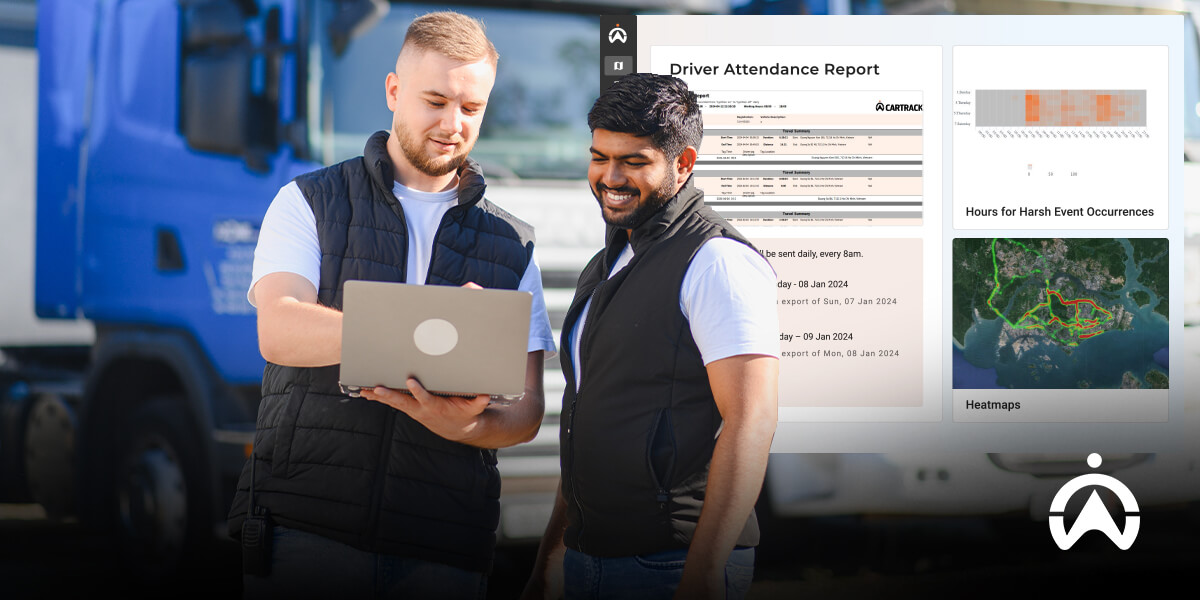
Team reviewing driver attendance report by truck for fleet benchmarking.

How Cartrack simplifies fleet benchmarking

Cartrack simplifies fleet benchmarking by providing you with all the insights you’d need to do so. As we’ve discovered, benchmarking is only as effective as the strong and accurate insights behind it. With Cartrack, you get a smart and straightforward platform to track, compare, and take action with total confidence.

Here’s how we stand out:

  • Data visibility: You have a complete overview of all the information you’d need on Cartrack’s FleetWeb platform. Every aspect of your fleet is covered, from fuel consumption and driver habits to maintenance. This makes it that much easier to spot those ever-elusive business gaps.
    ‍
  • Custom reports and KPIs: FleetWeb has automated reports that you can customise to make reviews a simple task. You can gather whatever information you need without worrying about doing it all manually.
    ‍
  • Driver behaviour analytics: We know how important safety is to your fleet productivity, which is why we have driver monitoring and scorecards on offer. You can coach the drivers needing help, reward those who are practising safe habits, and introduce incentives for all.
    ‍
  • Simplified and automated information: Cartrack takes the hassle out of collecting data. Automation means you don’t have to spend hours looking over numbers, and you can quickly and confidently get to implementing the changes you need to raise productivity.

Final takeaway

Fleet benchmarking is the key to your business’ lasting success and constant improvement. The fleet industry is an ever-evolving one, meaning costs are constantly rising, customer demands are growing, and the need to have full visibility is weighing heavily.

Fleet benchmarking is how you can gain all the knowledge at hand and stop speculating about how your fleet compares. Cartrack can make this process that much simpler for you, providing accurate and automated data you can turn into a valuable business advantage.

Are you ready to benchmark smarter and consistently outperform? Book a demo and let us show you how your fleet really performs.

FAQs

How often should a fleet be benchmarked?

A fleet should be benchmarked at least once a year, although it can be every quarter if you’d prefer something more regular. This can also depend on how rapidly the market is growing. Regularly reviewing benchmarks keeps your data updated and your business goals in line with your plans for regular improvement.

Can small fleets also benefit from benchmarking?

Yes, small fleets can benefit from benchmarking. Growth and development aren’t reserved for bigger businesses, and smaller businesses can also make the most of their resources. Through benchmarking, smaller operations can cut costs, increase vehicle longevity, and improve driver performance, without needing a massive team or fancy infrastructure.

How do I know which fleet benchmarking metrics are most relevant for my business?

You can know which fleet benchmarking metrics are most relevant for your business by seeing which ones impact your profits the most. Driver habits and CPK (cost per kilometre) are examples of some key metrics. It ultimately depends on what you’ve defined as your core objectives.

How long does it take to see the results of fleet benchmarking?

It typically takes several months before you start seeing tangible results from fleet benchmarking, but you could even be seeing results in a few weeks. The results that reflect quickly are usually from metrics like driver coaching or fuel management.

Fleet Maintenance Management Software: Run Your Fleet Smarter

Fleet maintenance management software helps you run your fleet smarter by making it easier to monitor vehicle upkeep. Gone are the days when you had to manually check for everything related to the health of your fleet of vehicles. With fleet maintenance management software, you’ll receive reminders of service dates and early warnings of faults in your vehicles.

The Fleet Maintenance Software market is currently showing fast growth as more companies seek ways to simplify their operations, save costs, and remain compliant. According to Verified Market Research, the Fleet Maintenance Software Market size was valued at USD 31.98 billion in 2024 and is projected to reach USD 14.08 billion by 2032.

With that said, let’s get into how you can use our maintenance software to handle your fleet vehicle health more easily.

Why fleet maintenance management software makes running your fleet a lot easier

Fleet maintenance management software makes running your fleet easier by giving you detailed information on the health of your fleet so you can plan ahead. Fleet maintenance is often overlooked, as managers are always pushing to meet client expectations. It’s easy to forget about service dates and checking for vehicle faults when your main focus is meeting deadlines.

To put things into perspective, let’s get into how a regular workday goes for a fleet manager who uses maintenance software vs. when he doesn’t. His name is Themba, and he runs a fleet of 80 delivery trucks.

A day in the life of a fleet manager who runs a business without maintenance management software

Morning:

Themba normally starts his day by checking his emails and responding to urgent matters. He then goes through a pile of paperwork, checking driver logs. Thereafter, he goes through different spreadsheets to view past vehicle service records and see which trucks are due for maintenance.

Themba thought this would be quick, but it ends up taking him hours, as there are some missing dates which require him to go back and forth between spreadsheets and other documents.

Afternoon:

By midday, Themba is already behind schedule. He starts receiving calls from drivers. During these calls, he finds out that three trucks have broken down and the drivers need urgent help. From there, Themba needs to organise repairs and also let clients know that their deliveries will be late. He also needs to go back to the spreadsheets and make changes as more vehicles are unavailable.

End of day:

Dealing with these sorts of delays is what puts Themba further behind schedule and results in his time being wasted sorting out the costs of the repairs and rescheduling vehicles for deliveries. Themba didn’t complete his task for the day. His reactive fleet maintenance tendencies leave him stressed out and having no time to plan ahead. This wouldn’t have happened had he invested in fleet maintenance technology.

A day in the life a fleet manager who uses maintenance software

If Themba were to invest in fleet maintenance management software, this is what his day would be looking like instead:

Morning:

Themba logs into a fleet management platform and checks for service reminders. He can see which trucks need to go in for servicing. He then plans upcoming delivery schedules based on the knowledge he just gained, making sure he only books deliveries based on the number of cars that will be available on each day.

Afternoon:

During the day, Themba checks in on vehicle health data just to ensure everything is okay. He notices alerts of worn-out brake pads for two vehicles. He then calls his mechanic to schedule replacements before they get worse and cause accidents. Themba then updates delivery schedules.

End of day:

Themba reviews cost and downtime reports through the fleet management dashboard and shares this information with other managers. He then updates compliance records based on the information received and starts planning his tasks for the next day. Themba feels more confident in his role, because he’s always in the know when it comes to his fleet and is hardly ever blindsided.

How smart maintenance software makes all the difference

Smart maintenance software helps keep everything on schedule by keeping you in the loop with everything related to the health and safety of your vehicles. This is done through:

  • Automatic scheduling
  • Preventative maintenance
  • Detailed insight

Paired with regular vehicle inspection, this software gives you a fleet that runs smoother.

Here’s how this software makes the difference:

Automation that keeps everything on schedule

You can import your fleet’s service date schedule as per the manufacturer’s requirements onto your fleet management system. This creates automatic service scheduling and ensures that you get reminders while checking on other fleet reports, so you don’t miss dates.

Predictive maintenance that prevents downtime

Predictive maintenance happens through the power of CANBus technology. CANBus is a digital language that enables vehicle parts to communicate with each other. Through this, they can share information on how vehicles are performing. CANBus helps you get early warning signs of issues with vital vehicle parts like the engine. When these issues are detected early, you’ll be able to prevent a breakdown from happening.

Insight that drives better decisions

With fleet maintenance software, every maintenance activity and cost is automatically recorded. This results in detailed reports that show you trends. For example, you’ll start to notice if the same vehicle is always going for repairs, which could indicate that it’s being used more than others. You can then use this information to see how you can equally rotate vehicles. Vehicle maintenance data helps you stick to the budget and see what consumes more money.

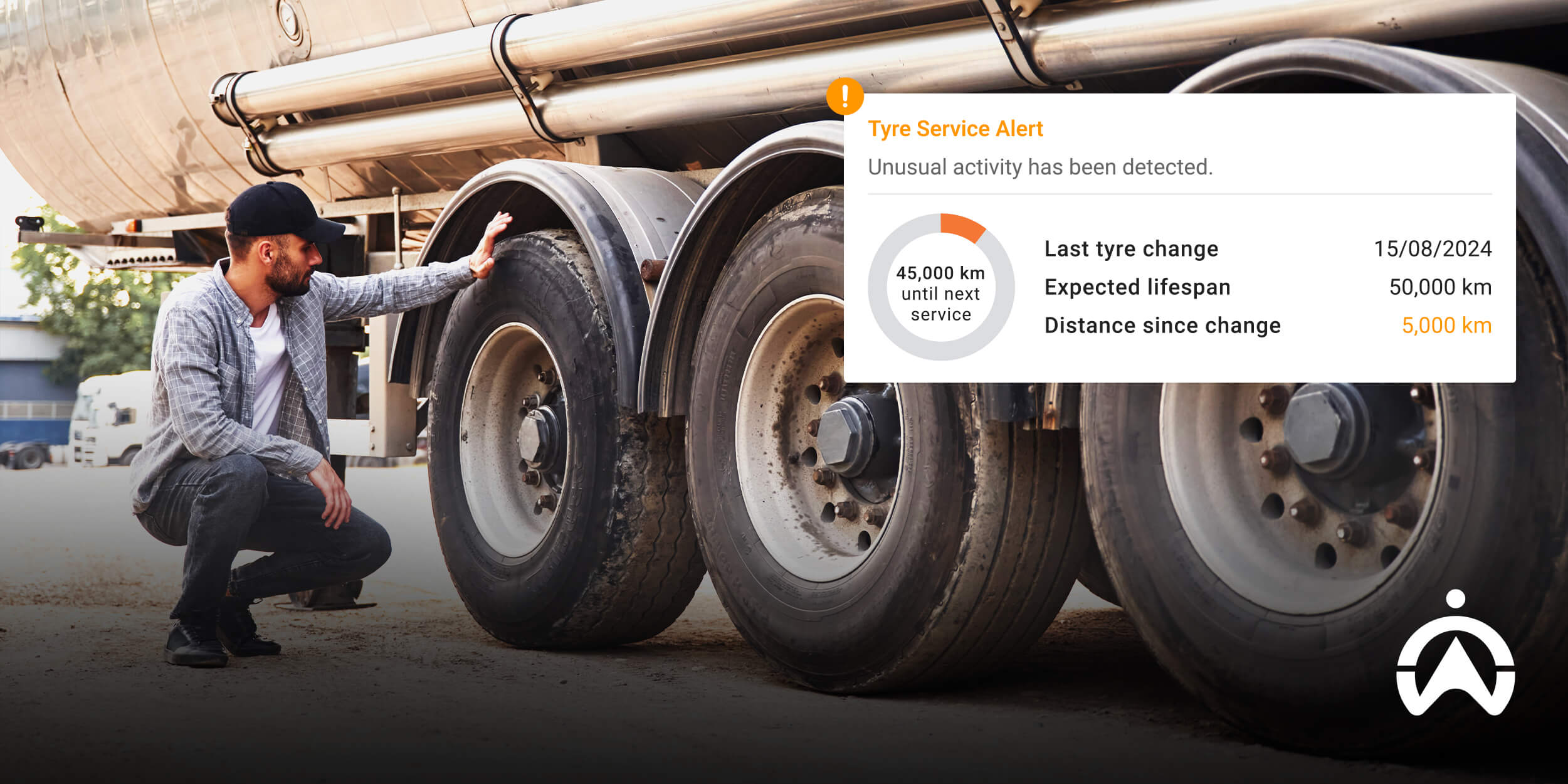
A person inspecting vehicle tyres with service alert supported by fleet maintenance management software.

The not-so-obvious advantages of using fleet maintenance software

The not-so-obvious advantages of using fleet maintenance software include improved:

  • Driver safety
  • Reliability
  • Customer satisfaction
  • Team efficiency

Keeping your vehicles in top shape improves your overall daily operations and gives you more time to focus on other important matters. It also ensures that your business adheres to compliance laws, saving you from heavy fines.

Driver safety

Vehicles are less likely to fail on the road if they’re well maintained. Things like failed brakes, lights that don’t work, or worn-out tyres lead to accidents. Fleet maintenance software ensures that your vehicles are always roadworthy, helping you meet compliance requirements.

Operational reliability

With fleet maintenance management software, your deliveries and schedules will stay consistent. You’ll know of all upcoming service dates and plan your delivery schedules based on the number of vehicles that’ll be available on that day. This makes your business more trustworthy, improves customer satisfaction and reduces service disruptions.

Sustainability

No one wants to buy a vehicle that won’t last long, especially if it’s for business purposes. Through fleet maintenance software, you reduce the need to get new vehicles. Your current vehicles will run cleaner and therefore last longer, giving you a better return on investment.

Team efficiency

With this software, you’ll hardly ever get a call about emergency repairs. Your things will go according to plan most of the time. Your team will be more efficient and productive, leaving you with less to worry about.

Case study: How Concord Cranes uses the Cartrack system for maintenance

Concord Cranes is a company with a fleet of over 180 cranes. They’re based in Midrand but offer crane hire solutions across South Africa and the continent. They specialise in loading, transporting and relocating abnormal loads using their cranes and expert rigging systems.

Concord’s main challenge was that they couldn’t accurately record the number of hours each crane worked daily, which made it hard to know when they needed maintenance. This negatively affected client deliveries, as they couldn’t give their cranes for hire without being sure that they were well maintained and safe to use.

How we helped them:

  1. Specialised power take-off sensors
    Using the Cartrack specialised power take-off sensors, Concord Cranes can monitor their cranes’ on-site working hours and track mileage, as well as the specific equipment used. This sort of data makes it easier for them to see the condition and usage of their cranes, helping them make more informed decisions.
    ‍
  2. Preventative maintenance features
    Our very handy preventative maintenance features help Concord with cutting down costs by reducing the number of cranes that need maintenance because of unexpected breakdowns. This also reduces downtime as they now plan ahead for servicing.
    ‍
  3. Improved reliability
    Through these preventative maintenance measures, Concord Cranes has improved their relationship with their clients. They’re more reliable and efficient. Their ability to plan ahead makes it easier for them to see which cranes will be available on which day, ensuring they never disappoint their customers.

“Using Cartrack’s advanced fleet management, we have been able to increase our operational efficiency to deliver a better service to our customers, as well as effortlessly establish a maintenance cycle that reduces our costs and increases our fleet longevity.” | Gareth Langley, Concord Cranes operations manager.

Beyond technology—the basic vehicle maintenance skills every fleet driver should have

The basic vehicle maintenance skills that your drivers should have include:

  • Checking for essential fluids
  • Checking tyre pressure
  • Understanding warning lights
  • Making minor repairs

Together, these skills help further prevent sudden breakdowns, because your drivers will play their part in maintaining vehicle upkeep.

Most of these tasks can be done before a trip, but drivers should pay attention to these components throughout the day. Here’s a detailed breakdown:

Checking and replacing fluids

Your drivers must know how to top up essential fluids like the engine oil, brake fluid, and coolant. Checking and replacing these fluids prevents engine damage and makes sure that critical vehicle components work properly.

Monitoring tyre pressure

When tyres lose air, they lose their grip, which results in an increase in braking distance. It also damages the tyres and increases fuel consumption. Tyre pressure should be checked weekly for fleet vehicles because of their high mileage. Your drivers should also check if the tyres are cold before starting a trip, as temperature changes can affect tyre pressure readings.

Identifying warning lights

Do your fleet drivers know what the warning symbols on their dashboards mean? Well, that’s another thing you should look into. A recent survey shows that only 7% of drivers feel confident identifying dashboard warning lights. Understanding these symbols is key to proactive vehicle maintenance, driver safety, and the safety of the public.

Performing minor repairs

Minor repairs include things like replacing windscreen wiper blades, jump-starting a battery, and changing tyres. Not every repair requires a mechanic, and knowing how to do it yourself can save time, which may result in deadlines still being met on time.

For example, if it rains and your driver notices that the windscreen wiper blades are in a bad condition, your driver can make a quick stop, replace them, and continue with the trip instead of waiting for someone else to do it.

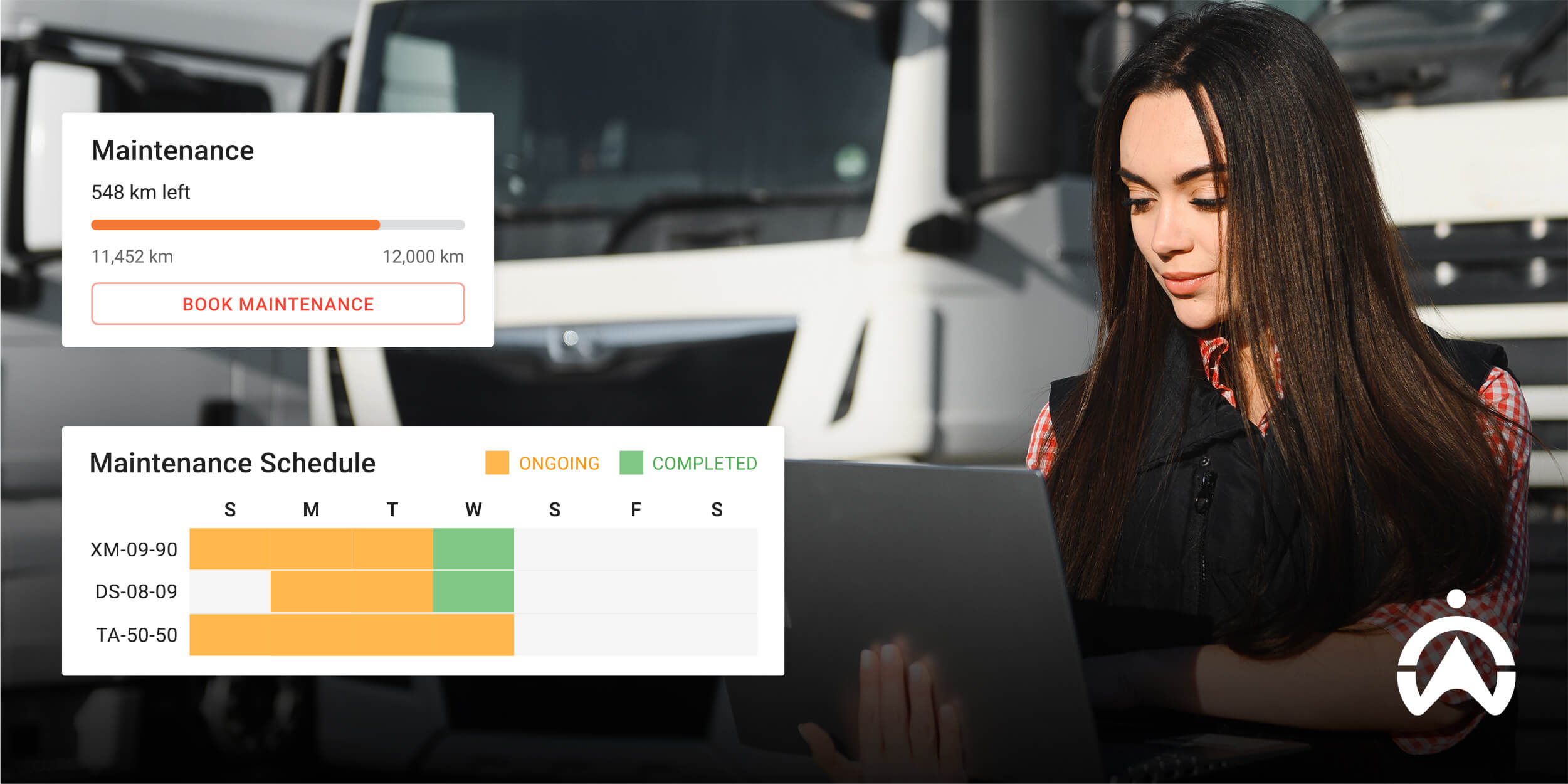
Woman reviewing vehicle maintenance dashboard powered by Cartrack fleet maintenance management software.

Build a more reliable and efficient fleet with Cartrack

At Cartrack, we help you build a more efficient and reliable fleet through early fault detection, service reminders, driver reports, and sensors. Using these tools ensures that you always know more about your fleet’s health, helping you avoid costly surprise breakdowns.

Here are our top fleet maintenance features:

Early fault detection (CAN Bus)

Our CAN Bus solution gives you real-time vehicle diagnostics. Through this, you’ll always know of things like oil and water fluctuations, issues with your engine, worn-out brake pads, or lights that need replacement. This helps you attend to matters before they get worse and cause breakdowns.

Power take-off sensors

The power take-off (PTO) sensors are for vehicles and machinery like tipper trucks, cement mixers, and cranes. Through PTO sensors, you’ll know how often your machinery is being used and for how long. This makes it easier to do maintenance planning that’s based on usage.

Scheduled service reminders

You can import vehicle service dates into your fleet management system so you can get reminders on our platform. Having all maintenance replacement information on one platform reduces the back and forth, saving you time and making it easier to maintain vehicle upkeep.

Driver reports (harsh driving habits increase wear & tear)

Proactive maintenance isn’t just about receiving alerts and replacing parts; it also requires you to ensure that your drivers are treating the vehicles well. Through our telematics system, you’ll be notified when drivers are engaging in habits that radically increase vehicle wear & tear, such as harsh braking. This helps you address these issues directly with the drivers and educate them on the importance of careful driving for safety and fleet longevity.

By partnering with us, you ensure that your vehicles are roadworthy, you save costs, and your business becomes more reliable. Contact us today and gain more control over your fleet operations.

Frequently Asked Questions

What are the 4 types of maintenance?

The four types of maintenance software are:

  • Reactive: Waiting for something to break before fixing it.
  • Preventative: Performing regular inspections and setting reminders of service dates.
  • Condition-based: Monitoring vehicle parts to determine when maintenance work is necessary.
  • Predictive: Using IoT sensors and other technologies to gather vehicle data and receive alerts of any faults.

What is the difference between CMMS and EAM?

The difference between CMMS (Computerised Maintenance Management System) and EAM (Enterprise Asset Management) is that CMMS focuses on work order management and scheduling, while EAM covers the entire life cycle of assets. CMMS is for maintenance teams and technicians, while EAM is for strategic planners and finance teams.

What is smart fleet management?

Smart fleet management refers to using technology such as GPS trackers, sensors, and software to gain more insight about your fleet. Using advanced tools helps you keep track of important fleet management components like fuel consumption, vehicle maintenance, and route planning.

What are the 4 pillars of fleet success?

The four pillars of fleet success are:

  1. Stakeholder satisfaction: Meeting the expectations of your customers, upper management, and community.
  2. Intentional culture: Purposely creating a positive and productive environment for your team.
  3. Resource efficiency: Making the most out of your resources to save costs and improve performance.
  4. Risk management: Identifying, assessing, and reducing the risks posed to the business.

Fleet Management Software vs Telematics

Every kilometre, litre of fuel, and minute of downtime counts when it comes to managing a fleet in Namibia. Which is why it’s no surprise that fleet managers are constantly on the lookout for smarter solutions to keep everything in check. Yet somehow the debate over which is better—fleet management software or telematics—always pops up.

But here’s the kicker: that question misses the point entirely.

Fleet operators across Namibia quickly embraced telematics systems, believing that tracking alone meant they had control. But a dashboard filled with warning lights, without a guide to make sense of them, is just like having data without the insights to back it up.

Telematics and vehicle tracking solutions are increasingly being adopted across the country, with several providers offering advanced fleet monitoring and management services to commercial and logistics operators. But many of these systems still only do basic tracking, leaving a lot of untapped potential on the table.

So let’s get into the real capabilities of these tools. We’ll look at why using them on their own just doesn’t cut it and how integrating a comprehensive telematics and fleet management system from Cartrack can transform Namibian fleets.

What’s the difference between telematics and fleet management software?

The difference between telematics and fleet management software is that telematics collects data, and fleet management software turns that data into insights. Telematics is the hardware and connectivity layer that tracks your car’s location, driving habits and performance. But it’s the fleet management software that’s the brain that turns that raw data into decisions.

It’s all about the big picture. One gathers the data, while the other turns that data into a solid strategy.

What do we mean by “Telematics”?

Telematics collects real-time information on your vehicle’s position, speed, fuel consumption, idle time, and driving patterns using GPS and sensors. It notifies you when a vehicle has been idling in Polokwane for too long or has taken an unexpected detour near Durban Harbour.

What do we mean by “Fleet Management Software (FMS)”?

With fleet management software, we mean that you can schedule maintenance, monitor driver safety, automate reports, and manage costs effectively. This digital control tower helps you tackle the challenges of the open road. It connects every moving part of your operation (from vehicles to drivers), giving you real-time visibility, faster decision-making, and fewer costly surprises.

Namibia: Where fleet tech proves its worth

Namibia offers the ideal backdrop to truly put a fleet system to the test. Our roads challenge you with everything from load-shedding downtime to urban congestion and lengthy inter-provincial routes. That’s why Namibian fleets are perfect for trialling technologies that can keep things under control, even in the midst of chaos.

Cartrack’s platform is built for these situations. We design, test, and support it right here in Namibia—where uptime, fuel control, and safety are non-negotiable. It keeps fleets productive and profitable, tackling any road challenges with features like real-time tracking, driver coaching, and recovery.

The conventional business framing: “Telematics or FMS?”

In conventional business framing, fleet managers often focus on software versus hardware, but it’s this mindset that can lead to missed opportunities. Choosing one over the other might simplify the purchasing process, but it splits your data and limits control. You could end up buying analytics software that doesn’t offer real-time data or track vehicles without reviewing the outcomes.

Let’s break down the differences:

Focus Telematics Fleet Management Software
Output Real-time vehicle and driver data Reports, insights, and task automation
Investment Hardware and installation Platform, data integration, training
Strength Visibility Decision-making
Risk Data overload without action Weak insights without data

In Namibia, the problem isn’t about businesses picking the wrong system; it’s that they stick to just one. Fleet management software puts you in control, while telematics offers you clear visibility. When you combine the two, you unlock measurable results.


It’s Not “Either/Or” but “Together, or Nothing”

Fleet management software and telematics work hand in hand, not against each other. One delivers the insights, while the other steers the direction. Without telematics, your software is left to guess, and your data becomes mere noise without the software. When they team up, you can analyse, anticipate, and elevate every journey in real time, going beyond just tracking your fleet.

Data alone is no strategy

Telematics delivers rich, real-time data, but without context, it’s just numbers. Simply knowing a car’s location doesn’t explain why it’s there or if it’s running efficiently. By using fleet management software, you can optimise routes, minimise downtime, and make smarter operational decisions.

Software without rich data is guesswork

Even the most advanced software is useless without quality data. Telematics delivers key insights like location, driving patterns, fuel consumption, and engine health. Without that real-time information, your decisions fall behind and your reports become outdated. Real-time telematics gives your software the accuracy it needs to operate effectively.

The combination is the differentiator

Using fleet management software alongside telematics gives you complete visibility and control. This powerful combo transforms confusion into clarity, helping you tackle problems before they get expensive. Fleets in Namibia that embrace both enjoy reduced costs, enhanced driver safety, and a competitive edge in the tough logistics environment.

Practical Namibian checklist: How to evaluate and implement

If you want to evaluate and implement fleet management software and telematics, you need a practical Namibian checklist. As a fleet manager in Windhoek, Walvis Bay, or Rundu, or even overseeing vehicles from a remote mining or farming site, this is your wake-up call.

Picking the right system goes beyond just ticking boxes; it’s all about aligning with real-world conditions, driver behaviours, and the specific challenges you face on Namibian roads.

Technical

  • Are you ensuring that all your assets—trucks, trailers, and equipment—are covered by your telematics hardware on both urban and rural routes?
  • Can your fleet management software seamlessly integrate driver analytics, maintenance data, and GPS tracking in real time?
  • Does the platform deliver instant notifications for events like engine failures, route changes, or fuel theft?
  • How does it handle data when offline or in low-connectivity areas?
  • Is it user-friendly on mobile devices for field service managers and drivers?

Organisational/Operational

  • Have you trained your dispatchers and drivers to use the system effectively?
  • Do you recognise the signs of success? (Think better fuel economy, fewer breakdowns, and safer driving.)
  • Can your solution scale with your fleet or adapt for electric vehicles and future sustainability targets?
  • Have you considered the initial hardware costs compared to the ongoing software returns?
  • To ensure smooth adoption and progress, do you have a strategy for deployment and feedback?

Besides tracking your fleet, a fully integrated setup strengthens your business, boosts profitability, and ensures compliance.


Why this matters right now in Namibia

This matters right now in Namibia because our fleets are tackling tougher challenges than ever. From fluctuating fuel prices to a surge in cargo theft and tighter regulations. Just having visibility isn’t enough; you need technology that empowers you to take action, not just observe.

Industry projections suggest that Namibia’s fleet management market is set to grow steadily in the coming years, driven by increasing adoption of telematics and digital fleet solutions. But as the market expands, competition will intensify. Fleets that merely track vehicles will fall behind those that leverage their data to make faster, smarter decisions… (Read that again!)

Shifting from a reactive to a proactive approach calls for integration. The future of logistics in Namibia depends on this evolution from fleet monitoring to fleet optimisation.

What’s next?

Now that you know exactly how fleet management and telematics work together, it’s time to get started. Test it on a few vehicles, monitor the results and measure the savings. Once you see the cost savings and better operations, scale up.

Remember, it’s about transformation, not just tracking.

  1. Audit your current state: Take a good look at your current systems. List the equipment and software you’re using, along with any data gaps you’ve spotted
    ‍
  2. Choose a vendor/solution: Pick one platform. Find a supplier that offers management tools, analytics, and telematics all in one place—like Cartrack.
    ‍
  3. Pilot the integration: Run a test project. For three to six months, trial the whole system on 10% to 20% of your fleet and keep an eye on key metrics like incident rates, cost per kilometre, and idle time.
    ‍
  4. Involve your team: Show your supervisors and drivers why it’s crucial to use the system every day. The more they know, the more they’ll cooperate.
    ‍
  5. Scale based on learnings: Refine and scale up. Use the insights from your pilot to roll out improvements across your fleet and foster a culture driven by data.
  6. Review annually: Use your pilot’s insights to share across your fleet and build a company culture focused on data-driven improvements.

Remember: the goal is to create smarter processes, not just to buy new technology.

Cartrack’s telematics: The heartbeat of every fleet

The heartbeat of every fleet lies in Cartrack’s telematics, turning every route, stop, and sensor into valuable insights. You’ll stay informed with live vehicle diagnostics, GPS tracking, and driver behaviour monitoring. You can spot risky driving, tackle fuel theft, and optimise routes before problems hit your wallet.

Cartrack’s telematics not only collects data but also tells the story behind every action. Whether you’re tracking cross-border transport or monitoring cold-chain deliveries in Durban, you get real-time precision. This means quicker responses, safer driving, and smarter use of every litre and kilometre.

Cartrack’s fleet management software: transforming data into decisions

Cartrack’s fleet management software turns all your telemetry data into actionable strategies. It acts as your command centre, helping you schedule maintenance, minimise downtime, and manage costs across your entire operation. With just one dashboard, you can easily monitor vehicle health, driver productivity, and overall fleet performance.

What really sets Cartrack’s software apart is how it integrates with your business. You’ll make decisions based on facts, not guesswork, with automatically updated reports and simple insights. Whether you manage 500 vehicles across Namibia or 10 vans in Windhoek, it will make your fleet run smarter and more efficiently.

The takeaway: It’s not a choice—it’s a connection

Telematics and fleet management software aren’t meant to compete; they complement each other. When these two systems work in harmony, your fleet becomes safer, quicker, and smarter.

In Namibia’s fast-changing logistics scene, integration isn’t just a perk; it’s a necessity! Fleets that weave data into their decision-making proactively avoid problems instead of just reacting to them.

So, focus on how well your systems are connected rather than which one is better. The smartest fleets today are the ones that act swiftly, not just those that keep the best tabs.

FAQs

How do data privacy and local data protection regulations affect fleet management systems in Namibia?

Data privacy and compliance affect fleet management systems in Namibia by ensuring that businesses handle personal and operational data responsibly. Fleet managers need to select providers that follow strong local data protection and privacy practices, safeguarding driver information and building trust through secure storage and management of fleet data.

Can smaller or mixed fleets benefit from integrated telematics and fleet management software?

Yes, smaller or mixed fleets can benefit from integrated telematics and fleet management software. These solutions help Namibian businesses be more efficient and compete with bigger players by giving real-time insights into fuel use, driver performance, and maintenance requirements. Plus, they grow with you.

What role does AI play in modern fleet management beyond tracking and reporting?

AI plays a role in modern fleet management beyond tracking and reporting by moving from reactive tracking to proactive decision-making. It allows you to optimise routes in real time, monitor driver behaviour, and anticipate maintenance needs. AI provides faster insights, lower costs, and safer, more efficient operations for Namibian fleets dealing with fuel theft and unpredictable traffic.

9 Car Checks You Should Never Skip Before a Long Road Trip

You should never skip regular maintenance and service checks before any long road trip. Check your spare tyre, the lights of the car, and make sure you have no cracked windows. The right checks ensure your car, your family, and you are safe during any road trip—long or short.

As we head into the festive season, these checks become more important for your safety. During the 2024/25 festive season in Namibia (15 Nov 2024–17 Jan 2025), authorities recorded 472 road crashes resulting in 918 injuries and 80 fatalities.  Many of these are because of faulty lights, failed mechanics, or because of accidents caused by lack of maintenance.

Without the right checks done you may end up stranded somewhere unfamiliar, without any help. Being prepared means you do the right checks, and having a trusted partner to call on whenever & wherever you are in the country.

Why should you do spot maintenance before going on any long trip?

Doing spot maintenance on your car before a long road trip ensures your engine, wheels, or safety systems won’t fail. Keeping your car in a working state means more than just ensuring it starts up. It needs to be reliable and capable of handling unexpected dangers on the road.

During our everyday commute, most cars don’t reach their full operating temperatures. When you’re doing a long road trip, this changes. Your car will operate for long hours without stopping. Each hour spent on the road is another hour your car has to operate at peak efficiency.

Increasing the punishment your car goes through are the road conditions countrywide. While cities and small towns may have good road infrastructure, the further you drive from civilisation the worse it gets. Roads may have potholes, be littered with debris, or be completely washed away due to recent storms.

With millions of people using the roads each day, a simple breakdown in your home city could become a life threatening situation.

The 9 car checks you have to do before going on a long road trip

1. Check your fluid levels (Oil, coolant, and washer)

Your car’s oil and coolant must be checked regularly. Check the oil condition and level by using the engine dipstick. Your car’s coolant levels can be checked on the reservoirs. A cold engine should have the fluids at the indicated lines. Coolant and oil keeps your engine SAFE, COLD, AND EFFICIENT.

Your washer fluid is easier to check, and will play a more visual role in your safety. Any long road trip will go through dust, rain, or worse. Having a windscreen covered in grime reduces your ability to see hazards on the road. Clean water is all you need to refill this in a pinch.

2. Check your belts, hoses, and wires (No obvious leaks, loose wires, or moaning belts)

Lift the hood of your vehicle and check every hose, belt, and wire you can reach. Hoses should have no fluids on the exterior. Wires shouldn’t be exposed or loosely fitted. Belts should not squeak or make loud sounds. There are hard to reach parts of your engine that are best left to a trained mechanic to check.

Many drivers never even do a cursory check on their wires, hoses, or belts. When you’re traveling on a long road trip, any of these can cause catastrophic engine failure.

3. Replace your filters (Oil, fuel, and cabin filters)

THREE filters in your car need to be replaced before you take any long road trip. The oil and fuel filters ensure that the fluids in your car are always clean. The fuel filter ensures that every drop of fuel you use is clean and safe. Oil filters increase the longevity of your oils, catching debris that may contaminate your oil.

Cabin filters are often forgotten by drivers, but on a long road trip they’re essential. You may drive behind a truck blowing diesel smoke or even drive through sand storms. Cabin filters keep the air inside the car clean and breathable, especially when you’re recycling the inside air.

4. Do a battery test (Check its health and age)

Car batteries are forgotten until they fail. Every car battery has a set amount of OPERATIONAL hours. Once they start reaching their ‘end of life’, the voltage they deliver will decrease. You can check the health of your battery using a volt meter. Alternatively, you can rely on a tracking partner that has built in battery testing systems.

Cartrack units measure the voltage from your car battery, sending a low-battery alert if the voltage drops or if the battery is disconnected. If you know your battery is old or you get regular low-battery alerts from your tracking unit, it’s always best to replace it.

5. Make sure all the lights work (Indicators, reverse, brake, fog, and headlights)

The most overlooked safety check you may forget to do is checking your lights. Your indicators, reverse lights, brake lights, headlights and high-beams can all fail without notice. Before departing for your trip do a check on each one. Ensure they are not too dim or broken.

If one of the lights seems weak, it’s safer to replace it. This ensures you’re safe on the road. It also avoids a possible fine when you’re pulled over. 

6. Have the brakes and alignment checked (Pads, discs, fluids, and wheel alignment)

Your brakes and wheel alignments have a big effect on the safety of your drive. Before the day of your departure, take your car to a specialist to have all of these checked. They’ll check your brake discs, pads, and brake fluid levels. Recommending a change if needed.

Getting your wheels aligned once a year is vital to increasing the longevity of your tyres. Doing so before any long road trip drastically improves the safety of your car on the road.

7. Check your tyre health (Tread depth, tyre pressure, and overall condition)

The easiest way to check your tyre tread depth is with a coin or a simple tread gauge. Checking your tyre health is something you can do at home with a few basic tools. In Namibia, tyres must meet the legal minimum tread depth of 1 mm to be roadworthy. For a more accurate reading, use a tread depth gauge or check the tyre’s built-in tread wear indicators inside the grooves.

Once the tread depth is checked, the inside of the driver-side door will have a sticker that indicates what the right pressure of your tyres are. During your wheel alignment you should ask the team to rotate your tyres as well. This means moving the rear wheels to the front, and the front to the rear.

8. Make sure the spare tyre is working (Cracks, pressure, and size)

Easy to overlook, disastrous to forget, the spare tyre is one of the most important parts in your emergency kit. Anything can happen on the road, and that includes having a tyre that looks perfect suddenly getting a puncture in the middle of nowhere.

Check your spare tyre for cracks, pressure, and overall health. Be sure that you know where it’s kept if you’re driving an unfamiliar car, and that you can fit it alone if needed.

9. Check for cracks on any of the glass on your car (Windscreen, mirrors, rear windscreen, and side windows)

A small crack on the windscreen of your car can quickly become a crack that spreads across your entire vision. Check your windscreen, the mirrors, rear, and side windows for any chips or cracks that may cause a problem. Replace these or have them fixed before they become a bigger issue.

Bonus | 5 Extra tips for drivers with trailers

Knowing how to get your car safely on the road is already a WIN. But what if you’re going for a long time? Maybe you’re camping for a few weeks out in the bush. What checks should you do for a trailer?

  1. ‍Inspect the tow hitch and coupler: Before hitching the trailer to your car, check the tow hitch and coupler. Make sure they are tightened correctly and that the coupler is wired properly.
    ‍
  2. ‍Check trailer lights and wires: Connect the trailer’s wiring harness to the tow hitch and coupler to test trailer lights. The reverse lights should go on with your car, as well as the indicators and brake lights.
    ‍
  3. ‍Balance and secure the load: Most trailers only have one axle. This means the heaviest luggage should be loaded at the front. Balanced loads prevent the trailer from tilting backwards, putting the wrong pressure on the hitch. Unbalanced loads can cause a trailer to swerve or ‘jump’ off the hitch.
    ‍
  4. ‍Check its tyres and pressures: Chances are your trailer has been in storage for close to a full year. The tyres and axles should be checked and properly lubricated. Tyres have to be crack free and the axle needs to turn unobstructed.
    ‍
  5. ‍Test the braking and safety chain: Larger trailers have their own brakes that apply when the car stops. Check to ensure these brakes are working and not rusted open or closed. All trailers in Namibia have safety chains, check the chain to ensure it’s bolted on properly to the trailer arm.

What should be in the emergency kit for a long road trip across Namibia?

When doing a long road trip across Namibia your emergency kit should have the basic trauma kit and safety tools. Drivers should check that they have these before any trip they make. This is true even when driving in your home city. There are many other parts you should have in your emergency kit.

The table below lists all the items your emergency kit must have and why:

Category📢 Items 🛍️ Purpose ⛑️
Safety and First Aid First aid kit, medicines, reflective vest, warning triangle Treat injuries and stay visible on the road
Tools and Car Essentials Spare tyre, jack, wheel brace, jumper cables, basic tools Fix flat tyres and minor car problems
Lights and Electrical Spare fuses, bulbs, torch, batteries Keep the lights working and see at night
Navigation and Communication Mobile phone, charger, power bank, offline maps, GPS Find your way and call for help
Food and Water Water bottles, snacks, energy bars Stay hydrated and keep energy up
Comfort Blankets, warm clothing Keep warm if you stop unexpectedly
Safety Extras Fire extinguisher, Swiss Army knife, hand sanitizer Handle small emergencies and stay clean
Documents Car papers, emergency contacts Prove your car is legal and contact help fast

When traveling across the country, how can roadside assistance help you?

Roadside assistance when traveling across the country helps you stay safe and prepare for the worst. If you have chosen the right assistance a new battery, emergency fuel, or emergency services are all only a call away. When you are in an emergency, the right assistance you rely on already has solutions to the most common problem you may face.

These are the 4 most common problems and how to solve them:

  1. Problem: A flat tyre or breakdown and you don’t have the right tools.Solution:


    Cartrack has roadside assistance you can call, a technician will come out with all the right tools to get you going again.
    ‍

  2. Problem: You might not know where the nearest repair shop is in another province.Solution:


    Using Google maps or contacting a 24/7 support centre that knows the area will guide you to the nearest specialist you need.
    ‍

  3. Problem: A dead battery or lost keys delay your trip.Solution


    : Just a quick call to your insurance or tracking provider and you’ll have a technician with a new battery or the right cables at your disposal.
    ‍

  4. Problem: When you’re traveling with your family, the dangers of your car being stolen or being in an accident increase.Solution


    : Safety isn’t just actively calling for help. You can drive without stress because you know your tracking unit can detect crashes. Alerting the right emergency services if you’re unable to make the call yourself.

How Cartrack’s tracking keeps your family and vehicle safe when traveling on a long road trip

Cartrack’s units monitor your location, keeping you and your family safe anywhere in Namibia. With advanced crash detection and geofencing you can be assured you’re safe wherever the road trip takes you. When parking in unfamiliar cities or towns, Carwatch features keep your car safe.

Our recovery teams are active nationwide and are mobilised by our 24/7 control room. Your long road trips aren’t just made easier. With us you can enjoy the open road with peace of mind, and carefree wind in your hair.

Frequently Asked Questions

How should you load the vehicle to ensure weight is distributed safely without compromising visibility?

You should load your vehicle by keeping heavy items low and over the axles to balance the weight. Avoid stacking items too high so your view is clear. Secure everything so it doesn’t shift while driving. Proper loading keeps your car stable and your trip safe.

How can you check whether a vehicle’s suspension and steering are in good condition for a long haul?

Check your suspension by looking for worn or broken springs and shocks. Test steering by turning the wheel and feeling for play or unusual noises. Listen for knocking sounds when driving over bumps. Proper suspension and steering keep your car stable and make long drives safer.

What vehicle failures should make me postpone a trip?

You should postpone a trip if your brakes, tyres, battery, or engine show signs of problems. Warning lights, leaks, strange noises, or cracks in glass are also red flags. Fixing these issues before you leave keeps you safe and prevents being stranded on Namibian roads.

What Are the Symptoms of a Faulty Fuel Management System?

Symptoms of a faulty fuel management system include performance issues that negatively affect your fleet, like your fuel costs climbing, but your mileage remaining the same. Reports may show there are data gaps you can’t explain. Even worse, a truck fills up twice in one day without any extra distance logged.

Sound familiar?

Fuel management systems are designed to save you time by tracking usage, preventing theft, and aiding in smarter planning. However, when these systems falter, they quietly drain your resources and alter your reports.

Fuel isn’t a minor expense for businesses. According to G2, 32% of fleets consider fuel to be their largest expense. If your fuel system is off, you could be losing control over one of your largest expenses!

So how can you tell if your fuel management system is underperforming—and what steps should you take? Let’s explore the classic warning signs, what they mean, and how Cartrack’s smart fuel tracking keeps your operations on track.

What causes a fuel management system to fail?

A fuel management system can fail for various reasons, with hardware damage, software glitches, and user errors being the most common culprits. Spotting these problems early helps you avoid costly downtime and inaccurate reporting that can impact your entire fleet operation.

Here are the usual causes:

  • Damaged or dirty sensors: They throw off tank measurements.
  • Incorrect calibration: A faulty setup delivers inaccurate fuel data.
  • Outdated firmware: Software bugs can cause syncing issues and data loss.
  • Electrical problems: Faulty wiring or power surges can disrupt communication.
  • Environmental wear: Vibration, heat, and cold can age hardware faster.
  • Human error: Manual entry mistakes or missed maintenance checks create anomalies.

Common symptoms of a faulty fuel management system

Symptoms of a faulty fuel management system often reveal themselves through inconsistent data, unexpected fuel spikes, or mysterious drops in performance. You might catch fuel reports that don’t match receipts, strange consumption trends, or even missing records. These warning signs usually indicate that it’s time to sort out your sensors, software, or data links.

1. Sudden spikes in fuel consumption

If your books reveal an unexpected spike in fuel usage without any clear reason for the operating costs—no new routes or extra loads—that’s a warning sign. It might point to a faulty sensor, incorrect readings, or even unauthorised usage.

Make sure you cross-check your physical fuel card receipts with your telematics data to spot any discrepancies early on.

Cartrack’s system automatically matches tank readings with trip and mileage records, highlighting spikes in real time.

2. Inconsistent or missing fuel data

When your system misses logs or has gaps in fuel reports, it can lead to communication or integration issues. Not having enough data can alter your performance metrics and conceal anomalies.

Imagine a whole day’s driving vanishing from your records. You’d be left in the dark about where the fuel disappeared to.

With Cartrack’s integrated platform, all your data syncs automatically across vehicles, sensors, and dashboards, so nothing slips through the cracks.

3. Frequent fuel card discrepancies

Fuel card mismatches are a major warning sign that something’s off in the system. When what you pay for doesn’t match what you actually use, it indicates a problem, either with the data feed or the behaviour influencing it.

Table: Common fuel card discrepancies and what they mean

Discrepancy Type Possible Cause Action to Take
Fuel purchased, but no trip data Faulty sensor or card misuse Audit driver activity and system logs
Refill exceeds tank capacity Potential fuel theft or data error Cross-check with GPS and fuel sensors
Duplicate transactions System glitch or human error Review software integration and logs
Missing transaction timestamps Connectivity or software sync issue Run diagnostics and re-sync telematics data

4. Fuel level readings don’t match actual use

When your tank gauges don’t match up with usage reports, it’s likely a sensor or calibration issue. Sometimes, it’s simply a hardware failure, but it could also be a subtle data integrity problem. Daily recalibration and diagnostics ensure everything runs smoothly.

Cartrack’s smart sensors are tailored for Namibian conditions and deliver accurate data, even in tough or high-vibration environments.

5. Slow or unresponsive software

A sluggish dashboard that takes ages to update or fails to refresh data in real time can really slow down your response to issues. You can’t manage what you can’t see. 

When alerts are delayed, small inefficiencies or even theft can easily slip through the cracks.

Cartrack’s cloud-based system provides real-time data refreshes, allowing you to act swiftly and make confident decisions.

6. Increased maintenance or engine issues

A failing fuel management system doesn’t just hit your wallet—it can also take a toll on your vehicles. Misinformation can cause you to miss maintenance alerts or overlook poor fuel quality. Over time, this leads to increased wear, unexpected downtime, and expensive repairs.

Cartrack links your fuel data with vehicle health insights, helping you spot early warning signs and keep your fleet operating at its best.

7. Irregular refuelling patterns across drivers

If some drivers or vehicles are refuelling more frequently or at unusual times, it could signal misuse or a system issue. Keep an eye out for patterns that don’t match up with mileage or work types, because they’re your cue to dig deeper.

With Cartrack’s geofencing and refuelling alerts, you pinpoint exactly where and when refuelling happens, making your operations clear and accountable.

Worker holding fuel nozzle beside tanker, highlighting faulty fuel management system issues.

Why fuel management matters for your fleet

A fuel management system matters because it empowers you to take control of one of your fleet’s largest expenses—fuel. It allows you to monitor every litre spent, spot theft or waste, and optimise your routes more effectively. Without it, you’re navigating without a map, relying on assumptions and guesswork instead of real, actionable insights.

The role of a fuel management system

A fuel management system combines sensors, telematics, and smart software to keep an eye on your fleet’s fuel usage, as well as when and where every litre gets used. When it’s running smoothly, it helps you spot wastage, catch theft, and keep your costs predictable. With Cartrack, you get real-time visibility and automatic alerts for every refuelling event.

The cost of fuel problems

Fuel ranks as one of the biggest controllable expenses in any fleet. A poorly managed system can lead to unnoticed fuel theft, inefficient driving, and unnecessary idling—all of which drain your budget and hinder productivity. Cartrack’s well-calibrated system ensures precise tracking, saving your business both time and money every day.

How does a faulty fuel management system affect fleet operations?

A faulty fuel management system affects fleet operations by distorting vital performance data and complicating decision-making. When measurements lack reliability, then planning routes, managing budgets, and holding drivers accountable become much harder. Over time, these inefficiencies pile up, increasing costs, lowering productivity, and causing unnecessary downtime across your business.

Here are the main operational effects:

  • Unreliable reporting: Makes tracking actual operating expenses a challenge.
  • Route inefficiencies: Misleading fuel data conceals unnecessary driving habits.
  • Loss of driver accountability: It becomes trickier to pinpoint misuse or fuel theft.
  • Maintenance delays: Deceptive data can lead to missed servicing for vehicles.
  • Lower profitability: Rising running costs and downtime slash your margins.

The business risks of ignoring fuel system faults

The business risks of ignoring fuel system failures can seriously dent your finances and operations. Fuel theft, often hidden, drives up costs and complicates financial planning. If you don’t tackle these issues in the long run, they accumulate into inefficiencies that boost maintenance costs and lower productivity—ultimately taking a toll on your profits.

Hidden costs add up quickly

Overlooking system faults causes your business to slowly lose money through inefficient and untracked fuel usage. Those seemingly “small” leaks can add up to thousands of rands in avoidable expenses over time. With Cartrack’s real-time insights, you’ll spot fuel issues before they spiral out of control.

Impact on fleet efficiency

Inaccurate data leads to poor decision-making. When your system isn’t reliable, you end up planning routes, fuel stops, and driver schedules based on shaky information. Cartrack’s integrated dashboard brings together your fuel management, telematics, and driver behaviour data, giving you the complete visibility you need to operate leaner and smarter.

Compliance and audit challenges

Incorrect or incomplete fuel records can turn compliance audits into a headache. Fleet managers require precise logs for tax allowances and ESG reporting. With Cartrack reports, you can demonstrate fuel spending accuracy and stay compliant—all without drowning in paperwork.

Why data accuracy matters for fleet decision-making

Accurate data matters because every decision you make for your fleet relies on trustworthy information, be it for maintenance or budgeting. With the right fuel data, you can effortlessly plan routes, manage costs confidently, and evaluate driver performance fairly. When the data is off, you end up reacting instead of planning ahead.

Poor insights can lead to overspending, neglected maintenance, and flawed forecasts. Reliable, real-time data empowers you to run your operations proactively, efficiently, and in alignment with your business goals.

Diagnosing and fixing a faulty fuel management system

Diagnosing and fixing a faulty fuel management system starts with identifying where the issue lies; whether it’s hardware, software, or data transmission. Kick things off by checking for sensor failures, outdated firmware, or weak connectivity. Then, recalibrate your equipment or update your system software to guarantee precise, real-time fuel monitoring across your fleet.

Step 1 – Review data consistency

Start off by diving into your historical fuel data. Did you spot any sudden jumps, missing days, or odd readings? That’s your first hint that something’s not right. Use Cartrack’s reporting dashboard to visualise patterns and quickly flag any inconsistencies.

Step 2 – Check hardware and connectivity

Take a good look at all your hardware, your sensors, fuel probes, and telematics units. Any disconnected or damaged bits can lead to inaccurate readings. With Cartrack’s locally supported hardware, you’ll get reliable fuel information, even in the most remote areas.

Step 3 – Audit software and integrations

Most discrepancies arise when systems don’t communicate effectively. Make sure to align your fuel data with GPS, trip logs, and ERP tools. Within Cartrack’s all-in-one solution, information flows seamlessly across all functions, eliminating silos and discrepancies.

Step 4 – Recalibrate and run diagnostics

Recalibrate your sensors and run diagnostics to guarantee top-notch performance. Poor calibration can lead to a significant data drift over time. Cartrack features built-in diagnostics to help you verify accuracy without taking vehicles out of service.

Step 5 – Train your team

Even the best technology falls flat without skilled users. Equip your dispatchers and drivers to spot unusual fuel readings so that they can report them immediately. Cartrack’s user-friendly interface and mobile app keep your team engaged and connected

Cartrack fuel management system helping detect faulty fuel management system during fuel tank inspection.

How Cartrack keeps your fuel management accurate

Cartrack keeps your fuel management spot on with real-time tracking, cutting-edge telematics, and intelligent fuel monitoring tools. The system spots any irregularities, sends you instant alerts, and keeps your fleet’s data in sync. With smooth integration and round-the-clock support, Cartrack takes the guesswork out and puts you in total control of every drop of fuel.

Real-time fuel tracking

With Cartrack’s fuel management system, you’ll never be left guessing where your fuel goes. The system tracks every litre in real-time, spots unusual usage, and alerts you right away to potential theft or leaks, stopping losses before they pile up.

Integrated data for full transparency

Cartrack merges fuel data with telematics, trip reports, and maintenance schedules. This gives you a complete operational overview—far beyond just fuel figures. You can see how driver behaviour, route choices, and idling habits impact your bottom line.

Proven reliability and local support

Cartrack operates throughout Namibia, offering 24/7 local support and boasting over 2.4 million active units. You’re supported by a team that truly understands your market and the challenges you face. When uptime is crucial for your business, Cartrack’s dependable systems ensure your fleet stays on the move without a hitch.

Don’t let inefficient systems eat into your profits. Get in touch with Cartrack today to keep your fuel management precise, efficient, and secure.

Frequently Asked Questions

How often should a fuel management system be calibrated?

You should calibrate your fuel management system at least once a year, or whenever you carry out major maintenance or change any sensors. Regular calibration ensures accurate readings, prevents data drift, and keeps your reports consistent, helping you make better operational and cost-saving decisions.

Is it possible to integrate a fuel management system with existing ERP or accounting software?

Yes, most modern fuel management systems are ERPC or accounting software compatible. Integration enables enterprises to automatically synchronise driver reports, route data, and fuel expenses. This minimises manual entries and errors and enables finance departments to obtain accurate, real-time information on fleet expenditures.

How can my business calculate ROI on a new fuel management system?

To calculate ROI on a fuel management system, track your maintenance and fuel cost before and after installation. Track savings: from less fuel theft, improved efficiency, and fewer breakdowns. Most fleets can recover their cost in 6 to 12 months thanks to better data and cost control.

What are the most common causes of fuel data discrepancies?

The most common fuel data discrepancies are often caused by faulty sensors, improper calibration, erratic refuelling patterns, or communication errors between the hardware and software. Early detection of these problems ensures that your fuel reports accurately reflect fleet-wide consumption, helps maintain accurate data, and prevents false reading

Can a fuel management system work without telematics?

Yes, a fuel management system is possible without telematics, but it won’t have full functionality. If you don’t have real-time tracking, you’ll have to resort to manual data entries and lagged reports. Telematics brings immediate insights, automatic alerts, and accurate information that allow you to better manage fuel consumption and expenses.

What Should You Do If You Are Involved in a Car Accident

If you’re ever involved in a car accident, the first thing you should do is to stop. No matter how minor the accident is, you’re required by law to bring your car to a standstill. This is so you and all other parties involved can assess the damage and figure out what needs to be done next.

Knowing how to react in an accident is important for protecting your health, safety, and finances. After an accident, things can get pretty chaotic. Most people experience shock, stress, and confusion at the same time, and never really know what to do next.

Namibia has a high road accident rate, with hundreds of fatalities reported each year. According to Namibia’s latest road safety data, there were about 2 793 reported road crashes resulting in 431 fatalities and 4 565 injuries between January and November 2025. No matter how careful you are, you might fall victim to a crash. No matter how careful you are, you might fall victim. Having a clear plan of action can help prevent further damage, which is why Cartrack is here to provide you with tips on what to do and how our technology can assist you.

The immediate steps to take after a car accident

The immediate steps to take after an accident include stopping your car in a safe place, checking for injuries, and calling for help. From there, you need to get out of the car, assess the situation, document everything, and get all the details you need for your claim and the police report.

Here’s a detailed step-by-step guide on what to do if you’re involved in a car accident:

  1. Ensure safety first
    Turn on your hazard lights to notify other drivers that something is wrong. Once you’ve done that, and if possible, slowly move your car to a safe location to avoid the risk of causing another accident. This can be on the shoulder of the road or a parking space, depending on where the accident happened. From there, check yourself and passengers for any injuries.
    ‍
  1. Check for injuries and call for help
    Call emergency services immediately if there are injuries. Don’t try to move someone who’s severely injured unless that person is in immediate danger, (like if you suspect the car is about to catch fire). This also goes for you if you’re severely injured; don’t move, as you might make things worse for yourself.

    If you have minor injuries, you must still seek medical attention. Make sure you keep all medical records for insurance claims and legal purposes. When calling for help, try to give the emergency service personnel clear details of where you are. Tell them how many people are injured and how bad it is so they can come prepared.
    ‍

  1. Protect the scene
    If the position of your car doesn’t increase the risk of causing other accidents, leave it where it is for evidence purposes. From there (assuming this is a minor accident with no injuries), put out warning signs such as warning triangles or cones if available.

    You should avoid moving any broken remains or disturbing any skid marks. Insurers normally assess the damage to both vehicles. Safeguarding the evidence of an accident scene is crucial because it can help prove who was at fault.
    ‍

  1. Document the accident
    As the social media merchants always say, “Did it even happen if you didn’t take a photo?” Well, the same applies to car accidents. Take as many photos as possible, from all angles, and make sure the damage is clearly visible. Make sure to include images of the other vehicle(s) involved, and their surroundings.

    Take note of the time and date of the accident, as these little details are easy to forget when there’s a lot going on. Collect as much information as possible about the other party, and include the following details:

    • Vehicle registration number
    • ID number
    • Cell phone numbers and alternative contact details
    • Insurance company details
    • Physical address
    • Make and model of the other car(s)

      The police will require a sketch and description of the accident, and this means you need to remember details of your surroundings, such as road names, intersections, and traffic lights. So take note of that too. Gather witness statements too, if there are any.
      ‍

  1. Avoid admission of fault
    Don’t admit blame at the scene. Determining who’s at fault is crucial for insurance claims, legal proceedings, and potential liabilities. According to The Cotto Law Group, an admission of fault could result in your insurer viewing you as a high risk and increasing your premiums. Insurance companies also use such admissions to deny or minimise claims, making it difficult for you to receive fair compensation.

    In some cases, people believe they were at fault and admit it to speed up the process and move on. Others admit unintentionally by saying things like “I’m sorry” or “I didn’t see you”, which may be considered admissions of guilt. Rather stick to factual descriptions when speaking to the police and avoid arguing with the other parties involved.
    ‍

  1. Notify authorities and insurance
    If there are any fatalities, injuries, or damages to someone’s property, or if you suspect the other driver is intoxicated, you need to immediately call the police. If it’s a minor accident, you must ensure that you report the accident to the police within 24 hours. From there, you can contact your insurance provider.
    ‍
  1. Watch out for post-accident reactions
    Your body releases adrenaline after an accident, which might mask pain and emotions. This type of reaction may have you feeling like you’re fine, leading you to overlook symptoms of injuries. The hidden signs of injuries include headaches, dizziness, and unexplained pain. Make sure you seek medical attention to steer clear of any hidden health issues. Visiting the doctor as soon as possible also creates a medical record that links your injuries to the accident.
    ‍
  1. Follow up
    After leaving the accident scene, you must conduct a follow-up. This is usually where lengthy disputes emerge, and the evidence you’ve gathered is what will save you from that. Seek legal advice if that happens.

    Keep a record of your communications with insurers, repairers, and all other parties involved. Stick to insurer-approved repair centres to ensure your car is fixed correctly and safely.

Warning triangle on road after car accident at dusk.

How modern-day technology can help after an accident

Modern-day technologies such as dashcams, vehicle tracking units, and sensors can help you after an accident by:

  • Providing clear footage of the accident and the moments leading up to it.
  • Providing telematics that can support insurance claims.
  • Detecting vehicle impact so you can get faster emergency service response.

Here are brief explanations of how these three technologies work to your advantage if you’re ever involved in an accident:

Dashcams

Dashcams are the best way to ensure that everything surrounding the accident is recorded. With these gadgets, you won’t have to worry about taking pictures of everything to prove your innocence. It also helps those who suffer from memory loss after an accident and are unable to recall the sequence of events leading to the accident. A dashcam strengthens your claim by providing factual video evidence with time stamps.

Vehicle tracking units

Vehicle tracking units with telematics capabilities provide location data and driver behaviour. This means they’ll show the exact time and place of the accident and reveal the speed at which you were travelling, or if you were braking or accelerating harshly. Through telematics, you can further prove to insurers that you were not in the wrong.

Crash detection sensors

Some tracking units also have sensors that can identify severe vehicle impact. This is known as crash detection technology. Through crash detection technology, your vehicle tracking service can identify when your car has been in an accident. They’ll then send emergency services to your location, giving you a faster response.

Get the support you need after a car accident with Cartrack

At Cartrack, we provide the support you need after an accident with advanced solutions that speed up the process so you can worry less. You can count on our GPS trackers, dashcams, roadside assistance, and medical assistance services to be there for you when you need them most.

Here’s a closer look at our post-accident solutions:

GPS tracking unit

GPS trackers are a must-have for every car owner as they come in handy in many situations—an accident being one of them. They’ll give you telematics data that shows how you were driving in the moments leading up to the accident. For example, if you’re accused of speeding, you can simply go to your Cartrack mobile app, access your trip history, and prove that you weren’t driving recklessly in any way.

Unfortunately, some accidents are staged. Criminals might intentionally, yet gently, bump your car from behind, making you stop and go out to assess the damage. They’ll then take over and steal your car. This form of hijacking is called the “tap-tap” method, and should you fall victim, our GPS tracking unit gives you the best chance at getting your car back. We have nationwide recovery teams that are always on standby, waiting for your call.

Dashcams—Road Vision

The Cartrack Road Vision dashcam is a front-facing camera that captures everything that happens in front of you while you drive. This helps eliminate the back and forth that happens after accidents, as you’ll have evidence of everything.

The Road Vision camera offers high video quality that can capture finer details such as road signs and number plates. For example, if you’re ever a victim of a hit and run, the dashcam will help you quickly find the culprit. You can present footage showing the number plate to the police so they can trace the car owner.

Cartrack dashcam alert showing unsafe following distance to help prevent car accidents.

Crash detection

A quick response after an accident can save lives. At Cartrack, we have a crash detection service that you can add to your package to ensure that you receive emergency assistance as soon as possible. Once we detect a heavy impact on your car, we’ll call you or your family member to find out what kind of help you need, then immediately send help to your location.

Protector (roadside and medical assistance)

Cartrack’s Protector is a value-added service that provides 24/7 emergency assistance such as roadside, medical, and legal support. It’s available on the Cartrack app at the push of a button. For instance, if you’re in an accident and need a towing service, you can contact us and we’ll arrange it for you.

Cartrack helps you prepare for the unexpected

Knowing what to do before an accident occurs is crucial, and having the right technology makes dealing with the situation a lot easier. Cartrack comes to the aid in such instances so you can focus on recovering. Reach out to us and enjoy the benefits of our post-accident solutions.

Frequently Asked Questions about car accidents

Will my insurance increase after a claim?

Yes, your insurance premium may increase after a claim. It depends on how often you claim. The more you claim, the higher risk you are to insurers, and they’ll charge you more for that. If it’s your first claim, you might get a small increase or no increase at all.

Who do you contact after an accident occurs?

After an accident occurs, you must contact an ambulance service if there are injuries. From there, report the incident at the nearest police station within 24 hours. You can also dial 061 222 222 to report the issue, and give accurate details about the accident. Make sure you get a case number, because it’s required for insurance claims and legal purposes.

Holiday Driver Safety Tips That Really Work

During the holiday season in Namibia, our roads get busier with travellers exploring every corner of the country. As a driver, it’s essential to ensure the safety of yourself and your loved ones on the roads during this festive time, which is why we at Cartrack put together some tried and tested holiday driver safety tips that really work.

This holiday season should be all about adventure, fun, and relaxation, not roadside stress. Yet every year, thousands of Namibians hit the road without realising just how dangerous it can be. According to recent Namibian road safety data, the 2024/25 festive season (15 Nov 2024–17 Jan 2025) saw 80 road fatalities from 472 crashes, while 918 people were injured, marking a concerning toll on national roads. Fatalities remained high compared to previous years, highlighting ongoing road safety challenges.

Most of these accidents were preventable. With a bit of planning, careful driving, and the right tech—like Cartrack’s Safety & Security solutions—you can travel with peace of mind and keep your loved ones safe.

Understanding the risks of holiday driving

Understanding the risks of holiday driving is crucial for staying safe on the road this festive season. Driving gets trickier with stress, heavy traffic, distracted drivers, and fatigue creeping in on long trips. These factors combine to heighten the chance of accidents, especially on unfamiliar roads or in bad weather.

By knowing the risks, you can plan better and drive with confidence.

Why holiday driving brings special challenges

  • Heavy traffic means everyone’s on the move at once.
  • Driver fatigue kicks in after long hours, messing with focus and reaction time.
  • Distractions pop up easily with other people, kids, and phones around.
  • Unfamiliar routes make quick decisions trickier.

Being well-prepared and staying aware of your surroundings helps you steer clear of these common obstacles.

Driver safety tips that really work!

Looking for some driver safety tips that really work? We’ve got you covered! You can get road-trip-ready by planning ahead; it’s your best bet for a smooth journey. By checking your vehicle, packing the essentials, and mapping out your route, you’ll cut down on the chances of breakdowns or last-minute stress while you’re on the road.

Preparation matters

Before you hit the road, ensure your car’s in prime condition. 

Make sure you check:  

  • Brakes, tyres, and fluid levels
  • Wipers, lights, and indicators
  • Emergency contacts, insurance, and your licence.

Pack Smart:  

  • Water, snacks, and a first aid kit
  • Reflective triangles, a torch, and a phone charger

Plan your route in advance and inform your family. Knowing your rest and fuel stops guarantees a smoother journey from start to finish.

Drive smart and stay alert

Driving smart means staying calm, alert, and predictable behind the wheel. By focusing on solid, responsible driving habits—like keeping a safe distance, sticking to speed limits, and taking breaks—you’ll protect yourself, your passengers, and everyone else on the road.

Safe driving habits that actually work:

  • Take a break and recharge every two to three hours. Switch drivers whenever possible to keep everyone feeling fresh.
  • Before you hit the road, set up your playlist and navigation. A little preparation goes a long way in keeping distractions at bay and making your journey safer.
Family packing car for a trip, illustrating key holiday driving tips.

What to do when conditions get tricky

Tackle tricky driving situations with confidence. When you know what to expect, handling tough moments becomes a breeze. Stay sharp and adapt your driving to factors like bad weather, tiredness, or busy roads to keep yourself safe.

Stay calm when the road throws challenges your way.

As the weather shifts, ease off the accelerator and use your lights wisely. Driving while tired can be just as risky as being under the influence, so find a safe spot to pull over if you feel fatigued.

In heavy traffic, patience is key, so avoid risky overtakes and don’t tailgate. Make sure your headlights are properly aligned, and keep an eye out for pedestrians and wildlife when driving at night.

Plan your routes wisely and keep your loved ones in the loop with live GPS tracking, like Cartrack’s real-time visibility.

Technology that supports your safety

On long journeys, vehicle safety technology offers you real-time support and comfort. With tools like Cartrack’s Safety & Security features, you can stay connected, minimise risks, and receive quicker assistance if anything goes awry.

Here’s how intelligent features keep you safe:

  • Real-time tracking: allows family members to track your journey in real time.
  • Driver monitoring: highlights excessive braking or speeding.
  • Trip sharing: keeps your loved ones in the loop during lengthy travels.

Technology vs what it offers you

Technology feature What it does for you Holiday-specific benefit
GPS vehicle tracking See the live location of your car Keeps your mind at ease while travelling
Driver-behaviour monitoring Flags, speeding, harsh braking, etc. Helps you avoid fatigue-related or reckless events
Crash detection & emergency alerts Rapid response in remote/holiday locations Rapid response in remote/holiday locations
Route/trip history & sharing Log your journey; share with family Family peace of mind during long trips

Protecting passengers, kids, and pets

When you’re on the road, prioritise the safety of your loved ones. Keeping passengers, kids, and pets safe is essential to a worry-free journey. Long drives become smoother and more enjoyable when everyone wears their seatbelts, child seats are correctly fitted, and you take regular breaks.

Keep travellers, children, and pets secure.

No exceptions—always buckle up before you hit the road. Ensure harnesses are snug and child seats are properly installed. Set some ground rules for the car: no climbing, shouting, or distracting the driver. Take a moment every few hours to stretch and grab a snack.

If you’re travelling with pets, make sure they’re secured in seatbelt harnesses or carriers, and don’t forget to keep water handy.

Safety doesn’t stop when you park

Driving safely is crucial, but so is protecting your car. The risk of theft goes up during the holidays, especially at rest areas, hotels, and petrol stations. Simple safety measures can help safeguard your valuables and vehicle.

Parking isn’t just about stopping—it’s about staying safe.

Always choose a well-lit, secure spot to park, and make sure to lock the doors before you head off. Keep your valuables out of sight, as even a bag or a pair of sunglasses can catch a thief’s eye.

Activate your Cartrack stolen car recovery system for 24/7 alerts and protection. Never leave the engine running, even for a moment, and store your keys securely.

What should you do in an emergency?

Knowing what to do in an emergency can be the difference between life and death in some cases. Being prepared for an emergency can really make a difference in how you and your loved ones react in an unexpected situation. While you wait for help, knowing what to do keeps you and your passengers safe.

When things go wrong, stay calm and follow the plan

  • Safely pull over and switch on your hazard lights.
  • If you have reflective triangles, set them up.
  • Record the details of the incident and update your insurer.
  • Keep clear of traffic and ensure your family stays safe until help arrives.
Family seated in car with seatbelts on, showing safe holiday driving tips.

Your ultimate holiday safety checklist

Before you head off, use a holiday safety checklist to ensure everything’s ready. It’s a simple way to confirm that your vehicle’s prepared, your passengers are safe, and your trip stays hassle-free. Travel with confidence, knowing you’ve ticked off all the safety checks.

A quick review before you hit the road

✅ Vehicle serviced and ready

✅ Emergency kit packed

✅ Route and rest stops planned

✅ Tracking system active

✅ Passengers buckled up

✅ Valuables hidden, vehicle locked

✅ Emergency contacts saved

✅ Everyone briefed on safety rules

Keep this checklist handy—it’s an easy way to ensure a safe, relaxed journey.

Make every trip safer with Cartrack

Cartrack boosts your confidence for every holiday journey, whether you’re heading to see family or hitting the coast. With real-time GPS tracking, emergency assistance, and alerts on driver behaviour, you stay safe on the road. Let Cartrack look after you and your loved ones this holiday season, so you can focus on making memories instead of stressing about the trip.

Remember, the best holiday stories start with getting there safely. Explore Cartrack’s Safety & Security features for families and make your next journey your safest one yet.

FAQs

How early should I start preparing my car for a long holiday trip?

Start prepping your car at least one to two weeks before your holiday trip. This way, you can check the tyres, brakes, fluids, and battery, plus arrange any necessary services. You’ll also have the chance to sort out any unexpected issues early on, so you’re not in a mad dash the day before you head off.

Is it better to drive at night or early in the morning during the holidays?

It’s better to start driving early in the morning, as this is usually a safer bet. The roads are cooler, visibility improves, and you’re less likely to encounter tired or reckless drivers. Nighttime driving can heighten the risks of poor visibility and drowsiness, so aim for daylight hours whenever you can for a smoother ride.

What should I do if my GPS or tracking signal drops while I’m on the road?

If your GPS or tracking signal drops while you’re on the road, just relax. Stick to your current route until the signal comes back. Always have a backup map or offline navigation app on hand. With Cartrack’s smart connectivity, you can swiftly get your tracking and location data back as soon as the network stabilises.

How can I keep my kids entertained on long trips without distracting the driver?

You can keep your kids entertained without distracting the driver by creating a hands-free entertainment plan. Stream movies, music playlists, or audiobooks on tablets with headphones. Pack games that don’t require adult supervision, along with small toys and snacks. Keeping the kids entertained during the journey helps everyone stay calm and happy, allowing the driver to focus on the road.

Fleet Camera Systems: Get Advanced Safety and Driver Management

Fleet camera systems have come a long way since entering the market just over a decade ago. It’s unbelievable to watch how quickly this technology has developed and adapted to the needs of fleet professionals. Two things stand out here: better safety is the first; driver management is the second.

Why are they important? Well, they directly impact your profits as a business. Cartrack will take you through some of the most important & definitive ways fleet camera systems transform the way fleet companies do business. You’ll quickly see why the best & biggest fleets only get bigger and more successful because of this transformative tech.

Ready to learn more and implement this into your own fleet? Good decision. Let’s begin!

What’s the point of getting fleet camera systems for fleet vehicles?

Getting fleet camera systems for fleet vehicles is your best way to enhance safety & compliance. It’s also one of the most effective methods for evaluating your drivers and identifying their individual coaching needs. At the end of the day, fleet cameras have PROVEN their worth as an invaluable way to grow your fleet and make more profit.

There are some interesting stats about this (both local and global). Here’s one that may interest you:

According to data from IJG Securities, total new vehicle registrations in Namibia’s rolling 12‑month period reached about 12,885 units by early 2025, up around 1.8% year‑on‑year, reflecting a modest rise in vehicles on the road

Sounds good for our economy, but there’s a downside too.

You see, the roads of Namibia will experience more truck-related accidents than passenger-related ones. This is a consistent statistic, and it’s one that Cartrack has always tried to lower. With the help of technology (and nowadays AI tech), we’ve looked at the root of these accidents and what can be done to prevent them.

The root of truck driver accidents

Truck drivers have a big responsibility. They operate large vehicles that can cause devastation on the road that’s unique from a regular car accident on your way to work. If they lose control of their trucks, it’s almost inevitable that other road users will be affected—NEGATIVELY!

We’ve done our research. We’ve looked at the stats. These are the most common causes of truck driver accidents. Once you see them, you’ll quickly realise why fleet camera systems are the most obvious solution:

  • Fatigue
  • Distracted driving
  • Speeding
  • Lack of visibility

How is safety improved through fleet cameras?

Once we knew what the problems were, we felt more able to come up with the solutions. Ironically, one solution actually goes a long way to solving ALL of these problems. You guessed it: vehicle cameras!

Check it out…

Problem: Many drivers don’t get enough sleep during their off times, making them dangerously tired while driving.

Solution: AI fleet cameras can detect signs of fatigue like droopy eyes, yawning, and long periods of eyes being closed.
‍

Problem: Drivers are often distracted by passengers, food, smoking, and things they drive past.

Solution: Dashcams can now monitor driver behaviour and alert you (and them) to potentially dangerous in-cab actions.
‍

Problem: Going over the speed limit is a common occurrence with truck drivers. Most of us have seen the maximum speed board at the back of their trucks, but many drivers don’t always adhere to this important rule.

Solution: AI-powered dashcams for fleet trucks actually detect speeding, and even record evidence of the speeding so you can address it later.
‍

Problem: Because of the size of their vehicles, truck drivers can sometimes struggle with all-round visibility. Their blind spots are often more extensive than yours or mine.

Solution: Fleet cameras give your drivers a full-vehicle view of what’s behind, in front, and next to their vehicles. This prevents them from swerving at the wrong time, cutting off other drivers, or hitting the brakes too quickly.

How do fleet cameras help to manage your drivers?

Fleet cameras help you to manage your drivers because of their additional features that track, observe, and alert. AI has revolutionised cameras to be so much more! This gives fleet managers like you the ability to comprehensively check on your drivers, track the vehicle they’re driving, and alert you to anything pertinent (like unauthorised passengers, collisions, or dangerous behaviour).

What all can a fleet camera system offer you today?

As of 2025, fleet camera systems can offer you a full package of awesome features that show you the road ahead, as well as the driver inside the vehicle cab. Sounds like a regular dashcam, right? Well, our dashcams also offer:

  • GPS tracking
  • Driving notifications
  • Tamper warnings
  • Automatic footage archiving

So as you can see, Cartrack is offering so much more than a dashcam. This is a system that solves a myriad of everyday problems faced by fleet managers and company owners across Namibia.

What types of cameras are included in a fleet camera system?

Even the most basic fleet camera system from Cartrack possesses ‘SmartCabin capabilities, giving you a live stream of the road ahead. Basically, you see what the driver sees (yes, even at night with our infrared night vision). But tracking is also integrated into this entry level camera system, helping you identify where your driver was when any incident happened.

Then there’s the dual vision that also has AI features. Dual vision simply means you get a feed of the road ahead as well as the in-cab. So why integrate AI into a camera that already monitors your drivers and their viewpoint? Because you simply can’t sit and watch your drivers all day long—especially if you have multiple teams on the road. Our cameras do that for you, and only alert you when something’s wrong.

If you really need a full package, Cartrack also offers a multi-camera system with AI surveillance. This gives you up to 8 to 16 cameras that give you an all-round view of the vehicle, its contents, the road, and the driver. This is super helpful for large trucks, because something might happen on the side or the back of the vehicle that regular dashcams wouldn’t capture. This system does of course include all of the other awesome features mentioned above.

Important to remember: Cartrack can tailor your camera package to suit any vehicle. We can add cameras, configure them to capture blind spots, and even help you survey your vehicle contents.


How is video stored and for how long?

Video footage from fleet camera systems is a constant stream that feeds to your head office or mobile device. Footage is only stored at your request, or when an incident is detected. This footage will be stored for as long as you need it, and can be requested for:

  • Insurance claims
  • Disciplinary action
  • Training purposes
  • Driver coaching

How do fleet cameras integrate with your existing telematics or GPS system?

If you already have an existing telematics or GPS system, you might want to integrate fleet cameras to make that system better. This is done by linking video data with your vehicle’s telematics data (things like speed, location, and driver behaviour).

Now all you need is a dashboard where everything can be viewed and controlled from. Cartrack gives you immediate access to a centralised platform, giving you full control of your drivers, your camera live feeds, and tracking info.

Which fleet camera systems are the best?

The best and most advanced fleet camera systems in Namibia belong to Cartrack, and we pride ourselves in staying ahead when it comes to fleet camera technology. Not only have we solved multiple fleet management problems, but we also tailor our systems to suit all individual fleets.

Important note: You might be wondering about compliance to Namibia’s Data Protection Act when it comes to tracking and surveilling your drivers. This blog will help you understand how this works and what your obligations are.

Frequently asked questions about fleet camera systems

Can drivers disable or cover inward-facing cameras for privacy?

No, your drivers disable or cover inward-facing cameras for privacy. Cartrack has thought of this too! Our AI-powered cameras detect when the lens is being blocked or tampered with. This will instantly alert you. Only you can authorise tampering, and only you have access to the footage.

Are fleet cameras compliant with Namibia’s Data Protection Act and local privacy laws?

Yes, Cartrack’s camera systems comply with Namibia’s Data Protection Act and other data protection standards. How? Well, our video data is encrypted, making hacking near impossible. It’s also securely stored and can be requested at a whim. However, it is essential to inform your driving team about why you’re monitoring them and how their footage is utilized. Transparency is important.

What happens to footage after a vehicle is decommissioned or sold?

When a vehicle is sold or no longer used, all its cameras and devices are disconnected from the system. Old videos are safely deleted (or stored for a short time). This will depend on your own company’s rules and privacy laws of course. Once the old data is cleared, the cameras can be reused and moved to a new vehicle

Can footage be used as evidence for insurance claims or legal disputes?

Yes, the footage from fleet camera systems is mostly used to settle insurance disputes and claims. In fact, many insurance companies will hesitate to insure your vehicles UNLESS you have a proper fleet dashcam system, as this solves a lot of disputes much faster.