How a dispatch controller can benefit from task management in trucking companies

Due to the behind the scene nature of their role, the job of a dispatch controller may be undermined. However, dispatch controllers are the bedrock of trucking companies. This means they need to be efficient and effective task managers. In this article, we discuss the role of dispatch controllers, task management and how dispatch controllers benefit from the software.

You are probably reading this for one of three reasons. One, you are a dispatch controller looking to improve task management. Two, you would like to become a dispatch controller or learn more about task management. Or three, you are simply looking for all the information on dispatch controllers or task management.

Whatever the reason, you are reading the right blog! After this, you will know what exactly the job of a dispatch controller entails, the challenges faced, and the task management tools and benefits that come to save the day from all the dispatch controller challenges.

 Firstly, what is a dispatch controller and what is their task? 

As a dispatch controller, there may be an assumption that your job entails sending drivers around while you sit back, relax and let time pass by. That’s a high underestimation of what a dispatch controller does.

 A dispatch controller is an individual who oversees and supervises the business operations from dispatch to delivery. This entails assigning drivers to tasks, optimising drivers’ routes, tracking the location of vehicles, collaborating with drivers and communicating with customers. 

So, although truck dispatch controllers are not on the frontline on the road all day in a big rig, they work hard behind the scenes coordinating and managing the schedules and routes of truck drivers to ensure cargo is dispatchedand delivered in a safe and timely manner.Basically, dispatchers are the bedrock of the trucking industry. 

Let’s see what being a truck dispatch controller really underpins. 

There’s no such thing as a “typical” day in the life of a dispatch controller but here are eight things that truck dispatch controllers do every single day:

  1. Manage operational costs: Daily, dispatch controllers are responsible for coordinating and managing the fleet operation to achieve set goalsat the highest productivity while at the lowest operationalcosts. A dispatch controller needs to quickly find creative ways to solve problems and optimise routes to save time, resources, and money.
  2. Proactively solve ‘the challenge of the day’: As mentioned, no two days are the same in the trucking industry, and neither are any of a dispatch controller’s deliveries. Each delivery has a unique need, for example: shipping food and beverages is much different than shipping car parts or chemicals. Dispatch controllers need to identify any special considerations, proactively solve challenges, and foresee and resolve future challenges.
  3.  Stay organised and focused: A typical day in the life of a dispatch controller is busy. Coordinating deliveries, taking calls, and managing drivers, vehicles, and routes all day makes time fly. In between all the busyness, dispatch controllers need to be highly focused, stay organised with a task list, and be able to manage the high customer expectations and high-stress levels of drivers.
  4.  Optimising technology: Technology is a tool used by dispatch controllers on a daily basis, from GPS tracking devices to smartphones to fleet management systems. Dispatch controllers in the trucking industry use technology daily to keep operations running smoothly, safely, and timely.
  5. Collaborate with drivers: As a dispatch controller, communication and collaboration are essential. Each day as a dispatch controller includes constant communication and frequent check-ins with drivers.
  6.  Ensure fleet compliance: It is the responsibility of the dispatch controller to ensure that operations are fleet compliant. Daily, dispatch controllers ensure that drivers are well-trained and well-rested, and vehicles are safe and roadworthy.
  7. Oversee the entire operation: It is the daily job of an effective dispatch controller to have a bird’s eye view of the entire fleet operation, from the location of each truck to the driving performance of each driver.
  8. Keep clients happy: Unhappy clients could result in dispatch controllers losing out on work and damaging the company’s reputation. Ensuring customer satisfaction is a huge part of a dispatcher’s job. The good news is that fleet management systems help dispatch controllers reach customer expectations. 

Yep, it’s a handful! With so much to do, it is obvious that dispatch controllers face challenges daily. Let’s take a look at the challenges faced by dispatched controllers. 

 Firstly, what is a dispatch controller and what is their task? 

What is task management? 

Task management refers to the process of scheduling tasks and managing them with milestones and deadlines to ensure tasksarecompleted on time. A dispatch controller needs to be responsible for ensuring that the fleet operation is as productive as possible by planning out how and when tasks are executed, from beginning to end. Task management is a leading challenge for dispatch controllers. 

Task management involves creating, prioritising, delegating, and monitoring tasks to ensure they are completed within set deadlines. For this, dispatch controllers need to organise the fleet operation workflow to ensure efficient task completion. 

Project management features task management but they play two different roles. While task management mainly focuses on getting tasks off the ground, executed and completed on time, project management software focuses on reaching overall project milestones and deadlines. Therefore, project management is a core component of task management. 

But why must dispatch controllers go through all this hassle?

Why is the management of a task even important?

Dispatch controllers have to know what, how and when tasks need to be completed. This is called task tracking, it is the main reason why project management plans are important. 

Let’s break it down.

Task management is pivotal for a fleet operation’s success as it helps dispatch controllerskeep everything in flow. All fleet operations from planning to reporting, analysing, evaluating, creating, and executing require task tracking so that dispatch controllers can efficiently control fleet operation, access real-time reports, and make strategic decisions. 

Task management is what allows dispatch controllers to track tasks closely and know everything they need to about each and every task to ensure they can manage customer and business expectations perfectly. 
Why is the management of a task even important?

3 ways to manage a task with project management software

Now that it is obvious that project management is crucial for a smooth running fleet operation, let’s find out how a project manager can effectively manage tasks. Below are three key categories, features and ways to manage tasks ensure teamwork: 

  1. Manually using to-do lists: This is a basic form of task management and is made up of  physical components such as manually writing tasks down on a planner, whiteboard or chalkboard in order to track tasks and scratch-off once completed. This way of managing tasks is best for people or teams who are dealing with a small number of tasks on a task list that rarely changes.
  2.  Electronically using apps or spreadsheets: With the rise of technology, computing has allowed for a shift from manual task management to electronic via software. Electronic task management can be done in various ways from the basic use of spreadsheets to using task management apps. Unlike manual forms of task management such as to-do lists, this form of project management is not confined and can therefore be taken with dispatch controllers anywhere they go with their computer, laptop, or even smartphone. 
  3.  Online or cloud-based tools: This is an extension of electronic task management which is inclusive of the unlimited expandability of the internet, so dispatch controllers can create and manage tasks online. This form of task management comes in the form of software tools or online applications allowing dispatch controllers to organise and monitor tasks from any location. With the use of the internet, online or cloud-based tools allow information, metrics, reporting, analytics, or any other files to be easily stored and shared. These tools work on the Cloud, this way dispatch controllers can assign storage space and even backup any critical information source.

Planning is a project management task, we already know that failing to plan is planning to fail. If tasks are not well planned and managed the business will be set for failure.Trucking companies need to use the most efficient task management method to ensure success and the best performance. Let’s find out moreabout task management tools. 

What is a task management tool?

Task management does not have to be as complicated as it sounds, especially with selected work management tools. These task management tools are basically the answer to the challenges faced by dispatch controllers, the dream and basic need of every dispatch controller! 

A task management tool is software used by an individual, team, or organisation to complete projects efficiently by organising and prioritising tasks. This software is used to streamline all the processes involved in creating, delegating, and completing task lists. 

Task management tools are built to help task managers and even dispatch controllers get the best out of their teams by empowering each employee to work faster and collaborate better. Task or project management tools combine every necessary feature a dispatch controller needs to create and manage tasks. These features include the next: 

  • Creating, sharing and assigning tasks
  • Identifying and labelling dependent tasks
  • Creating subtasks from larger deliverables
  • Tracking task progression and completion
  • File storing and sharing
  • Collaboration, teamwork and communication tools 

With project management software, dispatch controllers can create a suitable workflow for the team. Whether dispatch controllers need to create simple to-do lists, assign tasks to each team member or create a complex schedule to complete large deliveries, task management tools make the process effortless.

What is a task management tool?

8 benefits of using task management tools for trucking companies

Whether it is a business in the trucking industry or not, every kind of business can benefit from using task management tools to manage employees, teams, assets, tasks and other resources such as time and budget. Task management tools allow you to bring life to new and successful processes by:

  1. Organising all tasks on a single platform: With the right task management tool, dispatch controllers can have the entire workspace on one platform. Dispatch controllers can delegate tasks with ease, monitor them at a single glance, and immediately address any delays or issues.
  2.  Prioritising tasks based on importance: Yes, all tasks are important but not all tasks take priority. With a task management tool, dispatch controllers and teams can focus on the most critical tasks first and then turn their attention toward less urgent ones.
  3. Boosting team collaboration: ‘Teamwork makes the dream work’ might be a cliche, but it holds true for the trucking industry. Task management tools consist of features to boost collaboration such as user mentions and in-task comments and help teams communicate efficiently.
  4. Breaking down complex tasks and managing multiple tasks: Managing multiple tasks at the same time can be back-breaking. Task management requires a lot of planning and seamless execution or else minor delays or mistakes can lead to major issues. Task management tools make the process of creating and completing multiple tasks easier and effortless to manage.
  5. Automating tasks: Some tasks such as monthly reports or weekly meetings happen on specific dates throughout the year. Rather than manually setting up repetitive tasks, task management tools use automation to create tasks every month or week, based on the dispatch controller’s needs.
  6. Access to task progression in real time: Dispatch controllers have multiple drivers, vehicles, clients and deliveries on their plates, at the same time. Manually trying to keep up with the progression and completion rate of tasks is time-consuming and daunting. With a task management tool, dispatch controllers can oversee all their tasks on one platform.
  7. Clear task delegation: When the entire team can look at an up-to-date project board with all their tasks on it, they don’t have to go looking for crucial information or bug their manager or team members for it. This is especially crucial for remote or hybrid teams where team members have different time zones and work schedules.
  8. Making more profits: Profits are a benefit embraced by any business in any industry. Customer satisfaction and business profitability will be positively affected by task management software like Cartrack which offers the above benefits. 

With the right task management tool in place, businesses can reap each of the benefits. A good task management tool encompasses features that set the business up for ongoing success.   

There are a few task management tools on the market, but trucking companies need to make sure they choose the best.

8 benefits of using task management tools for trucking companies

The best-of-the-best task management tool 

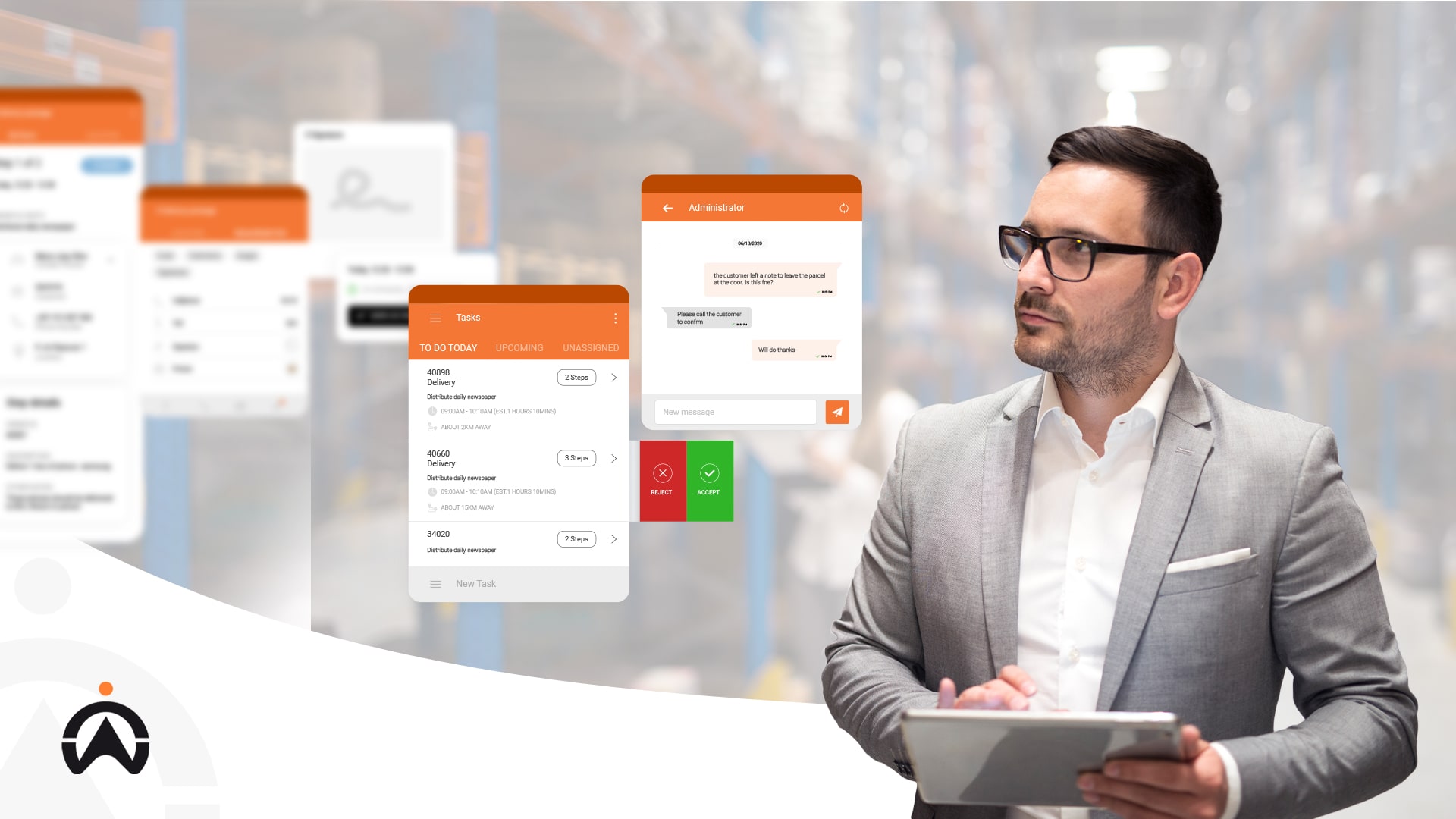
Cartrack has industry-leading fleet and task management software that empowers fleet managers or dispatch controllers to seamlessly assign jobs to their entire fleet and empower teams to successfully, efficiently and productively complete and deliver tasks.

Let’s take a look at Cartrack solutions and features that dispatch controllers can use to exceed customer expectations, grow the fleet operation and boost efficiency and profits: 

  • Easy-to-use, all-in-one platform: Cartrack is a complete fleet management platform, not only for transportation and logistics businesses but all businesses that require fleet or task management. Cartrack’s easy-to-use platform empowers trucking companies (amongst others) to streamline the entire operation from task management to operational costs, all in one platform. 
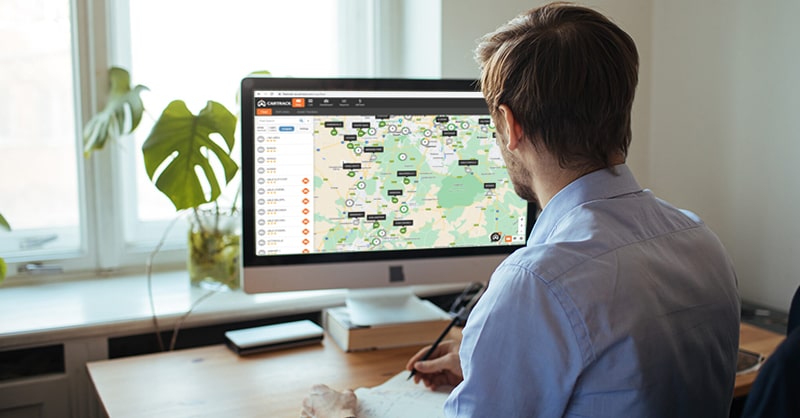
  • GPS tracking: GPS tracking is essential for effective task management. With Cartrack’s telematics technology devices, dispatch controllers can stay in the know of the real-time GPS location and movement of any of the company’s trucks. This feature will help dispatch controllers monitor vehicles, know driver and vehicle schedules, reduce unexpected downtime and time taken between jobs. 

That is not all. GPS tracking does not only allow dispatch controllers to track trucks and assets but also time and tasks. With GPS tracking, dispatch controllers can optimise routes and ensure that tasks will be completed in time. Time tracking helps dispatch controllers meet deadlines and anticipate any delays. Additionally, with GPS tracking, dispatch controllers can also track tasks allowing them to oversee accountability, the team members’ dedication, and the task completion progress. 

Now, customers can enjoy the experience of better service and faster deliveries. 

  • AI-powered Cameras: Cartrack’s AI-powered and live-stream camera technology has up to eight internal or external cameras to help dispatch controllers monitor driver behaviour and keep drivers, fleet and cargo safe. With this feature dispatch controllers can gain insight into which drivers speed, get distracted, drive harshly or become fatigued. This can help dispatch controllers  improve drivers’ road behaviour with safe-driver training and reduce accidents and cargo damage, as well as unnecessary maintenance and penalty costs.
  • Actionable insights: With Cartrack, dispatch controllers can instantly pinpoint challenges, know how to tackle them and increase the fleet’s operational efficiency with actionable insights that help them keep the business growing. This includes seamless automated reporting and insights on:
  • Fleet size optimisation
  • Fleet costs
  • Driver scorecards
  • Driver productivity
  • Fuel consumption
  • Cost per job and km 

Reports can be sent straight to dispatch controllers’ inboxes, ensuring that they have all the information that they need, when they need it.

Choose the best, choose Cartrack

With Cartrack, you can manage tasks, track progress and collaborate seamlessly, all from one platform.  

Contact Cartrack today, and have the best task management tools right at your fingertips!
Top telematics trends in 2022 and beyond

In today’s growing digital landscape, the success of many companies will rely on advanced software tools and systems that optimise business operations. 

As for the fleet industry, this is no exception. 

Vehicle tracking and telematics systems are undoubtedly a part of successful fleet management and customer success. 

Businesses need ground-breaking tech to optimise operations, monitor fuel consumption, and maintenance costs, to name just a few.

Here are some telematics trends of 2022 that’ll help keep your business relevant.

 But first, how relevant is the telematics industry?

According to Fortune Business Insights, the global vehicle telematics market size is projected to grow to USD 179.50 billion in 2028. 

Through telecommunication and information technology, telematics is being used across various industries for top transportation and logistics purposes. 

What are the different types of telematics for your fleet?

With innovative fleet technologies on the rise, companies will need to select an ideal telematics solution for their vehicles. 

These are some of the telematics solutions currently out there: 

  • On Board Diagnostics (OBD) II

This is a port in a vehicle that allows a user to retrieve valuable data like the vehicle’s speed, engine performance, and more. A portable fleet telematics device will connect to the OBD port. OBD-II telematics devices transmit in-vehicle data to the base station to be processed and utilised in fleet management software.

  • Smartphone-based 

The smartphone mobile apps receive data via Bluetooth-enabled in-vehicle sensors and provide customised vehicle tracking options. The latest smartphones are equipped with a (GPS) receiver and offer a variety of services for capturing, storing & processing real-time data.

  • Hard wired devices 

These are secure and hard-fitted into the vehicle, connected to the vehicle’s electronics, and powered by the vehicle’s battery. The telematics control unit sends critical telematics data over wireless infrastructure. 

What are three benefits for companies that use telematics?

  1. Improved fleet operations

There are many areas of a fleet business that can expand to the next level. A telematics solution will provide actionable data insights, so you can make the best possible operational decisions for your business. For instance, the data will give insight into ways to improve fleet maintenance, which leads to preventing roadside violations, minimising vehicle downtime, increasing driver awareness, and improving maintenance costs.

  1. Enhanced Security

GPS vehicle monitoring lets you see if your asset is in the right place, and is essentially the first security step in keeping your vehicle safe. However, it’s the telematics technology and frameworks that can take your fleet’s security to another level. 

Here are some examples of telematics safety features:   

  • Truck theft prevention: Keep track of driver IDs, route deviations, and unauthorised stops, to prevent your drivers from going into high danger zones. Notifications and alerts will be sent to warn fleet managers accordingly. 
  • Driver safety: In the unfortunate event of your driver being assaulted, you will be alerted and be able to react immediately, to protect your driver and vehicle. Get notifications with the driver’s location and other information straight away, by the press of a panic button.
  • Safe driving methods: A telematics platform gives all kinds of information about driver behaviour such as harsh driving, and excessive idling which can be used to mitigate road accidents and promote healthy driving patterns. 
  1. Increased cost management and revenue

Businesses have the opportunity to unveil weak spots in their operations and make them better overall. This can only bring more customers into the business, maintain a competitive advantage, and delight existing customers with service excellence. Sometimes it might be difficult to pinpoint these challenges, which is why fleet management systems will do the work for you. 

Perhaps admin processes are lacking, and the platform will organise it better for you. Or maybe there are fuel discrepancies you just can’t explain. In this case, you will get insight into how you can monitor your fuel consumption, in addition to other fuel-saving factors, such as fuel card theft and fraud.  

What are three benefits for companies that use telematics?

10 telematics trends to watch out for in 2022

  1. Improvements in driver behaviour

There is a strong focus on monitoring the behaviour of drivers in the fleet industry and empowering them to improve their driving methods. Companies understand that this contributes positively to overall fleet performance and business profits, and vehicle telematics systems will help them achieve this. They will always need all sorts of real-time information such as harsh speeding, sharp turns, hard braking, and excessive idling to prevent accidents and improve fuel consumption in the process. 

  1. The Internet of Things (IoT)

IoT brings internet connectivity, data processing, and analytics to the world of physical objects.As a result, devices can be interconnected and communicate with one another to give users a unique experience, and develop business operations. 

IoT solutions are a telematics trend in fleet management solutions to allow every aspect of fleet operations to be managed efficiently, with the exchange of real-time data. 

For example, a fleet business transporting cargo that needs temperature regulation can benefit from IoT technology. Sensor devices give out data if there are unwanted fluctuations in temperature, and managers will be alerted through the telematics fleet platform. 

  1. 5G expands connectivity

According to experts, the use of 5G wireless integrated into smart transportation will thrive by 26% annually over the coming decade, reshaping the future of the vehicle telematics market. 

What’s the 5G fuss about? The technology is fast, with more bandwidth, lower latency, and increased reliability. It can create new opportunities in vehicle connectivity and monitoring.

Low-latency 5G tech has allowed automakers to deliver advanced features in Advanced Driver-Assistance Systems (ADAS) such as fuel-tracking, real-time navigation and communication, speed and cruise control, and better fleet management.

It also assists fleet managers to monitor and control the parameters from remote locations via smartphones. 

  1. Reduced maintenance costs and improved productivity

Any way fleet managers can save and improve their business, will always be a hit. 

Cutting on maintenance costs is an increasing trend because it reduces breakdowns, unnecessary downtime, and expenses keeping profits on the rise.

A telematics system allows fleet managers to adopt a proactive approach to maintenance, and get real-time information on vehicle mileage, alerts for maintenance scheduling, and more. It’s an affordable way to run well-maintained vehicles and prevent costly repairs later on. 

  1. Actionable data insights

Getting lots of data and diving into what it means, and then taking action is the core of what effective fleet management is all about. It will always be an ongoing trend, and a software platform such as Cartrack strives to give out the best insights possible, through advanced telematics. 

Simultaneously, cloud technology is needed to store, handle, and process large amounts of data. Thanks to the cloud, fleet owners can access data from anywhere and at any time.

Historical data can also be pulled out from the platform to analyse all kinds of business tasks. 

Ultimately, the data will be used to make actionable decisions to streamline processes and ensure the business is always up to speed. 

  1. Remote fleet management 

The way we do business and working culture has shifted since the global pandemic. With the demands of day-to-day operations, fleet managers are always looking for ways to make their lives easier. 

A remote-friendly system gives them the flexibility they need to keep on top of activities, from a distance.

For instance, a software platform lets managers communicate in real time with drivers and manage their fleets from a computer or via an app on their phones. 

They can check on the status of deliveries, and locate where their fleet and drivers are, from anywhere, at any time.

  1. Data security

The reliance on technology and data transmission makes vehicles potentially more vulnerable to hacking and cyber-attacks. 

And with Cyber attacks on the rise, fleet owners will need to ensure their sensitive data is protected. In 2022 and beyond, they will need to install devices and software from a trusted brand such as Cartrack. 

Training staff on security measures to improve their fleet’s safety is also a persistent trend. 

  1. Optimised fleet safety

Advanced fleet safety measures will always be one of a fleet manager’s priorities. They seek the appropriate technology that will give them the insight to implement safe driving methods, prevent vehicle theft, avoid accidents, and more. AI camera technology solutions are also on the rise, as fleet managers use high camera systems to monitor and keep drivers, fleet, and cargo safe. AI-based vehicle video cameras are used to identify risky driving, and drivers can be alerted about potential safety violations so they can correct them immediately. 

  1. Electric vehicles

The sale of EVs (electric vehicles) increased in 2021, and the trend is yet to grow further. EV companies are finding ways to make communication and data sharing easier with fleet software. These vehicles also offer lower preventative maintenance, emissions, and fuel costs, so there’s no question that companies will consider these in the near future. 

  1. Telematics tracking 

GPS telematics tracking isn’t going anywhere, any time soon. Real-time tracking and diagnostics make it easy for companies to track their drivers’ locations, and driving habits and give other data insights to benefit their entire fleet. 

10 telematics trends to watch out for in 2022

The future ahead

As technology develops, so too will the telematics industry grow exponentially. 

With the evolution of technology including systems, hardware, software, and the power of 5G, businesses can meet the needs of their customers more effectively. 

By embracing new trends, it will give fleet owners a competitive edge and be on top of all aspects of their vehicle fleet, with meaningful telematics insights.

Chat to Cartrack today to get the latest software solution that will keep you on top of vehicle telematics trends in 2022 and beyond.

Fleet compliance and safety management made easy for fleet controllers

Regardless of the number of vehicles in a fleet operation, fleet compliance is pivotal to the smooth running of a business and ensuring the safety of drivers and vehicles. This article covers fleet compliance best practices, advantages and how Cartrack’s smart technology makes daily fleet operations a whole lot easier

From an outward perspective, fleet management appears to be an uncomplicated and rosey walk in the park. Unfortunately that is not the case, fleet management is a complex process that entails a number of intricate inner workings ensuring that the fleet runs like clockwork.

Employees and assets are managed by fleet controllers. This includes ensuring that drivers are well-trained and rested to efficiently complete tasks and that vehicles are roadworthy- this is where fleet compliance comes in.

Fleet compliance is one of the general struggles amongst fleet managers. Fortunately, fleet management systems provide information and data for an entire fleet operation on one platform. In this article, we discuss fleet compliance, its best practices, advantages and how it is made easy with Cartrack.  

 What is fleet compliance and who are fleet controllers?

Before diving into fleet compliance, let’s really get our heads around compliance. Compliance refers to actions or protocols that meet a set of legal rules and standards. That being said, fleet compliance means meeting the set rules and standards that apply to a fleet- from just about anything with wheels right up to the people who operate them.

Fleet controllers are in charge of managing the day-to-day operations of the fleet and ensuring that the operation remains compliant. 

Fleet compliance and safety management

A fundamental portionof fleet compliance management  is safety management. Safety management refers to applying a set of principles, frameworks, processes and measures to help prevent accidents, injuries and other catastrophic consequences through the use of a service or product. Effective safety management ensures fleet compliance and vice versa. 

Safety management and fleet compliance are both dependent on software that has the ability to store detailed information and data on vehicle maintenance, driver performance and road behaviour. 

This systematic approach will allow fleet operations to achieve fleet compliance and safety management through effective use of fleet management solutions . By using fleet management software the fleet operation can continually renew and review its fleet safety strategy, transport operations, policies and procedures to reach set standards, laws, and rules. 

Fleet compliance and safety management

 5 ways to implement compliance best practices 

As a fleet controller, fleet compliance is vital! Fleet compliance not only ensures the safety and productivity of a business. It also makes the business reputable for abiding by the set standards, rules and laws. These are five ways to implement compliance best practices: 

  1. Monitor drivers’ hours of service (HOS)

One of the leading causes of accidents, particularly in long-distance, bus, taxi and fleet operations is driver fatigue. Driver fatigue can happen anywhere, at any time, under any circumstances. Fortunately, HOS restricts the number of hours a single driver can operate a vehicle without taking a break. HOS refers to the maximum number of hours that a commercial driver can spend driving and working each day.  To achieve fleet compliance, fleet controllers need toprioritise HOS. The standard hours-of-service for fleet commercial drivers are:

  • 11 hours driving limit and 10 consecutive hours off duty for property-carrying drivers
  • 10 hours driving limit and 8 consecutive hours off duty for passenger-carrying drivers
  • Other restrictions include: a 14-hour limit, 30-minute driving break, and sleeper berth provision

Compliance with the set HOS restrictions will reduce the occurrences of accidents, injuries, and fatalities related to operating commercial motor vehicles. Efficient management of HOS will also improve driver safety by keeping fatigued drivers off the road.

The goal is to keep drivers alert, awake and attentive!

  1. Fleet maintenance

Regardless of the industry, companies are responsible for providing a safe working environment (this includes the safety of vehicles). Fleet controllers need to ensure fleet operations adhere to standards of safety while work is completed. 

Ensuring that your fleet compliance efforts include maintaining safe and roadworthy vehicles is almost equally as important as monitoring drivers’ hours of service. Fleet maintenance refers to the process of ensuring that fleet vehicles are serviced, repaired, safe and roadworthy. Fleet vehicles are on the road everyday which may lead to damage, this means vehicles need to be repaired regularly. If not, the daily or regular use of vehicles without maintenance will lead to vehicle breakdown or downtime, bringing the business operations and drivers’ productivity to a halt. 

To help avoid malfunctions, the US Federal Motor Carrier Safety Administration (FMCS) requires all drivers to fill out a Driver-Vehicle Inspection Report (DVIR) which serves as a pre-trip and post-trip inspection. These vehicle inspections are preventative road safety measures that ensure vehicles are safe and roadworthy. DVIRs include essential checks that ensure fleet compliance:

  • Lights and reflectors
  • Tires, rims and wheels
  • Horn
  • Rear-view and side-view mirrors
  • Windshield wipers
  • Steering mechanisms
  • Brake systems
  • Fifth wheel and connection points
  • Safety and emergency equipment
  • Record of wear-and-tear and repairs

You can already imagine how time-consuming and frustrating manually filling out DVIRs can be. As a solution to this, fleet management and software and telematics companies allow electronic Driver-Vehicle Inspection Reports (eDVIR). This drastically cuts down paperwork and admin, allowing for accurate DVIRs. 

  1. Keep compliance, safety, and accountability scores up to date

In addition to monitoring driver hours and fleet maintenance, fleet compliance also includes 

compliance, safety, and accountability (CSA) scores. CSA scores range from 0 (best) to 100 (worst) and are calculated based onseven Behaviour Analysis and Safety Improvement Categories (BASICs):

  • Driver fitness
  • Unsafe driving
  • Vehicle maintenance
  • Crash indicator- the frequency or intensity of collisions
  • Compliance with hours-of-service requirements
  • Controlled substance or alcohol
  • Hazardous material compliance

The CSA is run by the FMCSA to enforce safety measures for both fleet controllers and drivers. The categories listed above are assessed at roadside inspection points along various major highways across the United States and drivers with CSA scores closer to 100 will be

taken out of service and the fleet business could be penalised. Although this law is of the United States, it can apply to the fleet compliance of businesses around the world. 

  1. Driver qualifications

It is the responsibility of fleet controllers to ensure that all drivers who operate vehicles are licensed, and have the relevant training and specialities that meet legal requirements. Likewise, drivers need to ensure that fleet controllers are informed if there are any variations with their licence, in order for fleet controllers to ensure that licences are renewed smoothly. 

Fleet controllers can ensure compliance by conducting pre-employment screenings. This gives the fleet controller an idea of a potential driver’s history on the road. Pre-employment screenings include drug and alcohol testing, even though fleet controllers should have random checks to ensure that drivers remain compliant. 

  1. Comply with fuel tax

Fuel tax refers to the excise tax imposed on the sale of fuel. Fleet controllers are responsible for tracking where commercial vehicle fuel taxes go. Fuel monitoring is considered an important aspect of fleet management as it assists fleet controllers in determining the consumption of fuel whether for personal or commercial use. 

The International Fuel Tax Agreement (IFTA) is an agreement between forty-eight U.S. states (excluding Alaska and Hawaii) and ten Canadian provinces which keep a record of:

  • Miles driven
  • Fuel purchased
  • Purchase locations
  • Vehicle operators or fleet compliance managers submit these records to their local IFTA office every quarter. Then, based on the number and location of miles driven, the IFTA office distributes fuel taxes to each state and province.

Most fleet companies rely on telematics to help with fuel tax compliance. With telematics, fleet management software can provide fleet controllers with fuel consumption insights. 

5 ways to implement compliance best practices 

5 advantages of fleet compliance

Having fleet compliance become a core component of fleet operations and carrying these out correctly and accurately can result in the following advantages:  

  1. Organised paperwork and reduced admin: With help of fleet management software, fleet controllers can efficiently ensure compliance by electronically keeping insurance, permits and any other regulatory contracts up to date. This way, all fleet documents stay organised and updated, documents are not misplaced and time is not wasted searching through piles of paperwork.
  2. Minimised traffic violations: Compliance with drivers’ licences and qualifications as well as fleet maintenance ensures that drivers are well trained and vehicles are roadworthy, therefore preventing traffic violations. Additionally, drivers’ compliance with agreed company route plans and work schedules helps greatly minimise risk and lower fuel costs.
  3. Improve driver safety and efficiency:Fleet compliance empowers drivers to complete tasks within the set safety standards. Fleet controllers can be clear on safety and productivity standards- how drivers should load vehicles, operate vehicles, optimise routes and the hours they should spend on the road. Drivers who comply with the set standards will be properly trained, well-rested, fully engaged, and abiding by both the rules of the road and company safety standards, thus reducing the safety risk.
  4. Reduces legal costs: Fleet-related lawsuits and settlements can cost a large amount of money or result in damaged company reputation and a decrease in sales. Whatever the case may be, the business loses money. Following fleet compliance best practices helps your business avoid legal risks.

Builds customer trust: Complying with set standards, rules and laws will demonstrate to your customers that your business cares about keeping your drivers and their assets safe. While lawsuits or traffic violations damage company reputation, a record of compliance will demonstrate that your business is a trustworthy operation.

 Fleet compliance and safety control made easy with Cartrack

As much as fleet controllers and fleet owners desire to be everywhere at the same time, it is impossible for them to ensure fleet compliance at all times. Not unless they use fleet management software that makes fleet compliance easy, uncomplicated and undemanding. 

Cartrack provides fleet management software solutions that empower fleet controllers to streamline the entire fleet operation, all from one platform.

Fleet controllers can ensure fleet compliance with Cartrack’s fleet tracking software features:

  • Reporting: With Cartrack youcan choose from a range of over 40 standard reports including mileage, driver scorecard, speeding and productivity reports. Cartrack’s GPS tracking device monitors driver behaviour and tracks vehicles. This data is obtained by the fleet management system and can be accessed by the fleet controller via the internet, at any time.

Some reports accessible to fleet controllers include: 

  • Driver reports: Fleet controllers can use these reports to inform drivers where they can improve on their drivers. This report focuses on drivers’ road performance and obtains records through gps vehicle tracking which includes events such as harsh acceleration, braking, cornering or speeding.
  • Drive scorecards: This monthly report shows how safe drivers are on the road by monitoring high-risk behaviour. With this, fleet controllers can improve driver behaviour by training drivers where needed.
  • Logbook: Historically, drivers had to manually record trip details to distinguish between business and private journeys in order to claim tax deductions. Cartrack’s logbook feature simplifies this process. This feature automatically logs all vehicle trips and categorises them as personal or business trips. This ensures a tax-compliant logbook by distinguishing between business and private journeys for SARS submissions.
  • Vision: Cartrack’s AI-powered and live-stream camera technology ensures driver safety with the use of the following features:
  • Forward collision warning
  • Distracted or fatigued driving detection
  • Yawning and cell phone use detection
  • Up to 8 cameras: any combination of internal or external AI-cameras
  • MiFleet: Easy to use administrative and vehicle cost software that fleet controllers can use to efficiently manage drivers, fleet and related operating costs. The main benefits include managing:
     
  • Vehicle services
  • All-inclusive vehicle maintenance
  • Vehicle mileage
  • Driver licence validity
  • Asset depreciation
  • Fines and notices issued
  • Breakdowns per vehicle
  • Driver permits 
  • Fuel card fraud

Fuel fraud detection

Effortlessly achieve fleet compliance with Cartrack fleet management solutions 

Fleet compliance has never been easier! With Cartrack, you can remain compliant by easily managing and automating your fleet compliance throughout your operations. 

 Take full control of your fleet, contact us today.

Benefits of fuel management and fuel consumption techniques for fleet businesses

Managing vehicle fuel consumption doesn’t need to be a time-consuming task. For reliable fuel tracking, use fleet management systems to their fullest potential through fuel management and see the difference.

One of the biggest responsibilities managers take on is finding ways to minimise the costs associated with running a fleet. Fuel management just makes this process a lot easier.
Here’s how fuel management can help you calculate the average fuel consumption rate in your fleet.

Fleet management and your business’s fuel economy

Fleet management fully monitors vehicles and gathers data on each vehicle as they run. With each trip taken, the system automatically tracks fuel consumption levels and notes the speed at which the fuel is burned.

With this information, telematics gathers all vehicle data and translates it into easy-to-understand information, and compiles it on the manager’s fleet platform.

The type of information gathered for prime fuel efficiency includes:

  • Speed 
  • Full history of vehicle usage 
  • Vehicle routes 
  • Maintenance issues
  • Idle time
  • Driving behaviour

Now, managers will have full access to fleet diagnostics and valuable insights that will allow them to make informed decisions about how to improve their fleet for a greater, greener business.

 How to boost vehicle performance

Managers are constantly looking for fresh and inventive ways to keep up with their fleet and get the most out of their work operations. With fuel being one of the most valuable resources in use, managers need to take the necessary steps to ensure it is not being wasted.

Fuel management is a subdivision of a fleet management system that uses fleet telematics to:

  • Read fuel levels in real-time 
  • Keep track and improve fuel efficiency 
  • Reduce fuel consumption 
  • Instantly notify managers of fuel change

Fuel management systems can give you detailed information about your fleet’s fuel economy. You can determine whether your fuel usage has increased as a result of incorrect tyre pressure, misaligned tires, or vehicle weight.

All this ultimately helps managers better handle their fleets’ fuel consumption performance automatically, making fuel monitoring a crucial component of fleet management.

How to boost vehicle performance

Fuel economy defined

Fuel economy is the distance vehicles travel with a given amount of fuel, meaning it’s a form of vehicle thermal management that measures how much a vehicle consumes energy in fuel and turns it into kinetic energy to travel.

Fuel economy technologies show that vehicles with reduced fuel consumption burn less fuel than other vehicles and produce lower levels of carbon emissions.

So, how does a fuel management system work to preserve energy?

With GPS technology, fuel management systems automatically create different graphs comparing fuel usage based on previous trips taken. These graphs give business owners operational insights that aid in identifying a variety of technical and usage-related problems.

Fuel consumption management is extremely beneficial to fleet managers for the simple reason of its ability to reduce operational costs. Fleet management also provides a complete overview of transportation to manage your fleet operations and business logistics in the current economy with ease.

A fuel management system provides you with accurate data on:

  • Cost per mile
  • Fuel theft
  • Driver behaviour (risky driving, overspeeding, Idling)

How to reduce fuel consumption with fuel monitoring

Fuel expenses seem to grow with each passing year, so when it comes to planning, budgeting, and managing fuel costs, fleet managers use a few tips to give their tanks a break.

1. Driving Behaviour
They investigate how their team of drivers operate their vehicles and, through training, can change their driving behaviour for the better. Poorly driven vehicles use up more fuel than expected and contribute to maintenance issues in the future.

2. Vehicle inspections
Bad driving habits result in damaged vehicles, so frequent vehicle inspections for any maintenance issues that could contribute to excessive fuel usage and increased maintenance costs are recommended.

3. Route management
Finding the most fuel-efficient route avoids excessive fuel consumption and cuts down on overall delivery time.

How to reduce fuel consumption with fuel monitoring

 The cost impact of fluctuating fuel prices

Among the ups and downs of fuel prices in the South African economy, motorists finally got some good news from the Automobile Association of South Africa (AA) just in time for the new spring season.

Current fuel stats taking effect as of September 2022 are as follows.

Because of fluctuating fuel prices, fleet managers might find it difficult to plan out a fuel budget and manage costs, especially if they don’t have a strong tracking tool to help keep up with fuel price changes.

Benefits of fuel management

A great fleet manager can split their focus between all the factors that affect their fleet. If you manage a fleet efficiently, you’ll notice that fuel economy is just one of the many obstacles you have to tackle.

There’s also:

  • Fuel consumption management
  • Internal and external fuel fraud
  • Unnoticed fuel leakages
  • Complex and time-consuming fuel reporting

How do fuel management tools help tackle these issues?

  1. Improve accuracy – Get the data that is travelled by your fleet and calculate the amount of fuel consumed with fuel monitoring systems. You can also save the data for later analysis with the help of an automated fuel control system.
  2. Improve fuel efficiency – With this, you can track your vehicle maintenance and driver routes. Implementing efficient driving routes is necessary to make cost-effective decisions so that misuse of excessive fuel consumption can be eliminated.
  3. Reduce fuel theft – Fuel theft is considered a big issue in the fleet industry. Using a fuel monitoring system can reduce fuel theft attempts by recording fuel consumption, fuel-related expenses and identifying security issues within your fleet to implement solutions.
  4. Automated reports – Reports can be received on events in real-time, like fuel levels, unauthorised vehicle usage and frequent engine idling so that you are able to investigate what your mileage is, as well as any irregular fuel economy.
  5. Maintain compliance – Fuel consumption software will make sure that your fleet adheres to emission standards. There are many places where CO2 emissions are heavily regulated.

Managers can access information from their laptops or phones since the software allows for remote usage. With this and an internet connection, you don’t have to deal with outdated stocktaking or tank management from the office. You can do it all from virtually anywhere.

Benefits of fuel management

Reduce fleet costs with a trusted fleet management company

Cartrack’s smart dashboard provides swift fleet monitoring for your whole fleet and many more benefits for fellow managers. 

Learn more about fuel consumption, and use Cartrack fleet management solutions to fix it.

Visit us today to start saving on fuel.

How courier companies can benefit from cost reduction and implement business growth through fleet management

With great demand for online-based shopping comes an even greater need for efficient fleet management. Adapt to the times and grow your courier business with rewarding fleet management practices.With great demand for online-based shopping comes an even greater need for efficient fleet management. Adapt to the times and grow your courier business with rewarding fleet management practices.

Modern delivery services and fleet management go hand in hand in the era of fleet innovation. For a manager to accurately keep track of customers, delivery routes and local as well as international delivery services, the use of fleet management is highly recommended.

What is a courier company?

Whenever you scroll through an online store, order items and clear your cart, guess who delivers your goods right to your doorstep? Courier companies.

These are businesses that collect and deliver items ranging from things like clothes to groceries, from one location to another. They are an affordable option for transporting and delivering parcels across South Africa.

While courier services make online shopping that much easier for the average person, businesses also use these services often, as they are an important part of business operations.

Using couriers for e-commerce fulfilment allows businesses to:

  • Deliver multiple packages
  • Provide a more specialised or regional delivery service
  • Relieve themselves of service delivery responsibility

How does delivery work in a courier business?

How courier services go about fulfilling their orders, depends on the nature of the business, contracts, locations, customer needs and a number of other variables.

To reduce overall transport and delivery time, couriers often pick up many different orders to deliver to specific areas at a time. This is prefered over going back and forth between locations, with a zig-zag pattern. To help avoid this, route optimisation is often used. This way, courier services can dispatch multiple orders in a day and cut down on unnecessary journeys by coordinating area-specific deliveries.

Delivery cycle

How couriers go about delivering parcels might change depending on where the couriers are located. Most couriers follow a standard cycle centred around the customers based on their chosen delivery preferences. 

An average courier delivery process could look like this:

1. From the moment your order is processed and shipping details are sent to you for easy tracking, businesses deliver all orders to a local depot where couriers pick them up and drive them to designated areas of distribution.

2. During this time, you will receive a tracking update of their items, notifying you that the courier company is on-route to delivering goods right to your home or office.

3. This cycle gets repeated as the courier returns to the local depot to pick up and deliver parcels to other eagerly waiting customers. 

Depending on delivery routes and destinations, this cycle could be a lot more back and forth, especially without the fleet management services that offer route optimisation and fuel management.

How to choose the best courier service in South Africa?

Courier companies handle a lot of precious, personal and valuable goods. That’s why it’s important to find a company you trust. A business might need a courier who can deliver their goods on time and make sure their goods arrive undamaged, while the average person just needs a courier company that can deliver their goods quickly.

When looking at courier companies, there are plenty to choose from. Based on your needs, a consumer can view online reviews from previous customers, while it’s best for businesses to choose a courier that has what it takes to manage the size of orders they wish to fulfil and whether that company can meet their local or global needs, they might need to partner with both local and international courier services.

Other aspects to consider include; price, location, international reach, express delivery options and many more. For businesses, it’s smart to consider multiple courier companies that can cater for delivering different types of packages to assist with your needs. 

We put together a list of five courier companies South Africa has to offer that includes both local and/or global shipping:

  1. Fastway Couriers
  2. Globeflight
  3. The Courier Guy
  4. MDS Collivery
  5. Aerospeed Couriers

With The Courier Guy being one of the top courier services south of Africa, offering a popular range of delivery services like:

  • Same-day express delivery
  • Overnight courier
  • International shipping

In order to select the best South African courier service for you, research the services offered and become familiar with their processing procedures.

How to choose the best courier service in South Africa?

What is fleet management and how does it benefit delivery services?

Fleet management is used to track and monitor business operations. With this, a courier company can keep a fleet running efficiently, on time, and within budget while also making effective business decisions.

Fleet management and operations are a part of any business that relies on commercial vehicles to function. To boost productivity and make a business run as smoothly as possible, fleet management is used to oversee all fleet operations, employees and maintenance practices.

The reason fleet management is widely used, apart from efficient management:

  • Coordination of fleet
  • Ability to cut fleet costs
  • Maximising productivity
  • Reaching delivery quotas

 How does fleet management work?

While fleet management software may appear to be a simple solution to the many difficulties that this line of work presents, it is only when other factors are under control that the technologies of fleet management services can be used to their fullest potential.

Software

The foundation of fleet management is GPS tracking. The fleet manager can view the precise location using the software and use it to monitor the vehicles while receiving additional information on other aspects of driving behaviour and safety.

Telematics

Fleet managers can more easily gather data about a vehicle’s acceleration, speed, braking force, and fuel consumption through telematics, which helps them determine when maintenance and repairs are necessary.

The sensors are used to detect any sudden movements, such as fast acceleration or harsh braking, giving you a good idea of the driver’s behaviour, which can directly impact the fuel usage of that vehicle.

Maintenance

Keeping track of a fleet’s records and maintenance expenses can be very expensive. By handling vehicle maintenance, negotiating maintenance expenses, and planning service intervals, using a fleet management system can help cut costs and avoid unexpected downtime.

 How do delivery services benefit through vehicle telematics?

Using courier delivery services to ship goods from suppliers to wholesalers or fulfil customer orders is a common and affordable option for business growth. In our increasingly connected world, especially with the rise of e-commerce, there is no denying the importance and benefits of courier services.

In all aspects of fleet management, a manager needs to run fleet vehicles and maintain safety while they are on the road.

Vehicle telematics data comes in handy when analysing the following:

  • Fleet vehicles
  • Vehicle location
  • Service delivery
  • Coverage
  • Driver behaviour
  • Community safety
  • Routing
  • Dispatching units
  • Diagnostics
  • Preventative maintenance

For your package to be shipped securely and on schedule, you will need an experienced company or service provider that uses telematics technology to live-track and deliver packages securely.

Lost goods?

After ordering an item online and getting the confirmation Email/SMS from the courier service that your parcel is on its way, the first logical option is to track its every movement until it arrives at your doorstep, right? Well, what if your goods get lost in transit around South Africa or within your city? This is where fleet management can assist.

Each parcel has a shipping label that is scanned at each stop along the way, fleet management software can conduct a search starting from the last depot where the shipment was scanned and track it down to the last vehicle that had the items.

What’s the role of the fleet manager?

Fleet managers aim to keep costs low, maximise profits, and minimise risk while overseeing and optimising a fleet.

They are often in charge of the different departments that make up a whole fleet. Fleet managers are in charge of fleet operations and may be tasked with duties like route planning, driver management, asset utilisation, vehicle maintenance, and the implementation of any programmes that help boost business productivity and avoid cost wastage.

To improve fleet efficiency and lower operating costs, entities frequently use companies like Cartrack that offer efficient vehicle telematics with affordable, easy-to-use overall fleet management solutions.

The latest benefits of fleet management

No matter how many vehicles are in the fleet, manually managing them can be difficult. Through predictive analytics and precise reporting, fleet management software can assist fleet managers in:

  • Gaining real-time visibility into their operations
  • Improving driver satisfaction
  • Reducing fuel consumption.
    Reducing operation cost
  • Maintaining fleet
  • Complying with regulatory guidelines 
  • Boosting service levels

5 ways fleet management can improve delivery efficiency in companies

Fleet management technologies have dominated the world of logistics and business transportation. Due to the variety of advantages it provides, they have not only simplified the process but also improved delivery efficiency. Here’s how:

  1. Real-time routing

Route optimisation for effective planning is referred to as “real-time dynamic routing” because it enables fleet managers to make use of real-time data and insights. It considers a variety of factors, including same-day delivery, the quantity of goods, the weather conditions, and the movement of traffic.

It increases the business organisation’s dependability in keeping to schedules and deadlines. Additionally, it helps drivers save time, enabling them to complete more deliveries in a single day.

  1. End-to-end real-time monitoring

The data is available throughout the supply chain for managers and qualified employees. Allowing for better decision-making and general performance improvement as they would be able to access live information anytime from their fleet platform.

Fleet platforms make use of artificial intelligence (AI), machine learning and telematics to provide the power of planning, fleet and driver allocation, and tracking from a single point.

Productivity is increased by highlighting potential problems and improving transparency for customers, managers, drivers, and the business through: 

  • Aggregated data
  • Automated reporting
  • Improved real-time visibility across the supply chain
  1. Visibility

Since goods sometimes use several different modes of transportation to get to their destination, it is occasionally challenging for businesses to pinpoint their exact location due to the nonlinear nature of the route.

However with automated systems, the visibility of intermodal transportation has improved, aiding in the smooth coordination and execution of the plans. Fleet management also increases operational capability and operational efficiency while ensuring that shipments are handled with the utmost care and according to best practices.

  1. Electronic proof of delivery

An electronic proof of delivery (POD) is the signing off of your delivered items on a mobile device. It’s a significant benefit of moving logistics toward digital methods. By going paperless, you can cut costs while streamlining operations for both fleet managers and employees.

With the aid of electronic tools, the labour-intensive manual data entry process is now significantly reduced and gives drivers all the information they require, on an easily accessible platform.

  1. Contactless Shipping

Fleet management software can let customers know when their products have been delivered and confirm delivery through electronic signatures, minimising or eliminating physical contact and maintaining social distance. They are kept informed at every stage of the process and can also pay using digital wallets.

Resulting in:

  • Enhanced customer experience
  • Increased delivery profitability
  • Efficient #PL management
  • Greater control over fleet operations 
  • Improves intermodal transportation efficiency
  • Helps archive perfect order index
  • Adherence to on-time in-full deliveries
  • Reduces carbon footprint
5 ways fleet management can improve delivery efficiency in companies

Benefits of fleet management for courier companies

Fleet management software offers the same benefits enjoyed by other businesses and industries. With a complete view of fleet daily operations, managers can efficiently manage and offer their expertise through fleet platforms without physically being where they are needed.

Now, courier services can monitor their driver’s progress with real-time information, giving you the required insight into driver behaviour and vehicle treatment.

Wireless communication can be used to inform customers when their deliveries will arrive. While other features like mileage reports allow you to track and validate your employees’ work and billing.

Fleet management services also offer the following benefits to courier companies:

  • Communicate quickly and clearly
  • Reduce time spent on administration
  • Deliver a more flexible and reliable service
  • Maximise successful orders
  • Improve operational efficiency
  • Ensure accurate pickups, deliveries and returns

Why is fleet management required?

Catrack’s fleet management solutions can help courier companies that deliver locally and internationally. No matter the size of the courier service, a good fleet management system can help you manage any business.

Contact Cartrack today for an easy fleet management solution that can be tailored to your business needs.