6 ways to improve driver behaviour and driving skills with fleet telematics software

Do you need data insights to train your drivers on the dos and don’ts? Are your fuel costs through the roof due to poor driving behaviour? 

No matter your challenge as a fleet manager, there are ways to monitor driver behaviour with the help of telematics software. 

In this article:

  • Understand what driver behaviour is exactly
  • Identify the factors that affect driver behaviour
  • Discover various driver assessments to help you hire the appropriate drivers
  • Find out six ways to improve driver behaviour and safety
  • Learn how to shape driver behaviour through a fleet telematics management platform
  • Know the benefits of a driver behaviour monitoring system

This article is all about what you can do to empower your drivers and improve driving behaviour in your fleet – all of which give numerous business benefits you can’t overlook. 

On top of that, you will discover some factors that affect driver behaviour and driver assessments that can assist you in ensuring you hire the right drivers. 
Do you need data insights to train your drivers on the dos and don’ts?

What is driver behaviour?

Driver behaviour can be defined as the actions a driver performs while operating a motor vehicle. It’s essentially driving methods and a driver’s characteristics, either intentional or unintentional. Typically, driver behaviour is characterised on a spectrum from normal to risky and aggressive.

If you are a fleet manager, it’s useful to understand the factors that can influence your driver’s driving methods, as they can affect your driver’s ability to assess risk and make decisions on the road.

Take a look at some pointers: 

Factors that affect driver behaviour 

  • Distractions: Any action that takes your driver’s eyes off the road is considered a distraction. A common distraction is the use of smartphones for text messages and calls while driving. 
  • Reckless driving: Actions such as speeding, going through a traffic light, changing lanes without indicating, or driving too fast can put other road users at risk, all of which is considered reckless driving.
  • Fatigue: Apart from the actual dangers of falling asleep on the roads, even a tired driver may have slower reaction times than an alert driver, making it more difficult to respond to sudden road hazards.
  • Age and experience: There is a weight of evidence that proves that age and experience have effects on crash risk. For example, studies consistently found that teenage drivers had dramatically higher crash rates than older drivers, particularly drivers older than 25.
  • Driving under the influence: Drunk driving causes nearly half of all fatal accidents and numerous crash injuries every year. In South Africa, 50% of all accidents that occur on the roads involve a member who is over the legal alcohol limit. However, alcohol is not the only substance that can impair a driver’s ability to operate a vehicle. Prescription medications, illegal narcotics, and over-the-counter medicines can all cause confusion, drowsiness, and poor decision-making.

Now that you understand the factors that influence driver behaviour, there’s more you can do to ensure you hire the right drivers for your fleet.

Assessing a driver’s abilities and attitudes to driving can significantly help the employee and employer. The qualities of a good driver are derived from attitude, skills, and knowledge. 

You can consider conducting driver assessments to analyse behaviour and attitude together, after all, they are interconnected.

Here are some, so you can understand your drivers before they hit the road. 

Types of driver behaviour assessments 

  • The driver behaviour questionnaire (DBQ)

Drivers are asked questions about how they drive daily, and can indicate on a scale (0 = never and 5 = nearly all the time) how often they performed each driving behaviour on the list. 

  • Attitudes toward traffic safety scale (ATTS)

Here they asked questions about their views on road safety, which will give a fleet manager an idea about their behaviour and how they approach traffic laws.

  • Driver behaviour transactional analysis (TA)

This test will help you understand how your drivers react under pressure, and their working styles. This model will help you find out information about how they organise their work and time and communicate with each other. 
Types of driver behaviour assessments

 6 ways to improve driver behaviour and safety 

  1. Establish safety policies

Companies should create policies, procedures and safety expectations for drivers to follow. These should be signed by managers and drivers and reviewed regularly to show how committed your company is to reducing traffic-related crashes, injuries, and death. And these policies can be shown to drivers during training sessions, for example, your no-distraction policy.  

  1. Check driver records 

Check driving records and history before bringing new drivers on board. You can filter out those with poor driving history, to avoid future incidents. 

  1. Train drivers 

The best way to instil safe driving methods is to educate your drivers on safety protocol. Show them the consequences of risky driving behaviour, over-speeding, distracted driving, and more. You could also send them on a driver behaviour course to better equip them.

  1. Motivate your drivers 

Training your drivers will motivate and encourage them to perform better, as it creates a space for growth and to develop their skills. Empower your employees with the right set of values for success, creating positive practice.

You could also create incentive programs where they are rewarded for driving well, to enhance their good driving habits. 

Actionable data from a fleet management platform can be used to show your drivers the best way to drive. For example, you can pick up if one driver is idling more than others, and then you can let these drivers know. If others are following safe driving procedures, this can help motivate other drivers to reach that level too. 

  1. Maintain vehicles 

If your vehicles are maintained well, you’ll have a safer fleet overall. They will run better where you can prevent road accidents and protect your drivers. In real time, you can get alerts if there are any engine faults, worn brake pads, oil and water fluctuation, and other diagnostics, so you know when you need to service your vehicles. 

  1. Use vehicle telematics software 

Use the smart data from a fleet management platform to get the insights about driving behaviours and methods you need. You’ll be able to pick up events such as speeding and harsh braking, and put systems in place to stop these incidents in their tracks.

Here’s more on how telematics software can help you monitor the drivers in your fleet. 

6 ways to improve driver behaviour and safety 

How to improve driver behaviour through a fleet telematics management platform

As we know, there is a benefit in identifying unsafe driving methods. Insurance companies always look for ways to reduce insurance claims and road accidents by monitoring safe driving habits on South African roads. 

We also know that safe driving impacts the longevity of a fleet and can help cut costs.

Here’s how a fleet platform can help you improve driver behaviour:

  • Driver behaviour reports

Get driver scorecard data reports from a fleet platform and get the driver insights you need to pick up idling, aggressive driving, speeding, and more – all of which are costly to a fleet. 

Also get detailed reports for each behaviour. Say for instance, speeding is an ongoing trend with one of your drivers, then pull up a detailed speeding analysis. It could have detailed locations, duration and distance travelled over maximum speed limits, so you can get the full picture of a speeding incident. Or maybe your fuel costs spiked, get an excessive idling report to see if this is the cause. 

On-demand trip reports can also be retrieved if you want to analyse and compare all your vehicles, and the drivers using those vehicles. 

These reports will help fleet managers take real-time measures to mitigate issues.

  • Driver behaviour alerts and reminders

With all the daily tasks a fleet manager faces, a fleet platform will help with its alerts and reminder features. Managers can customise driver behaviour alerts and receive the info they feel is necessary. So they can create a trigger alert for when the ignition is on and off, and choose where they want the alert to go, i.e. email. Or get alerts in real-time when safety rules aren’t followed, and correct this immediately. 

Drivers can get preventative in-cabin alerts in real-time too, so they know when they are breaking the rules of the road or safety violations. For instance, if they are not leaving a proper distance from the other vehicle.  Also create reminders for certain events, so for example, maybe you want to be reminded to check a certain route a driver is taking, to see if speeding persists. 

  • AI-powered cameras

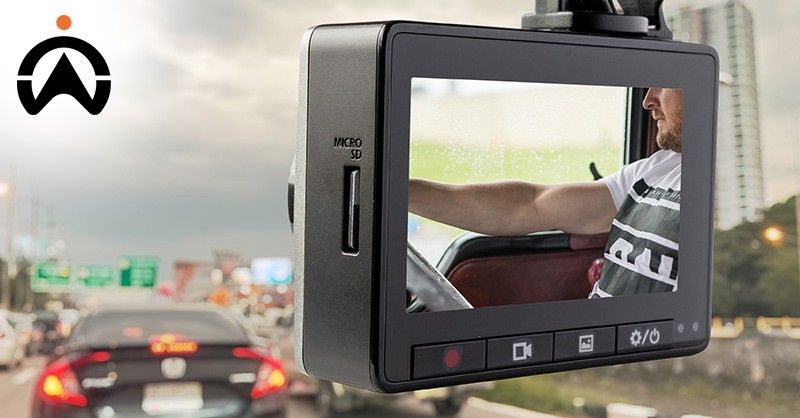
Get up to eight internal or external cameras to help keep your drivers, fleet, and cargo safe. These cameras can pick up all sorts of detection including front collision warnings, smoke detection, distracted driving, yawning, and more. Smart In-cabin screens keep your drivers safe and they can get visibility of their blind spots, and the cameras alert them in real-time of any dangers or issues. With the footage, you’ll also be able to protect drivers from false accident claims. In the event of poor driving, fleet managers can also use the footage to bring up the incident with the driver in question. 

Benefits of improving driver behaviour monitoring system

Choose Cartrack’s software and GPS tracking system and you’ll get these benefits: 

  • Reduce costs as poor driver behaviour will be picked up and accidents can be prevented
  • Ensure compliance with the law in your company
  • Identify harsh driving methods to ensure safety compliance on the roads and to protect your fleet
  • Protect your drivers as they will be notified in real-time if they are not driving correctly
  • Provide accountability with driver ID tags or identification
  • Save on running costs such as fuel and maintenance, and increase your vehicle’s longevity

Make your fleet and driver’s behaviour as safe as possible, with fleet management software from Cartrack. 

Get in touch with us today.

Why starting a transport logistics business and trucking company will benefit you

Truck logistics play a significant role in our economy and daily lives.

In this article:

  • Get an overview of what truck logistics entails
  • Learn how to start a truck logistics business step by step
  • Why truck logistics is such a rewarding business to venture into
  • How Cartrack’s fleet management platform can help run an efficient, safe and compliant transportation and trucking company

According to the Commodity flow survey (CFS) trucks transported 71.6% or $10.4 trillion of the $14.5 trillion worth of all goods shipped in the United States in 2017. Clearly, starting a truck logistics business comes with a lot of rewards but it is hard work too. 

What is logistics and how has it evolved to truck logistics?

The word logistics originates from the French term loger or logistique which means shortage. Historically, logistics was a term associated with the military where the function of logistics was supplying troops with suitable equipment for war. 

With the rise of consumerism and the growth and complexity of supply chains, the word logistics evolved in the 1950s. Logistics became a term used in the business sector to refer to the process of planning, implementing, and controlling the transportation of goods, resources and information from the point of origin to the point of customer consumption. The focus of logistics shifted from the war to meeting customer expectations and reaching customer satisfaction in the most timely and cost-effective manner. 

What is logistics and how has it evolved to truck logistics?

Today, the industry logistics markets have further developed as a concept that is utilised for business analysis and planning to help businesses achieve strategic competitive advantage by considering all possible factors involved in the business operation.

Truck logistics, therefore, refers to the research and planning of trucking operations. The logistics of trucking take into consideration all the factors involved in the transportation of goods and resources with the use of trucks, to boost productivity and efficiency. Trucking logistics include: 

  • Planning and optimising the most efficient routes for truck drivers 
  • Improving fuel consumption through fuel management 
  • Ensuring trucks are in good condition to complete tasks
  • Hiring an excellent staff of truck drivers
  • Applying effective fleet management 

In today’s industrialised world, trucks are one of the primary means for commercial transportation and the transportation of goods. Efficient trucking logistics not only helps a trucking company achieve success but also contributes positively to the economy. It is therefore safe to say that the trucking industry plays a large role in the economy.

Let’s take a closer look at how this important and large industry operates.

How does the transport business industry work?

A truck logistics company falls under the transportation business industry which is made up of businesses that transport goods, resources, or even passengers from one location to another. These businesses provide services to different target markets, from individuals to companies and even global trade partners. This means that businesses in the transportation industry can specialise in various niches and activities from e-hailing or hauling customer goods to international shipping of supplies and products. 

Businesses in the transportation industry are commonly classified into different categories based on their target customer, the type of routine, and the service provided, namely:

  • Personal transport: This is catered to individuals and small groups of people and includes one-on-one services such as taxi services, bus services, and most recently e-hailing services. 
  • Local transport: This category provides services to regional markets by transporting cargo such as livestock, materials, consumer goods, and more. Local transport may be commercial or private, depending on the distributed materials. 
  • Global transport: Global transport offers services for sea shipping or air-based delivery of cargo. These services consist of aspects of the personal and local categories but on an international scale.

Truck logistics focuses on local services. In providing these services, truck logistics prioritise road safety to ensure the secure transportation of cargo and the safety of both truck drivers and individuals as well as the preservation of specific goods, products, and loads. 

What trucking logistics does is examines factors such as trucking routes, types of loads and delivery times to best facilitate the different types of transport services and determine the best means of transport. For example, heavy hauling and long hauling are more demanding aspects of trucking than e-hailing personal services. 

How does the transport business industry work?

The role of truck logistics in transport supply chain businesses

A supply chain refers to a network of individuals and companies who are involved in creating a product and delivering it to the consumer. Truck logistics is an aspect of the supply chain that plays a role in delivering goods or services to customers, manufacturers, distributors, or consumers. 

Simply put, the supply chain covers the production and distribution of goods and services to all types of customers while truck logistics focuses on the movement and storage of products in the supply chain. When efficiently implemented, both supply chain management and truck logistics work together to give companies a competitive advantage and bring value to their customers.

The goal of truck logistics is to get goods and services delivered on time. To achieve this goal, truck logistics follows a logistics flow that entails the movement and direction of goods, resources, products, or information within a supply chain network between the point where the goods, resources, products, or information originate to where they are consumed by customers. 

The three types the logistics flows are:

  1. Inbound logistics: Raw materials, tools, machines used for manufacturing, consumable items needed for fuel, or various spare parts and other elements for production inputs are moved, transported, or stored from suppliers to manufacturers for processing and production. Being the first stop of the supply chain, effective inbound logistics allows for a swift and integrated supply chain.
  2. Outbound logistics: Finished products from manufacturing are moved to the next stop of the supply chain. These finished products are shipped and delivered from the warehouse to the logistics business customers. All the products that move through this outbound logistics flow are intended for consumer consumption and satisfaction- this is also referred to as the order fulfilment process. 
  3. Reverse logistics: This involves returning, servicing, repairing, refurbishing, reselling, recycling, recovering, or properly disposing of products. Reverse logistics, therefore, refers to moving items or goods from the consumers back through the supply chain. This process is most common in the automobile and electronics industry.

3 reasons why you should start a trucking company

With the current shortage in the logistics industry, starting a truck logistics business can be rewarding. Here are three reasons why you should start a truck logistics business: 

  1. You can make money

Amongst other reasons, people start businesses to make money. So yes, you can make money from a truck logistics business, however, only if you manage it efficiently. This is because the profit made in the trucking logistics business is heavily affected by the costs. Fuel costs are one of the factors that can lead to high costs, especially in trucking and logistics- fuel costs eat up your profits. 

  1. You can work from home

Working from home has become a new norm. Today, the basic needs of managing a truck logistics business are a computer, phone, and internet. With these gadgets, starting, owning, and managing a truck logistics business from home is possible. Trucks can be busy on the road all day while you use fleet management software to monitor the activity of your fleet with the use of GPS location software. 

  1. You do not need to own trucks 

Most people have the assumption that to start your own trucking business you need to invest in a truck or trucks- this is not the case. As an owner of a truck logistics business, you do not need to be the owner of the truck or trucks. A start-up trucking business can be started with another person’s truck- just like Uber and Bolt. This is called an owner-operator and you can simply register the owner-operator’s truck under your authority. 

Thinking of starting your own logistics company? Let’s get you started with the following steps!

3 reasons why you should start a trucking company

 6 actionable steps to plan and start a truck logistics business

  1. Complete the required training

Truck logistics requires the right set of training and skills, therefore it is important to acquire the right training suitable for the job. The form of training will vary based on the type of service the trucking business will provide- whether global, local transportation, or both. The following are some of the training requirements:

  • Transport Management Systems: This training gives an understanding of how transport management systems (TMS) work and why it is vital for transport systems. The training equips you to manage and track all the different aspects of transport management such as vehicle maintenance, warehousing, communications, cargo handling, and more.
  • Management and Inventory Operations: The ability to handle and control inventory plays a vital role in the transport and logistics business. Inventory management is integrated with warehouse management to inform and educate you on how products move through your operation.
  • Transportation Regulations and Law: To run a trucking logistics business that provides both domestic and international services, training should include regulations on interstate commerce and global shipments and carriers.

There may be additional training or courses that may have to be acquired depending on the type of service your truck logistics provides and local government regulations. 

  1. Do your research

Before you get into truck logistics it is important to research the industry. Research helps you understand the business and how viable it is, even before entering the market. Here are some research points that could give you an overview of the business: 

  • Costs: As mentioned above, the purpose of owning a business is to make a profit. It is important to find out the costs of the business and whether the business is profitable. 
  • Competitors: Researching competitors will help you understand what other service providers are doing right or wrong. This way, you will gain an understanding of what the customer’s expectations are.
  • Niche: The truck logistics business is a big industry. Find out what goods and services you would like your business to specialise in. Successful businesses pick a lane.
  1. Set it up

Starting a truck logistics business will take a lot of time, money, and energy, this is because it involves planning, making key financial decisions, and completing a series of legal activities. Here is a guide to setting up your truck logistics business: 

  • Create a business plan
  • Choose a business entity
  • Open a business account 
  • Ensure fleet compliance
 6 actionable steps to plan and start a truck logistics business
  1. Get funding

Transport tools and different road and cargo shipping requirements are some of the capital needed to start a track logistics business. Therefore, you need start-up capital to start a truck logistics business. Luckily, there are many funding and financing options accessible, based on the type of service a truck logistics business provides as well as the geographical location of the business. There are traditional financing options such as loans and private financial aid. However, if you have no money, you can opt for financing that can help you start a trucking logistics business with no money. The trick is doing the research and finding the funding that is ideal for you. 

In South Africa, truck logistics presents a major business opportunity with a few good funding options- these include both government funding options as well as private funding. 

  1. Put together a team to operate your fleet

A truck logistics business without truck drivers is non-functional. There are many things to take into consideration when hiring employees: 

  • Do they have a history of safe driving? 
  • Check the applicant’s compliance, safety, and accountability profile (CSA)
  • They must have a commercial driver’s licence (CDL) or road test certificate
  • Make sure the applicant’s medical certification is up to date
  • Have a road test

Finding a suitable employee will take a lot of time and effort but hiring the right applicant for the job will positively impact the business. 

  1. Invest in fleet management software

Finding the best fleet management software will help you ensure the success of your business. A good fleet management software will help you optimise routes, track truck drivers and cargo, ensure your fleet is compliant, help you manage fleet-related costs, protect you from fuel fraud and ensure you keep your truck drivers safe. 

Oversee your logistics company and save time with Cartrack’s software as a service (SAAS)

Cartrack’s fleet management software allows you to streamline your entire fleet operation from monitoring driver behaviour and using GPS tracking to pinpoint drivers and assets to managing vehicle usage and fuel usage.  

Contact Cartrack today and kick-start your successful trucking company with us. 

Supply chain and logistics: How to start a cold chain business

As the seasons change from one temperature to another, cold chain logistics provides a temperature-controlled environment that ensures fresh produce from storage to delivery.

In this article:

  • Cold chain logistics are temperature-controlled networks that ensure the preservation of medicines, pharmaceuticals and food products.
  • Run an efficient cold chain business by balancing the link between temperature, perishability and transportation
  • Explore the key elements of cold chain logistics and learn how to maintain them in your business.
  • Learn about the future of the cold chain industry and how it’s grown into a multi-million dollar market
  • Cartrack provides a complete fleet management solution where, cold-chain monitoring, real-time visibility and streamlined compliance are within reach from one platform.

The fresh produce at your local market, the skin care products you use daily, along with those important meds in your cabinet, all have one thing in common, they were moved from one location to another through cold chain logistics.

You might be asking yourself, “what is cold chain logistics?” Many of the products you buy are a part of cold chain logistics in one way or another. Without the use of this innovation, fresh produce wouldn’t survive the trip to wholesalers or even to your doorstep.

Supply chain management explained 

For smaller operations or local deliveries, cold chain transportation management occurs in-house and is simpler to operate, but for a larger company that works internationally, globally delivering temperature-sensitive products becomes complicated. This creates an opportunity to partner with third-party logistics companies that have expertise in cold chain transportation.

This is where supply chain management comes in. A cold chain is a temperature-controlled cold chain network. It’s a system that takes preservation seriously and treats products with recommended cold temperature levels. This allows customers to receive the highest quality products regardless of the season or weather.

Practical use for cold chain storage

Cold chain logistics (also known as chill chain logistics) is the technology and process that allows for accurate planning and safe transport of temperature-sensitive goods and products along the supply chain.

Some standard products requiring cold chain transportation are:

  • Meat
  • Seafood
  • Produce
  • Dairy products
  • Medical supplies
  • Pharmaceuticals
  • Floral industry

Efficiently starting a cold chain business means using certain technologies and science to evaluate and accommodate the link between temperature, perishability and transportation.

Practical use for cold chain storage

The future of the cold chain industry

This industry has grown to be a multi-million dollar market valued at USD 209.2 million in 2021. With an increased demand for product sustainability, the global cold chain logistics market size is forecast to reach staggering heights of USD 464.0 million by 2028, all thanks to the pharmaceutical and food industries’ expansion in 2022 due to the global pandemic we faced.

When to use cold chain logistics

Cold chain involves a process that isn’t just used when transporting or storing goods. It impacts every step of the cold supply chain, from procurement, storage, and delivery right down to end users.

Even after the goods have been safely delivered, many products are further kept at a constant temperature and stored in refrigerators or cool areas to preserve the item until consumed, used or expired.

A rise or fall in temperature during any of the supply chain phases can be bad news for the goods and the customers who have consumed/used them, particularly with expiry-sensitive produce. The shipper and their client have a lot on the line and might lose money when cold products go bad.

Key elements of supply chain management

To keep everything running smoothly, a cold chain business needs hands-on logistics managers who oversee each part of the cold chain process and receive crucial insights.

To maintain the shipment’s integrity and avoid product losses/damage, key elements of the cold chain have to be constantly monitored.

1. Packaging

Packaging is mainly used to protect products while in transit. Packaging for cold chain products should keep them from getting damaged while allowing storage containers to maintain the goods at their required temperatures.

2. Temperature monitoring

Products that need constant cold conditions also require regular temperature tracking. Temperature monitoring does more than maintain a constant degree. It can keep track of humidity levels and show when and for how long a package was kept at different temperature levels.

3. Transport

Products are kept at their appropriate temperatures from the time they leave the manufacturer until they reach their destination using various types of refrigerated transport units.

4. Storage 

To keep food or medication at the proper temperature along the supply chain, cold storage rooms are equipped with insulation against outside temperatures.

Key elements of supply chain management

How do you provide a temperature-controlled environment?

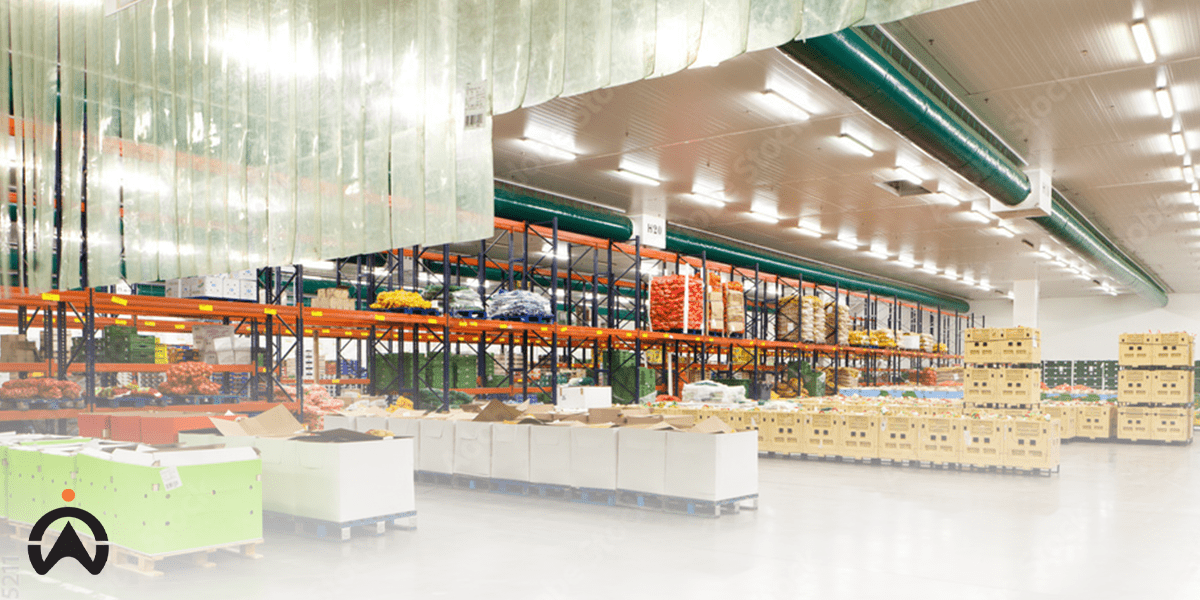
Since different food cold chain products have different temperature requirements, cold chain logistics can provide you with temperature-controlled facilities like warehouses and transportation that can cater to different temperature needs.

These are the standard degree settings recommended:

Deep freeze meat and seafood -30° C and -18° C (-22° F and -0.4° F)
Frozen meat and seafood -18° C and 0° C (-0.4° F and 32° F)
Pharmaceutical drugs etc. 2° C and 8° C (36° F and 46° F)
Chill fruits, veggies, and dairy products 7° C and 14° C (44.6° F and 57.2° F)
Ambient fresh produce etc. 14° C and 24° C (57.2° F and 75.2° F)

Although these are the recommended safe temperatures for certain foods, there is some leeway as some goods can handle the slight temperature change. If the change is steep and frequent, that’s when items get spoiled.

Cold chain technologies in the supply chain

So, to make sure goods don’t get compromised and stay in pristine conditions no matter the phase in the supply chain, the pharmaceutical, medical and food industries all heavily rely on cold chain logistics.

There are several methods to keep goods at proper temperatures. To determine the right refrigeration method, these factors are used:

  • Duration of transit
  • The size of the packaged shipment
  • The weather/outside temperature

After the right method has been chosen, the following modern cold chain solutions can be applied.

1. Shipping containers

To ensure shipments don’t experience fluctuating temperatures, businesses have to swiftly move shipments through the supply chain using shipping containers to ensure the products won’t experience undesirable temperatures.

Shipping containers (reefer containers or vehicles) are refrigerated units with a temperature-controlled onboard cooling system. These are insulated vans, semi-trucks or standard ISO containers that can also be modified to keep products warm if needed.

2. Cooling technologies

These are methods used to keep already cold products at the same temperature.

Gel packs: Frequently used in medical and pharmaceutical deliveries.

Dry ice: It can keep items frozen for a long time, particularly used for food, pharmaceuticals, and hazardous materials. Instead of melting when exposed to air, it sublimates.

Liquid nitrogen: Used primarily to transport biological cargo (organs, tissues, etc.). The extreme cold keeps things frozen for a longer time.

Eutectic plates: Also called cold plates, they are used similarly to gel packs, but cold plates are reusable.

Quilts: Insulated quilts can be wrapped around or placed over freight and are used to keep temperatures constant, so frozen items will remain frozen for a longer time.

Common cold chain logistics challenges

Despite all the tips, tricks, and devices mentioned above, running a cold chain business efficiently is not easy. Maintaining a constant temperature throughout cold chain storage is not always as easy as it sounds.

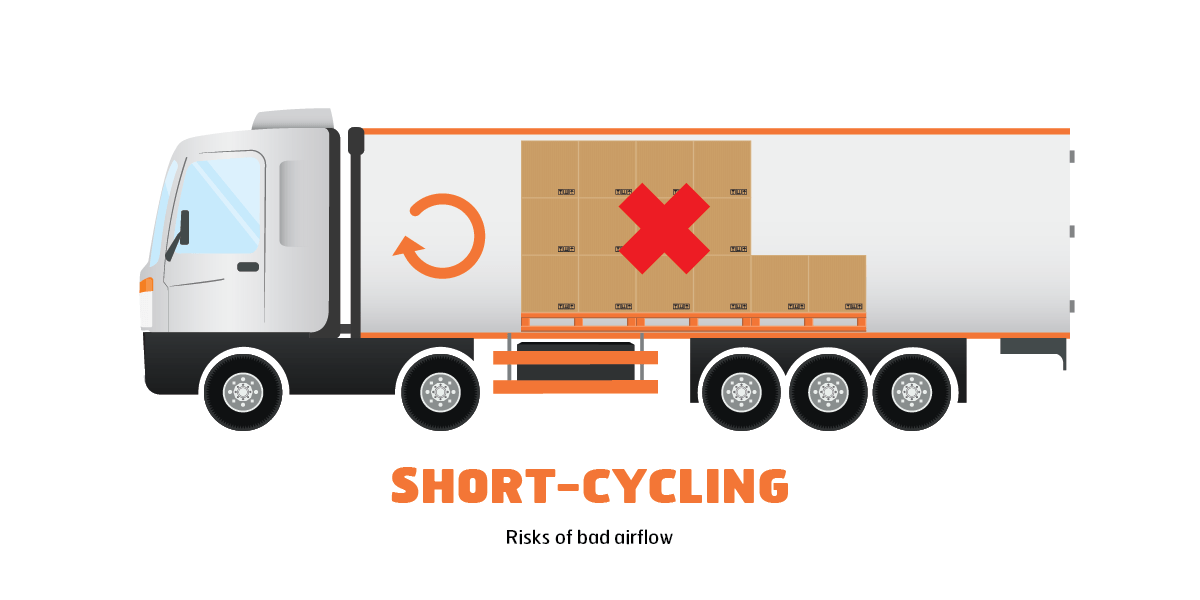
Bad airflow
While good airflow maintains a uniform temperature in your freezers, trucks, and trailers, and distributes air evenly within the area, bad airflow, however, can cause issues like short-cycling, promote humidity, and might have different temperatures throughout the storage and more.

(mock images)

Hot spots
Appear when a shipment is not cooled throughout at a uniform temperature, and certain parts of the shipment are at different degrees.

Hot spots

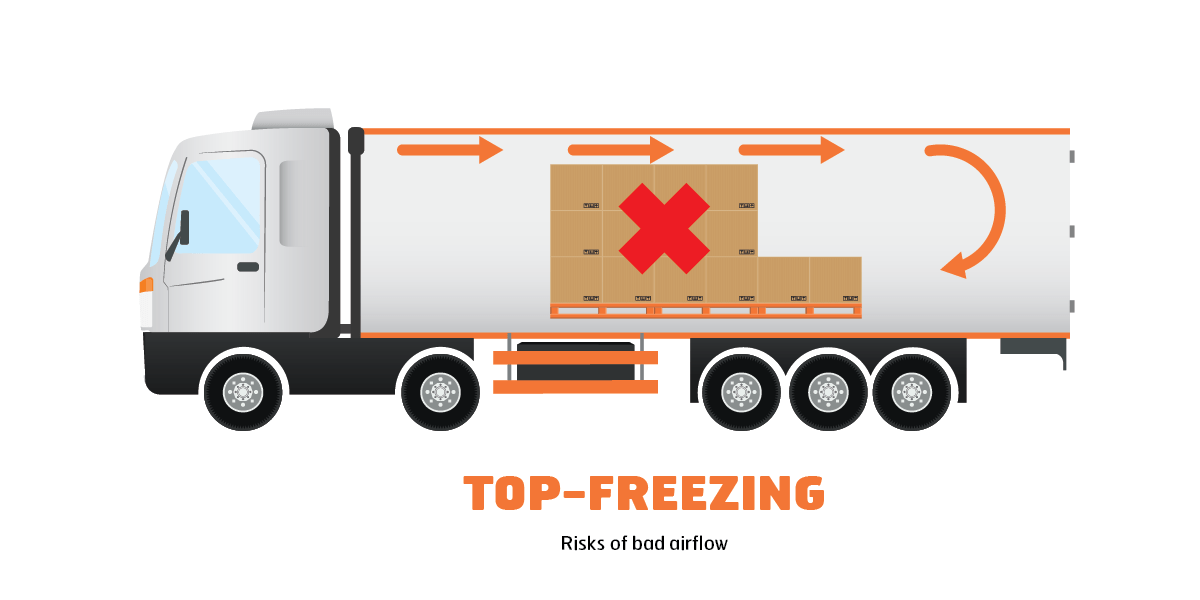
Top-freezing
Is when your shipment is placed too close to refrigerated air in a storage or transportation unit. It can cause frost damage to your products.

Top-freezing

Why is cold chain logistics important?

This allows customers to experience and purchase different goods that come from all over the world. The more customers demand to experience otherworldly products, the more the cold chain logistics companies grow.

While some products can withstand environmental shifts, others can’t. While transporting, quality, flavour, consistency, and safety are all on the line.

The end customer might not notice the prime wagyu beef they bought spent two hours in the wrong temperature range, but they may be at risk of food poisoning or associated illnesses if products are not treated accordingly by the cold chain.

With goods coming from all over the globe, cold chain management simply minimises the risk of temperatures exceeding safe levels during storage or transportation and provides manufacturers and suppliers with better control over their products.

Starting different cold chain jobs in the industry

Want to know how you can start a cold chain logistics business? Or want to join a cold chain logistics startup? If this topic has piqued your interest and you’re looking into different careers within this industry, here are some career paths in cold chain logistics you could partake in:

  • Rent out cold storage to companies selling perishable products
  • Cold chain consulting
  • Provide cold/refrigerated transport services for road, rail, air, and water
  • Manufacturing refrigerated trucks and vans
  • Construction of cold storage
  • Equipment manufacturing or supplying to cold store owners
  • Technology suppliers to temperature-controlled logistics services
Starting different cold chain jobs in the industry

Smart cold chain management

Leave your on-the-ground cold chain operations to Cartrack.

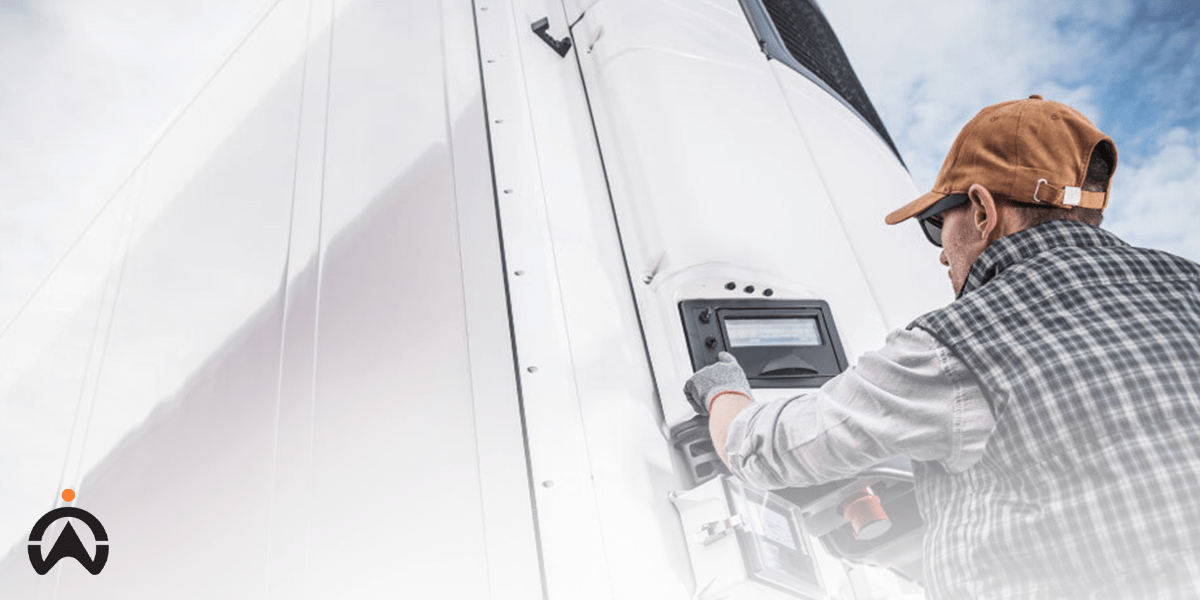
Get 24/7 protection with temperature sensors that remotely monitor temperature, automated alerts on temperature variations sent via email/SMS and our AI-camera system will help with real-time visibility of your cargo and drivers while on the road.

For optimum control over your fleet and the goods you transport, get Cartrack.

Let’s get in touch today.

Empower and improve your construction business with smart fleet management software

The buildings, homes, bridges, iconic structures and the very cities we live in today, are all made possible thanks to construction companies. 

In this article:

  • Find out what makes a good fleet manager. Ensuring quality supervision and making safety a priority is an example.
  • We will focus on how fleet management can benefit the construction industry.
  • Learn how to improve and empower your construction business with a fleet management software platform from Cartrack. 
  • Uncover the five major benefits of implementing construction fleet management for your business.
  • Find out some important tips to grow an efficient construction company from scratch.

To bring these masterpieces to life and ensure operational success, effective fleet management features are a must-have. 

If you are in the construction industry, you’ve come to the right place. 

We will inform you about ways you can empower and improve your construction business, and how smart fleet management software will help you do this.  

We will inform you about ways you can empower and improve your construction business, and how smart fleet management software will help you do this.  

What does a fleet management software platform do?

This can be referred to as a fleet software platform. 

All kinds of businesses or industries can use the tool to manage all aspects of their operations, from the powerful data insights it provides. For example, gain insights about maintenance, driver behaviour, fuel expenditure, fuel consumption and so much more.  

For a fleet manager, time is money.  

A lot of tasks can be automated to cut time spent on admin and create more time for growing the business.

Certain managerial qualities are also needed, to add the cherry on top of a good fleet management process.

What skills do you need to be a fleet manager?

  1. Create quality supervision

Construction fleet managers need to make sure they have an overview of their operations, drivers, and vehicles all day. No matter the time of day, if their vehicles are not working, they need to give reasons why they are not working, react fast, and find immediate solutions. Or perhaps there could be an issue on-site, they need to identify who is in charge of what construction project or which driver is responsible for using certain vehicles or equipment. 

  1. Make safety a priority

Necessary measures should be taken to secure his/her fleet. They need to know the location of their vehicles in real-time to prevent or identify any theft, and to protect their assets during a construction project. Fleet managers also need to make sure their vehicles are driven well and set performance standards for drivers to meet. This will ensure the  drivers, vehicles, and assets are all safe, while at the same time, unnecessary fleet costs won’t be incurred. Another safety measure is to ensure rules and regulations are being followed, where drivers should be encouraged to avoid distractions and safety hazards. In this case, managers should be aware of no-go zones for their fleet, and create geofences or barriers stopping drivers from entering any unsafe or unauthorised areas.  

  1. Make sense of data

Fleet managers need to analyse, interpret and react fast to software data, to make instant decisions that will safeguard operations. If they receive data alerts such as a vehicle has broken down, there’s bad driving or a vehicle is not where it should be, they will need to respond. For instance, there could be a non-functioning vehicle, and then maintenance will need to be carried out to prevent costly repairs on construction vehicles.

  1. Manage vehicle maintenance and make better decisions 

A manager needs to be more strategic about the data received from the software platform, and use it to plan and be more organised in the future. They can make predictions or forecasts for newly purchased or old vehicles and maintenance plans. Questions like are more vehicles needed? Or which vehicles are being used the most and which are the most efficient? Can be answered by the software platform service  to plan ahead. Ultimately, to reduce fleet costs and do operations more efficiently. 

What are the types of fleet management industries out there?

  • Vehicle rental & leasing
  • Cold chain logistics
  • Construction
  • Taxi
  • Transportation & logistics

In this article specifically, we will dive into what fleet management involves for construction businesses, and give you construction fleet tracking and telematics solutions. 

In this article specifically, we will dive into what fleet management involves for construction businesses, and give you construction fleet tracking and telematics solutions. 

What is construction fleet management?

It involves the planning and oversight of all vehicles, drivers, and assets to ensure productivity and effective workflow in the business.  

It is a process where fleet managers gain full visibility and control of their operations using route planning, vehicle fleet monitoring, data collection, and reporting. 

Managers of construction fleets need to see what’s working and what isn’t, so there are fewer project delays and cost impacts on the entire business. 

A smart fleet management platform is the answer to effective construction fleet management– here’s how. 

Why you need Cartrack’s fleet management solution to improve your construction fleet business

  • GPS vehicle and equipment tracking: Easily locate your vehicles and assets to keep them safe, and acquire information about their condition. And monitor if they are being utilised efficiently. 
  • Maintain your construction assets: Get maintenance alerts when your vehicles and machinery need a service to reduce costs and increase the lifespan of your vehicles. Also, reduce downtime and improve productivity.
  • Construction fleet safety: AI-powered tech cameras give insight into driver behaviour, making sure they are not easily distracted and are driving correctly. 
  • Driver management and training: Promoting safe driving habits and training will help save you time and money. This will improve road behaviour and reduce wear and tear on vehicles. 
  • Keep your assets and cargo protected: Ensure they are where they should be, and receive alerts when they enter or exit unauthorised zones.
  • Timestamps: Know when teams arrive and leave job sites to ensure working hours align so can pay your team’s wages accordingly. 
  • Less admin: Less paperwork, as all fleet processes are automated and documented electronically. 
  • Manage costs: Understand your project costs and ensure your pricing keeps you profitable and competitive. Our actionable insights help you spot cost inefficiencies, empowering you to focus on growing your business.

Equipment fleet management in a construction fleet 

Not only is vehicle management important for your construction fleet vehicle or vehicles, but heavy equipment fleet management plays an equal role.

The breakdown of this equipment could be severely costly to the business, limit projects getting done on time, and cause a lack of delivery to clients. 

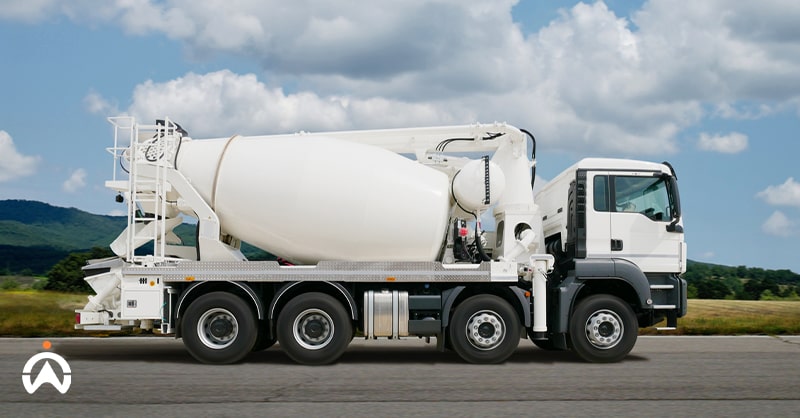
Let’s look at a concrete mixer, as an example.

They allow you to produce your own batches of mixed concrete that can be transported directly to where it’s needed on the construction site. It’s also a money and time saver as you won’t have to rely on a concrete batch plant to deliver and you can control the quantity of what is used. 

Let’s say you have ten cement mixers on site, do you know if they are being utilised effectively and if they are protected? Monitor them with GPS tracking technology, and get data insights on the platform.

They could be left on without supervision, and are turning unnecessarily without cement in them– thus are not being used efficiently. You could have some that are underutilised, so then you’ll save by not buying more where there’s no need.  

Also get live alerts if they are stolen, or are being used without consent and if they are due for maintenance. 

Equipment fleet management in a construction fleet

4 major benefits of fleet management software for construction fleets 

  1. Optimise fleet and operator performance 

Successful fleet management systems involve analysing vehicle and operator data to the max. 

Data insights such as fuel consumption, mileage, mechanical diagnostics, maintenance and driver performance– all allow managers to understand fleet operator history and performance thoroughly. 

Fleet managers can then refine daily operations, save on costs and make informed business decisions. 

For example, truck breakdowns and service maintenance can also be extremely costly. Managers can use the data to develop and manage a vehicle maintenance schedule, resulting in a drop in repairs and extending the lifespan of vehicles. They will also operate at full capacity, which means a reduction in fuel running costs. 

In addition, data about the best routes to take and safe driving methods to use can be implemented to improve driver safety and fuel economy.

  1. Increase productivity and workflow

When fleet management software is in place, there’s less room for errors, issues, delays, or anything that could disrupt workflow, resulting in more efficiency overall. 

Fleet managers must coordinate vehicle and equipment dispatch efficiently to keep construction projects on schedule. They can plan efficient routes, find the best routes and send the nearest available drivers to fulfil site requirements. The right people are assigned to the right jobs, and get tasks done better and on time. Projects are planned accurately and the team is accountable and on top of task deliverables needed to keep projects moving forward.

As a result, the company will have more time to respond to urgent requests and adapt quickly without delays.

  1. Improve invoicing

Automated reports tell you exactly when your construction teams arrive or leave their assigned project sites. 

This lets you see their actual working hours so you can bill your clients and pay your team’s wages accurately, helping you avoid cost wastages.  

Managers should consider their invoicing and transactions to be done digitally, which will also improve data security and safety. 

Also to implement financial record-keeping on a digital platform to improve accuracy and minimise payment errors and/or misses. 

This will allow construction companies to look back at payment history and send accurate invoices to clients.  

  1. Better budgeting & forecasting 

The whole objective of running a successful construction operation is to see if there are capital gains. Companies can thus leverage valuable fleet data to get an overview of expenses and an understanding of what projects are making or losing money. 

Get reports to predict expenses and revenue, and generate more accurate budgeting and projections for the future. For example, they can assess how much money has been spent on fuel within a certain period and budget accordingly. 

Overall, the business should understand where they stand financially, to take the right measures to keep their doors open and finances healthy.

How to grow an efficient construction business

We know a fleet management platform will give you more control of your business, but as with any business, other elements are important to your success.

We’ve got some additional tips for your toolbox. 

  1. Create a great team: You need the right people in your corner to ensure the work gets done right. And you should also be rewarding them for great work and empowering them to do better. 
  2. Build a strong network: Attend events and network to build your customer base. Build a report with existing clients, and create a space for positive referrals.
  3. Launch a website: Your website should include valuable information about your company and services, and answer questions your customers often ask. You should list how your services will solve their problems.
  4. Build effective sales and marketing channels: Having an engaging website and social media accounts is a good starting point for an online presence. But to take it a step further, you should consider using effective digital strategies like SEO, analytics, content marketing, and advertising as part of your overall growth strategy.
  5. Invest in the right construction fleet management software: As mentioned, a saas platform will assist with much smoother operations, and give fleet manager’s more control of their fleet through accurate reporting and data insights. 

The best fleet management for construction businesses is out there. Get started with fleet management software from Cartrack. Grow and improve your business with a tech-powered platform today.