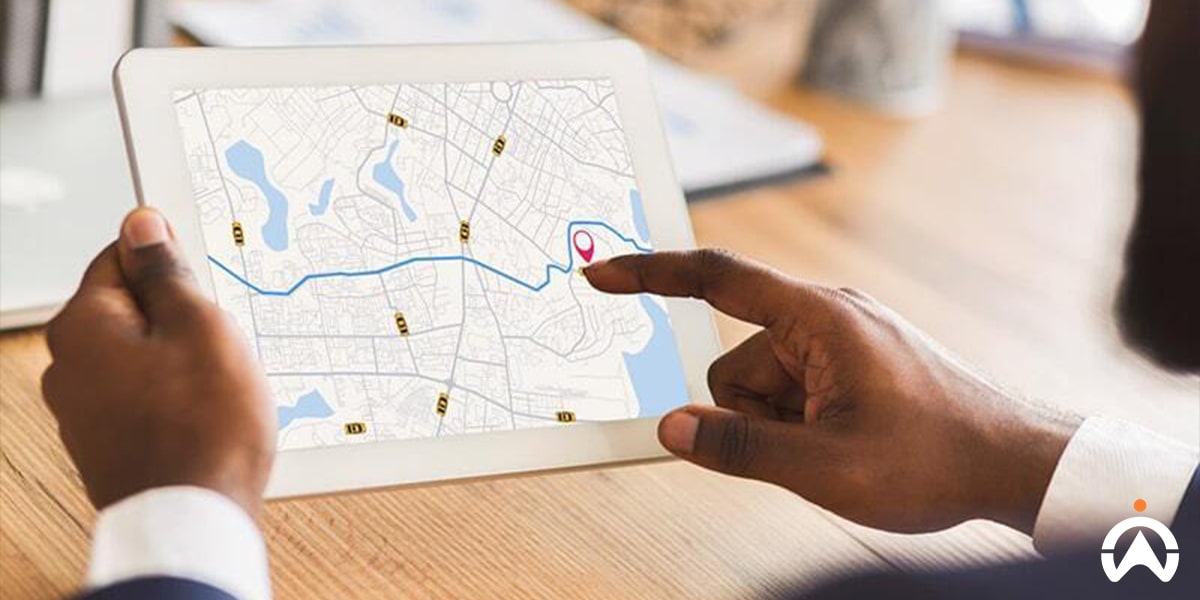
With today’s technology, having to worry about your fleet is old-school. Vehicle tracking systems have created a world where fleet management has been made easier. Get peace of mind with vehicle tracking from dispatch to delivery, all in the palm of your hand.
Technology continues to make our lives easier. Today, smartphones give us access to the online world and even our household appliances like washing machines. One of the tech creations that has completely transformed the fleet industry, is GPS tracking! Fleet companies are now in the know of their entire operations from beginning to end.
The real question is, how do you get the best vehicle tracking software with so much to choose from? By the end of this blog, you will know exactly what GPS vehicle tracking is, what to look for in vehicle tracking software and how your fleet business will benefit from vehicle tracking.
What is a vehicle tracking system?
A vehicle tracking system is software used to determine the exact location of a vehicle at any given time. To receive real-time insights on the geographic position of a vehicle, a vehicle tracking device is connected to the vehicle and uses GPS technology.
How exactly does GPS tracking work?
Okay, let’s break it down: GPS, which stands for Global Positioning System, is a satellite constellation supporting high accurate positioning, navigation and timing (PNT) measurements worldwide. While one of the first satellite positioning systems was initially developed in the 1960s for military purposes, GPS became available for public use in 1983.
Today, GPS has various uses in agriculture, marine surveying, and even fleet management where it is used to determine when, where, and how vehicles are being used, including driver behaviour, maintenance alerts, and more. This is done using the Global Navigation Satellite System (GNSS) network which comprises satellites that are in communication with GPS tracking devices providing information on the location, route, time, and speed of vehicles.
How exactly does GPS tracking work?
How do you know you need GPS fleet tracking?
Let’s unpack fleet tracking a bit more. Fleet tracking refers to a management system that uses GPS to monitor not just a fleet, but also tracked assets.
Fleet tracking uses telematics technology to collect real-time data from the fleet so fleet managers can monitor and efficiently manage the entire fleet and make strategic operational decisions.
These are some indications that your fleet business needs GPS fleet tracking:
A fleet manager is unable to manage drivers’ tasks and completion rates
There is poor visibility over your fleet and drivers, and poor task progression
A fleet manager is unable to assign and communicate important tasks in the event of an emergency
A fleet business has poor customer experience due to the inability to reach high customer expectations
Paperwork and signed proof of delivery (POD) get misplaced
4 benefits of fleet tracking
On the flip side, effective fleet tracking translates to the smooth operation of a fleet business, regardless of the fleet size. In turn, productivity increases, saving the business time and money, and overall, improving the customer experience which is great for any business’s bottom line. Here are 4 benefits of vehicle tracking for fleet businesses:
Driver visibility and asset tracking: Previously, fleet managers had no way of knowing the exact geographical location of the fleet and even the completion rate of the deliveries. Now, GPS tracking systems allow fleet managers to create, assign and monitor drivers’ tasks.
Reduced operational costs: Whether it is reducing money or time, GPS tracking allows fleet managers to efficiently manage a fleet, increase productivity and reduce late and incorrect deliveries.
Good customer experience: With vehicle tracking, customers can get real-time tracking of their cargo every step of the way from dispatch to delivery. Upon delivery, customers can sign an electronic POD and receive a delivery confirmation email.
Reduced admin: Vehicle tracking allows fleet managers to reduce admin burdens with the ability to assign tasks, track drivers and fleet, and store electric PODs, all in one place.
But with so many tracking systems to choose from, how do you know which one is best? Let’s find out.
How to spot a good GPS tracking software
Vehicle tracking tools come in a variety of shapes and sizes from plug-ins, to hardwired, and battery-operated. Here’s how to choose the best fleet tracking software:
Find an easy-to-use platform: Simplicity ensures fleet companies don’t exhaust additional time, resources, and energy. Find tracking software that provides everything you need for your fleet in one platform so that fleet managers can focus on expanding the business.
Get real-time tracking: Efficiently managing a fleet operation entails having access to the right information at the right time, when it is needed. Get real-time vehicle tracking, including HD video footage, and AI-powered cameras, so fleet managers can use data received to make strategic operational decisions.
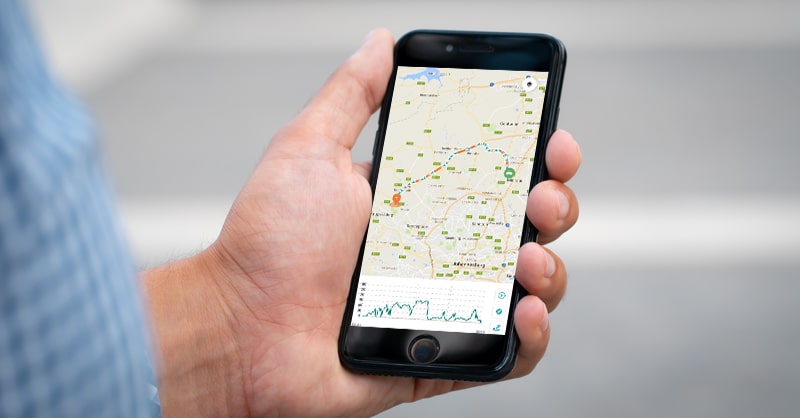
Mobility is a must-have: The ability to get visibility of the fleet and communicate with drivers from anywhere is essential for a fleet to operate smoothly. This way, you can manage the whole business operation (from assigning tasks to routing and dispatching, to the delivery) in the palm of your hands.
Get vehicle tracking in the palm of your hand with the Cartrack App
Cartrack provides an easy-to-use vehicle tracking and fleet management platform. Catrack’s vehicle tracking software puts fleet managers in complete control of your fleet, drivers, and assets. Let’s take a look at some of the most popular features from Cartrack’s all-in-one fleet management software:
Live-vision and AI-powered cameras:Cartrack’s easy-to-use video system provides real-time visibility of your fleet, cargo, and drivers. This AI-powered and live-stream camera technology has up to eight internal or external cameras to ensure the safety of your drivers, fleet, and cargo and includes event recording, giving fleet managers insights into driver behaviour.
Geofence: With an accurate GPS positioning functionality alongside route histories on comprehensive street-level mapping, fleet managers can set up predefined areas (geofences) and receive notifications via SMS and email when vehicles enter or exit these areas.
Protector: Protector is a Value-Added Service by Cartrack. At a push of a button provided on the Cartrack App or website, drivers can get medical, roadside, legal, accommodation, and car hire services, making their work experience as comfortable as possible.
MiFleet:MiFleet is an easy-to-use software that can efficiently manage fleet-related operating costs. With MiFleet, fleet managers can easily import fuel transactions, highlight all fuel risks, get informed on possible fraud and investigate ways to save fuel, money, and reduce admin.
Stolen Vehicle Recovery (SVR): If a vehicle is stolen, Cartrack’s stolen vehicle recovery uses an advanced tracking device to track and recover vehicles. With the support of a highly-trained response team, Cartrack has over 92% stolen vehicle recovery rate.
Get peace of mind with Cartrack
Fleet managers’ lives are made easier with Cartrack’s vehicle trackingand telematics platform, and fleet administration system which provides security, safety and control, anywhere, anytime. .
Contact Cartrack today for peace of mind in the palm of your hand.
To operate a successful fleet business, vehicle tracking is essential! Vehicle tracking has provided telematics technology to efficiently and successfully operate a fleet business. Let’s find out how it works and why your business will benefit from it.
The development of vehicle tracking systems began in the 1960s. Today, vehicle tracking gives fleet managers and businesses more control over their fleet. Truck, taxi, logistics and car service industries depend on vehicle tracking systems to operate efficiently. However, vehicle tracking goes beyond more than merely determining the exact geographical location of vehicles. Let’s discover what more there is to vehicle tracking.
vehicles need a tracking system
Why do vehicles need a tracking system?
The name says it all, a vehicle tracking system allows you to track the geographical location of your vehicle(s) in real-time. Thanks to innovation, vehicle tracking systems now go beyond just determining the exact location of a vehicle at any given time to collecting data and providing detailed reports on driver behaviour, vehicle maintenance, vehicle trip history, and even vehicle fuel consumption and management.
For vehicle tracking to work, a GPS tracking device is required. This is a small, portable unit that is installed on a vehicle (or even asset for tracking) enabling you to track the exact location of the vehicle or asset and receive information about when, where, and how your vehicles are being used.
Sounds similar to in-car navigation systems, right? But there are highlighting differences. On the one hand, GPS navigation systems show your location on a digital map and give you directions from point A to point B. On the other hand, GPS tracking devices use telematics technology to determine a vehicle’s exact geographical location and trip history, and further store this data in a computer, smartphone, or tablet.
Let’s dive into how this smart device works?
How a GPS vehicle tracking system works
GPS which stands for Global Positioning System, is a satellite constellation supporting high accurate positioning, navigation and timing (PNT) measurements worldwide. GPS tracking systems use the position of three or more satellites from the Global Navigation Satellite System (GNSS) to determine an exact geographical location.
There are different ways that a GPS vehicle tracking system can work. Active or commercial tracking systems provide real-time view of the geographical positioning of a vehicle while passive tracking systems or GPS loggers do not offer real-time tracking. Instead, they simply collect and store a vehicle’s GPS location and data on trips based on specific events to be viewed at a later time.
Although both active and passive vehicle trackers are the same GPS devices, they have different functions. Fleet managers use active tracking systemsto monitor drivers ’ real-time locations and drivers’ behaviour. Whereas passive tracking systemsprovide fleet managers with data and information on the fleet vehicles’ geographic locations, driver behaviour, and other vehicle insightswhenever they need access to the information and data.
How can vehicle tracking systems be used?
Because there are different vehicle tracking devices, there should be different ways vehicle tracking systems are used. Let’s explore the different scenarios in which vehicle tracking systems can be used:
To track a fleet: You are a fleet manager and you want to know the exact geographic location of your drivers and fleet. To make matters worse, customers are unsatisfied with the business’ services; complaints include late or no deliveries and missing or damaged assets. And if that’s not enough, you have piles of paperwork to deal with, including missing and unsigned proof of deliveries (PODs).
In this case, fleet managers often use GPS tracking to monitor the whereabouts of the vehicles. With vehicle tracking, fleet managers have a simplified and uncomplicated way to manage and oversee vehicles. Fleet managers receive information on where drivers and vehicles are at any given moment, where drivers have travelled throughout the day, the deliveries that have been completed as well as electronic PODs.
To keep an eye on your car: You are a car owner and need peace of mind that you will find your car exactly where you parked it. You want to have fun, live life, shop and have lunch with friends without having to worry about the security of your vehicle every second.
You can use GPS tracking to stay informed about the exact geographic location of your vehicle at any given time, receive notifications in the suspicion of idling, and if yourvehicle is stolen it can be tracked and recovered.
To access data and information when needed: You are a fleet manager and you are looking for an affordable tracking system that will provide you with the information and data you need to increase productivity, increase customer service, and effectively manage and maintain vehicles.
In this scenario, vehicle tracking is used to monitor vehicle mileage for the fleet businesses, access data and information that will assist in improving driver behaviour and reducing the misuse of vehicles.
3 fleet management challenges solved by fleet tracking
The purpose of fleet tracking is to collect data about a fleet using telematics technology. Fleet managers can use fleet tracking to help solve fleet management challenges. The following are three common fleet management problems that can be solved with fleet tracking:
Driver accountability: Accountability can be defined as the willingness to accept responsibility or to elucidate one’s action. Fleet managers need the ability to confirm that drivers have completed tasks as expected, at the time specified and location. Real-time GPS tracking is the solution to this problem. Fleet tracking helps fleet managers set clear expectations for drivers and allows them to focus on achieving their goals and tasks.
High customer expectations: With efficient delivery options such as one-week, one-day or even same-day, customer expectations have risen over the years and so have competitors. However, vehicle tracking systems have made it easier to meet high customer expectations. With vehicle tracking, fleet managers can optimise routes for drivers ensuring that deliveries are made on time and track assets from dispatch to delivery.
High operational costs: From fuel usage to vehicle maintenance, vehicle theft, and even time, fleet-related operation costs can get extremely high. Vehicle tracking provides fleet managers with the information needed to monitor fleet operation costs and efficiently manage the fleet to reduce operational costs.
benefits of vehicle tracking
9 benefits of vehicle tracking
The obvious benefit of vehicle tracking is that it provides real-time tracking of vehicles, this is a basic function that makes way for more benefits of vehicle tracking. There are more reasons why your business will benefit from vehicle tracking, here are nine:
Full visibility of drivers, fleet and assets: Previously, fleet managers had no way of knowing the exact geographical location of the fleet and even the completion rate of the deliveries. Now, GPS tracking systems allow fleet managers to create, assign and monitor drivers’ tasks all in one platform. The ability to oversee your entire fleet operation puts you in control of productivity, service delivery, and costs.
Reduced operational costs and increased profits: Whether it is reducing money or time, GPS tracking provides actionable insights about how the fleet business’ time, money, and resources are used. This way, fleet managers can analyse operating expenses and reduce unnecessary costs, time wastage,, and increase profits.
Decrease vehicle downtime: Fleet vehicles are either on the road everyday (whether for long or short distances) or in some instances not in use for long periods. Whatever the case may be, vehicles cannot curb the need for regular maintenance or else they suffer from damages such as wear and tear and engine faults.
With vehicle tracking, fleet managers receive diagnostics and alerts to ensure that potential vehicle damages are identified and vehicles get maintenance regularly. This information reduces vehicle downtime and the risk of vehicles breaking down while the drivers complete tasks and deliveries.
Increased customer satisfaction: Vehicle tracking does not only increase customer satisfaction by increasing productivity through clear task allocation and task progression tracking but it also enhances the customer experience by involving customers every step of the way. With vehicle tracking, customers can get real-time tracking of their cargo from dispatch to delivery. This allows both fleet managers and customers to communicate and stay informed on any emergency changes to the delivery. Customers can further efficiently sign electronic PODs and receive a confirmation email.
Theft prevention: Another reason why fleet businesses benefit from vehicle tracking is that it provides the ability to retrieve stolen vehicles. Vehicle tracking systems help reduce vehicle theft-related crimes by making it easy and accessible to track the whereabouts of vehicles, this saves financial and resource losses that could be incurred from vehicle theft.
Seamless fleet management: With vehicle tracking, fleet managers don’t only get a birds-eye-view of the whole fleet operation in real time, but they can further seamlessly create, assign and track tasks. The ability to easily assign and track tasks leads to higher productivity, a reduction in incorrect or late deliveries, and reduced operational costs.
A game-changing benefit of vehicle tracking for fleet management is the ability to communicate efficiently in case of an emergency. When unexpected situations occur fleet managers can communicate changes with drivers, quickly decide which vehicles to send where, or decide on the best alternative routes for drivers.
Minimise paperwork and admin: Managing hand-written paperwork can be stressful and time-consuming. With vehicle tracking there is no need to manually create timesheets, create receipts to record payments, or fill out and search through piles of paperwork. Vehicle tracking allows fleet managers to reduce admin burdens with the ability to assign tasks, track drivers and fleet, and store electric PODs all in one place.
The cut-down of paperwork and admin boosts employee productivity as it lifts the paperwork and admin burdenfrom employees and allows them to fully focus on completing tasks.
Increase driver accountability: The ability to seamlessly create, assign, and track tasks ensure that there are clear expectations of tasks and work ethic. With access to information and data on the accurate geographic location of vehicles, vehicle trip history and driver behaviour each employee can be held accountable for their work ethic whether good or bad. This way, vehicle tracking can foster a culture of accountability, integrity and honesty, and reduce internal and external conflict.
Improved driver safety: Driver safety should be a major priority for fleet businesses as the success of the business is dependent on the drivers’ ability to efficiently and safely complete tasks. Road safety risks on the other hand can lead to accidents, driver injuries, legal issues as well as financial losses.
There are many ways vehicle tracking enhances driver safety. Some of the ways include route optimizationallowing fleet managers to create the most cost-effective, time-saving, and safe route for drivers no matter the size of the fleet business, camera solutions to monitor driver behaviour as well as driver assistance in case of emergency. Vehicle tracking tools can also allow fleet managers to monitor poor driver behaviour such as speeding, harsh braking and acceleration.
Why you need a tracking device for your car
Regardless of being a fleet manager or a fleet business owner, getting a vehicle tracking device is beneficial as it allows you to personally monitor the geographical location of your car, at any given time.
Here are some reasons why you should get a vehicle tracking device for your car:
To ensure the security of your car at all times.
To be alerted if your car is being tampered with or is stolen.
To remotely deactivate your car’s ignition to prevent theft.
To get quick assistance in the event that your car is stolen.
To recover your stolen vehicle.
To receive reports on maintenance, driver behaviour, and vehicle trips.
This may sound like a whole lot of admin but it isn’t. All the above can be done remotely, on your smartphone, with the Cartrack App.
Boost your business with Cartrack GPS features
Boost your business with Cartrack GPS features
Cartrack provides an easy-to-use platform that allows fleet managers to oversee the entire fleet operation all in one place. Cartrack features ensure that fleet managers run the fleet as best as possible at the lowest costs, ensuring that your business reaps the rewards.
Below are some Cartrack features that allow fleet managers to monitor fleet vehicles, driver behaviour, fuel usage, and more:
MiFleet: With MiFleet, fleet managers can manage their fleet, drivers, and fleet-related costs efficiently. MiFleet is easy-to-use software which allows fleet managers to monitor fuel transactions, be alerted on fuel risks, get informed of possible fraud, investigate ways to save fuel and money, and reduce admin.
Geofence: Geofence uses accurate GPS positioning to set boundaries on certain areas that vehicles are restricted from crossing. With this Cartrack feature, fleet managers can monitor when vehicles enter or exit the pre-set geographical boundaries by receiving a notification via SMS and email.
AI-powered cameras: Cartrack’s easy-to-use vehicle video cameras provide fleet managers with real-time visibility of their fleet, assets, and drivers. With this AI-powered and live-stream camera technology fleet managers get event recordings as well as information and data that provide critical information to improve driver behaviour and productivity.
Routing: This is a Cartrack feature that allows fleet managers to easily set, optimise and manage predefined routes for fleet vehicles to reduce wastage in operating costs. In the case of route deviations, fleet managers receive real-time alerts. This way, fleet managers can ensure that drivers are sticking to their tasks.
Stolen Vehicle Recovery (SVR): SVR is a Cartrack feature that can save fleet business financial losses from vehicle theft. With the use of the advanced tracking devices installed on vehicles together with a highly trained response team, Cartrack has over 92% stolen vehicle recovery rate.
Get 24/7 vehicle tracking with Cartrack
Cartrack offers fleet businesses and car owners a variety of packages with various vehicle tracking features. This way you can find a package that is best for you based on your personal or business needs.
Vehicle tracking and vehicle recovery are commonly used for vehicle safety and fleet management. We will uncover how vehicle tracking works and why you’ll benefit from it. As well as the purpose of a vehicle tracking system.
In this article, we will talk about vehicle tracking as a security feature for drivers, vehicles, and fleets.
Let’s also jump between its benefits for consumer drivers and fleet owners.
What is meant by vehicle tracking?
This can be referred to as the technology behind tracking the movements of vehicles and fleets, with a vehicle tracking device installed.
The device is equipped with a GPS Locator, which is fitted in the vehicle.
GPS tracking uses a global positioning system. This allows users to monitor vehicle locations as it pinpoints their exact geographical location. A network of satellites is used to specify the location of an object or person attached to the GPS device.
Vehicle information can be viewed on electronic maps via the Internet or on specialised software from a vehicle tracking provider.
For fleet managers, the GPS tracking software collects and stores information related to vehicle performance and management, including speed, trip distance, and driver behaviour – which can be used by vehicle fleet owners to improve safety and lower running costs.
vehicle tracking systems
What types of vehicle tracking systems do you get?
The system has two core parts – the location hardware (or vehicle tracking device) and vehicle tracking software.
There are different types of GPS software tracking systems that work in various ways. By understanding the difference, you should get an idea of what works best for you.
Vehicle tracking is also described as being “Passive” and “Active”.
“Passive” devices: Also known as GPS loggers, passive systems gather data about the vehicle’s location and store it on a hard drive or memory card, which you can then access at a later time. To use the device, you simply place it in or on the vehicle. When you want to access the information collected by the tracker, simply plug the device into a computer.
“Active” devices: These types of systems collect the same data as passive tracking systems but transmit the data in near-real time or real time via cellular or satellite networks to a computer or data centre for evaluation. This allows the dispatch team and management to locate your vehicle much faster.
vehicle tracking and vehicle recovery
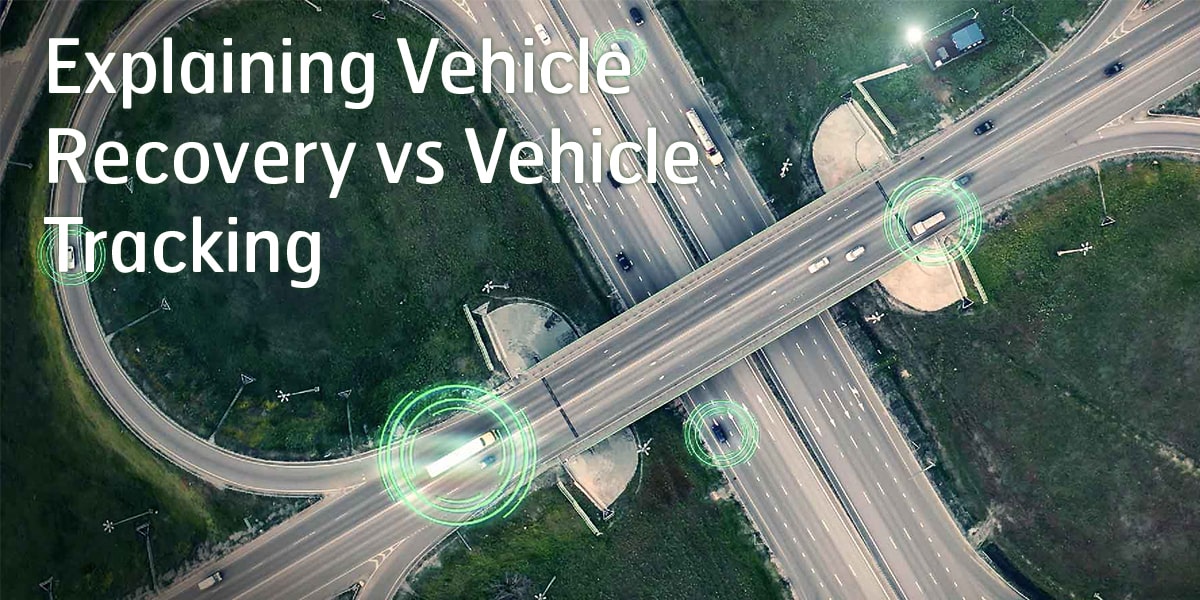
What is the difference between vehicle tracking and vehicle recovery?
Vehicle tracking and vehicle recovery generally go hand-in-hand.
As mentioned, a vehicle tracking system monitors the location of a moving vehicle using GPS technology. It assists in vehicle recovery, as well as gives you access to all types of information concerning your vehicle.
In addition to stolen vehicle recovery from Cartrack, you can get safety product add-ons, such as the Cartrack panic button. If you’re in a hijacking emergency, you can press this panic button and a silent alert will be sent to our 24-hour control room.
Or if you have one of our fleet packages, get access to information concerning driving behaviour patterns such as speeding and harsh braking.
Vehicle recovery – this is the part where the technology or data is used to get the stolen or hijacked vehicle safely back to its owner. The Cartrack recovery team will locate the alert signal from the device via the latest GPS and Radio Frequency (RF) technology.
Which two are the best?
When it comes to choosing between vehicle recovery and vehicle tracking, you would need to check in with your budget, lifestyle, and what works best for you.
Most vehicle tracking packages have vehicle recovery as a standard feature, so a recovery team can find your vehicle if it is stolen, which will also keep your insurance premiums low.
While vehicle tracking is more costly, you will get more peace of mind with the extra safety features. So, if you want to monitor your vehicle more with a more hands-on approach, then vehicle tracking is the best option for you.
Who needs vehicle recovery?
One needs to take into consideration that there are 55 000 vehicles reported stolen in South Africa each year. These realities should be proof that the need to install a vehicle tracking or recovery device is more important than ever.
If you have a more limited budget, there are more affordable options available that will give you peace of mind when it comes to the security of your vehicle. Cartrack offers a package from R99 a month for those looking for a good level-entry stolen vehicle recovery package.
Who needs vehicle tracking?
Companies that use a large fleet of vehicles, either as a means to transport their goods or as a courier service for customers, are in most need of vehicle tracking services. However, anyone who wants to keep track of the driving habits and location of someone using their car or cars could benefit from this service.
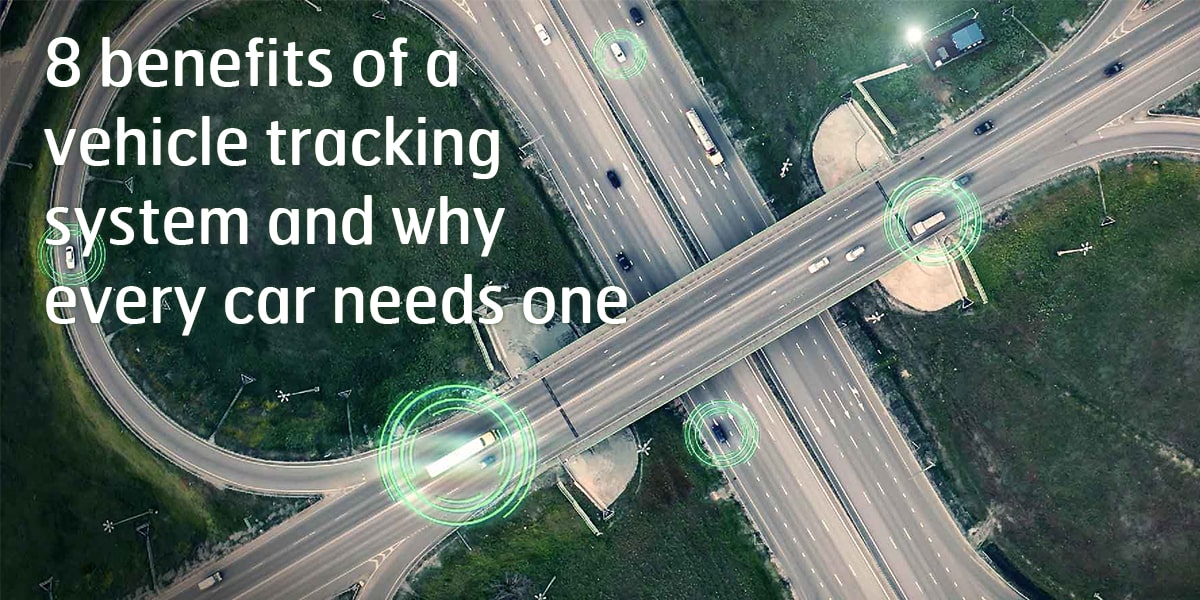
8 benefits of a vehicle tracking system
8 benefits of a vehicle tracking system
No matter what you need vehicle tracking for, there are numerous benefits either for effective fleet management or vehicle and individual safety.
The benefits seem endless, here are a few:
Reduce running costs
If you have a vehicle fleet, the platform monitors driving patterns and gives tips to significantly reduce fuel wastage. Everyday motorists can activate features on the mobile app to improve driving behaviour and reduce running costs.
Protect the environment
It is beneficial for the environment if fuel is monitored. Companies can contribute positively to the community and improve corporate social compliance.
Vehicle maintenance
The platform gives maintenance-service reminders and other alerts to ensure effective fleet maintenance. This will result in less wear and tear on the vehicle, increase its longevity and reduce maintenance costs. Fleet managers can also avoid road penalties for faulty tyres and other vehicle issues.
Lower Insurance premiums
Companies and consumers also significantly save on insurance if they have a GPS vehicle tracking system in place. This is because it encourages safer driving, and helps drastically increase the chances of recovery if thefts occur. Insurance providers use advanced telematics in the device to provide driving and vehicle stats. This helps reduce premiums where possible.
Theft-deterrent
A GPS tracking unit assists with stolen vehicle recovery. Vehicle tracking systems are popular in consumer vehicles for theft prevention. This also offers the ultimate peace of mind, especially in countries where theft is rampant. Drivers only need a mobile phone with an Internet connection to reach out and get their vehicle back.
Driver productivity
Through a fleet platform, driver hours are monitored to ensure they get the rest they need , especially on long-haul journeys Communication through the platform is also streamlined throughout the travel time for effective time management and productivity.
Customer satisfaction
There is also better communication with customers in the production and delivery process through the fleet software app. As a result, businesses become more “customer friendly” which can only improve customer retention and business profits.
Improved business processes
The platform allows for less time spent on admin, allowing managers to focus on other tasks. They can tap into the system’s information about good driver behaviour stats and use it as a benchmark to train drivers.
Cargo security
GPS tracking systems can help replay a route to help fleet managers concerned about cargo theft. They will be able to spot unauthorised trips, and drivers can be alerted to avoid certain areas. If drivers find themselves in trouble, they can get help.
Geofencing
Geofences alert a manager about a vehicle’s whereabouts when it leaves a certain location or boundaries. Fleet managers can ensure their vehicles are operating within specific areas and that high-risk areas are avoided.
Cartrack stolen vehicle recovery
Why 1.5 million people have chosen Cartrack to recover their vehicle
World-class vehicle tracking and recovery technology
A 92% stolen vehicle recovery rate, the highest in South Africa
Get up to R150 000 cash back in the unlikely event that we cannot recover your vehicle
Trained air and on the ground vehicle recovery teams
24/7 emergency control room support
Secure and reliable tracking device fitment techniques
Are you looking for the best car tracker in South Africa? Get the best of the best with us right by your side.
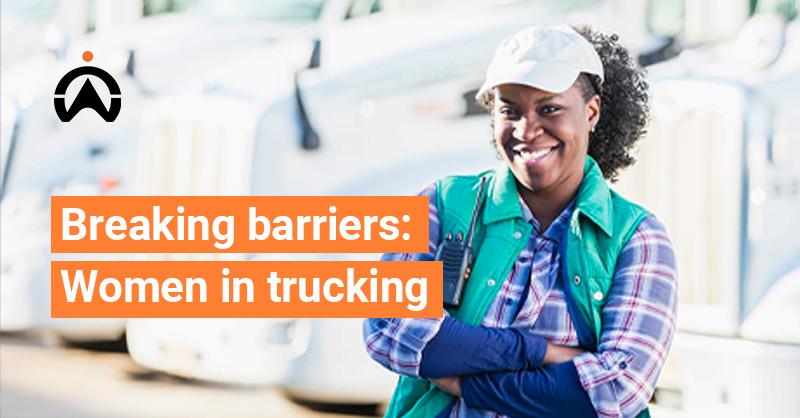
Truck driving has been perceived as a male-dominated industry, however, women have been breaking barriers and positively confronting stereotypes by stepping foot and increasing their representation in the trucking industry.
Over the years, women have been breaking industry barriers to entry by stepping foot into male-dominated blue-collar industries such as mechanics, engineering, construction work, and the focal point of this blog- truck driving. Despite the perceptions, backlash, and stereotypes women have come across over the years, women are increasing their representation in these male-saturated industries. In this blog, we explore the evolution, representation, as well as current and future possibilities of women in trucking.
Women and their representation in the fleet industry
Let’s face it, gender has contributed to how different industries are perceived and has influenced the career paths of both men and women. In the past, roles were largely based on gender types: domesticated and caring roles such as nursing and childcare were perceived as roles for females, upholding feminine and maternal stereotypes. While undomesticated roles were perceived as male roles, upholding masculine and paternal stereotypes. This has led to undeniably gender-segregated careers- mechanics, construction, engineering, and even the fleet industry.
Although the fleet industry is perceived as a male profession, this segregation has not stopped women from stepping into the industry. In return, companies are demonstrating an effort to close the gender gap in the fleet industry by increasing the representation of women in the industry:
The history and current state of women in trucking
Throughout history, trucking has been a predominantly male industry but women gained entry to the industry through a good cause. In the United States, the journey began with World War II when women stepped up to fill jobs of men who were at war, one of those jobs being trucking. While numerous women contributed to the early days of female trucking- in 1918 Luella Bates became the first woman truck driver and drove for Four Wheel Drive Auto Co while men were away at war; in 1929 Lillie Elizabeth Drennan was the first licensed truck driver and trucking-firm owner in the United States, and in 1944 Rusty Dow became the first to drive a 2 237km long fully loaded truck.
Since then, women have continued to step foot into the industry. In fact, according to a survey conducted by the National Transport Institute (NTI) the average percentage of female over-the-road (OTR) drivers increased from 7.13% in 2017 to 7.89% in 2018. The survey conducted by Frightwaves further shows that women now make up over 10% of OTR drivers, an increase from the 2018 survey. Recently, the percentage of female truck drivers has risen to almost 30% increase only in a period of a year (2018 to 2019). Currently, there are more than 300 000in the United States alone. Canada has 97,000 women in the trucking and logistics industry of which 10% are truck drivers.
There is evident growth in the representation of women in trucking, still, there is a long way to go to curb the gender imbalance. Although women make up 47% of the labour force, the American Trucking Associations (ATA) reports show that only 6% of truck drivers are women. Additionally, there are countries where women are still combating discrimination of the division of labour being unequally distributed in patrilocal families- this is a heavier barrier to entry for women located in these countries.
According to research conducted by Zippa,there are currently 4 682 fleet managers employed in the United States, of which 16.8% comprise women, increasing from 12.75% in 2011.
The renowned fleet business- SMH Fleet Solutions, shows that the number of women in the fleet industry has risen in the year 2019, with the company having 33% of females in the workforce, and 35% first-line, middle and senior management.
The US Bureau of Labor Statistics shows that the Trade, Transportation, and Utilities industry is the second largest employer of women in 2017, after manufacturing. Of the 7.7 million workers in the US Transportation and Utilities sector, women constituted 22.6%. There are 24.8% of women represented in the industry in 2021.
The above statistics verify that although women still represent the minority, the industry that was predominated by men is increasingly representing women and the number of women in the fleet industry is still on the rise. To better grasp the growth of women in trucking, let’s explore how women have evolved in the industry over time and how this has impacted the industry.
Female-owned trucking companies
Despite the aforementioned gradual growth and barriers to entry, women are working even harder, empowered more than ever before, have higher confidence and self-esteem, and are coming for the same recognition and equal representation in the trucking industry. As such, some women have moved from making their way into the industry to owning trucking companies. There are several female truck companies around the world, here are three success stories of female-owned trucking businesses:
GoGirl Logistics:
Founded by Siphokazi Matsha in 2018, GoGirl logistics is a full-service logistics company that empowers other women in the industry through training and leadership programs and by hiring them.
Veriha Trucking:
President and owner of Veriha Trucking- Karen Smerchek, runs over 250 drivers with the goal to attract more millennials, including women.
Aria Logistics:
In 2013, Arelis Gutierrez founded Aria Logistics with the objective to simplify transportation management.
Why should women get into trucking?
If you are a woman reading this with a deep desire to ride in a heavy-duty powerhouse or own a fleet of them, there has never been a better time! The trucking industry is opening up for women. Although there is still work to be done in the representation, inclusion, and equality of women in the industry, women today are more empowered with resources and opportunities through social media spaces, organizations, and communities to share support, guidance, and information. There are also initiatives and programmes that strive to empower thousands of women in the fleet industry.
The trucking industry needs more women because it is becoming increasingly difficult for companies to find drivers. The estimated shortage of truck drivers in the United States is 120 000 in 2022. Although this impacts shippers and carriers across the country, it opens opportunities for more female drivers. Women could be the solution to the driver shortage in the trucking industry.
Additionally, trucking is a quick career to get into, provides freedom, and has job security. There is a shared preconception that to be in the fleet industry and have a successful career, you must have a keen interest in mechanics, or be a car enthusiast but that is not true. Those attracted to the fleet industry are drawn by the experience, tasks, adventure, and adrenaline of the daily challenges that are encountered.
Keeping in mind that each profession comes with its pros and cons, being a woman in trucking is not an easy job, but can be very rewarding. According to a study conducted by Deloittein September 2016,lack of flexible schedule (33%), unattractive income (32%), unattractive work environment for women (31%), lack of opportunities for advancement (28%), and lack of work-life balance (27%) are some of the reasons European women stay away from the automotive industry. This is however changing, there has been a path paved by women throughout history, and the learning curve is less prevalent.
Women in trucking- confronting stereotypes and myths
The trucking industry is assumed a male profession, and with that comes the stereotypes and myths about the professional that could intimidate upcoming and existing women in trucking:
Women are bad drivers
Women do not have the physical strength and ability to be truck drivers
Women cannot balance both life and work
Female drivers are paid less than male drivers
Female truck drivers are often in unsafe situations
The good news is that female truckers have proven to positively confront stereotypes:
According to a survey conducted in 2020, men are 88% more likely to have a reckless or negligent driving conviction.
Despite some myths, truck driving is a gender-neutral job as it does not require great physical strength to be a truck driver.
Being a truck driver provides women with the flexibility and freedom that most jobs do not.
Since professional truck drivers are paid based on the number of miles driven, there is no pay gap between men and women.
As truck drivers, women do not have to face dangerous and unsafe situations that occur in public, as they ride solo with just their thoughts.
5 tips for aspiring female truckers
Being a minority group can be challenging. As a female truck driver, you need all the information, guidance, and support you can get. Here are 5 tips for aspiring female truckers:
Finding a school or training program: To operate as a truck driver, you need a valid Commercial Driver’s License (CDL). There are various types of CDL Licenses, as well as various schools or training programs through which you can obtain your license. The trick is to find a school or training program that will go beyond merely teaching you to pass your driver’s test but also empower you with the education, driver development and soft skills needed to become attractive to the professional world.
Get grants and scholarships to help you financially: You might not have the financial capacity to fund your own CDL- this should not stop you! There are grants and scholarships that you can find whether on your own, through female trucking organisations, or internal funding and grants within the school or program of your choice.
Become part of a community: You do not have to do it all alone, join women trucking organizations for further support, guidance, and information. The trucking industry experience differs for men and women. Becoming a part of a community, allows you to connect with other women with shared experiences, and feel less lonely.
Choose a diverse and inclusive company: It is important to find a happy and healthy working environment that provides equal opportunity, support, respect, benefits, and pay for both male and female workers. Make sure you choose a company that desires to diversify its staff and aligns with your needs and values.
How you can diversify your fleet with Cartrack
Diversifying your fleet means having a range of age, ethnicity, gender, and more differences within your workforce. Trucking companies are shifting into diversification of the workforce. In the US 40.6% of all trucking jobs are held by minorities. Seeing the clear gender gap in the trucking industries, trucking companies should continue to strive for a healthy mixture in gender representation.
Adding a female touch to your fleet can bring a different perspective to how companies operate and engage with clients- this way, you can offer something for every taste and preference. Additionally, women can close the truck driver shortage and thus increase productivity.
To attract more women, companies need to offer a favorable working environment for them. Since truck driving is a male-dominated industry, some conditions may not be favorable for female workers.
Opportunely, technology can be used to fuel positive changes and progress in diversifying the trucking industry today by fostering better working conditions for women.
This is how Cartrack can help you attract female workers:
Ensure your drivers are protected and safe: With the increase of violence against women globally, protecting female truck drivers should be a priority. According to the estimates by WHO 1 in 3 women have been subjected to either physical and/or sexual intimate partner violence or non-partner sexual violence in their lifetime.
Cartrack provides fleet management features that can ensure that female workers are always protected and feel safe:
Routing: This software application will allow you to set and manage predefined routes for your fleet. This way, you can set the safest routes and receive real-time alerts in case of any route deviations.
Replay route: This allows you to protect your drivers by always allowing access to footage to absolve drivers, reduce legal costs and smoothen insurance claims
Panic Button: As an optional add-on to your fleet management package, a panic button can be used in case of an emergency. When the panic button is pressed, a silent alert will be sent to the Cartrack 24/7 control room where an operator will provide assistance.
Protector: Give your female workers peace of mind with Protector. This is another optional add-on to your fleet management package, that provides a panic button for your drivers to access a range of services to make the work experience as worry-free as possible. With the push of the panic button, a call centre agent will contact the driver immediately to assist with any listed services.
AI cameras and real-time location: Keep your drivers safe with AI-powered and live-streamed camera technology as well as with telematics and GPS tracking that lets you see exactly where drivers are, how they are driving, and if trips are on track.
Empower your workers: Cartrack offers fleet management training which is intended to provide fleet managers, job dispatchers, and administrators with the skills and knowledge to get the most out of Cartrack fleet management solutions. By simply booking a session, managers receive training on all the latest software features and updates on the fleet management platform.
Provide a work-life balance: Cartrack software solutions and easy-to-use mobile app help drivers complete jobs quicker, eliminate paperwork, and improve communication, making their lives easier.
Let Cartrack transform your fleet business for all types of drivers
The further increase of representation of women in the fleet industry is dependent on fleet companies to open up opportunities for women by hiring women, training women, and providing favourable working conditions for women.
Although diversifying your fleet can empower women, reduce driver shortage and increase productivity- it needs to be managed efficiently.
Contact Cartrack for a complete fleet management platform for your transportation and logistics business needs today.
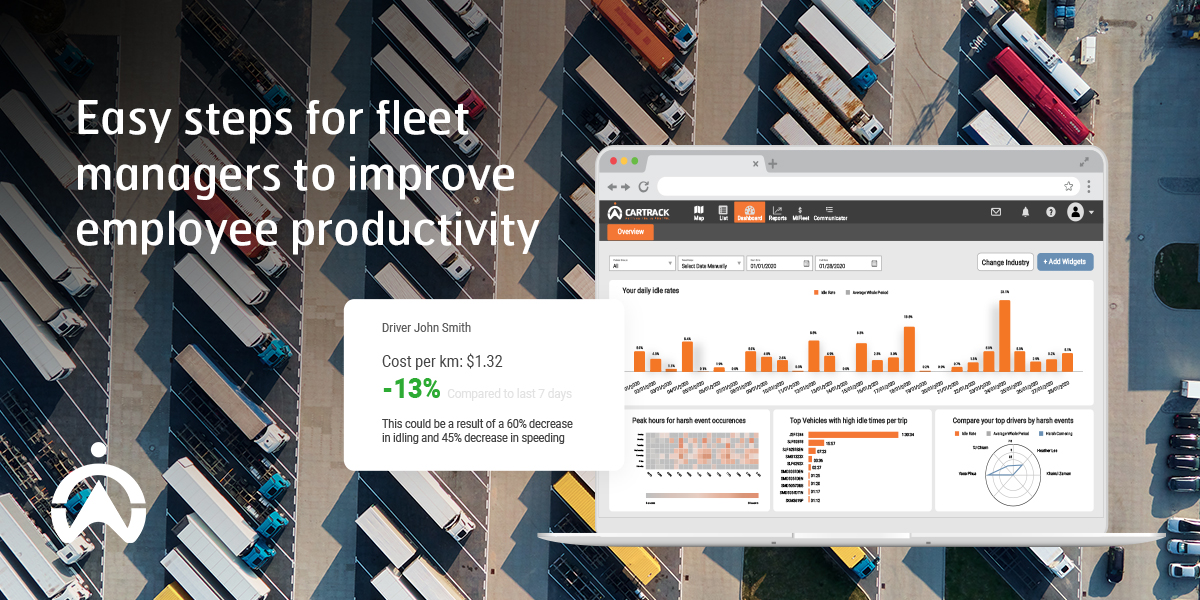
Managing fleet administrative tasks such as vehicle registration, fuel cards, invoicing and much more, leaves little to no time for fleet managers to focus on other business matters such as – employee productivity. Here’s how fleet managers can improve productivity rates.
Fleet managers often wear multiple hats and work on several projects simultaneously. Managing fleet administrative tasks such as vehicle registration, fuel cards, invoicing, driver expenses and quoting leaves little to no time to focus on other critical business matters, such as – employee productivity. Learn how to boost staff productivity and encourage fleet managers to bring production back on track.
With all the responsibilities fleet managers have, some might not be aware of the modern fleet technologies out there that can lessen their load and prove helpful in their daily duties. The most efficient way for fleet managers to increase their employee productivity is by outsourcing some of their responsibilities to someone, or something else.
Telematics and fleet management systems
A fleet management system is a database used to store all records of your fleet. Documentation on active vehicles, fleet vehicle specs, maintenance and anything else that has to do with your fleet vehicles can all be stored and accessed anytime you need the information.
Telematics, on the other hand, is a combination of vehicle tracking and communication services. It gathers and analyses all data collected from your vehicle(s) and sends it directly to the fleet manager. This information is used to keep track of various vehicle information.
Together, they possess a wide range of fleet data, reports and insights that fleet managers have full access to. All the administrative tasks that would have taken the manager several days to gather and compile, would all be waiting for him/her as soon as they open their laptop or phone.
How does fleet management help improve employee productivity?
The role of fleet managers is to keep costs low, maximise profits, and minimise risk while overseeing a fleet. With fleet management systems and telematics, half of the hard work would already be taken care of.
With the help of GPS technology, fleet management systems allow you to:
• Know the location of every vehicle in your fleet
• Be aware of each vehicle’s fuel consumption and be able to save
• Be able to decrease maintenance costs by continuously monitoring the vehicles
• Being the first to know when something needs to be replaced or fixed
• Cut delivery time down by implementing route optimisation
With these benefits put in place, and fleet management systems handling the heavy-duty tasks, fleet managers have more time to focus on maximising safety, improving service delivery standards and customer service and satisfaction. Fleet management systems don’t only improve a business’s work efficiency they also positively affect every employee’s productivity.
What is Employee Productivity?
Employee productivity is about fleet managers working smarter to raise the business’s bottom line. It’s the amount of work an employee gets done in a specific amount of time, or in simpler terms, how many jobs a fleet driver completes in a day.
Managers can access fleet data or employee productivity reports through productivity tracking and see where the majority of the employees’ time goes, how long it takes to complete their work and the quality in which it is done. This information is used by the manager to optimise operations going forward.
Productivity tracking
Productivity tracking measures show how productive your employees are in terms of how many projects they can handle and how fast they can get them done. It also tracks what the employees do when they are idling or simply not working, which websites they visit and how long they spend on these sites.
For a fleet manager, overseeing their many tasks on a day-to-day basis and being able to complete them before the day is done is very important. Productivity rates could rapidly decrease if their process is decreased by employees idling by or not completing their quota of tasks. It’s the manager’s job to keep them on schedule and avoid disaster.
“We often assume that productivity means getting more things done each day. Wrong. Productivity is getting important things done consistently,” says James Clear, author of Atomic Habits, “and no matter what you are working on, there are only a few things that are truly important. Being productive is about maintaining a steady, average speed on a few things, not maximum speed on everything,” says the productivity expert.
James Clear shares some top productivity methods with us:
These productivity methods could be used and utilised by both managers and employees. A valuable tool to have in your workflow management arsenal.
Eliminate Time-Wasting Activities by Using the Eisenhower Box
The Eisenhower box is a task management tool that helps you prioritise tasks. It helps distinguish tasks according to urgency and importance and then lets you go through your work accordingly.
Warren Buffett, a well-known billionaire investor, devised a two-list strategy in which you write 25 of your top priorities on one list, circle five goals from the first list, and jot them down on the second. Then only focus on those five while avoiding the remaining 20.
This is a 100-year-old strategy that’s proven to work time and time again. At the end of each day, write down six important tasks for the next day, then immediately do those tasks first thing in the morning. Repeat each working day with a new list.
Anthony Trollope created a routine where he would ruthlessly do his work at 15-minute intervals every morning without giving himself any leeway. He exceeded his goals and increased productivity by:
Having someone keep him accountable
Tracking his progress
Focusing on the small achievements, not the finished product
Being productive is as simple as taking a few minutes out of your day and implementing one of these methods. Ten minutes of planning could result in a whole day’s worth of productive work.
What does it mean to improve employee productivity?
Increasing your employees’ productivity means catering to their needs. Fleet managers do this by:
Creating a healthy work-life balance
Establishing employee relationships within the workforce
Creating doable working hours
Providing positive feedback on how they can improve their work.
This allows fleet managers to make long-term solutions that will encourage employee productivity in the long run. These suggestions might not have immediate results, but little by little, an improvement will be evident in productivity rates.
5 Ways to boost employee productivity in your workplace
For employees, it’s easy to fall into the mundane routine of working at a steady pace, which often results in incomplete tasks. This could add more tasks to your to-do list for the following day. The more you repeat this cycle, the more work gets piled up and results in procrastination, falling behind on work and slowing down efficiency in your respective department.
Being productive is a skill that many of us struggle to grasp, but it does not have to be that way. Here are a few tips managers should implement to help increase their employees’ productivity at work.
You might think doing a few tasks at once will help you finish your work faster, but in truth, it only slows you down and creates more work, as seen in the scenario above. Giving your attention to one task at a time is the only way to ensure your work is done and done properly.
Take breaks
The time allocated for your break is important. It gives your mind and body time to recuperate and get some much-needed energy back into your system. One might think working for a prolonged period means being productive, but the opposite is true. You will feel mentally drained and produce work of poorer quality at a slower rate if you don’t take some time for yourself.
Set small goals
Small achievements help maintain momentum over the long run. You’re more likely to complete large projects when they come by focusing on every achievement, no matter how big or small.
Acknowledging employees’ achievements helps motivate them, which in turn makes them more productive.
Do the most work when you have the most energy
Whether it’s in the early hours of the work-day, or right after your lunch break, the time of day when you’re most alert and energised should be the time where you attend to your biggest tasks. Big projects require large amounts of energy, so give them the proper amount of time and attention they need. There’s no use letting all that energy go to waste on follow-up emails and organising paperwork.
This method is perfect for preventing procrastination and for reaching objectives without even noticing. All you have to do is fill small spaces of idling by doing tasks that would take you two minutes to do. Before you know it, you will have accomplished a lot of work and improved your work ethic.
Factors that impact employee productivity
Investing in your employees will have a lasting impact on your organisation. Beyond an employee’s experience, skills, and work ethic, several other office-based factors affect their work. These factors impact employee productivity, but they are often overlooked by fleet managers:
Engagement: Managers often think employees are productive simply by waking up, showing up for work and doing their assigned tasks. Getting to know your employees, giving them a sense of value and purpose so they feel a need to want to do more, is also an important aspect. It encourages them to be more productive.
Management practices: What level of engagement does the fleet manager have? Are they available and easily approachable by employees? And does he or she work with individuals’ strengths? Are they able to motivate their workers through their management style? These questions help determine if a manager’s management practice is effective or if it’s a liability to the business.
Workplace environment: When the atmosphere is unpleasant or intense, engagement and productivity levels plummet, which negatively affects the entire organisation’s productivity. Unnecessary stress and pressure might even drive employees to consider working for other businesses.
Fleet managers should look for ways to lighten the mood in stressful moments to ensure their employees remain calm and focused.
Appropriate tools: It is about providing people with the necessary tools and resources they need to get their jobs done to the best of their abilities. As a manager, make sure systems are in place to ensure new employee hires and current staff members have access to all the necessary software and resources they need to get their jobs done.
Employee engagement
This can be seen as the level of involvement or interest employees have within their workspace, towards their managers and with their surrounding colleagues. Whether they are fully involved in the business culture or are struggling to integrate into the environment.
Prioritising employee engagement in the business and various departments within it will build up work relationships and help in the long run, by making employees feel welcomed and more comfortable at work. Providing a safe environment for stellar production increases is an investment any business should be willing to make.
Lack of employee engagement
This lack of interest is often a result of improper organisational socialisation, also known as onboarding, in the first few weeks of the company. This is usually the responsibility of HR and the training department, but fleet managers also have a role in continuing to inform, assist and guide employees in their new roles and duties. This will aid in employees’ getting to know and engaging with their environment, colleagues and managers.
The type of work produced by an employee who is merely there to clock in and finish off their day, and one produced by an employee who truly enjoys their work and interacts with their colleagues, are drastically different.
Based on research gathered from 50 employees, Gallup states that “ Engaged employees produce better business outcomes than other employees – across industry, company size and nationality, and in good economic times and bad.”
Key factors to staff engagement:
Purpose – “ People want purpose and meaning from their work. They want to be known for what makes them unique. This is what drives employee engagement.” says Gallup.
Development – Employees need to feel like their skills and know-how are constantly being improved and they are learning new things by being at work. Not a place where they constantly share their business knowledge, but one where the business gives back by investing in them.
A caring manager – Some managers think they need to lead with an iron fist, but a friendly personality and positive feedback go a long way.
Ongoing conversations – The relationship between an employee and their supervisor is critical. If the employee and manager have a good line of communication with each other, issues can be resolved quickly and the work produced will be more aligned with the manager’s expectations, which means fewer reverts.
A focus on strengths – Employees must focus on the strengths they already have while cultivating and improving their weaknesses.
Have team building activities – Most people might think this is the job of HR, but managers are the ones that have to put the effort into planning and implementing team building activities as they have an impact on the overall production and behaviour of their employees.
Project management
Project management is a process that helps to identify and manage the scope, cost, schedule, risks, and resources of a business. It also includes making sure that all the employees’ tasks are completed, resources are allocated appropriately, and that the work produced provides the business with increased sales and meets the business’s objectives.
The goal of project management is to create an environment where everyone on the team can work together and produce their best work. The aim is not to fix short-term problems like increasing the number of customer calls or emails sent per day. Yes, these are factors that increase employee productivity, but these problems will more than likely not have an impact on productivity in the long run.
What are performance measures
Performance measures are a collection of different attributes that come together to show how much a business, or employee, has achieved, based on its performance in a specific amount of time.
Many businesses use performance measures to set goals established by what their stakeholders and higher-ups expect from them. They then push these objectives towards their fleet managers and employees, to have a set goal.
Understand performance pace for different employees
Remember, not all employees work the same or at the same pace. For fleet managers, comparing one employee’s performance to their overall expectations of them or even to another employee is not always an accurate indicator of their ability to perform.
Managers have to evaluate each employee individually. Keep in mind that they are not all on the same level and they each have their own strengths, weaknesses and process they follow to get through their work.
Use employee productivity reports to customise every evaluation and use that data to individually improve productivity output. This will improve confidence in the employer, as it shows that the performance measures taken are used to help employees identify their ‘blind spots’. It also builds trust as it proves that the software is really there to make improvements and not as a spy tool.
The importance of performance measures
These are to keep fleet managers and businesses accountable and informed about every step taken to reach their goals. Each performance improvement is used to track the trajectory to success and the period in which it would take them to reach their target.
Without performance measures, managers wouldn’t have any means of tracking small milestones made on their way to achieving the business’s objectives.
Here are five pros and cons regarding productivity monitoring and performance measures:
Advantages
Ensures fairness within a work environment
Track individuals and team productivity
Sets positive standards for workplace behaviour, even outside the office
It reveals high-performing employers and underperformers
Shields business from cyberattacks
Disadvantages
Distributions of trust
Creates privacy problems
Employees can feel highly monitored and start to feel uncomfortable doing their job.
Lack of knowledge concerning the monitoring software
Cannot track where online, the employee spends their time
Most of the disadvantages of productivity monitoring can be dealt with through effective communication, indicating what exactly will be monitored.
For fleet managers, it’s important to be open and inform fleet drivers of the necessary safety measures put in place in each vehicle, yes, including the AI camera system recording their every move.
Advantages of employee productivity tracking
Productivity tracking helps to fine-tune business efficiency and employee work ethic. It helps the business in the long run by focusing on long-term solutions and not just short-term ones.
With the help of productivity tracking software, fleet managers can change the way they monitor employees, measure time, and keep track of their teams in between formal office hours.
Here are some of the benefits of implementing employee productivity:
Improve employee productivity and efficiency
Identifies struggles and internal problems
Efficiently track attendance and effort
Improves working from home conditions
Creates trust in employees
Effective project management
Increases security and safety
Employee productivity monitoring analyses the data provided to improve your employee’s work ethic, behaviour and productivity.
It is designed to show fleet managers which measures work. The data can be used to improve a team’s productivity as well as allow fleet managers to make informed important decisions like:
Whether they need to adjust their goals
Modifying certain departments.
It also gives a business a good indication of how far they are from achieving their objectives.
When looking for a digital assistant to help you improve your employee productivity ratings, workflow and work ethic, Cartrack’s fleet management solutions do it all.
Cartrack offers fleet managers a range of add-on features that help cut fuel costs and driver expenses, lowers acquisition prices, saving businesses time and money.
Some add-on features include:
Routing
Fuel Monitoring
Temperature monitoring
CarWatch
Take your first step into work optimisation, contact us today to get a quote.
Step into the world of modern fleet management and get unique insights into your fleet vehicles and drivers through telematics solutions. This article will help you get the most out of your fleet and fully understand what telematics systems can do for you.
The telematics industry strives to benefit and make changes to every business it touches, and its efforts are evident. Telematics has grown immensely in recent years, encouraging businesses to implement telematics solutions to improve safety, increase efficiency, and most importantly, reduce costs.
This has seen the demand for innovative technology, prompting more businesses to grow curious about what telematics can be used for and how it can benefit them.
This blog will answer all your questions and give you the information you need to make an informed decision about telematics.
What is telematics?
What is telematics?
Telematics (also known as fleet telematics) is a system used to collect GPS fleet tracking data along with a range of vehicle-specific information and store it in a database. It integrates both wireless telecommunications and information technology (informatics) to process, deliver actionable data and efficiently convey information over vast networks.
Telematics is often associated with fleet management and vehicle GPS tracking devices. With these fleet systems in mind, telematics can be defined as an onboard communication system where all fleet software can interact with one another and share vital information.
Telematics can also be seen as a new method of integrating all types of data, from vehicle equipment to driver behaviour.
How do telematics systems work?
For a telematics system to work, it needs a few items:
A communication device (mobile phone, computer, laptop and/or tablet)
Fleet communication software
GPS tracking device
Engine interface
Input/output interface
SIM card
Accelerometer
Alert/notification
Telematics systems function by connecting a GPS fleet tracking device, or other data logging tool, to an asset. The tool collects critical performance data about the asset, like real-time engine diagnostics, vehicle location, and vehicle activity.
After being collected, the device transmits the data to a data centre where it can be analysed, interpreted, and compiled.
Fleet managers can access the uploaded data via the software of the telematics system once it has been uploaded. However, the method of doing so may vary depending on the particular telematics solution.
How are telematics devices installed?
Telematics is implanted via the vehicle’s on-board diagnostic (OBD) II port, or CAN-BUS port, typically located under the steering wheel.
GPS tracking devices and fleet management telematics are installed in discrete places so they are hard to locate and tamper with. Here are three types of units available and their hiding spots:
Plug in: These are devices that can be easily plugged into any fleet vehicle’s cigarette lighter, like Cartrack’s compact mobile unit. Since these devices have to be plugged-in to function, they could be very easy to spot.
Hardwired: These devices are installed directly into the vehicle and connected to the vehicle’s power supply (battery). Because they are not attached to the OBD port, they can be easily hidden in the vehicle.
Battery operated: These have a battery or solar charger of their own and can operate independently from the vehicle, so they can be easily placed anywhere in the vehicle. These types of devices often have powerful batteries that could last for months at a time.
After installing telematics units, the device collects GPS fleet tracking data and a range of vehicle-specific information where fleet managers can implement smart solutions to achieve, automate and improve the following:
Manage route optimisation
Ensure the safety and compliance of the drivers
Help identify and improve bad driving habits
Receive notifications for preventative maintenance
Reduce idling, fuel and maintenance costs
Manage assets’ utilisation
Help drivers comply with policies and regulations
Reduces carbon footprint
A centralised server receives the information from the units via General Packet Radio Service (GPRS), 4G or 5G mobile data and cellular networks or satellite communication, and displays it through a secure website (usually the telematics system’s platform) accessed through tablets or smartphones.
Telematics and vehicle tracking systems
Vehicle tracking is the most common use of telematics in most industries, especially in trucking and transportation.
This technology is preferred in vehicles because of the notable benefits it offers. The ability to map the exact location of the vehicle, its speed, and its maintenance status, all through the use of GPS systems, combined with onboard diagnostics.
Here’s a list of additional information gained through telematics.
Location
Fuel Usage
Maintenance issues
Fuel consumption
Idle time
Instances of harsh driving (e.g., hard braking or cornering)
Speed and rapid acceleration
To make good use of this information, the telematics system analyses the data for certain events and patterns and creates reports on specific drivers and fleet vehicles, specifically for the convenience of fleet managers.
Telematics integration with vehicles
from fleet manager to fleet driver
Telematics integration with vehicles
Typically, trucks, trailers and other fleet vehicles are sold without tracking systems installed and are fitted with GPS tracking devices soon after they have been sold. If the vehicles don’t come pre-equipped with this technology, many aftermarkets offer GPS and telematics unit installation.
Some car dealerships also partner with telematics providers or vehicle tracking companies, such as Cartrack, to provide a seamless end-user experience and sell vehicles already fitted with Cartrack’s tracking units.
How to positively use telematics technology in your fleet
You have now gathered a basic understanding of telematics software and decided to implement it into your business, great! To properly use this technological game-changer, here are a few key areas where telematics can boost your business.
1.Safety tracking
Fleet telematics allows you to track vehicle location, speed, seatbelt use, as well as driving behaviour. You receive a digital record of every aspect of your fleet vehicles’ operations, which can provide insight into where and what improvements can be made to prevent accidents and improve driver safety.
2.Better payroll management
A telematics solution can help you reduce instances of overtime and timesheet fraud by monitoring your fleet’s electronic time logs and allocating resources based on real-time information. You can optimise your drivers’ routes so that no driving time is wasted. You’ll also know exactly how long and how far a vehicle has driven, making payroll calculations easier.
3.Trailer and asset tracking
Telematics can be used for more than just monitoring vehicles. You can attach a GPS tracking unit to trailers, expensive equipment, and non-motorized assets to prevent them from becoming lost and help find them faster if they are stolen.
You can also create alerts to be sent to you if a trailer or other non-motorized asset is moved without your permission.
4. Insurance risk assessment
With the permission of the owners, telematics can be used by insurance companies to monitor driver behaviour, allowing them to better determine risk factors and adjust insurance premiums accordingly. If additional help is needed in sorting out insurance, Cartrack helps motorists find affordable insurance by viewing the current insurance package used and providing you with 14 quotes with better rates.
How is it used in everyday life?
The telematics solutions market is projected to reach $62.6 billion by 2025, up from an estimated $29.9 billion in 2020. With this amount of money on the table, it’s safe to assume not just the transportation and freight industries reap the benefits of this system. Almost every industry has space in their regime to integrate telematics into their business and some of them use this technology a little bit differently than the rest.
Here’s a look at the industries making the most of telematics today.
Heavy machinery: Maintains heavy equipment and prevents theft with the use of telematics and asset tracking safety features.
Public Security: Monitors the location and driving speed of emergency vehicles to improve officer safety and increase response times.
Fleets: Trucks and various fleet vehicles are monitored to ensure shipments arrive at their destination safely and on schedule.
Construction: Performance diagnostics, fuel usage, and maintenance schedules are all reported on through the use of telematics.
Oil & Gas: Oil, gas extraction and transportation activities are monitored to improve efficiency and worker safety.
Refrigeration: The temperature of cold or heat-sensitive products is monitored to reduce spoilage and ensure safe consumption.
Executive fleets: Improve luxury vehicles’ maintenance to reduce breakdowns, unscheduled repairs, and part replacements.
Landscaping and lawn care: Monitors the performance of employees and equipment to improve productivity and customer service rates.
Generators: Generator conditions such as fuel level, battery voltage, and coolant temperature are monitored to ensure it is in healthy conditions and can run for longer.
How does telematics benefit the fleet business?
Telematics works to help fleet managers conduct their vehicles, drivers and other fleet employees. With telematics, GPS devices work to track your vehicle, trailers and assets successfully while also gathering vehicle data such as a full trip history of your vehicle and other actionable insights fleet managers can use to improve vehicle and driving conditions.
Other noticeable improvements telematics can make in fleet management are as follows:
Boost fleet efficiency
With actionable insights from our telematics and fleet data, you can track your drivers’ progress, improve communications and streamline your workflow.
Eliminate toll and fuel-card fraud
Telematics will automatically verify fuel-card payments whenever they are made by matching fuel sensor data, vehicle location history and fuel-card recipes. Making sure each driver is using their authorised cards at all times.
Always know exactly where your assets are
With our GPS units, you don’t only know the exact location of your assets but also ensure the cargo is accounted for from dispatch to delivery. For extra safety measures, you’ll receive alerts and footage whenever the cargo door is opened and the cargo itself.
Actionable insights on the conditions of your fleet
From the petrol intake to driving behaviour, telematics gives fleet managers all the information they need regarding their fleet. They also receive real-time alerts used to address maintenance issues immediately before they escalate. This allows you to keep your vehicles operational for longer, saving money on large repair bills, avoiding critical safety violations, and protecting your Compliance, Safety, and Accountability (CSA) scores.
Real-time tracking
Easily track the progress of your deliveries with automatic job status updates via SMS or email with electronic signature and photo sent, for that little layer of assurance and safe delivery.
Accurate dispatching schedules to ensure on-time deliveries
Use the Cartrack communication app for easy information transfer from fleet manager to fleet driver. Say goodbye to incorrect customer information, ensuring faster deliveries and happy customers.
Have Streamlined communication
Fleet telematics can drastically improve communication between drivers and fleet managers or administrators in a business. Improved communications, combined with accurate vehicle location, can help you accurately estimate arrival times and improve customer satisfaction.
Decreased fuel costs and operational expenses
Telematics can assist in uncovering waste areas, such as vehicle idling or fuel leakage, and allow fleet managers to rectify them quickly, improving fuel efficiency in the business and the bottom line. It can also assist management in planning the most efficient route for each driver to save wasted miles.
It increases driver safety
Accidents are always harmful to businesses and could be worse for drivers’ health and safety. Telematics can be used to improve driver behaviour and promote overall road safety. Fleet management software collects telematics data on your team’s driving habits and ranks your drivers according to their safety scores. You may then teach your drivers safer driving habits and improve the overall safety of your fleet.
Telematics and fleet management software can calculate distance driven and fuel expenses for different drivers in different jurisdictions automatically. They can also automate calculations for International Fuel Tax Association reports, increasing administrative efficiency, lowering calculation errors, and decreasing your company’s chance of being audited.
How does telematics work with other fleet software
How does telematics work with other fleet software?
Businesses are increasingly relying on telematics and fleet management software to assist them in managing their fleets.
Fleet management software, a branch of telematics, is popular among modern companies as a way to manage the vehicles in their possession. Fleet management systems allow them to gain a comprehensive view of the health, profitability, and productivity of their entire fleet.
Many fleet managers use both fleet management systems and telematics to simplify and efficiently compile gathered information.
What is fleet management software?
Fleet management software is a large information database where you can keep track of everything and anything linked to your fleet. These records may include:
The purpose of using both telematics and fleet management technologies is to reduce the administrative processes associated with managing all fleet lifecycle information. This helps make sense of a fleet in terms of operating costs and total cost of ownership, as well as ensure that you are operating legally, complying with regulations, and effectively maintaining assets.
As such, these fleet systems usually have quite comprehensive reporting tools that can set alerts and send emails while perfectly integrating with third-party systems that offer financial solutions like Cartrack’s SARS-compliant logbook feature.
Are both systems needed?
If you’re asking yourself if the use of both telematics and fleet management software is truly needed to optimise your business, the answer is yes. These systems work together to improve fleet efficiency and productivity and provide several benefits that can easily be observed as soon as the technology is integrated into a business.
The benefits include:
Creating risk analysis by combining driver behaviour information with data on accident rates, medical history and fines
Safety monitoring
Elimination of costly idling
improved routes for travel
Streamlined processes by eliminating administrative time
Improved accuracy by eliminating redundant data entry
By incorporating telematics and fleet management software into business practices, you can reduce investment and operating costs in a variety of areas, including fuel purchasing, leasing, maintenance, accident management, and accounting.
Gain fleet insight with Cartrack
Use Cartrack’s fleet management solutions as well as the telematics technology to have your whole fleet under your control and watchful eye. Be informed about all the comings and goings of your fleet at any time and location.
Contact us on our website and take the first step in achieving fleet efficiency.
When transporting various materials, certain safety measures should be taken to keep cargo as safe as can be. Read more to discover top-notch safety features used by the freight industry.
The freight industry transports hundreds of different materials, ranging from food and fabric to coal and fertiliser. Most of these materials are valuable which encourages criminals to go to great lengths to steal the cargo while in transit. But rest assured, there are plenty of ways to keep your cargo safe with the help of good fleet management software and its advanced features.
Safety measures for cargo
Cargo is transported through different types of freight channels like land, air or water. No matter the type of cargo, special care is taken to ensure that it is not damaged while in transit. Packaging the cargo in containers and wrapping them in foam, bubble wrap, or any other material is just one way to keep cargo safe and prevent it from moving around or being tampered with.
Shipping companies are responsible for packaging and labelling cargo before departure and are liable for protecting the contents against damage or theft.
Here are a few tips shippers can take to ensure cargo is handled safely:
Use proper shipping supplies like cushion materials, appropriate lashing, and labelling
To prevent shifting while on the road, the cargo must be secured on all sides
Fill open spaces with various materials like boards, airbags, empty packages and foam to minimise weak points
Secure cargo with special lashing on the top and bottom side rails, as well as the corners
Use nets to secure cargo in place
Cargo being loaded for shipping
High-risk cargo
Living in certain countries where crime is prevalent and fleet attacks are common can be stressful for both fleet managers and transporters.
Although cargo theft can occur at any time, criminals usually target goods in transit. This is mainly because of the countless unsafe parking spots and dodgy streets along the way. This is when cargo is at its most vulnerable.
The distance between one point and another might also be a factor in an attempted theft. The more the driver is on the road, the more tired and less aware they get, making them an easy target for hijackers. As a result, crime syndicates may attempt to steal the goods at stop signs, under bridges, in unsafe parking spots or on deserted quiet streets when the driver least expects it.
There are a few preferred features frequently used by fleet managers to avoid these situations, geofencing being one of them. It’s a feature that allows perimeters to be set around any area, or danger zones, that fleet vehicles might pass along their way.
When the vehicle arrives at these locations, an alert will be sent and if for some reason, the vehicle does not exit these locations, the fleet manager would immediately know something is wrong and can quickly act by sending emergency personnel to the exact location, hopefully arriving just in time to stop the hijacking attempt.
The impact of technology on the road.
With safety measures becoming more sophisticated and technically advanced, it seems crime syndicates have also evolved with the times and started implementing tech in their operations.
Truck hijackings in South Africa have been increasing over the years and don’t seem to be slowing down anytime soon. Last year, Police Minister Bheki Cele reported a sizable increase of 31.7% in truck hijackings across the country.
“Criminals are now so sophisticated that they are using signal jammers, diversion tactics, infiltration teams, blackmail and even planted employees to reach products or assets,” says transport tactical risk specialist, Stan Bezuidenhout, as he shares some insights with Arrive Alive.
Though this might all seem negative, hope is not lost. While criminals become more intricate and ‘professional’ in their craft, technology will always be one step ahead. Fleet management safety systems have certain features such as CarWatch, Protector, AI surveillance cameras and many others that can add another layer of monitoring and security to protect your assets.
Cargo loaded on a truck
Keeping track of your cargo
Monitoring the arrival times of drivers is one of the most effective ways for fleet managers to keep their trucks and cargo safe. To ensure optimum safety while in transit, tracking companies such as Cartrack provide fleet management solutions to help with daily operations.
While fleet managers do their part to keep their fleet safe, transporters also have the tools to manually protect cargo with certain features provided.
Benefits of geofencing:
Geofencing provides a location-based service that defines a virtual perimeter around any area via GPS, such as a warehouse or even an entire city.
With this feature, fleet managers can:
Live track their vehicles
Identify certain events while on the road, like travelling in an unassigned area
Deliver automatic notifications to preset geofenced areas and receive alerts when drivers enter or exit high-risk or unassigned areas
Allow immediate reaction if theft of cargo or hijacking occurs
While geofencing is a huge asset in terms of fleet safety, it also contributes to the business’s bottom line. By using this solution, fleet managers will save money that would have otherwise been spent on replacing or repairing stolen or damaged vehicles.
AI-powered and live-stream camera technology:
It is more important than ever for fleet managers to have an extra pair of eyes on the road and ‘be’ present in each of their fleet vehicles. It may be an overwhelming task to manage risk for large fleets, but LiveVision is the dream tool that provides fleet managers with the visibility needed to ensure driver, vehicle and cargo safety.
LiveVision is Cartrack’s AI-powered video surveillance solution that can be used to protect, monitor and record the activities of your drivers and fleet. This solution can be used for fleet management, fleet tracking, and fleet security.
Fleet managers can gain full visibility of cargo by live-streaming the journey from their laptops or phones, or instantly download footage to review events or attend to alerts of potential cargo tampering.
International road safety rules
While ensuring cargo arrives safe and sound is a top priority, the purpose of certain safety measures is to reduce the chances of attempted theft or road accidents.
A Monash study on fleet management and safety provides insight into how three different countries approach the issue of road safety:
In Germany, The German Traffic Safety Council has advocated the formation of volunteer safety circles, in which the company’s fleet of employees gathers to discuss prominent safety issues and find solutions under the guidance of an expert moderator. They also offer one-day “Safe, Economical, and Environmentally Friendly Driving” courses.
In the United Kingdom, various strategies have been implemented in the UK to improve road safety within organisations. These strategies are as follows: driver training programmes, reward schemes, punishments, accident investigations, driver monitoring systems, and driver feedback procedures are among the long list.
In South Africa, we have taken a hands-on approach with our road and cargo safety protocols. We have fleet management and vehicle recovery companies such as Cartrack that offer training facilities for drivers to better improve their driving skills and driving behaviour, as well as fleet management training, helping fleet managers reach a higher operations management level.
We also have a wide range of safety features, specially made for every individual motorist as well as businesses with any number of fleets. These features include Carwatch, Protector, Fuel monitoring, Geofencing, AI-Powered cameras and over 40 reports features that constantly monitor the state of your vehicles as well as your drivers. With all these insights and tools at your fingertips, productivity and efficiency levels within your business will only improve.
Cargo safety inspection
End goal for driver and fleet safety
Although countries around the world take different approaches to their cargo safety protocols, the end goal is for all to improve road safety for cargo, fleet vehicles and transporters involved in transit.
Implemented cargo safety protocols are necessary steps taken to reach:
Reduced theft and hijacking attempts
Vehicle accident prevention
Enhanced driver education, alertness and behaviour
Readily available accident analysis reports
Reduces operation costs for damaged or stolen goods.
Improve and implement safety with Cartrack
Cartrack offers security features specially designed to protect your drivers, fleet and cargo against theft, hijacking, or any other roadside emergency that may occur. Put your trust in us and we will protect your assets. Visit our website today to get a free quote.
What is business and transport logistics management and how can it benefit my company?
Business logistics matters to every organisation, regardless of the scope, industry or specialisation. Read more on how fleet managers can better utilise logistics management to transport goods and services from point A to B.
This is the process of transporting goods from one primary location, such as a manufacturing warehouse, to their destination. This process of movement makes up contemporary business logistics and keeps your logistics business running smoothly.
logistics and supply chains
What are logistics and supply chains?
Supply chain management and logistics management are two topics often used interchangeably because both concepts are central to running a successful business. While the supply chain includes every element from production to delivery, logistics is only one element in the larger concept of the supply chain.
Let’s unpack this a bit more.
A Supply chain is a network of businesses, organisations and other people working together to produce and distribute popular products. Logistics, on the other hand, handles the safe movement of supplies and finished goods from location A to B, this includes transportation and warehousing.
Logistics also includes two processes:
The gathering of data on each process involved in a company’s distribution
The allocation of resources such as human resources, materials, equipment and capital to the different steps required in the movement of goods
Although logistics is a simpler concept to understand than the overall supply chain, don’t let its simplicity fool you, logistics has a huge role to play with many steps within it to keep it functional and beneficial to the business.
Business logistics: What it is and how it works
Business logistics refers to the workflow and oversight of goods in transit, whether from a supplier to a business or from a business to a customer. The key concept here is managing these processes as a unified system.
You don’t have to manage and oversee this process manually. A logistics management system can take care of inbound elements like purchasing and arranging the transportation of products, parts, materials and finished inventory from suppliers to a company’s warehouse or manufacturing plant. And outbound elements like the flow of items through a company’s production line, warehouse and ultimately to the customers.
Both these elements would need the logistics manager to implement other management techniques such as:
Transportation management
Warehouse management
Fleet management
Order processing
Inventory control
Supply and demand forecasting
Managing third-party logistics (3PL) service providers
A logistics management system can take over these different management departments and automatically gather and process information as needed. Leaving logistics managers with practical tasks such as making sure the supplies being transported arrive safely and intact, and striving to attain positive feedback from customers.
business logistics management
How does business logistics management boost profits?
Business logistics management gains profit and trade for the business, by exchanging goods and services, making logistics the backbone of any business. Without financial gain and trade, there would be virtually no transactions taking place, no deals, no profits and ultimately, no business.
But when done right, business logistics management can make organisations leaner and more profitable over time. Granting broader visibility over the movement of goods and items from production to consumption, identifying infrastructure and operational practices that help or hinder the smooth transportation and distribution of goods
As smooth as this process is, it can show cracks in the current workflow of any business. It can also inform which aspects of an employee’s duties are handled well, and which require new or updated systems. To ensure no further ‘cracks’ are shown, a set of inbound and outbound domains should be followed to ensure effective logistics handling.
The 7 pillars of effective logistics
1. Material sourcing
Material sourcing is more than finding the cheapest supplier of raw materials. Logistics includes calculating and managing factors like backorder delays, add-on service costs, extraneous fees, increased shipping costs due to distance or regulatory environments, and warehousing costs.
Going the extra mile to find the right supplier for any material also requires understanding how these factors will impact the overall operation cost. This process is referred to as “strategic sourcing”.
2. Transportation
Fleet managers should pay special attention to this component of logistics planning, as it is the core of logistics management.
For transportation to contribute and fulfil its role in logistics planning, first, a company needs to select the best mode of transportation – there are only three freight options for shipments: air, water, or land. Then they choose the best carrier based on cost, speed and distance, including optimising routes that require multiple carriers.
If goods are being transported globally, the shipper needs to be knowledgeable about customs, tariffs, compliance and any relevant regulations, while transport and fleet managers have to document and track shipments, manage billing and report on performance using dashboards and analytics software.
3. Order fulfilment
For items to get to their destination(s) without trouble, the right items must be “picked” from the warehouse as per the customer’s order, get properly packaged and labelled, and then shipped to the customer’s home or collection location as scheduled. Once delivered, this creates an order fulfilment, which is the heart of logistics sequencing in customer distribution.
4. Warehousing
Both short- and long-term storage are common parts of logistic planning, so common in fact, that a new process, warehouse management systems (WMS), was created to help logistics planners optimise warehouse space by taking into consideration specific conditions for perishable goods, as well as enquired facilities such as cold storage, docking facilities, and proximity to modes of transportation such as rail lines.
Further, WMS can also deduce goods that are scheduled for transport to be placed at the front of the warehouse. While lower-demand items are stored toward the rear. Perishable goods are often rotated, so the oldest items are shipped out first, ensuring effective warehouse operations.
5. Demand forecasting
Logistics caters to inventory demand forecasting. This ensures the business never runs out of high-demand products or materials and doesn’t stock up on items that aren’t needed. This saves the businesses money, time and products that might expire as a result of poor sales. By using demand forecasting, logistics managers can precisely determine how much of each product they will need and when they will need it.
6. Inventory management
Based on past trends or seasonal behaviour, companies can plan for increased demand for certain products and meet demand when requested. In turn, a company can better determine when to offer discount pricing for items that aren’t in demand and offer incentives for free capital to reinvest in goods that are in higher demand. With this, they can also keep profits higher and make inventory turn faster.
Since stores differ from one another, good inventory management enables the business to decide to ship products that are performing poorly in one store or region to another where the products are in demand rather than take a loss via discounting pricing to get rid of stock. Or creating waste by throwing away the products. Logistics is key to moving inventory where it is likely to get the best price.
7. Supply chain management (SCM)
A supply chain is essentially a series of transactions. If logistics fails, the supply chain will fail, and transactions will come to a standstill. To better explain, during the pandemic, aisles in multiple stores were empty, caused by sudden high demand. While warehouses and farms had amble goods that were going bad and had to be thrown out. The transportation restrictions during that time broke supply chains, and thus stores didn’t receive their goods, losing profit in the long run.
If business and transportation logistics were implemented and business owners used demand forecasts beforehand, they could have foreseen the disaster and prepared for the sudden spike in demand.
What is transportation logistics management
What is transportation logistics management?
Transport management is part of logistics management and, as such, It’s considered one of the most important aspects of the distribution element, as well as the factor that can make or break a company.
Because transportation and logistics management are so similar, it’s not uncommon for them to share the same primary goal of efficiently and effectively transporting goods throughout a company’s supply chain.
The end goal: physical delivery
Transportation logistics focuses on the successful delivery of goods from one location to another. Planning to have a safe and scheduled delivery is one thing, but going through the terrain without loss, damage or attempted theft and delivering the physical items is another.
To swiftly meet delivery deadlines without encountering any problems, it’s best to get to know the transportation functions. The function of transportation services can be divided into three important areas:
Operations Management
Vehicle and Fleet Organisation
Infrastructure Administration
The best terrains for your business
Depending on what shippers are transporting, how large the item(s) are, and how valuable they may be, different modes of transportation may be appropriate for that item; however, when comparing the different terrains, it is stated that out of all the different modes of transportation, road transportation is the popular mode frequently used by the freight industry, here’s why:
It’s the most cost-effective of all the modes of transportation
You can have a quick and scheduled delivery (1-3days delivery)
Flexible service
Easily traceable cargo and fleet vehicles
Door-to-door complete delivery services are available
Most economical means of transportation
Transport Logistics management
Why is active management crucial?
Order fulfilment is only one of the many aspects of transportation and logistics management. There are several other reasons why it’s crucial to be proactive in this area of your business. As seen above, transportation management is a huge deal in the overall supply chain and the success of a business.
Let’s take a closer look at a few reasons that support active management:
Optimisation of inventory flows
Your entire supply chain can run smoothly when you manage your transport logistics effectively. This will allow you to keep a close eye on inventory and manage it accordingly, especially if transportation techniques are used. As a result, your warehouse’s operational efficiencies will be improved, lead times will be reduced, and storage costs will be reduced.
Environment sustainability
As you become more streamlined in your logistics approach and use the terrain that best suits your business practices, another benefit is reducing your carbon footprint. The transportation industry is known for being a bit ‘emissions-heavy’ so every little step towards decreasing emissions is one to be celebrated.
Moreover, striving to lessen air pollution will draw in customers that want to work with companies that take social responsibility seriously. Optimising your transportation process will simultaneously reduce environmental impact while increasing customer satisfaction.
Some notable benefits of logistics management
1. Increases visibility
With business logistics management, logistics managers have the advantage of seeing the distribution and transportation process through a strategic, more precise lens. It’s important to note the steps taken in the primary stages of product creation, such as front-end design, testing and production of its goods. While these are vital processes and essential to solidifying brand market share, they should not take time away from pushing the products through the business’s supply chain in a timely, efficient and cost-effective way.
2. Reduces costs
Smart business logistics planning helps logistics managers trim costs on many previously overlooked transportation and storage expenses. Through programs like fleet management software, inventory management and demand forecasting, businesses can tailor far more strategic inbound and outbound shipping schedules, routes, fleet vehicle maintenance and more. With this, managers can use the money saved through the efforts of effective spending and money-saving methods to be distributed elsewhere.
Key overhead costs reduced through business logistics efforts include:
Storage and inventory holding calculations
Purchasing expenses
Per-unit production costs
Fixed-asset expenses, such as warehouses, vehicles, etc.
Total supply chain expenditures
All the while, business logistics improve:
Cash flows
Order fulfilment rates
Delivery times
Net profits
3. Improves customer experience and increases customer satisfaction
Out of all the different options a business has for delivering their products, most customers favour door-to-door delivery. With this delivery option, customers can enjoy safe payment methods, quality of a good or service upon arrival, and save up on fuel and travelling expenses to the nearest delivery location.
To better cater to the customer, the delivery process should be a swift and straightforward experience, as a customer there’s nothing worse than not knowing where your parcel is or when it will arrive. Prompt and on-time arrivals, clear communication channels from the organisation and intact, undamaged cargo are key factors that impact customer satisfaction and guarantee positive feedback on the overall delivery service.
When your organisation fails to meet these delivery expectations, customer satisfaction can greatly decrease. Logistics managers, however, can prevent that from happening with the help of business logistics.
4. Increased Profit
Efficient logistics management gives you credible transport and business insight on operations and customer relations. The information can then be used to increase the order fulfilment rate which can boost profit. With the aid of other management programs, such as fleet management software, fleet data, route optimisation, and active vehicle tracking, managers can minimise operational costs and ensure supply chain synchronisation.
fleet management
What impact does it have on fleet management?
At best, poor logistics planning will temporarily affect a company’s bottom line. At worst, it could be quite damaging. Since logistics are seen as the physical manifestation of a transaction, without them, cash flow can’t move from buyer to seller, resulting in a halt in production and a staggering loss in products and profit, ultimately leading to poor customer satisfaction and a decrease in customers.
Fortunately for the business, managers can use logistics management software to help make the best decisions for the business and fleet, such as calculating the best routing and shipping decisions, containing costs, protecting investments and tracking the movement of goods.
Logistical best practices vary depending on the nature of the business and its product decisions, but the process is always complex. Automation is the key to efficiency. This software can often also automate processes, such as:
Choosing shippers according to rate fluctuations or skills
Printing shipping labels
Transactions are automatically entered in financial ledgers and on the balance sheet
Ordering shipper pickups
Recording receipts and receipt signatures
Helping with inventory control
This one software can do the job of many in no time. Modern logistics management, aided by technologies such as Artificial Intelligence (AI) and the Internet of Things (IoT), enable managers to find new revenue streams and increase delivery profitability. Sure, these objectives can be met without the use of technology, but these methods allow businesses to achieve higher standards of logistics management and delivery efficiency.
Cartrack’s tailor-made fleet management systems
Have Cartrack’s user-friendly, fleet management tools readily available to help in the management of your business and transportation logistics as soon as you open our app. To further optimise your business practice, visit our website and let’s get started.
Real-time maintenance alerts are an important part of a business maintenance strategy. There are different types of maintenance you can implement for your business, particularly if you have a vehicle fleet.
Your business is multi-faceted. Maybe it has multiple assets on-site, fleet cargo, industrious equipment, or high maintenance vehicles–which make up its innate structure.
Maintenance management is an important part of building a healthy business ecosystem.
With advanced IT systems, real-time monitoring and maintenance alerts can be available at your fingertips. There are numerous benefits and ways it can work for you positively.
We are here to guide you, so you grab them with both hands and manage your business effectively.
What is maintenance and monitoring
What is maintenance and monitoring?
Whether you would like to receive maintenance alerts for your vehicle fleet or important assets at your premises– it all forms part of asset maintenance and monitoring, under the umbrella of asset management.
What exactly is Asset monitoring? It refers to the management and assessment of assets and equipment of an organisation, which incorporates the tracking of asset usage.
The main purpose of asset maintenance is to ensure effective operations, create a safe working environment and protect your assets. Quality asset maintenance will ensure you get the most asset value and longevity for your business investment.
Real-time asset tracking allows asset-intensive companies to monitor the condition and usage of their assets. In order to monitor the efficiency of assets immediately, and receive maintenance alerts on the fly– we need real-time asset tracking through various technology and sensors.
What is real-time monitoring?
In other words, we mean data monitoring– the route of real-time monitoring.
Real-time monitoring is a process, enabled by IoT, where sensor-collected data is streamed continuously for immediate access and review, with zero to little latency between collection and delivery.
Traditionally, other monitoring solutions were used such as data loggers. These required costly installations creating data blindspots and issues. But with real-time monitoring, there are fewer gaps in data processing and interpretation due to continuous data streaming. In addition, you can use a time monitor for even extra visibility.
There are various administrative methods that can be used for data collection, such as fleet management. For example, real-time monitoring is important when it comes to fleet management and monitoring of cargo transportation.
The sensor device can be placed in the fleet’s cargo. It will collect data about temperature, light, humidity, and much more– depending on the fleet manager’s requirements for data processing.
It will be interpreted by the vehicle provider’s software platform (such as Cartrack), where data points will be streamed in real-time. The business can consolidate the information with the platform’s comprehensive reporting tool.
But let’s talk about how it can be fundamental for vehicle and asset maintenance. Now we are diving into real-time maintenance alerts.
Real-time monitoring example
What does real-time monitoring do?
Say you own a country-wide food delivery company, with a robust vehicle fleet under your wing. Fleet management and vehicle cost-efficiency are a top priority. Vehicle maintenance is an important consideration to cut costs and ensure an effective production line.
Fleet managers can make use of real-time data collection on vehicle health from a vehicle tracking company such as Cartrack, which will provide streamlined data and alerts relating to vehicle maintenance.
Their fleet management platform uses telematics software to give you the necessary information, and real-time vehicle diagnostics.
We will dive more into this later on.
But let’s first look at some practical examples and benefits of how asset tracking and maintenance alerts can assist your business– an add-on service provided by a vehicle tracking provider.
monitoring business benefits
5 real-time monitoring business benefits:
Improved asset utilisation
Smart algorithms will alert you when your assets and machinery require servicing. Receive maintenance alerts on movable assets such as industrious equipment on your manufacturing site. This works through asset tracking to manage them better, increasing their durability. For instance, forklifts that aren’t managed and maintained on-site could break down causing more maintenance problems. Also, use monitoring to ensure the completion of equipment maintenance without delay.
Save costs
Reduce asset repair or replacement costs. Well-maintained equipment reduces the frequency or necessity of buying new equipment or replacing broken parts. It can also assist with stock inventory management. If equipment breaks down, this can affect production costs and supplies– impacting sales and customer retention.
Improve employee and workforce safety
If assets are maintained well, then staff will be protected from danger caused by equipment. If there is any danger on site, authorities will be alerted accordingly. You can also prevent situations that could threaten safety.
Asset and business management
If you are implementing asset maintenance management, you can go a step further and create a risk assessment to help identify equipment with high safety risks– based on maintenance reports. Once identified, the appropriate maintenance schedule can be implemented, to plan part replacements or upgrades. This will assist with managing your business more efficiently.
Improved admin processes
Streamline your administrative processes effectively and have everything you need in one place. Instead of using filing, paper trails and other manual tools- you can retrieve everything in one place. For example, access powerful reports on usage hours and costs for you to make maintenance decisions on your equipment.
Types of maintenance
Part of vehicle and asset management is having a maintenance strategy in place to get the most out of software data and maintenance alerts. Maintenance tasks can involve a chunk of procedure, leaving us in a situation of not knowing where to start. Making it easier for you, we can break them up into predictive, preventive, or corrective maintenance. The difference between preventive maintenance and predictive maintenance lies in the data being analysed.
Let’s unpack this a bit more:
Predictive maintenance
Predictive maintenance is an advanced form of planned maintenance that monitors asset conditions in real-time. It relies on monitoring and analysing data from the actual, current condition of the equipment in operation. Within predictive maintenance, there are condition monitoring tools used to detect equipment malfunctions and damages.
How does predictive maintenance work?
Maintenance workflows are used to retrieve your asset or vehicle diagnostics, so you receive the necessary maintenance alerts. A vehicle tracking provider will usually already have this in place.
Sensors are connected to the asset being monitored, data is then collected from the sensors within identifiable baselines and set parameters. While the asset is running, the sensor will detect any performance abnormality and send out maintenance alerts. Maintenance will then be performed before running the asset as usual. Advanced warnings like this can save your business from excessive maintenance costs or worse, irreparable damage to your assets.
Here are the tools and technologies that make it possible:
Condition-monitoring equipment
These are sensors commonly used in maintenance, to pick up information and capture data from the asset, which is then communicated with the software to assess the state of the asset in real-time. As part of internal operations, Alerts can be configured into a cloud monitoring service for maintenance. You can configure single or multi condition-based alerts to notify you about problems that may require attention. When a condition-based alert is triggered, you will be notified through one or more notification channels.
In addition to increasing the longevity of equipment. Machine condition monitoring supports a variety of goals for manufacturers, including:
Reducing and eliminating unplanned machine downtime
Optimising machine health and performance
Improving quality and reducing scrap parts
Driving a maintenance performance programme based on accurate machine data
Enabling automation based on real-time machine condition data
There are various condition-monitoring sensors that detect environmental phenomena.
Here are some examples for businesses to consider:
Vibration monitoring. Vibration patterns can indicate many different things. Monitoring vibration patterns can offer insight into part durability and changes to this pattern can indicate a failing tool, often 15 minutes or more than when a human operator can begin to see a problem.
Temperature. Temperature is a strong sign of any potential problems in a machine. If temperatures deviate against the set parameters or standards, employees will be alerted about any impending machine failure, machine breaks, or even fires in hazardous environments. This could all pose major health risks too.
Torque: A worksite might have assets operating using a twisting force around an axis, called a torque. Use sensors to identify anomalies in the rotational force of the machine, and develop an understanding of how it changes during job runs. Monitor its day-to-day functioning, and identify any correlation with scrap parts, machine failures, and broken tools. Site managers can integrate data retrieved into their maintenance strategy.
The Internet of Things (IoT)
IoT refers to the way devices interact with one another. The role of IoT is to analyse and make sense of the equipment data. The different sensors collect and share the data working with other parts of IoT technology, such as user interfaces and connectivity within the central information system.
Predictive Formulas
From here, predictive formulas identify common equipment maintenance trends, including servicing, repairs, or a replacement. The formulas rely on predetermined algorithms that compare a machine’s current behaviour against its expected behaviour. Once the trend deters from the standard, there will be signals of gradual deterioration. The maintenance team can then take measures to prevent the equipment from failing.
[H1] What are the main industries using predictive maintenance right now?
The manufacturing industry benefits the most from predictive maintenance. According to Mckinsey Global Institute, the global manufacturing industry could save up to $630 billion by 2025, by using predictive maintenance. Manufacturers can use this maintenance strategy to manage plant floor equipment, boost operations, and improve workplace safety.
Preventative maintenance
Preventative maintenance
Preventive maintenance relies on historical data, averages, and life expectancy statistics to predict when maintenance activities will be required. It includes taking the necessary precautions and actions to prevent equipment incidents or failures from occurring before they happen.
The benefits of preventive maintenance will decrease business downtime and productivity resulting from equipment not working properly. It will also ensure all equipment and employees work only during scheduled hours, eradicating the need for paying staff overtime due to unforeseen machinery failures.
Real-time vehicle monitoring
Real-time vehicle monitoring benefits
According to vehicle safety experts, all vehicles are subject to wear and tear and unless maintained at regular intervals, this wear and tear will eventually result in unsafe vehicles and vehicle breakdowns which could impact your downtime and productivity.
Regular planned maintenance is a critical step in preventing this.
We know that for operational managers, on-site maintenance and management are necessary. The same applied to vehicle fleets, which is equally crucial.
Here are some ways real-time monitoring is used in vehicle maintenance.
Increased driver safety as ill-maintained vehicles could cause life-threatening incidents on the road.
Seamless maintenance plans which are easily adjustable
Avoid road breakdowns and accidents. Receive real-time alerts of any engine faults, worn brake pads, oil and water fluctuation, and other diagnostics, helping you pre-empt which vehicles need servicing.
Instantly respond to maintenance needs. Schedule maintenance and warn drivers in advance via our app, and keep workflows undisrupted. Communicate directly with your driver the moment a fault is detected and let them know where to take the vehicle in real-time, helping you minimise downtime and future issues.
Automated preventative maintenance. Our platform automates the maintenance schedules for each of your vehicles by using your utilisation hours and the time of the last service, hassle-free:
Cut your maintenance costs. A strong maintenance servicing routine helps prevent vehicle breakdowns, minimising major indirect and direct costs.
Increase your vehicle lifespan. With proactive-maintenance schedules your vehicles will remain healthier for longer, ensuring you get more out of them.
Reduce unnecessary downtime. Prevent vehicle breakdowns and plan for your servicing in advance to reduce project disruptions.
Improved maintenance workflows: For your fleet, you can use the Cartrack app, which will give you real-time maintenance alerts. As a result, you can streamline your process and workflows better.
Other uses of a real-time monitoring application
What is real-time Database monitoring? Real‑time database monitoring is the continuous tracking of a database’s performance metrics (like query times, resource use, and availability) so you can measure performance live and receive alerts that help identify current and potential future problems.
A real-time monitoring tool is useful in the healthcare industry. Real-time alerting for maintenance is crucial for a patient’s safety in hospitals.
Real-time monitoring call centre refers to the tools and software used by managers to oversee and track agent calls as they occur. Alerts can be more quickly routed to appropriate staff, or even to automated systems, for future mitigation.
Use Cartrack to stay on top of your vehicle maintenance and/or asset maintenance and create a maintenance strategy that works for you.
 South Africa
 Botswana
 Kenya
 Malawi
 Mozambique
 Nigeria
 Swaziland
 Tanzania
 Zimbabwe
 Hong Kong
 Indonesia
 Singapore
 Malaysia
 Philippines
 Thailand
 New Zealand
 Vietnam
 Poland
 Portugal
 Spain
 United Arab Emirates