
Fleet Cameras: Striking the Right Balance With Driver Privacy

Drivers are the backbone of any fleet business, so it is important to keep them safe. Many businesses use driver-monitoring systems like cameras to help protect drivers. These tools offer real-time insights into driving behaviour and vehicle conditions. They can help prevent accidents and improve efficiency. It’s all about finding the right balance between monitoring and privacy because when drivers feel safe and respected, they can focus on doing their jobs well.

Fleet cameras can be used responsibly to encourage a safe environment and build trust with drivers. Let’s examine how fleet cameras work and their role in enhancing safety.

In this article, you will:

  • Know what fleet cameras are
  • Learn about the benefits of fleet cameras
  • Understand the best practices for ensuring driver privacy with fleet cameras
  • Find out how Cartrack’s camera solutions can help your business
  • Know the future trends in fleet camera technology and privacy protection

What Are Fleet Cameras?

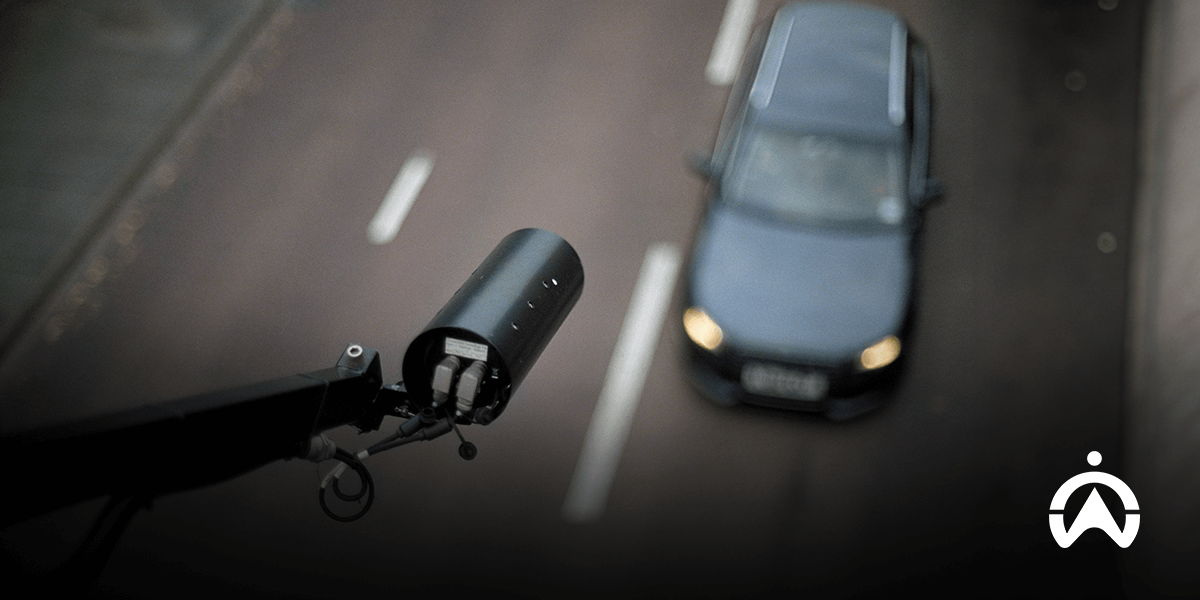
Fleet cameras are video recording systems designed for commercial vehicles. They have more advanced features than regular dashcams. These features help keep fleets safe, improve operations, and provide valuable insights into driver behaviour and vehicle performance. Investing in these cameras improves safety and productivity, resulting in happier customers.

Benefits of Fleet Cameras

  1. Improved Driver Safety: Fleet cameras act as an extra eye on the road. The footage can be used as evidence in the event of an accident. This can come in handy when false claims are made against drivers.
    ‍
  2. Increased Accountability: The driving behaviour recording makes it easier for fleet managers to hold drivers accountable and better coach them.
    ‍
  3. Improved Fleet Management: Integrated with GPS tracking, the fleet manager can see the vehicle’s location in real-time, detect the speed at which the vehicle is going, and see how drivers behave. This helps fleet managers plan better routes, save fuel, and improve the business’s overall performance.
    ‍
  4. Lower Costs: Reduce fuel costs, maintenance and insurance premiums through real-time driver coaching and alerts that address behaviours leading to unnecessary wear and tear.
    ‍
  5. Better Driver Training: Fleet managers can use the recorded footage as a training tool to improve driver skills.
    ‍
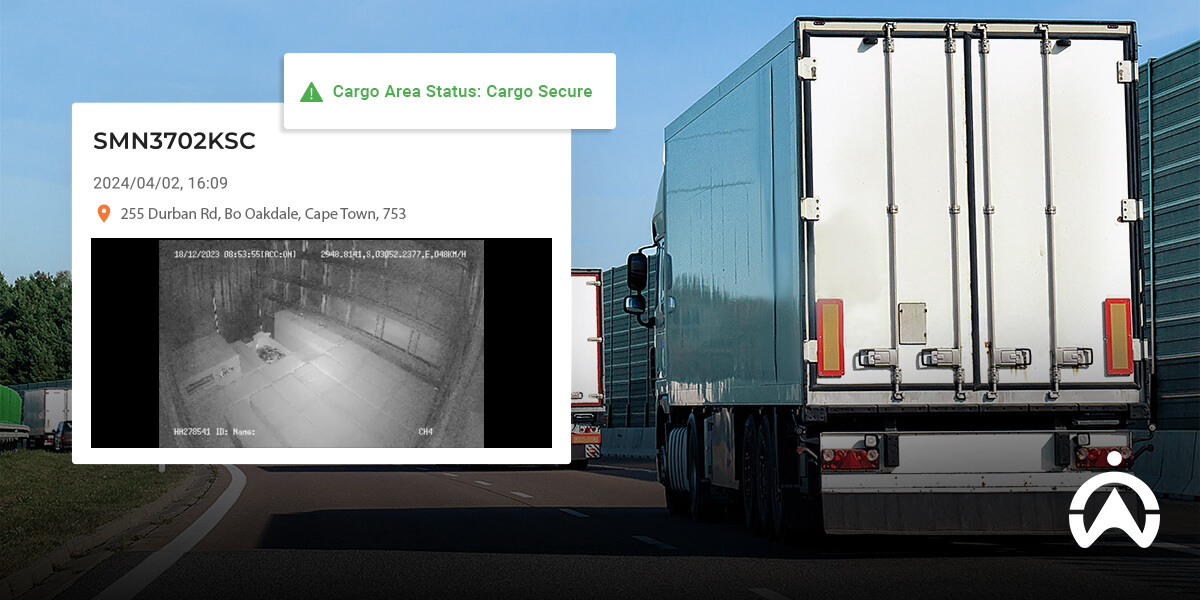
  6. Deter Criminal Activity:  Fleet cameras can deter criminals, discouraging them from attempting vehicle theft or break-ins.
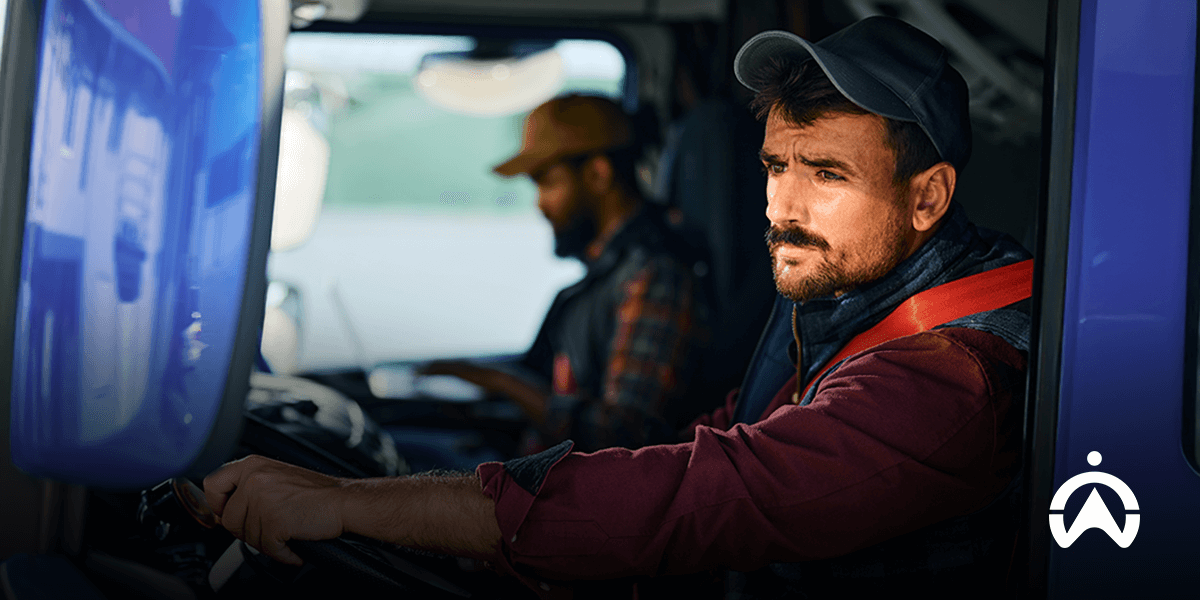
Two truck drivers in a cabin, one holding the steering wheel.

Best Practices for Ensuring Driver Privacy With Fleet Cameras

Whether fleet cameras benefit the overall business or the drivers, it is still important to make sure that the drivers are comfortable with their use. Cameras can sometimes make people uncomfortable, making them feel like they are constantly being watched and self-conscious. To avoid this and maintain trust, it’s advisable to follow best practices to protect driver privacy.

Here are some key strategies to guarantee driver privacy while using fleet cameras:

  1. Ask for Consent
    Let the drivers know the purpose of fleet cameras. Explain how they will be used in your business and have drivers sign a consent agreement. Open discussions can build trust and ensure everyone is on the same page.In South Africa, employers can have security cameras in the office or property to protect their business. However, placing cameras in private areas such as the bathroom, is considered a violation of privacy. However, the employees must be notified about the intended use.
    ‍
  1. Inform Passengers
    Make use of visible signage so your passengers know they are under surveillance.
    ‍
    The Protection of Personal Information Act (POPIA) emphasises the importance of obtaining consent when collecting and using personal information, including audiovisual recordings and film.POPIA recognises that there may be circumstances where recording or filming without consent is necessary, such as law enforcement activities, security surveillance, or journalistic purposes. However, these exceptions must be balanced with individuals’ privacy rights, and any use of personal information without consent should be carefully justified and within the confines of the law.

    Even with these exceptions, customers may feel betrayed that they are being recorded without their knowledge. So, by having these signs, you are essentially building trust with them.
    ‍

  1. Create a Privacy Policy 
    Have a written privacy policy that outlines how footage will be recorded, stored and used. Indicate who has access to the footage and for what purpose. This will help protect sensitive data and avoid misuse.Not having a policy in place on how this sensitive information will be handled, will pose a risk for the company. For example, the footage can be leaked to social media platforms, further violating the drivers’ privacy and potentially harming the company’s reputation.
    ‍
  1. Limit Access
    Make sure that the camera footage is used by authorised personnel only. This reduces the risk of unauthorised viewing and ensures data is handled properly. Allowing all employees of different ranks access to sensitive data, such as this footage, can lead to issues within your company, including potential bias in how employees are treated.Imagine a group of employees viewing footage that captured a colleague making a mistake while driving or exhibiting poor behaviour. Instead of using this information constructively, some employees might use it to unfairly criticize that colleague. This could foster a biased environment where individuals are judged harshly based on isolated incidents rather than supported in their professional development.

    Customise Camera Settings
    Customise the camera settings, such as turning off audio recording during private conversations. If a driver and another employee are travelling somewhere and they are having an intimate discussion about their personal lives, they need to be afforded that privacy.

  1. Compliance with Regulations
    See to it that the fleet camera system adheres to privacy regulations, such as the General Data Protection Regulation (GDPR). This helps defend sensitive information and ensures that data is only used for authorised purposes.
    ‍
  1. Regularly Review Practices
    Technology is always evolving, so make sure to regularly conduct assessments and update privacy practices. This will ensure that you are on par with the law.
    ‍
  1. Training Sessions
    Organise training sessions to educate drivers on how camera systems work. Address any issues and questions they may have so they’re comfortable with them. When drivers are constantly trained on these systems, they will adopt better driving habits which will minimise accidents and increase the vehicle’s longevity.
    ‍
  1. Encourage Driver Feedback
    Allow drivers to share feedback on their experiences and suggestions about the camera system. This will foster a positive work environment and lead to higher employee satisfaction and retention rates, as drivers feel valued and supported.
    ‍
  1. Highlight Success Stories
    Share scenarios with your drivers of how the camera system has helped improve safety, reduce accidents, or enhance operational efficiency.This will further enforce the benefits of these camera systems and encourage drivers to constantly strive for improvement.  This will also be a great opportunity to celebrate the drivers’ efforts, contributing to positive work environment.

These best practices can ensure that your fleet camera system helps improve safety while respecting driver privacy.
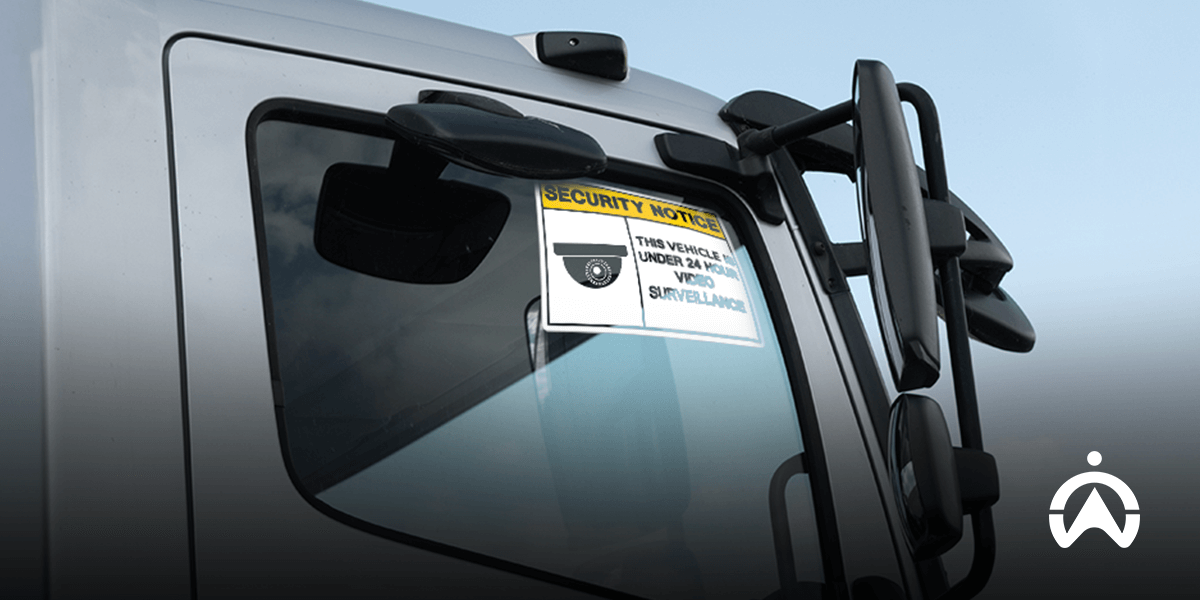
A security notice on a vehicle window stating "This vehicle is under 24-hour video surveillance."

How a Company Can Protect Driver Privacy with the Right Technology

Companies must ensure that in as much as they use cameras to protect the overall fleet, they must also protect the privacy of their drivers. Having policies in place will ensure that drivers do not feel violated. Furthermore, having rules and regulations surrounding the handling of this footage will let the drivers be at ease that they are protected — the footage will not be used carelessly. This will foster trust between yourself and your employees and create a harmonious working environment.

Are You Ready To Improve Your Fleet With The Best Camera Solution?

If you’re looking to keep your fleet, drivers, and cargo safe, look no further. Cartrack offers an AI-powered solution with up to 8 cameras (internally and externally), all equipped with built-in telematics.

Cartrack’s AI-powered cameras notify the driver of risky driver behaviours such as distracted driving, smoking, fatigue, or speeding. This allows drivers to correct their actions in real-time and helps create a safe driving culture reducing the risk of accidents.

Contact us today to find out how our camera system can meet your fleet’s needs!

Frequently Asked Questions About Fleet Cameras and Driver Policy

Q: How do you maintain fleet cameras?

A: Regular maintenance includes checking lenses for any damage, updating software, and reviewing footage storage. This will ensure that everything works correctly.

Q: Do fleet cameras record in poor lighting or at night?

A: Yes! Cartrack fleet cameras have night vision or infrared technology to capture clear footage in low-light areas and at night.

Q: What if a driver refuses to consent to fleet cameras?

A: If a driver refuses to consent to being recorded then the company must follow their internal policy. In many cases, however, consent is required as part of employment. The company can also consider alternative safety measures if consent is withheld.
Top 7 Fleet Management Trends for 2025 and Beyond

2024 has been a very turbulent year in the business world, with geopolitical conflicts affecting supply chains globally. The fleet management industry has had to adapt significantly to keep up with these events.

As we head into the new year, it is important to plan ahead and prepare for industry changes that are anticipated.

These developments have created a great opportunity for companies looking to develop and enhance their businesses. According to the 2024 Fact MR Market Research Survey, the fleet management industry is expected to grow from US$65 billion to US$300 billion in the next ten years, with South Africa as the leader in the African region. This presents an opportunity for companies looking to innovate and adapt their businesses to the future, it also gives them a head start on optimising their businesses for maximum profit.

In this article, you will:

  • Learn about the current state of the fleet management industry
  • Discover the fleet management trends for 2025
  • See what solutions Cartrack offers

The Current State of the Fleet Management Industry

The fleet management sector is undergoing tremendous change, with new markets growing into the space globally. This is no different in South Africa, a country full of businesses that produce products and raw materials. This fact is compounded by the growing global interest in South Africa as an emerging market. As a BRICS member, South Africa now forms part of a larger logistics and trade federation, which necessitates reliable fleet management systems to optimise supply chains.

Berg Insight estimates that active fleet management systems will grow at a compound annual growth rate of 10.3 percent from 2.3 million units at the end of 2023 to 3.8 million by 2028 in South Africa. For many companies operating in South Africa, an effective fleet management system is vital as it mitigates many logistical problems that are caused by weak infrastructure, bad planning, and other procedural variables.

With this system in place, companies can monitor driver behaviour, maintain vehicle maintenance records, track their vehicles and manage fuel expenses – whilst maintaining compliance with local laws and regulations.

In South Africa fleet management systems must abide by rules and regulations set by the South African Department of Transport. These regulations include but are not limited to, ensuring that driver’s licences are valid, vehicle registrations are up to date, and that all necessary safety features are installed.

These regulations are coupled with The Occupational Health and Safety Act, which determines the required conditions for a safe workplace for employees. It is the confluence of these factors that brings us to where we are as an industry in South Africa today.

However, new trends have emerged that are sure to shake up the fleet management industry. Let’s explore what these are and how they will affect you and your business in the years to come.

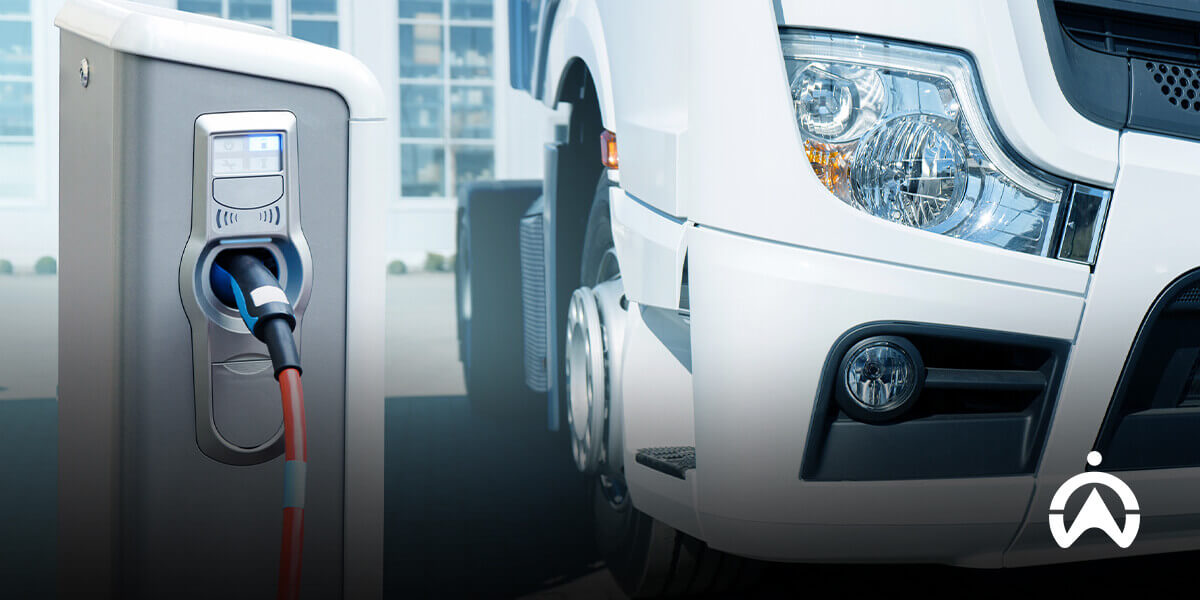
Electric vehicle charging at a station with a charging cable connected.

Seven Fleet Management Trends for 2025

As the world moves ever closer to complete digitalisation, companies globally are seeking ways to augment their processes and streamline efficiencies. It is often these considerations that can make a significant impact on a business’s bottom line, and overall stakeholder value.

In the fleet management sector, the best way to achieve these goals is by adopting emerging technologies that enhance how the industry as a whole runs. These new developments and innovations incorporate current processes and protocols with new tech and software.

Let us explore some of the new trends in fleet management in the year 2025.

  1. AI-Powered Route Optimisation
    Artificial Intelligence (AI) has made a major impact on the world in the last year, with many industries looking for ways to apply it to their business models. The expansive use and application of AI is looking to reshape how the world works, the fleet management sector is part of that change.
    ‍
    AI-driven algorithms are getting better at predicting accidents, traffic patterns, and even weather changes- all in real-time. The benefits of this kind of technology in fleet management are clear and indicate to greater reliability in the software used. The future of AI in fleet management points to developments in traffic delay detections, reduction in fuel consumption, and adaptive rerouting. This is geared to increase efficiency and decrease decision-making protocols, allowing for quicker and more streamlined processes.This data-driven approach will dramatically increase delivery time and optimise the entire process, offering the manager a holistic overview of all operations, before, during and after delivery.
    ‍
  1. Advanced Driver Assistance Systems (ADAS)
    Accidents are very costly and dangerous, and often lead to delays, loss of life and lawsuits. With ADAS high-definition mapping and real-time data boost drivers’ situational awareness reducing the likelihood of accidents and hazardous roadside incidents.ADAS will become increasingly common in fleet management systems as we progress into the future. Automatic braking, adaptive cruise control, lane-keeping assistance, and collision avoidance are all features that come with ADAS technology, which means any vehicle with this system is better equipped to deal with unexpected road occurrences. These measures protect both the driver and the vehicle, additionally, they centralise all emergency protocols to a system that evaluates each incident accordingly.
    ‍
  1. 5G Connectivity for Fleets
    Fast and reliable internet connectivity is a vital part of communication systems, especially when managing a fleet of vehicles. With developments in 5G internet connection expanding wider, this is bound to greatly benefit the industry.Enabling this feature will lead to enhanced real-time monitoring, better communication between drivers and dispatchers, and faster updates from vehicles that are on the road. Another benefit is that faster connectivity will also allow for quicker response services such as real-time tracking, instant alerts, and dynamic route changes.

    Additionally, fleet managers who use a host of management apps will have faster communication channels and more reliable reporting tools.
    ‍

  1. Predictive Maintenance with IoT Sensors
    Vehicle maintenance is a necessary part of fleet management and is often done late in a vehicle’s lifespan, or when an emergency occurs requiring immediate repairs. These maintenance routines can hinder business operations leading to delays and disrupted workflows. The solution for this in 2025 will be predictive maintenance using IoT(Internet of Things). IoT is an internet connection for physical things, which allows them to share data and information with other devices and systems.IoT sensors can be installed in vehicles, where they measure all vital components and track how well they are performing. Vehicles equipped with sensors can transmit real-time data on engine performance, brake conditions, and other critical systems. This feature allows potential wear and tear issues to be detected and attended to early on before they become too severe and require extensive service. With this system, businesses can expect to reduce costs and vehicle downtime, meaning overall performance goes up.
    ‍
  1. Driver-Focused Telematics
    A fleet’s team of drivers are an essential part of the delivery process and form the backbone of a business, meaning their well-being is paramount to operations. Telematics systems that focus on driver and vehicle well-being are predicted to become a critical component of fleet management in 2025. This is because the system provides real-time feedback on driver activity, such as bad driving, speeding, hard braking and any other driver behaviour that might be detrimental to the vehicle and the delivery. With driver safety becoming a bigger priority, telematics systems like this are bound to decrease accidents and improve overall fleet performance.Route planning software with telematics integration is going to make driving a safer endeavour, making it easier to track and enhance driver performance.
    ‍
  1. Carbon Footprint Tracking
    The general population is now more environmentally conscious than ever and expects the same from the businesses they support. Any environmentally conscious efforts made by a business that show it is considering its contributions to global warming are certain to reflect well on the public. Additionally, global agencies now rate and score companies based on their carbon footprint, measuring their impact and often advising consumers to divest from those that score poorly.Sustainability remains a top priority for many companies with a large fleet, especially when considering the large carbon footprint caused by combustion engine vehicles. The world is moving towards finding greener solutions to minimise its impact on global warming. For this reason, carbon footprint tracking will be a factor that many fleet management systems will want to monitor.

    Tools monitoring carbon emissions will become essential, especially apps that integrate carbon tracking features, allowing businesses to measure and reduce their carbon footprint.
    ‍

  1. Increasing Electric Vehicle Adoption
    In line with sustainability goals, the adoption of electric vehicles is predicted to increase in many businesses with large fleets. Electric vehicles have lower carbon emissions and are less costly overall to run and maintain compared to traditional vehicles.This poses a significant logistical issue as electric vehicles require specific infrastructure to be charged while on the road. Route planning must then be considered, factoring in distances between charge stations and optimal travel routes. As this is predicted to be the norm in the coming years, government agencies and the private sector will need to align on what this future looks like infrastructure-wise.
Three semitrucks driving on a highway with a foggy background.

Cartrack’s Fleet Management Solutions

Cartrack is a leading fleet management company in South Africa, ranking in the top 5 nationally. It is a reliable and highly specialised fleet management company with customers across various industries globally. Cartrack is on the cutting edge of vehicle tracking technology, with developments in fleet management systems for a diverse business clientele. The company is well-equipped for 2025 with many industry trends already in application in the solutions on offer.

These solutions can be tailor-made for the respective client to increase productivity, reduce costs and enhance overall efficiency. The reporting from Cartrack’s solutions is accurate and highly detailed, offering insights on how to optimise your business best. This reporting gives the business owner peace of mind and assurance on how the overall operations of the fleet are going.

The fleet management solutions available at Cartrack Namibia come with numerous features and adaptations that are necessary for any business going into 2025. Here are some below.

Standard features

  • Internet-based access with no additional software required
  • Movement sensing
  • Alerts on harsh acceleration, braking, cornering and excessive idling
  • Exceeding speed limit alerts
  • Accurate GPS positioning and routing
  • Mapping
  • Creating and managing geofences
  • Live positioning stream
  • Generating management reports
  • Odometer reports
  • Replay of all travelled routes

Looking ahead into the near future, fleet management systems will become more sophisticated and efficient. This is exacerbated by the introduction of advanced technologies like 5G, AI, and machine learning. South African businesses will have access to powerful solutions that will optimise their unique fleet management needs. Ultimately these developments will optimise operations and improve overall safety and customer service. Leveraging these innovations will afford companies greater insights into their fleet’s performances while complying with regulations.

With South Africa’s emerging market status on the incline, it is natural to expect more business dealings to be headed here. This means that there will be a greater need for an efficient, reliable and effective solution to the imports and exports of goods. As more and more businesses move online, this will only get more complex, requiring solutions that can be tailored to various business structures and industries.

Cartrack Namibia is best equipped to take you and your business there. Contact us today to learn more about our fleet management solutions and how they can be tailored to your business’s unique needs.

Remote Fleet Management for a Hybrid Workforce

Fleet management has made remarkable progress over the years. In the past, managing a fleet was extremely time-consuming. The main role of the fleet manager was to conduct physical checks on vehicles and machinery, manually fill out paper reports and trust drivers to report their vehicle’s status correctly.

In present times all that has changed. Fleet management involves so much more. Fleet managers are now responsible for the efficiency, productivity, safety and compliance of their fleets.

Fortunately, advancements in fleet management systems have resolved many challenges fleet managers face. Let’s explore what remote fleet management entails and how it simplifies a fleet manager’s role.

In this article, you will:

  • Discover what remote fleet management is
  • Understand why fleet management is important to succeed as a hybrid workforce
  • Learn the power of Cartracks fleet management products
  • Unlock the power of Cartracks fleet management training

What is remote fleet management?

Remote fleet management refers to the use of advanced fleet systems that enable fleet managers to monitor their vehicles and manage their fleet operations from anywhere, without constant in-person oversight. Using GPS and GMS technology, managers can see where their vehicles are, how they perform on a given day, and how safely they’re being driven. With such a level of connectivity and a wealth of information, managers can make better decisions to address issues on the spot. Fleet management is a powerful solution for thriving in today’s flexible and hybrid workforce.

Why hybrid workforces require fleet management systems

Fleet managers often wear many hats and need a thorough view of on-site operations to ensure the business runs smoothly. Effective fleet management systems keep you informed with real-time updates about your vehicles, allowing you to quickly identify any misuse and optimise the use of resources, such as fuel.

In the Fleet Management in South Africa report for 2024, Rickard Andersson the principal analyst at Berg Insight optimistically projects that the number of fleet management systems used will increase from 2.3 million units in Q4-2023 to 3.8 million by 2028. This is a view of the future that indicates that companies are scaling their fleets to maintain the growth of their business and profitability.

Here are the reasons hybrid workforces implement fleet management systems in their businesses.

Increase vehicle visibility

Fleet vehicles are often needed in remote and hazardous locations where there’s limited infrastructure. Examples of this can be seen in mines in the Limpopo province and the Eastern Cape. Managing these fleets can be particularly challenging for fleet managers who manage their fleets off-site. Fleet systems give you a view of your vehicle’s location and help enforce safety protocols like following the speed limit and following a safe distance while driving at any time you need it.

Speeding and excessive idling will no longer be a concern with the system’s protocol for monitoring driver behaviour and ensuring compliance. This lets you respond quickly to issues like unexpected breakdowns or delays due to poor road conditions. Ensuring that projects stay on track and vehicles are used safely and efficiently.

Reduce operational costs

A hybrid workforce, if managed incorrectly, can lead to increased costs. However, with a fleet system, you can identify inefficiencies in your operations and reduce expenses by monitoring key factors like fuel usage, maintenance needs, and driver behaviour. This system provides real-time alerts on actions such as speeding or tailgating, which can significantly impact fuel costs.

By addressing these behaviours as they occur, you not only lower fuel expenses but also reduce accident rates and maintenance needs, ultimately keeping operational costs in check.

Improve driver performance and safety

South Africa faces a high rate of theft and hijacking. Unfortunately, the mining industry is not spared from this. It also affects fleet vehicles and machinery like construction and mining equipment. In one case, an excavator, weighing 30 tons and worth about R1m, was stolen from a Free State sand mine and driven across the Caldeon River in Lesotho. With fleet management systems, you can monitor your equipment activity on-site.

This enables you to see where your vehicles and equipment are in real-time. Create virtual fences by drawing boundaries around work sites so that you can be alerted when vehicles enter and exit a virtual fence.

Increase customer satisfaction

South Africa’s business sector is said to be a mature market therefore it’s a very competitive market. This is due to a lack of investment and an economic downturn. A management system is essential to minimise equipment downtime and adhere to project schedules. Achieving that increases customer satisfaction and strengthens your business’s reputation. Fleet management systems enable effective project planning and streamlined operations. This also allows you to communicate accurate ETAs to your clients.‍‍

Delivery person in uniform driving a van.

Key features of Cartrack’s fleet management system

At Cartrack, we believe fleet management can be simple and effective, regardless of where your team is working. It is an integral part of having a system that ensures that projects are completed on time and within the budget while providing a great experience for customers.

Here are some of the ways Cartrack’s all-in-one fleet management systems help companies excel with a hybrid workforce.

Real-time GPS tracking

Are you worried about your vehicles and equipment getting stolen? With Cartrack’s GPS and telematics tracking technology you can relax, If your assets go missing our real-time tracking will pinpoint exactly where they are. It’s like having your own personal virtual guard 24/7.

Driver Identification tags (DID)

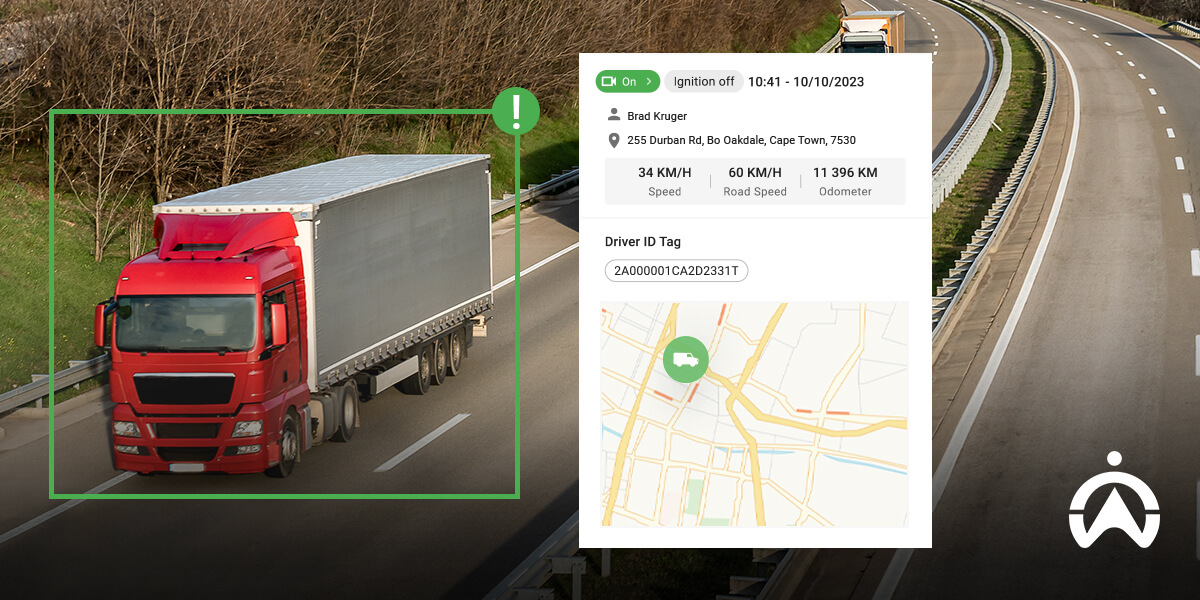
A driver identification (DID) tag is a key-ring-sized tag that is linked to your ignition key. It helps you identify who is on duty, who is driving which vehicle and for how long. It is also an extra layer of protection against theft. If your vehicle is used without a tag, it will send an alert as a potential theft situation.

Geofencing and alerts

Imagine having a digital eye on your entire fleet, with Geofencing this is possible. Our system enables you to create virtual boundaries around sites your vehicles work on. You can create boundaries around each site and designated routes vehicles are allowed to travel. When one of your vehicles enters or exits a designated area, the system immediately sends you an alert. This feature helps you confirm that drivers follow their assigned routes and schedules.

Man in a shirt and tie showing a Cartrack app, standing before a 'Fleet Management Annual Meeting' sign.

MiFleet

Cartrack understands that managing a fleet of vehicles can be challenging and time-consuming with many tasks like fleet maintenance, monitoring driver behaviour, vehicle performance, and fuel usage. MiFleet empowers you to make data-driven decisions from anywhere. Stay up to date with vehicle licensing, fuel costs per vehicle, toll fee payments as well as issued fines. Plus, MiFleet automatically emails detailed reports to decision-makers, so you can focus on streamlining your operations and boosting your bottom line.

Cartrack CANBus

This product is perfect for fleet managers who need to monitor vehicle and machinery engine performance closely. Think of Cartrack’s CANBus as a real-time mechanic. It connects to your vehicle’s system to extract a wealth of data on engine performance in real time. This information includes revs per minute (RPM), odometer readings, water and oil temperature, and the gears selected. This telematics device delivers all the essential information needed for informed decision-making, automatically stored on Cartrack’s Fleet Pages platform.

AI camera monitoring

Cartrack’s Vision take driver safety to the next level, giving businesses the tools to keep their drivers protected and ensure that safety practices are consistently followed. Imagine having AI cameras on board that not only help prevent accidents, collisions, or rollovers but can also audibly alert drivers to possible dangers in real-time. It’s like having an extra set of eyes on the road, helping to catch risks before they become issues.

Fleet managers can use this technology to address high-risk driving behaviours like speeding, distracted driving, mobile phone use, and even smoking. Curious about how it all works? With advanced vision algorithms and sensors, Cartrack’s AI Vision system continuously captures and analyzes video footage, detecting key movements inside the vehicle. If a driver’s head turns or they show signs of distraction, the AI immediately sends an alert.

Are you ready to take your fleet operations to the next level?

Contact Cartrack Namibia today to discover how our fleet management system can help your business excel in a hybrid work environment.

Optimise your hybrid workforce with Cartrack’s fleet management system

Cartrack’s fleet management system is the ultimate tool for remote fleet management. Empower your team to monitor and optimise operations from anywhere, anytime. By reducing fuel consumption, minimising downtime, and enhancing driver safety, Cartrack helps you achieve peak efficiency and cost-effectiveness, even when you’re far away.

Frequently asked questions

Want to know more? Here are a few more questions we get asked. If you don’t get an answer to your burning questions, reach out to us anytime.

Q: How does Cartrack ensure data security for fleet management?

A: Cartrack is committed to keeping your data private and safe. Our operations are governed by regulatory policies that ensure we maintain customer trust and prevent unauthorised access to valuable customer insights. It directs how we gather, store and handle personal data.

Q: Can small businesses benefit from fleet management systems?

A: Absolutely! Cartracks has different fleet management solutions that you can choose from, depending on the size of your business and its specific needs. Fleet management provides a full view of your fleet from anywhere and anytime.

Q: What kind of training is provided for using Cartrack’s system?

A: Cartrack provides fleet customers with all the necessary training on how to use the fleet platform and how to optimise it for the best results. Once you have one of our fleet packages you can send your request for fleet training to fptraining@cartrack.com. Cartrack provides you with recurring training meaning, if you have a new fleet manager training is provided for them. For example, six months down the line you get a new fleet manager. You can request training for them free of charge. This means that all training is done by Cartrack, saving you the time and money needed to hire someone to do the training.

Q: Are there mobile applications available for fleet managers?

A: Cartrack understands that fleet managers can’t always be at their computers monitoring their vehicles and fleet data. That is why, we have developed a mobile application with the busy fleet manager in mind. With Cartrack’s mobile app, you can monitor your vehicle’s activity straight from your mobile phone; monitor driver behaviour, view last position reports and review alert reports on speed, risk, fuel and many more.

Fleet Management for The Mining Industry

Are you a fleet manager looking for more effective ways to tackle the unique challenges that mining companies face? If so, you have come to the right place.

Cartrack, known for its exceptional recovery rate, has developed fleet management solutions that you can tailor to your business’s specific needs. Explore how fleet management combat the mining industry’s most complex problems.

In this article, you will:

  • Discover the key functions of fleet management systems
  • Learn about the importance of ADAS in the mining industry
  • Uncover the benefits of Cartrack’s fleet management systems
  • Find out how fleet management is changing to save our environment
  • Read about the future trends in fleet management

Role of fleet management systems in mining operations

Fleet management isn’t just about tracking vehicles. It’s about addressing the most challenging issues that fleet managers face in the mines. Additionally, it’s focused on maximising productivity, minimising costs, and ensuring your employees are safe.

To meet the demands of the mine, here are the core functions of fleet management essential for mining operations.

Real-Time Asset Tracking and Monitoring

Real-time tracking for mining is like having a birds-eye view of your entire fleet and is an essential part of mining. The telematics systems allow fleet managers to monitor their fleet over vast and very remote mining sites. It acts as a live feed that lets you know what’s happening in real-time. This enables fleet managers to respond quickly to theft attempts, delays or safety concerns. Real-time tracking also ensures that you have constant visibility of your driver’s behaviour and the health of your fleet.

Enhanced Safety Measures

Being on a mining site can be very dangerous even for the most experienced mining operators. It is very unpredictable which can be a challenge to mining companies. Many alerts coming into Cartrack’s control room show that fatigue and distractions are major factors in collisions and damage to company assets. That’s where fleet management systems can make a difference.

Operational Efficiency

Cartrack’s fleet management systems help mining operations stay ahead by streamlining fleet operations through optimising daily tasks and predictive maintenance systems. These tools cut down on fuel used by each machine and reduce costly maintenance, which boosts both your team’s productivity and the profitability of your operation.

Asset Maintenance Optimisation

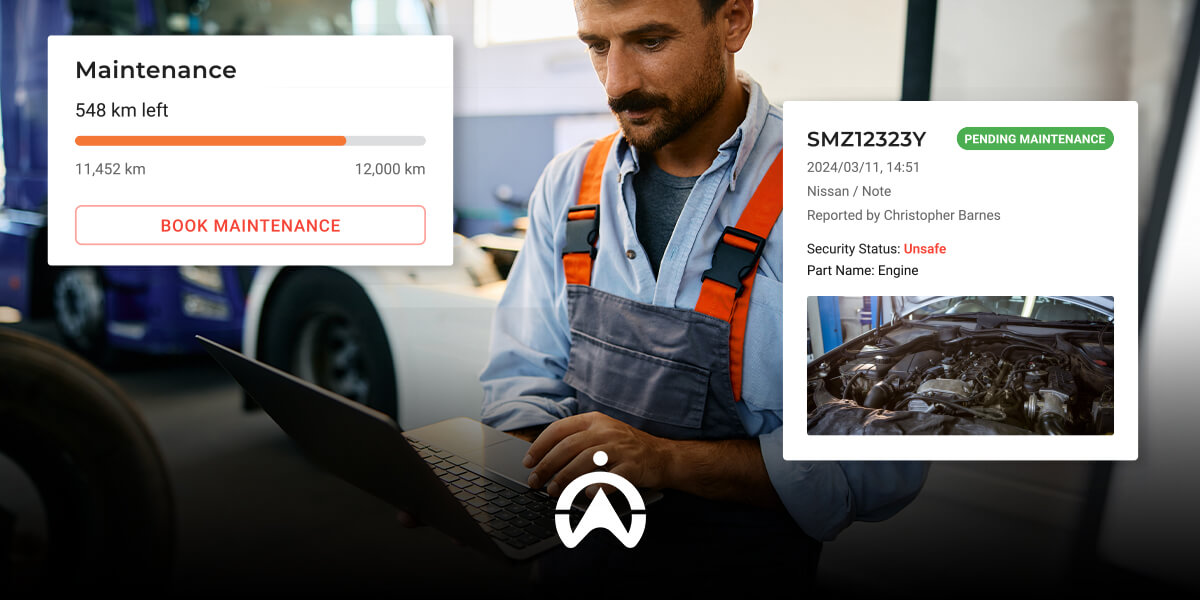
Imagine your fleet working tirelessly in harsh conditions. They are required to run and sustain a mining operation over long hours, and because of that, they require frequent maintenance. Advanced telematics tools collect data from the machinery using sensors, GPS and engine diagnostics to determine the wear and tear, and then recommend maintenance based on the data. This prevents unexpected downtime and extends the lifespan of your vehicles and equipment.

Construction site with backhoe loader and concrete columns in the background.

Benefits of fleet management systems in the mining sector

Integrating a fleet management system like Cartrack’s can bring numerous benefits to your mining operation. Let’s explore the five key advantages:

Cost Control

Cartrack’s MiFleet system is an administrative and fleet costing tool. It provides managers with in-depth insights into fuel consumption, toll fees, maintenance and insurance contracts, and information on tyres like the type, scheduled appointments and deals. Cartrack understands that time is money. The real-time data allow for better cost-saving opportunities such as reducing fuel wastage and avoiding vehicle downtime that could delay operations.

Protection against bad claims

Imagine a scenario where one of your drivers is driving an excavator and has left a mining site to drive to another location, and a false claim is made against your driver. The driver was in an accident and the other driver involved said it’s your driver’s fault.  Fleet management systems provide the data that helps mining companies protect themselves from such claims. With detailed records of your vehicle location history, driver behaviour, and AI video footage managers can easily verify what happened. This protects the business from being forced to pay out large insurance claims and protects the business’s reputation.

Accident Reduction

Anything can happen behind the wheel when on a mine. It does not matter how experienced or attentive a driver may be, anything can happen in a blink of an eye. Fleet management systems act as a preventative measure to compensate for a driver’s momentary distraction, especially in high-risk mining areas with rough terrain and uneven surfaces.

Driver monitoring and coaching

It can be a difficult task to keep drivers alert in high-risk mining areas. With Cartracks AI camera systems, your drivers can receive in-cab coaching helping them to correct unsafe driving practices. For example, if a driver is distracted and not looking at the road, the AI camera detects that the driver is not focused on the road. An alert is then sent to the control room to which an agent will respond by coaching the driver directly through the in-cab speaker. This encourages safer driving habits and promotes a more responsible culture within your business.

Operation Efficiency

Maintaining an efficient and effective fleet can be challenging without the right tools. Cartrack’s telematics and GPS tracking help mining operations maximise their productivity by optimising routes and tasks, reducing idle time, and as a result, cutting down mileage.

How fleet management systems reduce costs in the mining industry

Let’s talk money! Fleet management is not just about safety and efficiency, It’s also a powerful tool to keep costs low. By implementing Cartrack’s fleet management solution, mining companies can drastically reduce their operational expenses. Here’s how:

  • Fuel Efficiency: By tracking how much fuel is used and optimising routes for the transportation of ore and materials, you can identify inefficiencies in how your vehicles are used and reduce fuel costs.
    ‍
  • Reduced Maintenance Costs: The advanced technologies in fleet management systems collect data to foresee and prevent machinery breakdowns. The data received enables managers to see driver behaviour like harsh braking, accessive acceleration and periods of idling that increase wear and tear on your vehicles. The fleet management system can be used to determine the corrective measures required to reduce costs. It also alerts managers to schedule repairs in time to avoid downtime.
    ‍
  • Improved Driver Safety: Enhance worker safety by utilising advanced safety features that help decrease the likelihood of accidents and injuries on the mine.
    ‍
  • Increased Vehicle Lifespan: By monitoring your machinery’s health and scheduling maintenance on time, you can extend the lifespan of your fleet.
    ‍
  • Enhance Security: The use of real-time tracking and geofencing around the mining site can notify you of your machinery’s location and movement at night so that you can respond on time to prevent the loss of your machinery and vehicles.

By implementing these cost-saving methods, you can decrease operational costs and keep your mining operation going long-term.‍

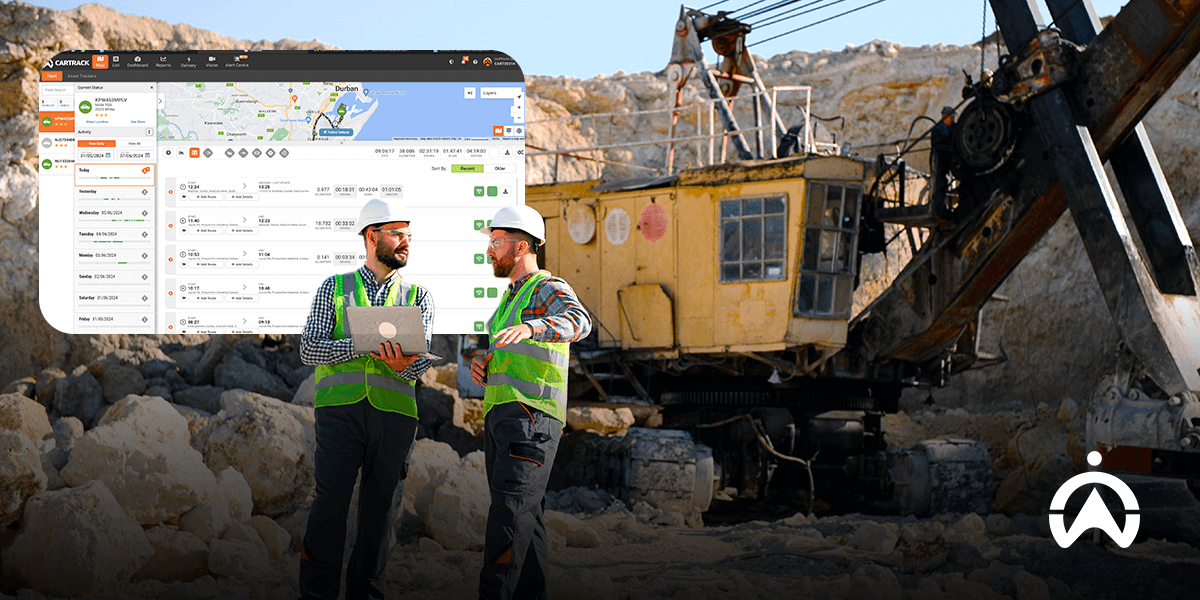
Two workers with vests and helmets using a laptop at a mining site with heavy machinery.

Improving safety standards with fleet management systems in mining

Safety is a top priority for mining companies because employees regularly face dangerous situations. Cartrack recognised this need and has developed fleet management solutions tailored for the mining industry called ADAS (Advanced Driver Assistance Systems). ADAS combines technologies that improve driver safety by helping drivers prevent accidents.

The importance of ADAS in mining fleet management

Integrating ADAS into fleet management has been a game-changer for the mining industry. It was primarily designed to prevent accidents and collisions in the mine and on the road. In fact, It’s estimated that investments into the integration of AI in the mining sector will reach $7.264 billion by 2033, as companies seek to improve efficiency and productivity. Now, let’s delve deeper into what ADAS has to offer.

  • Camera and Sensors
    Cameras and sensors are the eyes and ears of ADAS systems. They play a crucial role in gathering real-time data from a vehicle’s surroundings. The data can include vehicles, pedestrians and obstacles around the vehicle. The cameras are strategically placed around the vehicle for optimal visibility.
    ‍
  • Data Processing
    The core function of the sensors installed in the vehicle is to understand and interpret a vehicle’s surroundings.  This data is processed fast and provides split-second information needed to avoid dangerous situations
    ‍
  • Driver Assistance Features
    ADAS uses analysed data to provide driver assistance features that boost safety, these include:

    • Front Collision Warning
    • Lane Departure Warning
    • Adaptive Cruise Control
    • Blind Spot Detection
    • Automatic Emergency Braking
      ‍
  • Audible and Visual Alerts
    Combined, Cartrack’s fleet management systems and ADAS technologies provide an effective way to monitor driver behaviour through the use of audible alerts within the vehicles. These alerts are received by the control room, where an agent promptly contacts the driver in the vehicle about the possible dangers. These alerts promote immediate corrective actions keeping employees and company assets safe.

Future trends of fleet management systems in the mining industry

The mining industry is predicted to rapidly grow in the next few years after a period of recovery due to the pandemic. As a result, innovation within the industry is gaining momentum. The mining industry is ramping up its investment in new innovative technologies that automate the tasks that a manager is responsible for.

As we look to the future, the blend of advanced AI, IoT(Internet of Things), and data analytics is set to change the game for fleet management in mining. AI systems are set to go beyond just analysing and storing data. Fleet management solutions help fleet managers transform their operations.

Imagine having all the data from your mining machinery’s engines integrated into a single platform. This would make it easier for fleet managers to monitor specific data much faster. This ranges from monitoring vehicles, equipment, and machinery to analysing vehicle health and fuel usage.

This integration of new technologies makes it easier for fleet managers to monitor all aspects of the business in real-time. In the long run, a fleet management system has a profound effect on the company’s bottom line.

Environmental impact of mining and the journey to sustainability

Mining companies play a crucial role in driving economic growth and providing valuable resources. While the extraction of these minerals can present challenges for our environment and surrounding communities, there’s an exciting shift happening.
With the advancements in technology, the focus is being put on green mining technologies to mitigate the impact of mining on the environment. The primary objective is to reduce energy consumption and minimise environmental damage.
In a recent emissions report, it was estimated that transportation contributes to 20% of global carbon dioxide (CO2) emissions. It is said that 15% of this comes from vehicles like cars, buses and trucks carrying cargo.

Here are 3 ways fleet management helps make your fleet greener

  1. ‍Reduce carbon emissions by tracking your fuel usage and creating optimised routes to improve travel times.
    ‍
  2. Monitor driver behaviour to improve driving habits that cause high fuel usage like excessive speeding and idling.
    ‍
  3. Keep your vehicle in top shape by monitoring the vehicle’s wear and tear so that regular and timely maintenance is done to increase the lifespan of your fleet vehicles.

The Role of AI and Machine Learning in Fleet Management

There are many fears around AI and machine learning. Many fear it will take over! However, we see it as a powerful ally for the mining industry.
AI and machine learning (ML) have rapidly been integrated into fleet management systems and have automated many tasks for more efficient mining operations. AI and ML can analyse large amounts of data at very fast speeds from telematics systems, cameras and sensors. This provides the ML algorithms with the data to identify patterns and predict outcomes. For example, AI-powered cameras can predict the possibility of an accident based on a driver’s behaviour and actions behind the wheel. This saves lives and saves money at the same time.

AI technologies like dynamic traffic mapping and computer vision analyse traffic conditions and vehicle conditions to optimise more favourable routes for a specific journey. Cartrack has embraced innovations in technologies to ensure mining companies are empowered with world-class systems that improve safety and reduce costs.

Maximise your fleet’s safety and efficiency with Cartrack’s solutions

Are you ready for a greater level of connectivity and protection for your fleet? Combining ADAS and fleet management technologies with your business provides you with a more proactive approach to managing your fleet. Get in touch with Cartrack today to learn how our customisable solutions can take your business to the next level!

FAQs

Can I choose which events to get alerts on from my fleet activity?
Yes, you can. You can specify which events you want the control room to monitor and respond to. This is a proactive way to prevent accidents and save costs.

What are Cartrack’s control room response times on alerts?

Cartrack is dedicated to protecting your fleet and employees. We are always available and ready to respond to alerts. Currently, our average time to call is 69 seconds, and our average time to act is 63.24 seconds.

‍How does AI and machine learning enhance fleet management in the mining industry?

The advancements in AI and ML can predict potential machinery failures and suggest timely maintenance for them. AI can detect anomalies in vehicle data such as unusual fuel consumption indicating possible fuel tank tampering or fuel theft.

How to Track and Secure High-Value Freight

The transportation of high-value items is important for many industries today, from luxury goods to medication. However, this value brings significant risks, including theft, damage, and delays, which can lead to major financial losses and ruin a company’s reputation.  Thankfully, technology can help reduce these risks.

So, how can we effectively track and secure high-value freight? Key strategies include careful route planning, strong packaging, reliable carriers, secure storage, and sometimes escorts. It’s also essential to adhere to customs regulations, train employees on safety procedures, and have proper insurance.

This blog will cover the best strategies, technologies, and practices for safeguarding your high-value freight. Whether you’re a logistics manager, a supply chain professional, or a business owner, knowing how to protect your valuable shipments is crucial in today’s competitive market.

In this article, you will:

  • Understand what is meant by a High-Value Freight
  • Know the risks associated with High-Value Freight
  • Learn how to protect your valuable goods
  • Find Cartrack solutions to keep your cargo safe

What is High-Value Freight?

High-value freight refers to goods with significant monetary value that require special handling and insurance.

Goods valued over a million Rand, are considered high-value freight. These items are in high demand, making them more likely to be stolen, and often have strict regulatory controls.

High-value items include luxury goods like jewellery and designer items, medications, banknotes, gold coins, metals, gems, electronics, livestock, diamonds and art. Premium cigars, cigarettes, and alcohol, especially in large amounts, are also classified as high-value freight.

There are four major types of freight transportation: ground(road), rail, ocean, and air.

Cartrack mainly uses ground freight transportation, which has two types of loads: Less-Than-Truckload (LTL) and Full-Truckload (FTL).

  • Less-Than-Truckload (LTL): This involves shipments that don’t fill a whole truck. Different shippers can share the truck to save money, but it might take longer because the cargo gets handled multiple times.
    ‍
  • Full-Truckload (FTL): In this case, one shipper uses the entire truck. This provides more space for high-value items and usually means faster delivery.

Why You Need High-Value Freight Tracking?

Tracking high-value freight is essential because cargo can be at serious risk of theft, damage, or loss. You need to monitor your goods from where they start to when they get delivered. GPS tracking allows you to track the location of your goods in real-time.

South Africa ranks fourth in cargo theft incidents globally. According to the Transported Asset Protection Association (TAPA), South Africa witnessed over 40,000 crimes impacting supply chains in the past year, based on data from the South African Police Service (SAPS). These incidents are happening at the ports but also on the road.

Organised crime groups are always looking for new ways to access your cargo. Here are some common methods used to steal high-value goods:
‍

Six Most Common High-Value Freight Theft Methods 

  1. Identity Theft and Fraud: Thieves sometimes use identity theft to pose as legitimate freight companies. By creating fake documents and credentials, they can convince carriers to release valuable cargo, leading to significant losses for shipping companies.
    ‍
  2. Truck Hijackings and Burglaries: This involves the theft of entire trucks, typically when they are left unattended at rest stops or during deliveries. Thieves often monitor trucks from a distance, waiting for an opportunity to attack.
    ‍
  3. False Emergencies and Coerced Stops: Criminals signal drivers to pull over, then steal cargo while the driver is distracted.
    ‍
  4. Commercial Burglaries: Criminals break into shipping containers or trucks at facilities like truck yards, warehouses, or businesses near transportation hubs. Cargo theft at these locations often happens because the goods are left unattended for extended periods.
    ‍
  5. Employee Involvement: Insider theft occurs when employees help criminals by providing access or staging hijacking for financial gain.
    ‍
  6. Use of Technology: Criminals can use GPS jamming to prevent the tracking of goods or use hacking techniques like phishing, allowing them to create fake shipments and steal goods.

Tracking high-value freight is crucial for protecting your cargo, especially in a high-risk country like South Africa. Find out more on how to prevent your goods from getting stolen. 


Ways to Secure Your Freight with Cartrack Namibia

Cartrack’s fleet management system helps you manage your cargo transport in a smart and safe way. This all-in-one solution makes fleet management easier and more convenient.
‍

Here’s how Cartrack can protect your high-value goods:

  1. GPS tracking:
    With Cartrack’s live GPS tracking, you can always see where your valuable goods are at all times.  We’ve designed a tracking unit that can easily be attached to most movable assets to help you improve your asset utilisation and reduce costs. This way, you can keep an eye on your cargo.
    ‍
  1. Temperature monitoring: 
    You can install up to four temperature sensors on your truck and trailer. This lets you check the temperature of your cargo from anywhere, which is especially important for things like livestock. You can set alerts for any temperature changes, helping to ensure that goods arrive in the right condition for your customers.
    ‍
  1. Ignition Sensor: 
    This sensor tracks whether the vehicle’s ignition is on or off. It provides key information about the vehicle’s status and can help detect different theft situations.
    ‍
  1. Geofencing: 
    Set up virtual boundaries around certain areas to monitor your drivers, vehicles, and equipment in real-time. Once a geofence is created, you’ll get instant notifications whenever a vehicle enters or exits that area. This helps you keep track of fleet activity and avoid high-risk zones.
    ‍
  1. Driver behaviour monitoring:
    Enhance driver safety with Cartrack’s fleet driver monitoring system. This system uses advanced hardware and software to track driver behaviour.Cartrack’s AI LiveVision cameras alert drivers to distracted and risky actions, like smoking or speeding, allowing them to correct their behaviour quickly. This helps create a safer driving culture and lowers accident risks.
    High-priority alerts can be sent to coaching, a Value Added Service that helps companies keep a record of repeated offences and provide targeted training for drivers.
    ‍
  1. Jamming Detection: 
    If a thief uses a jamming device to disrupt communication between the tracking system and the cellular network, Cartrack can switch to RF frequency. This ensures we can keep communicating with your vehicle, enhancing security and increasing the chances of recovery.
    ‍
  1. Routing: 
    Routing is a software tool that helps you set and manage planned routes for your fleet vehicles. You’ll receive real-time alerts for any deviations from these routes. Keeping vehicles on their intended paths reduces operating costs and ensures drivers stay focused and cargo remains on track. ‍

Cartrack’s fleet management system offers so much more than just tracking. It provides peace of mind your high-value freight is well protected. With our comprehensive features, you can trust that your valuable assets are in safe hands.


Take control of your high-value cargo at all times

Cartrack Namibia provides security features tailored to safeguard your drivers, fleet, and cargo from theft, hijacking, and accidents. Trust us to protect your valuable assets.

Frequently Asked Questions on High-Value Freight in South Africa 

Q: How can I package my high-value cargo to prevent damage? 

A: Use strong, sturdy boxes or containers and cushion contents with bubble wrap. Consider tamper-evident packaging to ensure items aren’t tempered during shipping.

Q: Can I insure my fleet with Cartrack?

A: While we don’t provide insurance directly, our insurance agency can help you find the right coverage that fits your needs and budget.

Q: What are the common risks in HVF (High-Value Freight)?

A: Theft and hijacking.

The Benefits of Remote Vehicle Diagnostics for Fleet Operators

Gone are the days of waiting for your truck to act up to know there’s a problem. Remote Vehicle Diagnostics can be a game-changer, helping you save both time and money. Early diagnosis means timely repairs, helping you avoid costly downtime.

Imagine your driver is delivering goods when suddenly the brakes fail. This could lead to serious injuries or even the loss of your vehicle. Fortunately, this won’t happen to you because, with Cartrack’s solutions, potential issues like this can be detected early, preventing accidents before they happen.

Remote vehicle diagnostics has many other benefits, which we will explore further in this blog.

In this article, you will:

  • Know what Remote Vehicle Diagnostics is
  • Understand how Remote Vehicle Diagnostics work
  • Learn the benefits of Remote Vehicle Diagnostics
  • Understand how Cartrack Namibia manages fleets
  • Find out how Cartrack has helped a business with Remote Vehicle Diagnostics needs

What is Remote Vehicle Diagnostics

Remote vehicle diagnostics is a system embedded in a vehicle’s engine. It monitors the vehicle’s health and performance from a distance and identifies and controls any vehicle problems. This system uses telematics and data communication technologies, to provide insights into the vehicle’s condition without needing physical access.

How does Remote Vehicle Diagnostics work for fleets? 

Remote diagnostics is important for commercial fleets to maintain vehicle health and optimise operations. It allows fleet managers to track the performance metrics across their entire fleet and respond quickly to maintenance alerts.

Here’s how remote diagnostics work:

  • Data Collection: Modern vehicles have numerous sensors and onboard computers that continuously collect data from various systems, including the engine, transmission, brakes, and advanced driver-assistance systems (ADAS). This data, including fault codes, performance metrics, and operational alerts, is stored in the vehicle’s onboard computer systems.
    ‍
  • Remote Access: Technicians can access this data through specialised diagnostics tools or applications. A technician can send a request to the vehicle for specific logs or fault codes. The vehicle responds by transmitting the requested data to the technician, allowing for real-time diagnosis.
    ‍
  • Analysis and Reporting: Once received, this data is analysed using telematics to identify potential issues, generate diagnostic reports, and recommend necessary actions. This significantly reduces vehicle downtime.
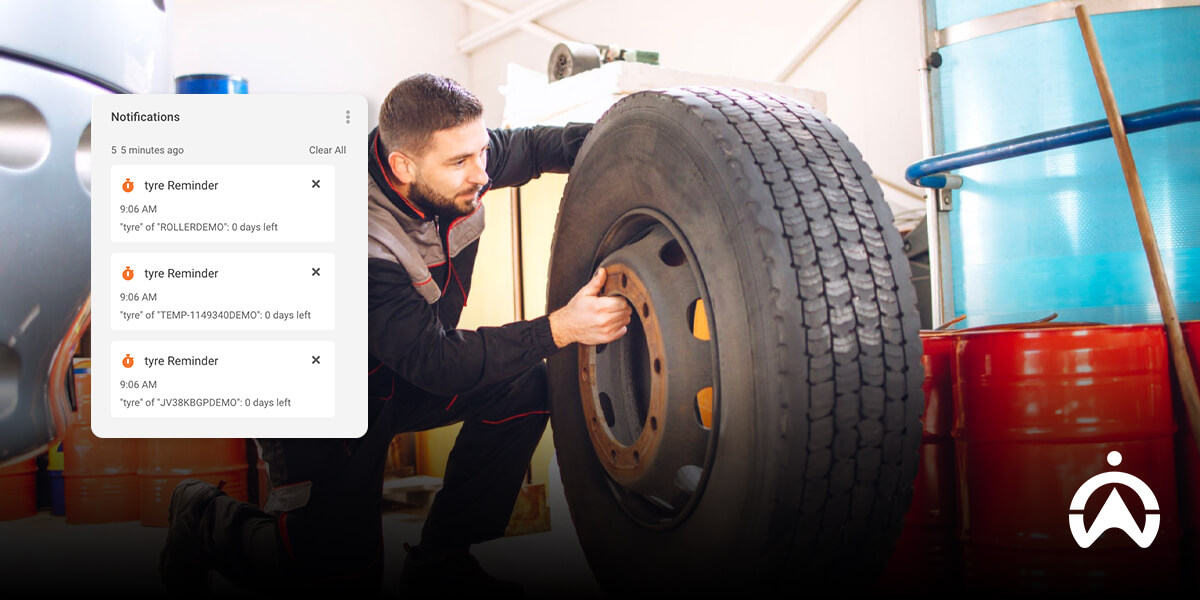
Mechanic adjusting a large vehicle tire, with notification pop-ups on the left.

7 Benefits of Remote Vehicle Diagnostics for Fleet Operators

Now that you understand how remote vehicle diagnostics work, let’s explore its benefits for fleet operators in enhancing efficiency, safety and cost-effectiveness.

With real-time insights, operators can optimise vehicle performance, reduce downtime, and make informed maintenance decisions, all while ensuring safer driving conditions and lowering overall costs.
‍

Here are 7 benefits of Remote Vehicle Diagnostics for fleet operators:

  1. Real-time Monitoring:
    In the olden days, fleet operators had to wait for the vehicle to break down before discovering the issue, often leading to costly towing and repairs. With real-time monitoring, operators can identify problems before a breakdown occurs, allowing for proactive maintenance.
    This approach not only saves money but also enhances overall fleet efficiency. By addressing issues early, operators can schedule repairs during off-peak times, minimising disruptions to operations. Access to real-time data improves decision-making regarding vehicle usage and resource allocation. This ultimately leads to a more reliable fleet and improved customer service delivery.
    ‍
  1. Reduce Downtime: 
    Taking the vehicle in for repairs means it will be off the road for some time, this is called unplanned downtime.
    Downtime affects a fleet in several ways, including:

    • ‍Decreased productivity: Your business will inevitably fall behind schedule if some of your vehicles are not operational. For example, if your business is a freight delivery service, if one of your delivery trucks is not operational, it will inconvenience not only you and your business but also your customers (other businesses) and their clients.
      ‍
    • ‍Overuse of other vehicles: When a car is not in use, other vehicles will be overused to play catch up. While this seems like a solution, overusing vehicles beyond their scheduled times can lead to wear and tear, compromising the fleet’s condition and lifespan.
      ‍
    • ‍Loss of revenue: Failure to deliver goods and services results in a loss of revenue to the business. Because of the inconvenience caused, customers may take their business elsewhere, or worse, they may leave bad reviews about your company, influencing other people to not work with you.
      ‍
    • ‍Increased costs: An unexpected vehicle breakdown will require funds to cover repair costs. Since these expenses aren’t typically planned for, fleet managers may need to pull from other parts of the business finances to ensure that the repairs are swiftly attended to.Find out how to reduce vehicle downtime on your fleet and keep your business running.
      ‍
  1. Proactive Maintenance:
    Proactive maintenance, also called preventative maintenance, aims to recognise the cause of vehicle breakdowns and rectify them before the vehicle breaks down.
    The benefits of proactive maintenance are:

    • Cost saving
    • Fewer repairs
    • Increased safety and reliability
    • Longer vehicle life spanUnlike reactive maintenance where repairs are done after the vehicle has broken down. Proactive maintenance is scheduled after Remote Vehicle Diagnostics detects the issue earlier.
      ‍
  1. Fuel Efficiency:
    Monitoring vehicle performance is important in identifying inefficiencies contributing to excessive fuel consumption. By prioritising fuel efficiency through remote diagnostics, fleet operators can enhance overall performance, reduce environmental impact, and save costs.
    ‍
  1. Data-Driven Decision Making:
    The insights gained from remote diagnostics allow fleet operators to make informed decisions based on historical data and predictive analytics. This capability helps identify trends and recurring issues, enabling more strategic planning for fleet operations.
    ‍
  1. Improved Safety and Compliance:
    Ensuring that vehicles are in optimal condition helps enhance driver and public safety, reducing the likelihood of accidents due to mechanical failures. Regular monitoring through remote vehicle diagnostics, allows fleet operators to identify potential mechanical faults like brake failure to reduce the likelihood of accidents caused by unexpected breakdowns or equipment malfunctions.
    ‍
    Regular checks for faults can help identify and fix issues that could lead to violations of road laws, such as safety equipment failures like lights, brakes, or emissions problems. By ensuring that the vehicle is in good working condition, fleet operators can maintain compliance with regulations, reduce the risk of fines, and enhance overall safety on the road.
    ‍
  1. Improved Communication with Service Providers: 
    Remote vehicle diagnostics allows better communication between fleet operators, drivers, service providers, and customers.
    With real-time insights into vehicle status, operators can easily schedule maintenance and repairs, keeping everyone informed. This approach allows for quick updates on the timeline and any potential delays, making sure that customers are notified in advance and minimising inconvenience.

Overall, Remote Vehicle Diagnostics helps fleet operators run a successful business. With a healthy fleet, operations run smoothly, services are rendered on time, there’s improved communication in the business and customers are left satisfied.

How Does Cartrack’s Fleet Management Solution Work with Remote Vehicle Diagnostics?

Cartrack offers a fleet management service that helps you manage and run a successful fleet. We also connect with a vehicle’s existing CANbus. Short for Controller Area Network Bus.  It is a communication platform for different parts of a vehicle.

This communication allows your vehicle components, such as engines, transmissions, and sensors, to share information in real-time.

So what do we do with CANbus? Cartrack taps into the CANbus in the vehicle which allows clients to see their vehicle information such as mileage, fuel-related information and RPMs on the fleet website.

The type of data that CANbus collects is dependent on the make, model and year of each vehicle.
‍

Benefits of CANbus:

  • ‍Vehicle diagnostics: CANbus allows remote diagnostics resulting in lowered maintenance time and costs.
    ‍
  • ‍Transferring data quickly: Data can be transferred at speeds of up to 1 Mbps (megabit per second).
    ‍
  • ‍Communication between different devices: CANbus allows different devices to communicate with each other.
    ‍
  • ‍Vehicle Network: It is the backbone of modern vehicle networks which can connect up to 70 devices.
    ‍
  • ‍Provides real-time data: CANBus provides real-time monitoring and analysis of data.
    ‍
  • ‍Fuel efficiency: The data can help optimise fuel efficiency, reducing emissions and fuel-related costs.
    ‍
  • ‍Driver behaviour analysis: CANbus data can be used to analyse and coach driver behaviour.
    ‍
  • ‍Industry-standard: CANbus is an industry-standard, that ensures compatibility across various vehicle manufacturers and models.

You need a reliable way to manage your fleet efficiently, and Cartrack’s use of the CANbus system delivers just that. With real-time access to key vehicle data, you can enhance maintenance, optimise fuel use, and analyse driver behaviour, ensuring your fleet operates smoothly and effectively.

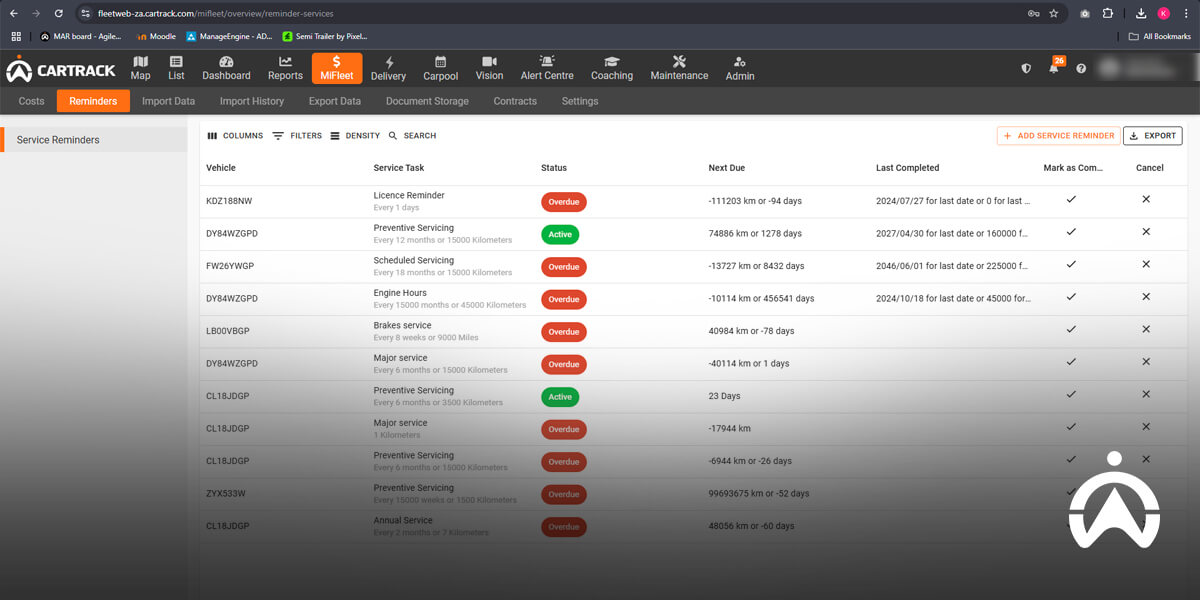
Screenshot of MiFleet vehicle service reminder with overdue and active tasks.

Case Study: Success Story in Remote Diagnostics

Cartrack has helped many clients with their fleet management, particularly in remote diagnostics. We have managed to reduce fuel costs, downtime, delays etc. We have ensured that their services run smoothly so their customers are satisfied.

One business we helped was a Burial Society based in Limpopo. They approached Cartrack with the challenges of sudden breakdowns, hot weather conditions and traffic delays. Given the sensitive nature of the items they transport, there must be no delays.
‍

Here’s how Cartrack helped them:

  • With Cartrack’s real-time vehicle diagnostics and scheduled maintenance, their routine and emergency maintenance can be handled more efficiently. By knowing which vehicles need maintenance and when the business can optimise vehicle usage and reduce unnecessary downtime and breakdowns.
    ‍
  • The Burial Society has area managers across different locations, who use the Cartrack Mobile App from anywhere at any time to see exactly where drivers in that area are and determine whether drivers have arrived at a funeral or are delayed. With this information, area managers can then call and seamlessly communicate with drivers and customers on job changes or delays.
    ‍
  • At peak times, the Burial Society can monitor the movement of over 300 vehicles simultaneously from their control room using Cartrack’s web platform. This provides them with total visibility of their fleet so the controllers know the exact whereabouts of each vehicle at all times to track productivity, job completion, and can instantly dispatch assistance in case of a breakdown to avoid delays.
    ‍
  • Furthermore, Burial societies often transport temperature-sensitive items, such as flowers, embalming fluids or other perishables. By installing up to four temperature sensors in their transport vehicle, they can remotely monitor the temperature of their cargo. This system allows for real-time tracking of temperature variations, enabling burial societies to set up alerts that notify them of any fluctuations. By ensuring that these sensitive items maintain the appropriate conditions throughout transit, the burial society can arrive in the condition expected by the families they serve.

Our solutions have enhanced the quality of service the Burial Society offers. We have also helped the business build trust with their clients, assuring that their loved ones and associated items will be treated with the utmost care and respect.

Transform Your Fleet Operations With Cartrack Namibia

Transform your fleet operations with Cartrack’s advanced remote vehicle diagnostics using CANbus technology. Monitor vehicle performance in real-time, identify issues early, and keep your fleet running smoothly—all from your device.

Don’t let breakdowns and rising costs hold you back. Partner with Cartrack to enhance efficiency and safety.

Contact us today to optimise your fleet!

Frequently Asked Questions

Q: How long does vehicle diagnostics take?

A: The duration of a remote vehicle diagnostic varies based on the vehicle’s complexity and the tools used. Initial results can often be available in minutes, while a thorough analysis may take a few hours to a day.

Q: What should I do if an alert is triggered?

A: Have the vehicle inspected by a qualified technician as soon as possible to prevent further complications.

Q: Is remote diagnostics only for large fleets?

A: No, remote diagnostics can benefit fleets of all sizes, as well as individual vehicle owners seeking to monitor their vehicle health proactively.

Why is Seatbelt Safety Important

From a young age, our parents and teachers caution us that seat belts are vital to our safety. Our mother or father reminds us to fasten up whenever we get into the car.

But, as we grow up and get behind the wheel, we relax. Those warnings we heard as children began to fade. We forget that those few seconds we take to buckle up could make a world of difference.

Keep reading to re-learn the importance of safety belts.

In this article, you will:

  • Find out how seat belts save lives and reduce injuries
  • Investigate how you find yourself in hot water with the law if you are not fastened in
  • Grasp how failing to strap in can increase insurance and health costs
  • Find out how seat belt safety can enhance company safety culture
  • Discover many Cartrack solutions that can increase driver safety

Why you need to strap in your seat belt

You must always wear a safety belt to avoid poor consequences. These include loss of life, legal issues, hefty insurance costs, and more.

We will expand on these regrettable outcomes below, but don’t let them get you down. We will eventually provide information on Cartrack solutions for improved driver safety.

Seatbelts save lives and reduce injuries

Seatbelts are the number one way to help prevent fatality and severe injury. They virtually cut the odds in half!  These safety belts prevent people from ejecting or being thrown around the vehicle’s interior. When flung around inside cars, drivers or passengers can slam into each other. This impact can cause significant physical harm. Fastening your safety belt will also ensure that individuals do not hit their heads and become unconscious. This is especially true for those behind the wheel, who could easily bang their heads on the dashboard.

Effectiveness of Seatbelts

  • Fatality Reduction: The World Health Organization reports that wearing a seatbelt can reduce the risk of fatal injury by 40-50% for drivers and front-seat passengers, and up to 75% for rear-seat occupants.
    ‍
  • General Impact: Road traffic injuries are a leading cause of death globally, with an estimated 1.24 million deaths annually. South Africa faces a significant burden from these injuries, highlighting the importance of effective safety measures like seatbelt use.

Current Seatbelt Usage Rates

  • Overall Usage: A study indicated that the overall rate of seatbelt use in South Africa is approximately 60%, which is among the lowest in the world.
    • In urban areas, seatbelt-wearing rates can be as low as 25%, while rural areas show higher compliance rates, reaching up to 80% in some regions like Limpopo.
      ‍
    • The wearing rate for children is particularly concerning, with only 8.8% of children in Bloemfontein using restraints during travel.

Enforcement and Compliance Challenges

That said, many people choose to believe otherwise, while some are even quite wary of seatbelts.

For example, many think that airbags can replace belts. But, they are only efficient when combined with seatbelts. If they are used independently, they cannot safeguard drivers from severe consequences. There are also valid concerns over rare seatbelt injuries, such as shoulder, abdominal and vascular injuries. However, this is a significant minority of cases. It is not worth getting in the way of keeping you and your passengers’ lives safe.

Comparative Statistics

Safety Feature Effectiveness in Reducing Fatalities Current Usage Rate in SA
Seatbelts 40-50% for front seats; 75% for rear seats ~60% overall; 25% urban; 80% rural
Airbags ~30% reduction in death risk when used with seatbelts N/A (dependent on vehicle type)
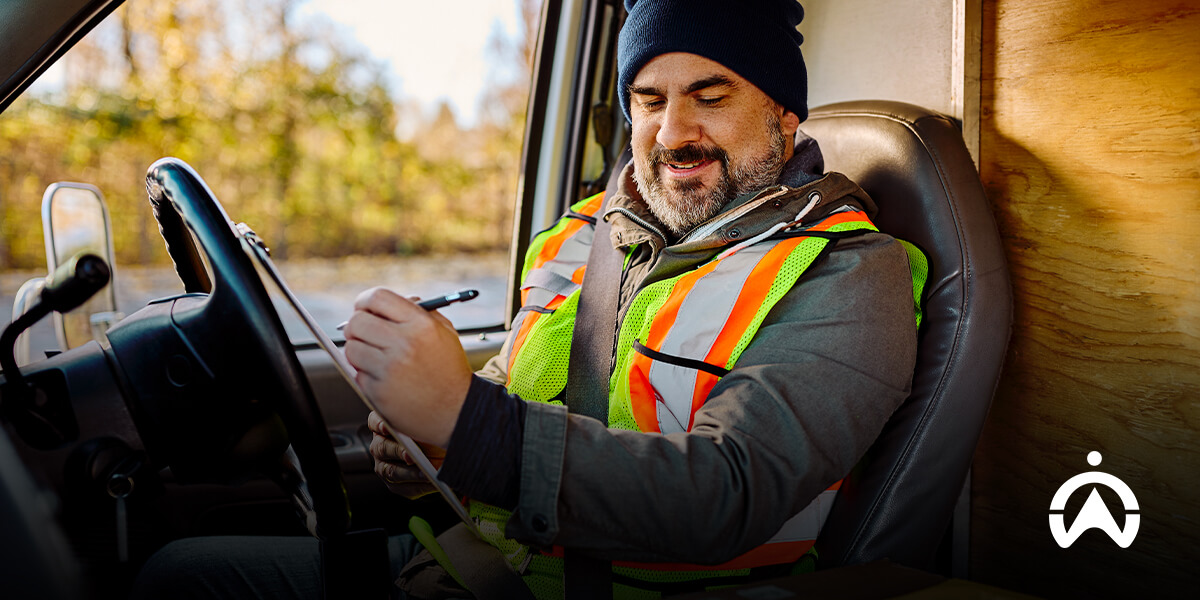
Person in high visibility vest sitting in a vehicle's driver's seat, holding a pen and notebook.

The roads of South Africa pose unique risks

South Africa’s streets have tricky characteristics that make it vital to fasten up. From reckless driving to potholes and hijacking, Africa’s wild roads present many challenges, three of which you can take on below.

  • Drinking and driving: You may travel with care while on the road. But, the uncomfortable truth is that not everyone shares this sentiment. In South Africa, drinking and driving is a serious problem, leading motorists to throw caution to the wind.
    ‍
  • Potholes and bumpy terrain: Potholes are a massive cause of irritation for many South Africans, and who can blame them? These holes can damage vehicles. Plus, Arrive Alive says that some can cause crashes, sometimes even to the point of fatality.
    ‍
  • Hijacking: South Africans live in a country where hijacking poses a genuine threat. A standard hijacking method is to drive in front of the motorist rapidly. This approach causes them to swerve off the road. Fastening those belts helps those behind the wheel avoid hitting their heads during this moment. They then remain conscious, alert, and capable and can take action, such as calling law enforcement.

You could find yourself in hot water with the law

No one likes getting in trouble with the law, and as everyone knows, not wearing a safety belt is illegal. Find out more about the laws around buckling up and why you should always adhere to them.

  • Namibia seatbelt laws: Namibia has many laws about buckles. Significant ones for everyday driving include:
    • No one may drive on a public road without a seatbelt.
      ‍
    • No one can drive on a public road with a car whose seatbelts are not in working order or correctly fitted.
      ‍
    • ‍Safety belt-related fines range from N$1,000.
      ‍
  • Where responsibility lies:
    • The law states that those controlling the wheel are solely responsible for ensuring everyone straps in.
      ‍
    • If a fleet driver gets into legal trouble, the company must pay the relevant fines. This responsibility is imposed by common law, ‘Vicarious Liability.’ It means that employers are responsible for their employees’ offences. That said, the company can hold them internally accountable.

Increases healthcare and insurance costs

As we know, avoiding seat belt safety increases the risk of injury severity. The higher the severity, the higher the insurance and healthcare costs. If you choose not to buckle up and are hurt in a car accident, you may not receive the best compensation from your insurance company. They could even go as far as to deny your coverage, claiming negligence.
Insurance also provides for private healthcare, and in South Africa, the quality of care between private and public sectors is vastly different. You could end up paying out-of-pocket for substandard services.

Improves companies’ safety culture

Safety culture is more than a company pushing a safety-focused policy. It is also a workplace culture with an enthusiastic attitude toward compliance and safety. This cheerful and active approach to security brings many benefits, which you can learn more about below.

  • Retention and attracting new employees: Focusing on drivers’ safety makes them feel like their company cares. This feeling can increase morale and retention and even attract new employees.
    ‍
  • Reputation: If potential or current customers hear of fleets having unsafe experiences while on business time, they may choose not to purchase from them. These companies could also lose partners or investors who won’t want to look bad via association.
Person in high-visibility vest driving a vehicle with seatbelt-secured notification on the screen.

Strengthen driver safety with Cartrack’s trip history

Whether it’s about buckling up or not, investing in anything that improves driver safety is always a great idea. At Cartrack, everyone can do just that with our trip history feature. With the help of telematics, trip history offers the following:

  • Trip recording and reports: From duration, distance, routes, stops, departure and arrival times, this feature records every trip in detail. The system records data on these harsh driving behaviours that can be used to understand motorists’ poor habits. These habits include:
    • Speeding
    • Aggressive cornering
    • Harsh acceleration
    • Harsh braking
      ‍
  • Benefits for everyday drivers: Trip history can help you and your loved ones analyse and improve one’s own or each others’ driving patterns.
    ‍
  • Benefits for fleet managers: Trip history reports can empower fleet managers to monitor poor driving conduct and coach drivers where needed. These reports can prevent motorists from repeating poor driving patterns and improve a business’s safety culture.
    ‍
  • Cartrack’s driver scorecards: Driver scorecards are perfect for fleet managers’ coaching needs. They source data via the trip history feature to inform their point system. Fleet drivers lose points on their scorecards if they engage in harsh behaviours. These scores motivate commercial transporters to drive more cautiously. Providing fleet managers with insights into their transporters’ specific weak spots is also a valuable coaching tool. These specifics include speeding, harsh acceleration, harsh braking, harsh turning and excessive RPM (Revolutions Per Minute). These reports vary from one to seven days and an entire month.

Discover more about these features by contacting Cartrack Namibia today.

Ensure that your fleet straps in with Cartrack’s AI Multi-Vision

With our AI (Artificial Intelligence) Multi-Vision solution, fleet managers can ensure their drivers’ well-being. They can, for example, get real-time knowledge of whether drivers are buckled up. That said, let’s explore many of AI Multi-Vision’s features.

AI Multi Vision is an AI-enabled solution. It allows fleet controllers to protect fleet safety and improve coaching methods. This solution includes up to eight cameras in each vehicle, such as in-cabin road-facing, internal, and external cameras. These come with live audio streaming and direct in-cabin calling and alerts, sent to Cartrack’s web platform and our Mobile App for the fleet manager and other relevant individuals to keep track of. These real-time alerts are for high-risk safety events picked up through AI camera detection. These include fatigue, distraction, smoking, phone use, camera covering, tailgating, and, as stated, seatbelt use.

Regarding safety belt detection, the process is quite similar to all the other events in that the AI camera picks up an event via its specific “trigger.” In this case, the alert is set off when there is no visible sign of them wearing their seatbelt.

Fleet controllers can remotely request footage for evidence, and AI Multi-Vision comes with 13-27 days of recording space. It also comes with free and convenient installation and training.

Next time you get into a car, remember to buckle up. It’s not just a law, it’s a lifesaver. By prioritising seatbelt safety, you’re not only protecting yourself but also contributing to a safer road for everyone.

Want to take your fleet’s safety to the next level? Cartrack’s innovative solutions, like AI Multi-Vision, can help you monitor driver behaviour, including seatbelt usage, in real-time. Contact us today to learn more about how we can help you build a safer and more efficient fleet.

Can I Cancel My Tracker Contract?

Have you ever found yourself questioning the value of your vehicle tracking contract? You might feel burdened by ongoing fees or need clarification on whether the service is genuinely beneficial. It’s natural to wonder whether you’re getting your money’s worth.

This blog post explores why people cancel tracking contracts and offers guidance for making an informed decision.

Are you ready to examine your tracking contract more closely and determine whether it’s a wise investment or time to cut ties? Let’s help you make an informed decision.

In this article, you will:

  • Find out if you can cancel your tracker account
  • Learn how to cancel your tracker account
  • Understand the importance of Terms and Conditions (Ts and Cs)
  • Find out how Cartrack Namibia can benefit you after you cancel your existing tracker contract
  • Get more answers from our Frequently Asked Questions (FAQ) section

Yes, you can cancel your tracker account! There are several reasons why you might consider cancelling your tracker account. Let’s explore them in detail.

Reasons you may want to cancel your tracking device contract

Let’s have a look at common reasons that push people to cancel their tracker accounts:

  • Perceived lack of value: If individuals haven’t had any incidents of theft or accidents, they might question the necessity of a tracking device.
    ‍
  • Unsatisfactory service: Poor customer service often leads to frustrated consumers, which leaves them no choice but to want to cut ties with their service providers.
    ‍
  • Inaccurate tracking: Consumers may find the tracking unit ineffective if it always shows inaccurate data.
    ‍
  • Contractual obligation: If your contract is ending and you don’t see its need or value, it may be a good idea to cancel.
    ‍
  • Switching providers: If you have found a better service provider, that is affordable and has better features.

While there are valid reasons for wanting to cancel your contract, it is crucial to weigh the pros and cons, especially in a high-crime environment like South Africa. Without a tracking unit, your vehicle does not have one of the best options to protect against theft and hijacking.

Key things to keep in mind when cancelling your contract

Like any other contract, there are Terms and Conditions.

Ts and Cs are rules you must agree to when you make a contract or an official agreement.

It is important to check your contract’s Ts and Cs when cancelling. This is to help you understand the cancellation process, or if there are hidden costs or a waiting period.

Here is a list of common Ts and Cs in tracking contracts:

  • Notice Period: Most contracts require you to provide a notice before terminating your contract. The notice period is usually one calendar month (a calendar month is from the first day of a month to the last day of a month). This means they must receive your notice on or before the first day of the month to end the agreement at the end of that month.
    ‍
  • Cancellation fees: Some companies require a termination fee, especially if you cancel your contract before the end of your agreed-upon period (e.g. if you cancel your 36-month contract at 12 months).
    ‍
  • Written request: Most contracts require you to write down your cancellation request or in some cases, give any recorded notice.
    ‍
  • Return of tracking unit or any other equipment provided to you: You must return any equipment given to you or otherwise arrange that the company come to you to uninstall the equipment, at a fee. It is important to avail yourself and the vehicle to avoid paying a No-show charge.
    ‍
  • Final Payments: Check for any additional payments you may have to pay before the cancellation is concluded.
    ‍
  • Refund policy: Check if you are eligible for any refunds.
    ‍
  • Confirmation of cancellation: You must receive a confirmation stating that your contract is cancelled.
    ‍
  • Impact on services: You will not be able to use services once your contract is cancelled, you need to know when the services will be inactive.
Person writing on paper with a pen, indoors, with a warm ambiance.

How to check your contracts Terms and Conditions:

Usually, Ts and Cs are sent to you via email, or they are available on a company’s website. Either way, it is your duty to make sure you have read and understood these terms.

Ts and Cs can often change, make sure you have the current version. Regularly reviewing these terms can help you stay informed about any updates or modifications that could impact your relationship with the company. Ignoring these terms could lead to misunderstandings or unexpected obligations. By taking this responsibility, you can navigate your interactions with confidence and clarity.

To obtain the Ts and Cs of a contract, you can follow these steps:

  • Company website: Most businesses publish their Terms and Conditions on their official website.
    ‍
  • Contract documentation: Check within the pages of your contract. A Ts and Cs page, clearly labelled “Terms and Conditions,” is usually included at the end of your contract.
    ‍
  • Customer service: You can call the company’s call centre to provide you with the Ts and Cs. You can either contact them by giving them a ring or write to them via email.
    ‍
  • Frequently Asked Questions (FAQs): T’s and C’s are usually answered in FAQs sections, usually on the businesses’ social media pages.

Are there alternatives to cancelling your tracker contract?

If you are considering cancelling your vehicle tracking contract but aren’t quite ready to cut ties, there are several alternatives you might explore. Here are a few options to consider:

  1. Downgrading Your Plan
    If your plan feels too costly or includes unused features, consider downgrading instead of cancelling.
    Benefits of downgrading:

    • ‍Cost Saving: Spend less and direct funds where needed.
      ‍
    • ‍Tailored Features: Select a plan that matches your actual usage.
      ‍
    • ‍Simplicity: A simpler plan focuses on essential functions.
      ‍
    • ‍Flexibility: Keep your provider relationship for easy upgrades.
      ‍
    • ‍Reduced Commitments: Lower tier plans often have shorter contracts.
      ‍
    • ‍Less Data Overload: Fewer features mean fewer notifications.
      ‍
    • ‍Opportunity for Reassessment: A simpler plan helps you evaluate your needs.
      ‍

Downgrading can help reduce costs while maintaining vehicle security. Always ensure that the new plan fits your actual needs.

  1. Consulting with Customer Support
    Reach out to customer support to discuss your concerns. Representatives can offer valuable insights into your options, potential discounts, or promotional offers that might help reduce your costs while keeping the service active.
    Before making the final decision to cancel your vehicle tracking account, it’s worthwhile to explore these alternatives. Doing so may provide a solution that meets your needs without losing the benefits of vehicle tracking altogether. Always consider your unique situation and weigh the pros and cons of each option to make the best choice for your circumstances.
A person in a plaid shirt giving a thumbs-up in front of an open car hood with a Cartrack cover.

You’ve cancelled your tracking device, now what?

Given South Africa’s ranking as the fifth-highest country in the world for crime rates, it’s strongly recommended that you explore alternative tracking service providers after terminating your existing contract

This is where Cartrack comes into the picture: Products that are easy on the pocket to accommodate you in these trying times.

Our commitment to exceptional customer service is evident in our glowing reviews on Hello Peter. With an average rating of over 4 stars, our customers consistently praise our dedication to their satisfaction.

Cartrack has a stolen vehicle recovery rate of over 90%. In the event of a theft, our expert recovery team is swiftly deployed to locate and retrieve your vehicle.

You can rest assured that every precaution and effort is taken to ensure the successful recovery of your vehicle.

With our Control Room Positioning, you can track your vehicles in real-time using the Cartrack App, the web portal or by phoning our 24/7 Control Room.

The Cartrack App offers a range of features to enhance vehicle security and provide peace of mind for vehicle tracking, stolen recovery services, and fleet management solutions It’s easy to use – providing essential information for both individual and fleet customers.

If your vehicle’s battery disconnects, you’ll receive a power event notification to alert you of potential tampering.

If you are in an accident we will be notified and we will dispatch medical and roadside response to your exact location. Cartrack is with you anytime and anywhere.

Unlock the extra value of our Value Added Services with your chosen package.

Discover how these additional features can enhance your experience and provide even more benefits.

Here’s a list of our exciting Value Added Services on consumer products, guaranteed to make your life easy:

  • CarWatch: Activated on the Cartrack App, CarWatch keeps a virtual eye on your car when you can’t. It will tell you if your car moves without your knowledge so you can decide what assistance you may need.
    ‍
  • Protector: Whether you need roadside assistance or legal help, Cartrack is there for you. Activate Protector on your mobile app and a call centre agent will contact you immediately with the assistance you need.
    ‍
  • Lifetime Maintenance Warranty: Experience the benefits of a Lifetime Maintenance Warranty. Our commitment to quality, backed by our in-house design and manufacturing, ensures your tracking unit’s longevity.

Cartrack is the first tracking company in South Africa to offer a warranty for our service that offers a payment of up to R150 000 and in certain cases up to 5 million, in the unlikely event that a client’s stolen or hijacked vehicle is not recovered, subject to certain Terms and Conditions.

Cartrack’s fleet management system offers a range of services aimed at helping businesses optimise their vehicle operations. Some of our solutions include vehicle tracking, telematics, fleet analytics, driver behaviour monitoring and maintenance management.

The fleet management system presents far more benefits than simple GPS tracking. Our innovative solutions feature comprehensive smart fleet options for every industry to boost operational efficiency.

We also offer a Mobile App for commercial products, where you can:

  • View your live vehicles’ location and past trips.
    ‍
  • Activate CarWatch which alerts you if your vehicle moves once parked.
    ‍
  • Activate Protector which provides Medical, Roadside, Legal, Accommodation and Car Hire services.
    ‍
  • Learn effective driving techniques to optimise fuel efficiency and reduce maintenance expenses.
    ‍
  • Share your live vehicle location.
    ‍
  • View speeding reports to improve safe and courteous road user behaviour.
    ‍
  • Risk reports to prevent accidents and hazardous driving behaviour.
    ‍
  • Maps in three different views – Default, Satellite and Google.

Cartrack Namibia is dedicated to providing world-class vehicle security, emphasised by its leading audited vehicle recovery rate in high crime environments such as South Africa.

Start Cartrack today to learn more.

Frequently Asked Questions

Q: How do you officially cancel a contract? 

A: To cancel a contract, take the following steps:

  • Make sure you send the cancellation notice within the time allowed.
    ‍
  • Always cancel in writing. You can use the cancellation form or send a letter.
    ‍
  • Keep a copy of your cancellation notice or letter.
    ‍
  • Send your cancellation notice by certified mail and return receipt.

Q: How much is the annual increment in the contract?

A: All Cartrack contracts increase by 10% in year 2 and again in year 3. Once the 36-month minimum term option has ended, the increases will be at the discretion of Cartrack, in line with the Consumer Price Index.

Q: Can I transfer my contract to a new owner?

A: Yes, you can transfer your contract to a new owner. This can be a convenient option if you are selling your vehicle.

Can I Have More Than One Tracking Device in My Car or Fleet?

Vehicle crimes remain an issue in South Africa. Unfortunately, you can easily forget these crimes exist as you go about your day. As the tactics used to steal vehicles become more sophisticated, vehicle owners are encouraged to rethink how they approach vehicle safety to avoid falling victim to these crimes. In this article, we answer the burning question many vehicle owners ask: Can I have more than one tracking device in my car or fleet? The answer is yes, you can.

In this article, you will:

  • Discover why multiple tracking devices are required in South Africa
  • Understand the best practices for installing various units
  • Learn how Cartrack solutions support multiple tracking units
  • Uncover the ways Cartrack help existing fleet companies

Is one tracking device enough, or should you have more?

Criminals have improved their tactics in recent years to keep up with advancements in vehicle technology and tracking devices. This has raised an important question. Is one tracking unit enough, or should you have more? Let’s discuss this issue further.

The increased threat to your vehicle’s safety

Recent statistics revealed that 8611 vehicles were stolen between April and June 2024. This indicates about 96 cars were stolen every day. In terms of fleet vehicles, it is estimated that about 30 to 35 fleet vehicles are hijacked and stolen daily, with 70% occurring in Gauteng.

The alarming theft trend is largely because of the increased use of signal-jamming devices. These devices block the signal from your key and your vehicle’s computer box. This can prevent your car from locking, which provides criminals easy access to your vehicle.

Keyless entry vehicles similarly have also become a target for criminals. Designed to provide convenience to drivers, these keyless systems can be vulnerable to jamming devices. A pair of criminals can exploit this vulnerability by intercepting the signal from the key fob and transmitting it from one jamming relay device to another, which allows them entry into the vehicle.
‍
This is a serious problem that Cartrack is dedicated to solving with its advanced technology. There are many notable benefits to having additional tracking units in your vehicles. They include:

  • ‍Secure Insurance coverage: Insurance companies now request that clients install multiple tracking units in their vehicles. To add a second layer of security to make it harder for thieves to get away. It also helps secure a lower premium to save money.
    ‍
  • ‍Peace of mind: Multiple devices in your vehicle provide additional security. If one unit is disabled, tampered with or damaged. You can be confident that the additional device will transmit signals. This makes it harder for criminals to get away with your car.
    ‍
  • ‍Enhanced Fleet Management: Multiple tracking devices empower fleet managers to optimise the performance of large fleets. Enabling granular monitoring of individual vehicles, these devices significantly improve operational efficiency.

Now that you’re armed with more knowledge of how criminals target vehicles and the various benefits of having multiple tracking devices installed in your car. Let’s learn the best practices for installing many tracking devices to maximise your protection.

Best practices for installing more than one tracking device

Let’s explore these best practices, that can maximise the benefits of a multi-device tracking setup and enhance your overall security and monitoring capabilities.

  • Need Analysis: When you’re window shopping for a vehicle tracking package with multiple units, it’s advised that you first identify what you need in a package. It could be that you only want stolen vehicle recovery, you want to monitor your driver’s behaviour, or you would like to keep a close eye on your loved ones while they’re on the road. This information is golden as it helps a sales agent offer you the best package.
    ‍
  • Device Placement: Cartrack’s discreet installation process involves carefully selecting a concealed location within your vehicle to place the tracking device. The installation is typically carried out by trained technicians who connect the device to your vehicle’s electrical system or use a self-powered unit. Once installed, the device communicates with Cartrack’s servers, providing real-time location data and other valuable information.
    ‍
  • Battery Consumption: When you opt for an additional unit, it is best to confirm that the additional device does not drain your battery. Cartrack’s additional unit comes with its own power supply, which means the device will not drain power from your car battery.

Knowing all that, you can be confident that installing multiple devices is not only possible but also highly effective.

Overhead view of a car on a road, with a traffic camera in the foreground.

How Cartrack solutions support multiple tracking devices

Cartrack specialises in vehicle tracking, vehicle recovery and fleet management solutions. We are dedicated to catering to various customers and their every need. We understand that as vehicle crime in South Africa evolves so do the solutions to protect customers and their vehicles.

Our advanced products are adaptable meaning you can customise your package to your specific needs. Existing clients can also add additional devices to strengthen their vehicle safety. Be it for personal use to protect you and your family on the road, or for fleet purposes to save on fleet costs and boost fleet efficiency. We have you covered.

Here are the packages specially tailored to personal use:

  • ‍Quick: This consumer package includes stolen vehicle recovery, control room position and a mobile app.
    ‍
  • Quick Plus: With this package, you receive a tracking device, control room vehicle location, the mobile app, power event notifications, a logbook, and the R150 000 recovery warranty – T’s and C’s apply.
    ‍
  • Quick Executive Plus: This package provides you with all the above features, plus CarWatch.

For businesses with fleet vehicles, Cartrack offers four different fleet packages:

  • ‍Fleet Management Lite: Cartrack’s most affordable fleet packages provide fleet managers with fleet management data, reports, logbooks, power event notifications and the mobile app.
    ‍
  • ‍Fleet Management Mobile: This package offers an easily movable unit that you can plug into the cigarette lighter of your vehicle. You get all the same features as the fleet management lite package, without vehicle monitoring.
    ‍
  • ‍Fleet Management Plus: This package includes vehicle and driver data, including reporting, and route history.
    ‍
  • ‍Global Fleet Management: This package offers cross-border coverage with the same benefits as the fleet monitoring systems. This system also comes with an added benefit where you don’t pay extra for roaming costs on the GPS device.

How courier companies use Cartrack’s multiple vehicle tracking solutions

Companies with fleets of all sizes trust Cartrack to protect their vehicles, from big cargo trucks to small courier vehicles. A leading courier service provider with a fleet of over 2000 vehicles partnered with Cartrack to cover their fleet. With a rapidly growing fleet and an increased customer demand, this company needed a better system that provides a full view of its entire fleet, task management and business operations.

Here’s how we help them:

  • Cartrack’s telematics platform provides an easy way to monitor their drivers’ location. It also ensures that packages are delivered safely and on time.
    ‍
  • Cartrack’s fleet management software helps eliminate incorrect order submissions, which results in fewer issues and more happy customers.
    ‍
  • Thanks to Cartrack’s AI-powered live-streaming cameras, they can keep an eye on their drivers at all times. This helps to correct bad behaviour and also to make sure their drivers are safe.
    ‍
  • The stolen vehicle recovery covers fleets in the unfortunate event of theft or hijacking. This way they are covered from all angles.
A red pushpin on a map with a car in the background.

Are you ready to take the next step in securing your vehicle or fleet?

Investing in multiple tracking devices and partnering with a reliable provider like Cartrack, can significantly enhance the security of your vehicle or fleet. With advanced features, discreet installation, and 24/7 monitoring, you can enjoy peace of mind knowing your assets are protected.

Always stay one step ahead of vehicle criminals with Cartrack’s advanced tracking solutions and industry-leading recovery rate. With us, you can drive confidently knowing your vehicle is secure.

Enjoy peace of mind with cutting-edge technology and 24/7 support. Contact us today for a free quote and discover the perfect solution.

Frequently Asked Questions (FAQ) about installing multiple tracking devices

Can I add more than one tracking device to the same subscription plan?

Yes, you can. With Cartrack, you can choose a tracking package that best suits your needs. You can add an additional tracking unit which is billed separately under your client profile. You can add our Value-added services to your subscription to strengthen your vehicle protection.

Is it legal to install multiple tracking devices in your vehicle?

Yes, In South Africa, it is legal to have multiple tracking devices in your vehicle. You should ensure that the devices you choose best suit your needs and that the devices installed meet your insurance coverage requirements.

Are there different payment plans to choose from?

Cartrack has two different payment plans. The 36-month subscription is a fixed-term contract with a 10% escalation in the 2nd and 3rd years.

There is also a month-to-month payment option. This option allows you to pay monthly without a contract. You purchase the hardware upfront and get a reduced monthly fee.

Why It Is Important to Measure Fuel Flow in Your Engine

Fleet-related industries rely on efficiency and precision to keep operations running smoothly. And, when it comes to potential profit drainers like fuel inefficiency, you need a fuel monitoring tool that gives you accurate data for informed decision-making.

Discover why it’s important to measure fuel flow in your engine and how fuel probes can boost your business.

In this article, you will:

  • Understand the real reasons to measure fuel flow in your engine
  • Learn the differences between fuel level sensors and fuel probes
  • Understand how a fuel probe works
  • Discover the benefits of fuel probes
  • See how Cartrack’s technology can help you optimise fuel tracking
  • Get answers to the most frequently asked questions

Understand the real reasons to measure fuel flow in your engine

  1. Fuel Efficiency: Monitoring fuel flow helps you identify inefficiencies in your engine’s operation.
    By pinpointing areas where fuel is being wasted, you can take steps to improve fuel economy and reduce your overall fuel consumption.
    ‍
  2. Engine Performance: Fuel flow data provides valuable insights into your engine’s performance.
    By analysing the fuel flow rate under different operating conditions, you can detect potential issues like fuel leaks, injector problems, or faulty sensors that might be affecting your engine’s power output and responsiveness.
    ‍
  3. Maintenance: Tracking fuel flow helps you stay on top of your engine’s maintenance needs.
    Unusual spikes or drops in fuel flow can indicate potential problems that require attention before they escalate into more serious issues. Regular monitoring can help prevent costly breakdowns and ensure your engine’s longevity.
    ‍
  4. Emissions: Fuel flow data can be used to assess your engine’s emissions levels. By optimising fuel delivery and combustion, you can reduce harmful emissions and contribute to cleaner air.

Learn the differences between fuel level sensors and fuel probes

When it comes to measuring fuel level and fuel flow, we can see the benefits; especially when you manage or run a fleet-based business and fuel economy is crucial. Let’s discuss this in detail by first looking at the difference between fuel level sensors and fuel probes that help you measure fuel flow.

If you want to understand the difference between measuring fuel levels and fuel flow, it’s important to understand how both are measured and what tools are used to measure each. First, let’s look at fuel level sensors, how they work, and the different types.

A quick overview of fuel level sensors

Fuel level sensors, telematics, and IoT devices collect different types of data that help you understand the real-time fuel levels in your fleet vehicles’ tanks. Using a fuel sensor, our MiFleet Fuel solution provides the following:

  • Validation of fuel tank capacity
    ‍
  • Validation of how many litres are in the tank
    ‍
  • The ability to detect fuel theft
    ‍
  • Fuel consumption

Our MiFleet Fuel solution is multifaceted. It can be used in a variety of industries, such as automotive, marine, and industrial fleets.

Close-up of an engine with pistons and flames inside cylinders, illustrating combustion.

How a fuel probe works

These devices measure the fuel quantity flowing in your fuel tank. They provide fleet managers and operators with fuel flow data that is 98% accurate, helping to optimise vehicle, vessel, or equipment performance and increase efficiency.

One of the main reasons fuel probes are so valuable is because of the real-time data they provide on fuel levels in your vehicle that helps operators, drivers, and fleet managers proactively manage and make informed decisions on fuel management.

Why you need fuel probes in your fleet vehicles and equipment

The most important reason to measure the fuel flow to your engine with a fuel probe is that it provides nearly perfectly accurate data on your fleet’s fuel consumption, which can help you optimise your operations in multiple ways and contribute to increasing your ROI.

Here are some of the benefits you get from monitoring your fuel consumption with a fuel probe:

Lower fuel expenses and better fuel economy

Real-time fuel consumption monitoring is one of the most effective ways businesses can identify fuel drainage and other fuel-related inefficiencies. Checking your fleet’s fuel usage in real-time also gives fleet managers the power to make proactive decisions, like immediately looking for causes of fuel loss and fixing them. This helps to keep budgets stable instead of causing profit depletion and expensive vehicle repairs. Keeping vehicles healthy improves your fleet’s fuel consumption and economy, making it a win-win for your business in the long run.

Reduced vehicle downtime and improved performance

A well-maintained vehicle is a fuel-efficient vehicle. A vehicle operating at peak performance consumes less fuel than one with mechanical issues. Early detection of potential problems can significantly reduce downtime and improve fuel efficiency.

Accurate ESG reporting tool

Providing an accurate Environmental Social and Governance (ESG) report is crucial to instilling and maintaining trust in investors and stakeholders. Fuel probes help you generate data and accurately document your business’s sustainability to meet the ESG Fuel Management 2024 criteria so you can increase transparency. And, with accuracy being crucial, these probes are the way to go.

Accurate fuel costing analysis

Fuel probes elevate your fuel budgeting capabilities with their exceptional accuracy. Every cent counts, and precise fuel data empowers you to maximise savings, enhance budget flexibility, and boost your bottom line.

Car exhaust pipe emitting dark smoke on a road.

Other ways Cartrack Namibia helps you enhance your fleet’s fuel efficiency

Fuel probes help you get near-accurate data about your fleet’s fuel consumption. Cartrack Namibia can elevate your operations even more by tackling fuel inefficiencies from all angles and helping you optimise your profits the smart way.

  1. Risk reports
    Regular reports of your drivers’ behaviours while on the road can help you pinpoint bad driving habits that lead to increased fuel consumption, like speeding and harsh acceleration. These detailed reports also serve as a foundation for targeted training material, helping you address problematic behaviour quicker to get better results from your drivers and experience better fuel economy in your fleet. 
    ‍
  1. Fuel graphs and reports
    To help you pinpoint other fuel drainage and support fuel flow data, Cartrack’s Fleet Web platform allows you to view fuel usage graphs. A sudden fuel drop may indicate syphoning. MiFleet reports are also available under the Report function. This function allows you to view where and when the car was filled up and the tank capacity. The vehicle’s pre-installed fuel sensor enables you to see how much fuel is filled into the tank to spot any inconsistencies.
    ‍
  1. CANBus
    Our CANBus-enabled diagnostics work brilliantly with fuel probes by giving you real-time data and even more metrics to improve your fleet’s fuel efficiency. Apart from getting fuel usage insights, you also get accurate odometer readings to help you schedule timely maintenance for peak vehicle management and real-time alerts for engine faults so you can make intelligent decisions before parts start deteriorating, causing increased fuel consumption.

Let Cartrack Namibia optimise your fuel flow data and pave the way to success

Cartrack Namibia knows how important keeping track of your fleet’s fuel is for increased efficiency and profits. Contact us today and discover how we can optimise your operations.

Let us answer your FAQs:

  • Why is fuel flow important?
    A vehicle’s fuel flow accurately indicates whether the engine is performing how it should, which can help fleet managers identify problems early on and avoid maintenance problems piling up.
    ‍
  • Why is it important to monitor fuel flow to an engine?
    The benefits include improving fuel economy, identifying fuel theft, reducing emissions, and reducing your fleet’s total fuel expenses.
    ‍
  • What is fuel flow measured in?
    Fuel flow rate is generally measured in litres per minute.