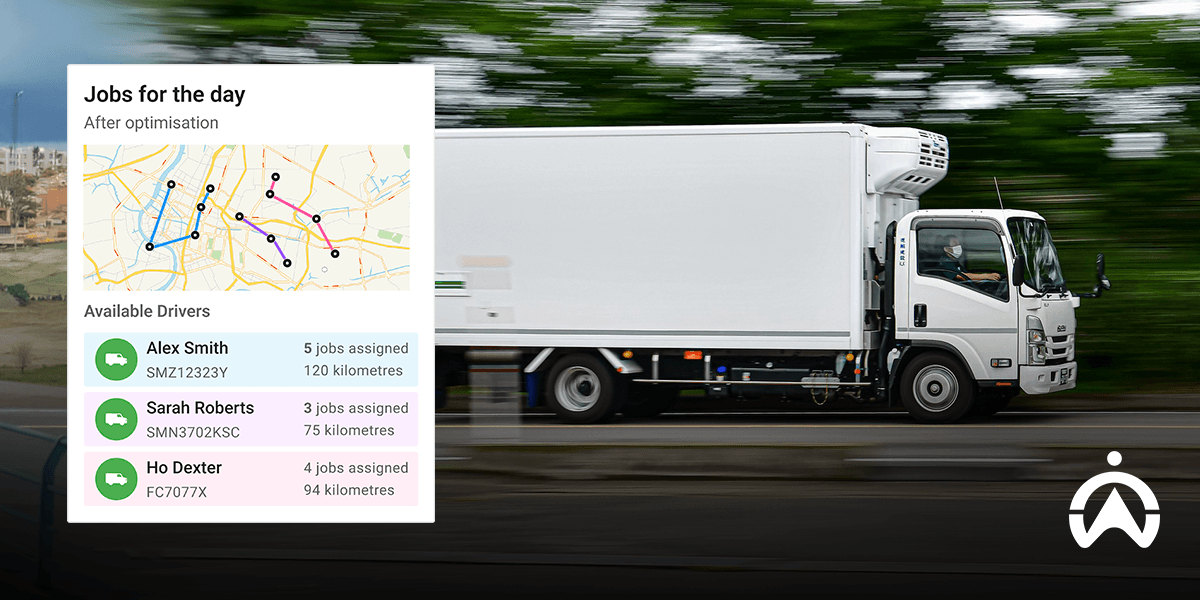
Why You Need a Utilities Fleet Management System for All Your Providers of Gas, Water and More

Utilities that provide our cities with gas, water and electricity need a fleet management system to stay on top of which drivers are where, and when they’ve completed a task. These are the services that keep our cities & homes functional, so speed and efficiency are paramount.

Namibia supplies a total of about 3 Mtoe (Million Tonnes of Oil Equivalent) of energy each year, according to research compiled by global energy databases. This pool of energy is managed by NamPower alongside regional grid operators like the REDs (Regional Electricity Distributors) and local municipalities, which means they decide who gets switched on and who gets switched off.

Many of these organisations also works alongside individual gas & water management entities, and road travel is a big part of each one. If you manage one of these entities, pay attention as Cartrack explores the need for FMS in utilities.

Why do utilities need fleet software to manage their drivers and fleet?

Utilities should manage their drivers and keep track of their vehicles using software because thousands of people rely on their services for basic home & business needs. Because road travel can prove precarious at times, keeping drivers safe, on time, and accountable is how risks are managed and service is maintained.

The “fleets” you see servicing communities (like maintenance trucks for water & power or rubbish collection vehicles) are a mix of government-owned and privately managed services.

How does this work? While the responsibility for the service lies with the provincial government, the active management of vehicles is mostly outsourced to private specialists.

This means that each individual area within a country is affected by how efficient those fleets are. If a utilities fleet is badly run, the residents of that city or town will suffer as a result.

Risky business: How utility providers manage unique industry risks

Utility providers can protect their drivers through regular coaching, vehicle camera systems, and a proactive maintenance strategy. It’s also important to protect each vehicle too, because your drivers rely on these vehicles to get from point A to point B safely.

More importantly, residents need to be protected. Utility workers are performing tasks that could cause explosions (gas), electrocution or fire (electricity) or even flooding (water). With fleet management software you can control your fleet better and manage these risks to better prevent them.

Safety culture

Utility workers do the same job day in and day out. This can breed complacency, which is a hotbed for incidents. Managing your fleet beyond just its vehicles helps you create a safety culture that keeps your workers accountable.

It’s not just about your drivers—it’s about ALL your workers.

This is never more true than in situations where your utility workers are in high-risk areas. This is when they and you need to be on high alert. 

Fleet management software comes with handy tools like geo-fencing which alerts you to those times when these high-risk visits are actually happening—helping you prioritise your attention. It also comes with panic buttons so that your workers can urgently alert you to a crisis if one happens—helping you to react fast to mitigate disaster. 

Driver behaviour

Drivers can be their own worst enemies sometimes. Accidents in fleets are often caused by distracted driving, cellphone use, or speeding. Time to take control! Minimise these habits and you’ll have a significant effect on the common risks drivers face. You’ll also keep the residents you serve safe from fire hazards, gas explosions and flooding from burst water pipes.

How?

  • ‍Camera setups for vehicles integrate well with coaching systems. Having both lets you train your drivers with FOCUS. It removes doubt about where your drivers are struggling and gives you indisputable footage that you can use to adjust risky driver habits.
    ‍
  • ‍CAN bus integration reads important diagnostics about your vehicles in real-time, allowing you to set up alerts when drivers are speeding or get into a collision. CAN bus also reads real-time power-related actions of other equipment like cranes, lifts and pumps, which are right there in the midst of the most dangerous areas.

Whether you choose one of these or both, you’ll get valuable, high-quality data to keep your drivers on the straight & narrow. 
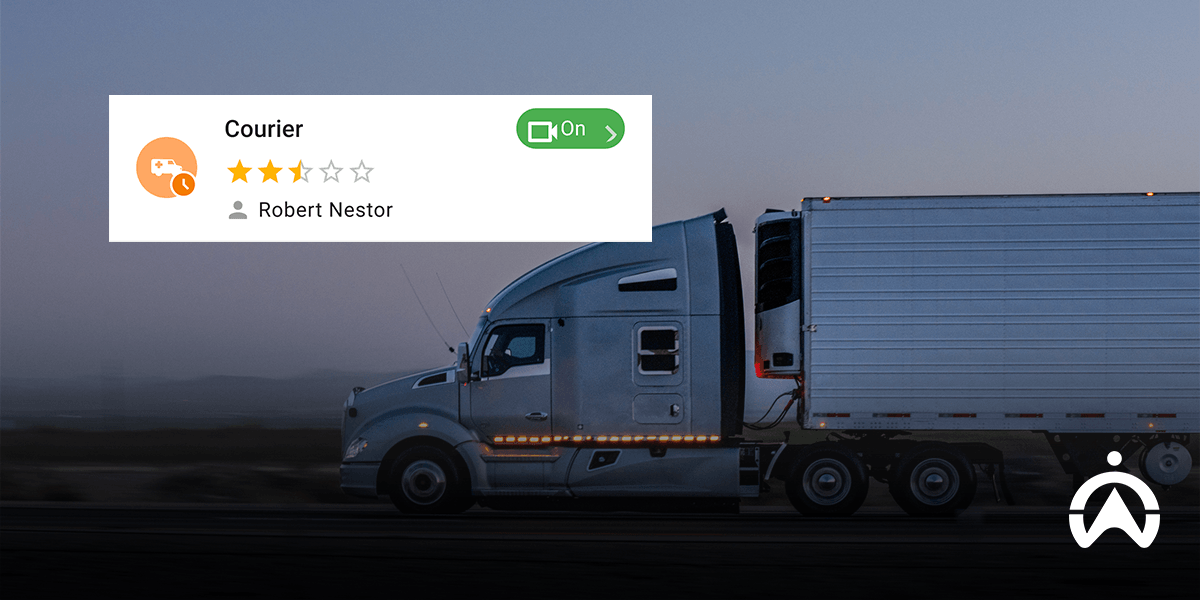
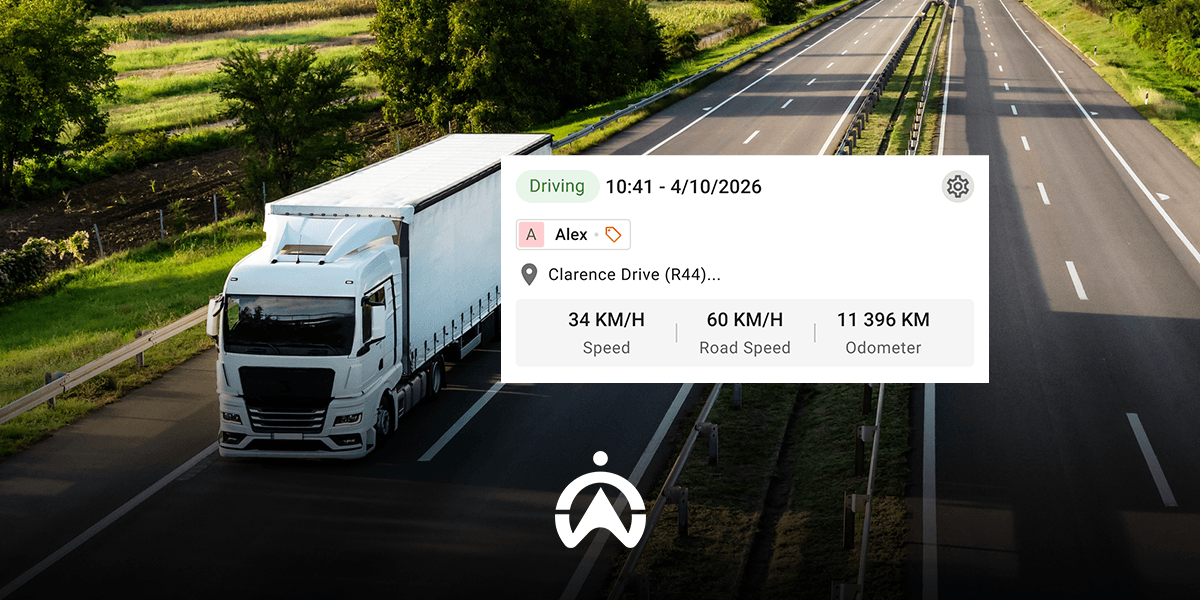
Truck driver operating a utility vehicle, illustrating how a utilities fleet management system improves fleet visibility and driver monitoring

Third-party and other incidents

What about everyone else on the road? Your drivers are at risk every day due to the bad driving of others—not to mention damaged roads, unexpected obstacles, and extreme weather conditions.

  • ‍For third-party risks: Vehicle camera systems keep others accountable when they surround or encounter your utility drivers. Not just on the road, but while they’re working too.
    ‍
  • ‍For damaged roads and obstacles: Route optimisation software can help your drivers avoid bad routes by instantly redirecting them to safer, quicker ones.
    ‍
  • ‍For extreme weather: Emergency roadside and medical assistance is available for those who want to safeguard their drivers against weather-related accidents or breakdowns.

Vehicle protection

The vehicles are what carry your utility service deliverers. If driver safety comes first, vehicle safety is a close second. But is tracking enough these days? Thieves are wisening up to tracking devices and using jammers to scramble their signal.

As usual, Cartrack is one step ahead. We use hardwired tracking devices AND offer the Cartrack Tag as a backup if your regular device gets jammed.

If you really want to upgrade the security of your utility vehicles, consider our freely installed cameras that record everything that happens in and/or around your vehicle. Vandalism, theft, or hijackings—our cameras pick up everything!

The service delivery bridge: Satisfying residents

At the heart of fleet management for utilities is a focus on service delivery. Unlike most fleets, utility fleets keep the wheels turning for residents & businesses, placing high importance on speed, scheduling, and proof-of-service. Can FMS meet the challenge? Yes—and more.

Priority scheduling

When it comes to turning someone’s water back on or delivering a canister of gas before nighttime supper, priority plays a role. In utilities, certain tasks are more important than others, which is why scheduling is so important.

Cartrack’s workforce optimisation app boosts your utility service productivity by automating task assignment and optimising the workflows of your technicians. It does this using AI-powered algorithms that prioritise some jobs over others based on your managerial discretion.

Getting there FAST

Good service means speedy arrivals. Part of what Cartrack’s workforce optimisation software does is provide you with optimised routes so your drivers bypass traffic, damaged roads, and long routes. Residents and business owners will appreciate your dedication to quick utility fixes like switching on their power or getting their water turned back on.

Completing tasks

When one of your technicians finishes their task, you have to rely on their word. So does the resident. This can often lead to disputes that are nuanced in various ways. But when you have conclusive evidence of a job being completed, disputes become much easier to resolve.

For utility companies, this saves time & money, enabling your team to complete more tasks per day. Whether it’s a digital photo, an electronic signature, or a digital copy of a document, tasks flow more seamlessly when you have a system that WORKS.
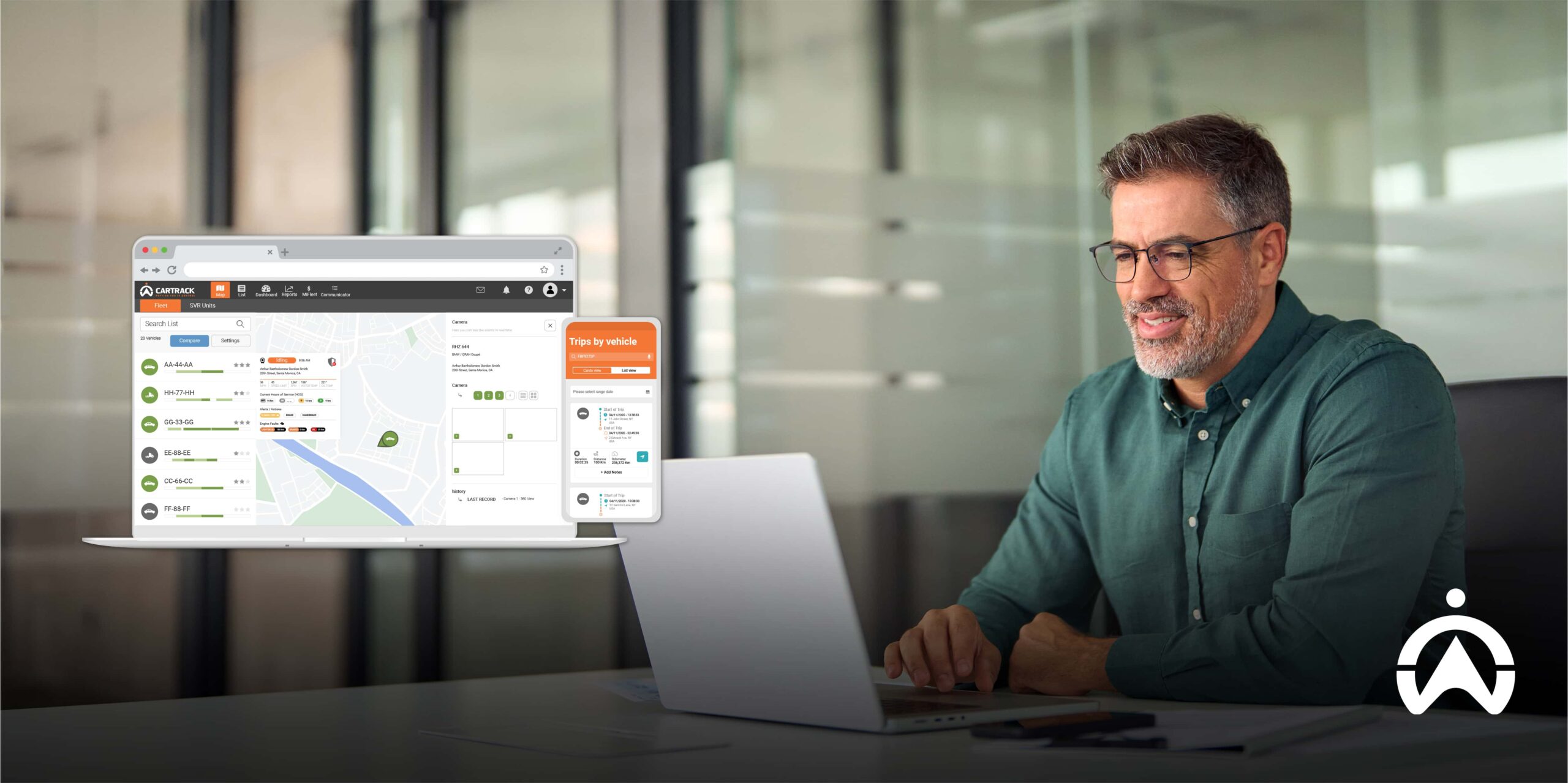
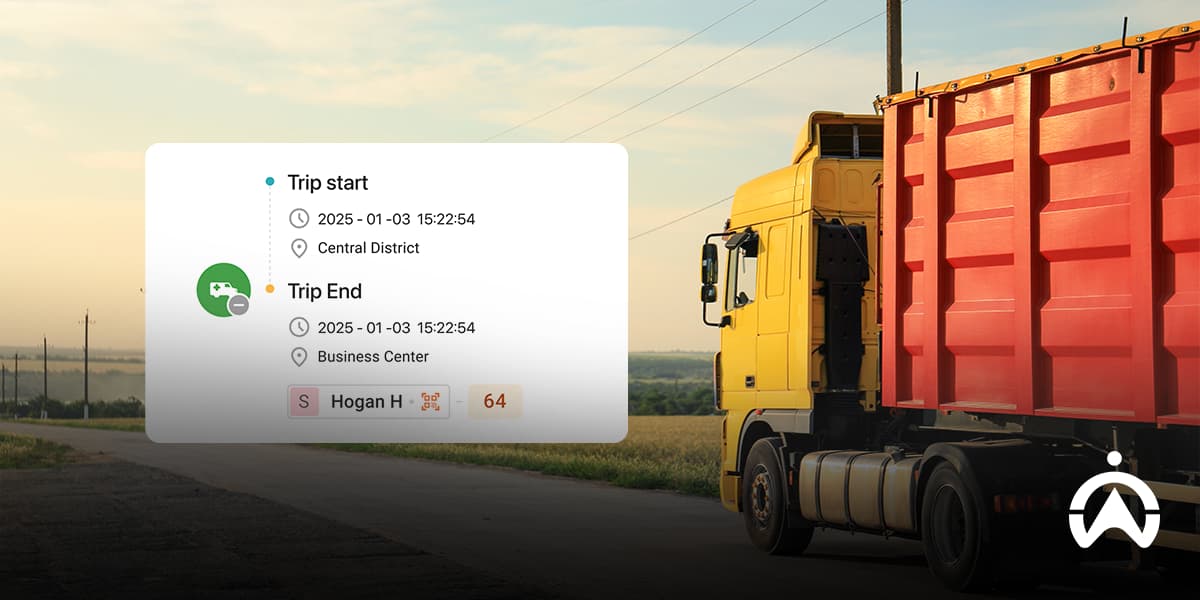
Manager using the Cartrack fleet management system with live vehicle tracking and trip data for utility fleet operations

It’s still a business: Keeping profit margins high

At the end of the day, a utilities company needs to turn a profit. It’s a business after all, and money keeps things running—not just for the business, but for the town or city being served as well. To keep profit margins high, using a fleet management system is being regarded as a necessity rather than a luxury.

Why pay for something unless it’s delivering a decent ROI? Let’s find out how FMS safeguards your profits. 

Negotiating insurance

Every vehicle in your utilities fleet needs to be insured. This is one of the biggest overheads you’ll have, and risk profiles affect just how big it ends up being. You may not know this, but insurance companies LOVE high-security features on your vehicles. They lower your risk profile and make disputes easy to resolve.

Adding alert systems, vehicle cameras and tracking devices to your vehicles gives you the leverage to negotiate your insurance premiums. And let’s be frank: every rand you can save makes a difference to your annual profit over time. 

More service… higher profits

A good FMS should be designed to help your team service more residents. Through route optimisation, task completion evidence and fuel savings, your team can reach more people in less time. Your productivity goes up, and invariably, so do your profits. 

Fuel cost management

Fuel is where you should see the biggest savings. Some fleet companies that use Cartrack report up to 24% savings on their fuel overheads. Why shouldn’t utilities companies enjoy similar results? Your vehicles are on the road A LOT, so every small adjustment you make adds up.

What’s the best fleet management software for utility fleets?

When it comes to features that fit the daily operations of utility fleets, Cartrack emerges as a solid fleet management service provider. Our security features are layered, and you get to choose which ones you want without paying for ones you don’t use.

It’s also worth looking at a solution that helps your fleet operate seamlessly, because this means better safety, higher profits, and a good reputation that just keeps developing over time.

Talk to our consultants about what you need, and we’ll discuss a range of features that will keep your utility fleet flowing, keeping your area of residents supplied and satisfied. 

Frequently asked questions about utilities fleet management systems

How do utility fleets differ from other fleets?

Utility fleets differ from other fleets in that they’re an essential service rather than a luxury or commercial service. Their vehicles are often on the road more often than those of other fleets, and they must regularly operate and function well in rural areas.

How do my technicians provide proof of job completion?

Technicians can record proof of a completed job by either recording a digital signature or taking a screenshot of a signed document. They can also take mobile pictures of a completed task (like a switch or a fixed water pipe) and these will be kept on the FMS system if it needs to be referred to later.

Can FMS be used to notify residents of impending water or power disruptions?

Cartrack’s FMS can’t be used to notify a large area of people about water or power disruptions. It can notify individual residents of scheduled tasks who may have called or emailed about a problem and provided their details, but this is rare. In utilities, FMS is mostly used to simply increase efficiency.
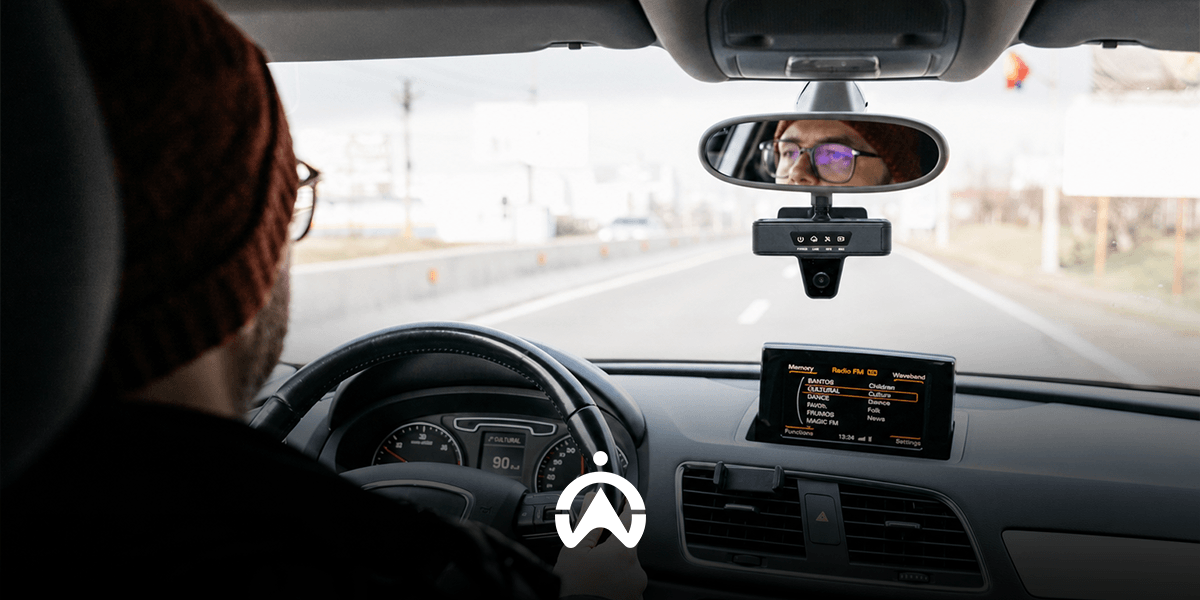
What are 5 Common Mistakes to Avoid When Using a Dashcam?

Dashcams aren’t just devices you go buy at a tech store. They should rather be seen as an (ideally) hardwired vehicle component that is essentially part of your car. Failing to manage footage and memory is another common mistake motorists make, but it all starts with choosing the right dashcam from the get-go. 

In line with the World Health Organization’s tracking of global road safety trends, dashcams have become nearly indispensable for drivers, with millions installed to date. Locally, a rise in unpredictable road incidents has Namibian motorists researching dashcams to ensure their road events are properly captured for legal means.

But with so many brands available to consumers, which one is best? And what are the mistakes being made by motorists when they finally bite the bullet and make the purchase? Cartrack Namibia will highlight 5 common mistakes you could make when using a dashcam and also show you the best way to avoid these mistakes by purchasing the right one.

What are 5 mistakes drivers typically make when using a dashcam?

  1. Purchasing the wrong dashcam in the first place
  2. Mounting the dashcam incorrectly
  3. Not managing their footage efficiently
  4. Being ignorant of “night vision”
  5. Sharing footage prematurely on social media platforms

1 – Buying the wrong dashcam

Arguably the biggest mistake dashcam users make is in the initial selection process. Dashcams are seen as an accessory for your car; something we just add for continuous recording “just in case” something happens that’s worth capturing.

But dashcams are a bit more complex than people realise. Video footage takes up a lot of data. Imagine capturing every trip on your phone camera! It wouldn’t be long before your gallery ran out of space. And if you were to go over that footage afterwards, you’d quickly realise that much of that footage is painfully boring.

This is basically what store-bought dashcams are: simple cameras that record EVERYTHING about your trip. Not as useful as one might think.  

Problems that stem from buying the wrong dashcam:

The 5 mistakes we mention in this article actually stem from this main mistake: CHOOSING THE WRONG DASHCAM to begin with. This will create mounting problems (you’ll likely have to mount it yourself), data management problems (store-bought cameras come with SD cards that require meticulous maintenance), and other challenges.

  • ‍“But they’re so much cheaper.”
    ‍
    True, but for the purposes of protecting you on the road, store-bought dashcams won’t necessarily do everything you need them to—especially in an emergency.
    ‍
  • ‍“But I only have to pay for it once.”
    ‍
    Yes, but a once-off purchase comes with a lot of self-maintenance that will become tedious after some time.

So before you buy your next dashcam, let’s look at how mounting, data management, and safety features can be misunderstood. That way, you’ll make the right choice from the get-go.

2 – Bad mounting

Incorrect camera placement is a common mistake that ultimately renders your dashcam relatively useless. A store-bought dashcam will need to be mounted with wires hanging down to the plug that’s connected to your cigarette lighter.

Definitely NOT ideal!

Problems that stem from mounting your dashcam incorrectly:

Another big mistake is failing to inspect your windscreen beforehand. A crack in the windscreen could distort the footage, and windscreens that are strongly tinted could do the same (although this is less common). Bad footage won’t be useful if you ever need to refer to it for legal or insurance reasons.

  • Some users even make the mistake of mounting the dashcam OUTSIDE of the vehicle, which will cause the camera to suffer damage very quickly.
    ‍
  • A dashcam mount that disregards power is another common mistake. It might be in the right position, but will it sufficiently charge when your car is switched on?
    ‍
  • ‍What about the angle? Is it picking up everything you need it to? How will you know how to adjust the camera to the most ideal angle?

Also remember: your car is constantly vibrating. The camera must be securely fixed by a professional, and the wiring should be hardwired to your vehicle in a way where wires are NOT in the way.

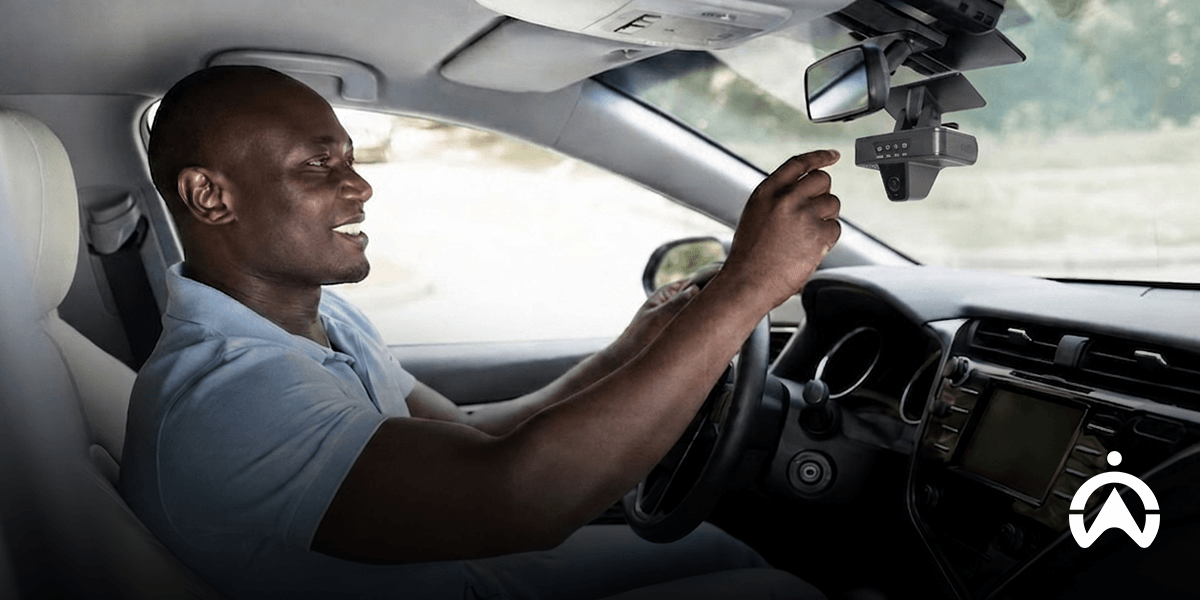
Driver adjusting a dash camera inside a vehicle, showing common mistakes to avoid when using a dashcam for proper placement and recording quality

3 – Wasting memory with irrelevant footage

As we mentioned earlier, much of the footage of your dashcam is nothing more than boring travel. This is not the purpose of a dashcam, because all of this footage takes up loads of space (or memory).

Many dashcams out there come with SD cards, which is where all this footage gets stored. But these need to be formatted at least once a month. You can pull footage and save it to your laptop if you want, but you’d have to search for it among hours of video you don’t actually need.

Problems that stem from memory mismanagement:

Not managing your footage correctly results in lost footage, corrupted images, and possibly a damaged SD card. The point of your dashcam is ultimately PROTECTION. If you don’t have clear, observable footage, you can’t use it to prove your innocence or the actions of those you encounter on the road.

4 – Misunderstanding “night vision”

Night vision is a great feature for using your dashcam in limited light. The problem comes in where night vision doesn’t adapt to bright lights and shadows. Night vision causes lights to be blindingly bright, making it impossible to discern shapes, shadows and number plates.

Problems that stem from night vision issues:

You might buy a dashcam because it has night vision (great selling point!), but without wide dynamic range (WDR) technology, the camera won’t adapt to bright lights in real time. This will leave you with indiscernible footage that’s useless for recourse if you experience an event on the road.

5 – Premature sharing of footage

It’s not technically illegal to record other people on the road, but once you share images of other people for the purpose of “naming & shaming”, you’re entering into dangerous territory.

Article 13 of the Namibian Constitution prohibits you from sharing recorded footage (where a private person can be easily identified) on public platforms. This includes number plates, faces, names, and other identifiable factors.

Problems that stem from sharing footage against regulations:

People get into a fair amount of legal trouble by sharing the identities of others online. This can open the floodgates of civil litigation where YOU’RE suddenly the one in the wrong!

Other bystanders who aren’t involved in the incident might also be in the footage. Without their consent, you may not share their faces on social media in Namibia.

Remember: dashcam footage is there to identify someone who did something wrong, but always go to your insurance company first, and then to the police with your evidence. Social media isn’t where private information about other people should be divulged.

How does choosing the right dashcam solve these problems?

Choosing your dashcam from a reputable telematics service provider negates these problems by controlling footage wisely, having the camera installed properly, and guiding you on the correct (and legal) ways to use your footage and camera features. Suppliers like Cartrack Namibia approach dashcams from a professional viewpoint, giving you everything you need to stay truly protected on the road.

Here’s how:

Cartrack’s solution to low-quality footage

Cartrack Namibia solves low-quality footage by always mounting your dashcam PROFESSIONALLY. We also inspect your windscreen for you, and wire your dashcam (typically through your cubbyhole) in a way that hides the DVR box and keeps wires out of the way.

Our dashcams give you high-definition footage, making it clear and easy to refer to when you need it for insurance claims or legal defence. The dashcam is mounted securely, so vehicle vibrations won’t affect the integrity of the device or its components.

Cartrack’s footage management strategy

Data and footage are where Cartrack Namibia really shines! Instead of having a massive storage of irrelevant footage, Cartrack Namibia only stores video that’s based on an event. Our cameras automatically store this footage for 3 years in case you need to refer to it later.

This policy also solves the privacy problem of sharing footage. We’re bound by constitutional privacy protections to only share footage for legal or insurance purposes, keeping you safe from misusing that footage and getting into trouble.

If you need to review event footage, we’ll give you access to it—so you only use data when you actually need it. Our cameras do have SD cards for immediate recording, but you’ll never need to format it to keep it in good condition.

Cartrack’s night vision feature

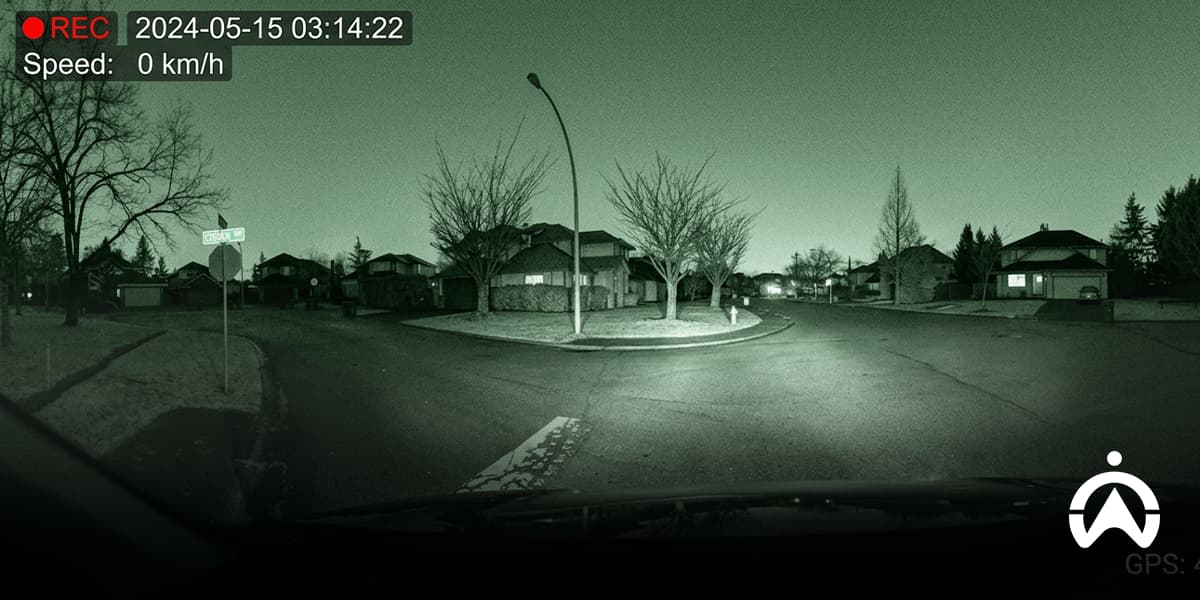
Your Cartrack dashcam will work just as well at night as it does during the day. Our dashcams have WDR technology built in, so it adjusts to lighting and shadows in real time, giving you clear & crisp footage.

Nighttime dashcam view at a quiet intersection, illustrating common mistakes to avoid when using a dashcam for clear video recording and road visibility

What other features work well with a dashcam?

Other features that work WITH your dashcam to give you more safety features include:

  • GPS tracking and anti-jamming technology
  • Accident detection
  • AI driver & road monitoring
  • 24/7 roadside and medical assistance
  • Cross-border tracking
  • Ignition start prevention
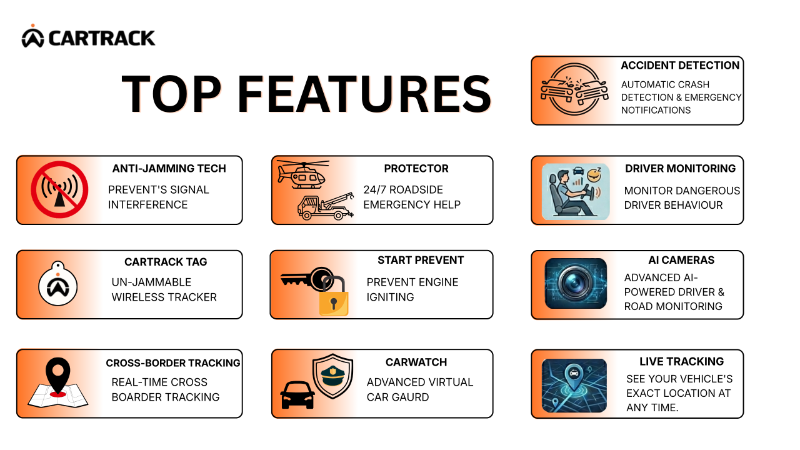
Cartrack top features that work well with dashcams

Where should you get a dashcam?

Avoid these very nuanced dashcam mistakes and keep clear of all the complications that come with mounting, sharing, and data management. Get your dashcam from Cartrack Namibia and let us do all the heavy lifting for you.

We offer our dashcams at affordable prices, and installation is FREE! Get yours by contacting us today.

Frequently asked questions about dashcam mistakes

How do I keep my dashcam SD card healthy?

To keep your dashcam’s SD card healthy, format it once per month. File fragmentation tends to happen over time on these cards, which can cause various errors and footage corruption. By formatting once a month, you’ll keep it from overloading with data that continuously overrides old data with new.

Should I turn off the dashcam audio while driving?

No, it’s best not to turn off your dashcam audio while you’re driving. It’s surprisingly helpful to have audio when analysing dashcam footage for legal or insurance purposes. Picking up sounds like hooting or reactions from the driver helps to identify context for the event being analysed.

How private are dashcams?

Yes, dashcams from reputable providers like Cartrack Namibia are private. Our policy is to never share your footage without permission unless it’s absolutely necessary for legal or insurance purposes. Cartrack Namibia is fully compliant with constitutional privacy protections, which state that personal data can only be processed if it’s done lawfully, fairly, and in a transparent manner that doesn’t infringe on your privacy.

How important are the time & date settings on my dashcam?

The time & date settings on your dashcam are very important, because this ensures accurate timestamps on your footage. The time and date of an incident are critical pieces of information, and having these wrong could bring your legal or insurance claims into question.

Where to Buy Rugged Fleet Cameras for Delivery Vans?

Rugged fleet cameras for delivery vans can be purchased from providers like Cartrack Namibia. The integrity of these cameras AND their installation ensure stability on bumpy trips. These cameras must work properly if they’re to protect your vans, which is why choosing the right provider is paramount.

According to data from Simonis Storm and local NaTIS registration metrics, recent market trends saw an impressive upswing in light commercial vehicle (LCV) and bakkie sales compared to previous years. A sharp surge in corporate fleet procurement, expanding tourism transport operations, and regional mining logistics are the main drivers—proving that Namibian businesses are investing heavily in reliable commercial utilities to scale their operations.

But with this upswing comes increased risk, which is why delivery van fleets are looking to vehicle cameras to keep their drivers & assets safe.

Can the demands of van logistics be tolerated by vehicle cameras? Only the best ones. Here’s where you can source yours.

What makes a fleet camera “rugged” enough for delivery operations?

The ruggedness of a fleet camera depends on its ability to record and provide high quality road footage despite the constant vibration of a delivery van. It also needs to withstand harsh weather conditions and normal wear & tear (which speaks to its longevity).

Are dashcams suitable for delivery vans?

Many store-bought dashcams are NOT suitable for delivery vans because they’re intended for private motorists. Some of these cameras have invasive wire connections, and others aren’t exactly built for bumpy driving. And because of the high demands of delivery van driving, a specialised provider like Cartrack should be contacted for your delivery van camera needs.

What’s the difference between a store-bought dashcam and a delivery van fleet camera?

The difference between a store-bought dashcam and a delivery fleet camera is that the latter is built for high-demand driving. Bumpy roads, lots of stops, long hauls, and weather conditions all affect the durability of a delivery van camera. That’s why a store-bought dashcam isn’t a wise investment if the purpose is camera longevity.

FEATURE Store-bought dashcam Cartrack Vision How Vision from Cartrack benefits your fleet
Alerts Beeping sounds and/or light flickering Real-time driver coaching Drivers get AI voice warnings in real time
AI capabilities Some have G-sensors Advanced Driver Alert System Keeps drivers safe in real time
Data management SD card that needs regular formatting Saved footage is event-based and uploaded to Cartrack’s system No manual data management and no need for SD card formatting
How it’s connected Wi-Fi 4G or LTE streaming in real time You can see live footage
Warranty Depends. Usually 12 months Lifetime warranty No need to replace your camera hardware
GPS capabilities Yes, on-screen GPS Yes, GPS is synced with your telematics software Your footage has context (location, speed, etc.)
Secure installation? Plug in to your cigarette lighter Hardwired to a DVR box without wires in the way No wires across the dashboard
Support of other cameras Usually 2 cameras can be accommodated Accommodates up to 16 cameras Perfect for large vehicles like trucks and delivery vans
Can it be stolen? Yes, easy to steal Installation is tamper-resistant Lower risk of camera theft

How do delivery van cameras help in the delivery process?

Beyond protecting your driver and van, delivery cameras are often used to resolve delivery disputes FAST. If a customer claims that your van never reached their home or business to carry out a delivery, you can use the delivery van camera footage to clear your driver.

Vehicle cameras for delivery vans are also used to protect cargo. These cameras are attached to door sensors, automatically recording every time the van door is opened to survey who’s handling your goods.

Will having rugged delivery van cameras affect your insurance?

Most insurance companies offer better premiums to fleet companies who install cameras onto their delivery vans. Disputes are resolved quickly when footage is always retrievable of a time-stamped event.

If you look at the price of delivery cameras from Cartrack versus the amount of money you’ll save on your insurance, the difference is often surprising.

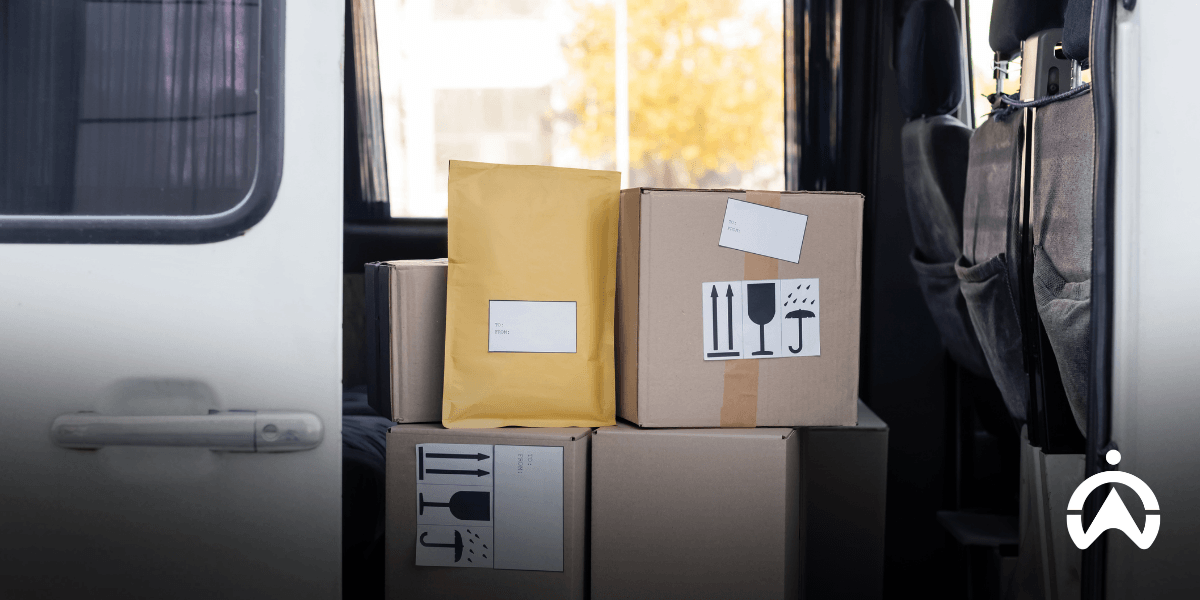
Packages stacked inside a delivery van with open side door, illustrating where to buy rugged fleet cameras for delivery vans and improve cargo security

Why is delivery van logistics so demanding?

Delivery van logistics is especially demanding because it involves driving that’s often “rough” and long. Delivery van drivers make lots of stops each day, and they often find themselves in rural areas where the roads are bumpy. Another fact is the condition of some roads, which call for the ruggedness of components—including the vehicle cameras. 

Potholes and bumpy roads

Many countries struggle with potholes in their roads. Many potholes are hard to see, giving delivery van drivers a sudden jolt when they drive over (or into) them. This happens to everyone, but MORE SO to delivery van drivers who travel long hours during the night & day. These jolts can severely damage your cameras if they’re not built for rugged driving.

Stop-and-go driving

Delivery drivers stop more often than the average driver. This constant stopping and going may sound minor, but it does add more vibration to the components. If your cameras aren’t rugged (or not installed properly), they may start to come loose or get damaged over time.

Weather considerations

Most motorists have the option to keep their vehicles under cover during storms or hot weather. With delivery van fleets… not so much. They have a job to do, and bad weather won’t usually be accepted as an excuse for not delivering on time.

For these and other reasons, delivery van cameras should be rugged enough to withstand the rough demands of delivery driving. Learn more by checking out Cartrack’s rugged camera options for delivery vans. 

What should a delivery van camera include?

Besides a rugged build and professional installation, a delivery van camera should also include a system where footage is easy to manage. The best delivery van cameras also come with door sensor technology that automatically switches on when doors are opened and off again when they’re closed.

Furthermore, look for a delivery van camera that comes with various options for in-cabin, side-view, and rear-view recording. Last but not least, always choose a delivery fleet camera that has AI capabilities, as this comes with many profit-saving features that will help you manage your fleet better.

Easy-to-retrieve footage

Choose a vehicle camera provider that makes retrieving footage simple. Storage of your footage should be cloud-based to prevent high data costs, but viewing a specific event shouldn’t be a mission. Cartrack lets you view footage by simply making a phone call to our control room. 

Cargo door sensor technology

Many providers sell cameras, but not all of them sell a camera SYSTEM. If you run a delivery fleet, having a full surveillance system is vital to the protection of your cargo. Door sensor technology coupled with your cameras will watch what happens every time the doors are opened to give you a full picture of how your valuable goods are handled.

Versatile installation options

Camera systems for delivery vans should also be versatile enough to go beyond road recording. 

  • What about the cabin where the driver and passengers sit?
  • What about blind spots?
  • What about the cargo?

Speak to Cartrack about how a full camera system protects all aspects of your fleet operation. 

AI technology for driver coaching

The best cameras for delivery vans will always go beyond recording by also giving you operational intelligence. A camera that monitors your drivers is all good and well, but what if it could correct your drivers in real-time based on highly refined AI tech?

That’s exactly what our cameras do at Cartrack! They identify potentially dangerous habits like drifting off while driving, or even eyes gazing somewhere other than the road. What about smoking, eating or drinking? Yes, our cameras detect those too.

Not only do they detect, but they can even correct that behaviour right then & there—almost as if you’re right there with your driver.

Why is installation of delivery van cameras so important?

At Cartrack we stress the importance of having your delivery van cameras installed by our competent technicians. The ruggedness of our cameras relies on a proper installation, so it’s not just about the design & build of the device itself. Considering the demands of delivery van logistics, installation must be done by experts who know how.

REMEMBER: To enhance the ruggedness of your delivery van camera, they should be hardwired into your vehicle, not simply “plugged in”.

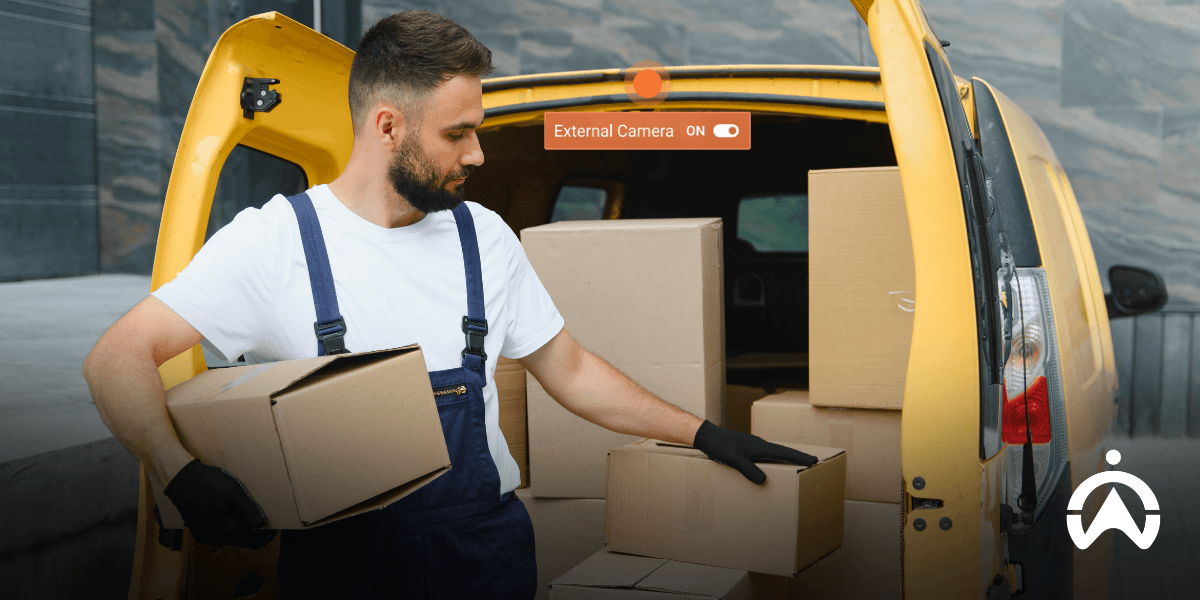
Delivery worker loading boxes into a yellow van, showing where to buy rugged fleet cameras for delivery vans to improve driver and cargo monitoring

How much do delivery van cameras cost at Cartrack?

The cost of delivery van cameras at Cartrack will depend on how many you need, what software package you want to combine with your cameras, and how large your fleet is. Cartrack is standing by to answer all your questions and give you a detailed quote based on exactly what you need.

Give us a call to learn more.

While Cartrack is considered to be a leading vehicle camera provider in various countries, it’s important to remember that we specialise in vehicle camera SYSTEMS. This means you’re getting a lot more than a camera for your delivery vans. You’re getting:

  • Cloud-based footage management
  • Scalable installations that can be modified or adjusted
  • Free installation
  • Subscription-centred assurance
  • Device warranty
  • AI capabilities that go beyond basic recording

You don’t have to select ALL our features, but it’s nice to know they’re available if you ever need to upgrade your delivery van security. 

Frequently asked questions about rugged fleet cameras for delivery vans

Can I install a delivery van camera myself?

No, it’s highly recommended that you don’t install your delivery cameras yourself. Installation is an important part of having a vehicle camera, and not doing it professionally will affect the functionality and warranty of the camera. Since our vehicle camera installation is free at Cartrack, this is best left to our professionals.

Do delivery van cameras help my drivers see blind spots?

Yes, delivery van cameras can be installed to help your driver see blind spots. We offer regular road-facing cameras, rear-view cameras, and cargo cameras, but we also give you an extra option to install side vehicle cameras that give your drivers a fuller view of what’s around them.

What happens to vehicle camera footage?

At Cartrack, vehicle camera footage is stored for some time before it’s eventually deleted to make room for more. You can at any time request to see footage if it’s recent enough, in which case we’ll archive that footage for future use. If our AI cameras detect a notable event, we’ll automatically save the footage in case you need it.

How do I retrieve delivery van camera footage?

To retrieve delivery van camera footage, simply contact Cartrack and request the footage with a time & date. We’ll supply the footage of that particular event, at which point you can let us know if it should be saved or deleted.

9 Cold Weather Maintenance Tips for Your Trucks

The 9 cold weather maintenance tips for your trucks include, but aren’t limited to, assessing battery health, prepping emergency kits, establishing strong safety protocols, and selecting winter-grade products and accessories.

Winter doesn’t just make driving trickier; it speeds up the wear and tear on your fleet’s most vulnerable (and pricey!) parts. Reports reveal that hydraulic system failures shoot up to an astronomical 340% in the colder months, thanks to fluid thickening and seal degradation.

For you, mastering winter care is an intelligent financial move to keep those bulky bills away. 

Don’t get caught in the cold. Keep reading to find out all there is to know about keeping your trucks in the best shape during winter months, and how Cartrack can help you achieve that.

What are the 9 crucial tips for maintaining your fleet trucks in cold weather?

The 9 crucial tips for maintaining your fleet trucks in cold weather include:

  1. Assessing battery health
  2. Ensuring your diesel engine is prepared
  3. Checking that fluids are at the correct levels
  4. Examining your tyres and their traction
  5. Inspecting your heater and defroster
  6. Looking over suspension components
  7. Considering valuable operational protocols
  8. Scheduling a pre-winter service
  9. Keeping emergency supplies stocked up

Take a look at each point in greater detail:

1.🔋Assess battery health

Freezing temperatures can put some serious strain on a truck’s battery, which is why regularly testing battery health is one of the most important of the 9 steps.

Did you know that winter conditions can cut your truck’s battery capacity by up to 50%? The need for extra power to start up the truck on cold mornings makes things even worse.

If you’re consistently checking your trucks’ batteries, you’ll know whether or not they’re ready to take on harsh winters. Ensure that any connections aren’t rusty or corroded; check that the battery is actually charging & in good condition; and if the battery is leaning towards four years old, consider having it replaced.

2. ⛽Ensure your diesel engine is prepared

The last thing you want is for your fuel to crystallise & gel, damage the inner workings of your truck, and set your whole workweek back through downtime.

The cold temperatures can alter your fuel and its viscosity, causing it to turn into a sludgy, wax-like substance that does more harm than good. Your engine could potentially fail.

Ensure you’re prepared with winterised fuel or anti-gel additives, as these keep your fuel in good condition and prevent it from gelling. This also means the trucks’ filters and systems remain free of blockages.

3.🎚️Check that fluids are at the correct levels

Just as special precautions are taken with diesel, standard vehicle fluid management needs the same level of attention. Windscreen washer fluid, oil, power steering fluid, and coolant all need to be at their correct levels, and winter-friendly options should also be considered.

Picture this:

One of your drivers is on the road, heading out to make their delivery in the dreary, winter weather. They get a load of road spray (debris consisting of water, road dirt, and mud) kicked up onto the windscreen, compromising their visibility. They activate the washer fluid to clear the screen, but it’s diluted or has partially frozen. It only creates more sludgy dirt across the windscreen and worsens your driver’s visibility.

Part of driver safety is ensuring that fluid management is thoroughly and intentionally controlled.

Consider getting winter-grade washer fluid & car oil to ensure smooth fluid flow, and closely monitor coolant & power steering fluids, as their performance levels can change when the weather drops.

4.🛞Examine your tyres and their traction

It goes without saying that strong tyres with the right level of traction are key to staying connected to slippery, wet, and potentially icy winter roads.

Always check the tyre grip! Tread depth on your tyres is what will save your drivers from dangerous situations in winter conditions, like loss of control and hydroplaning. Ensure that the depth of your tyres isn’t lower than it should be, and consider replacements if there’s some unevenness.

Consider snow-ready or winter-grade tyres (with deeper treads) for high-altitude areas that typically experience snow.

Finally, don’t forget to regularly check the air in your tyres. When the temperature drops, so does the tyre pressure, and this ultimately impacts wear-and-tear & fuel efficiency.
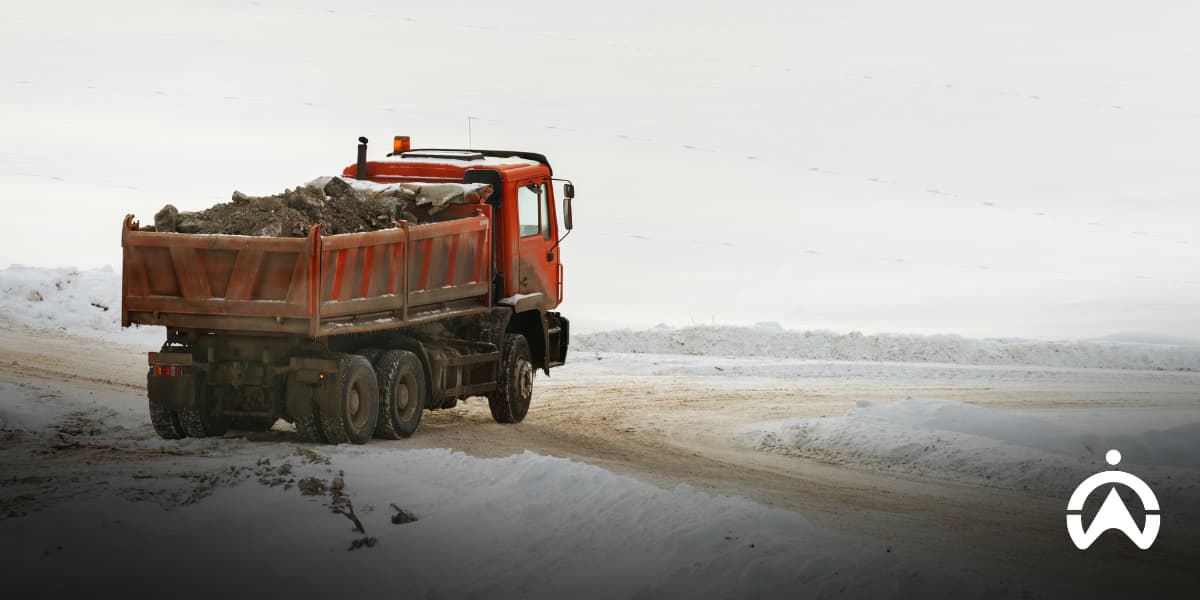
Orange dump truck driving on a snowy road, illustrating cold weather maintenance tips for your trucks during winter transport operations

5.🥵Inspect your heater and defroster

Your drivers need to be comfortable and in good health during their trips, especially when they’re long-distance. Part of helping them maintain this is by ensuring that the heaters and defrosters are in good condition.

When the heaters and defrosters are working well, they keep your drivers comfortable, which means your drivers are secure and fully engaged.

But beyond this, heaters and defrosters help with increasing visibility when condensation or misting is happening in the truck. They can also help warm the truck up if it gets caught in the snow.

Test these functions, check filters, and clean out vents if necessary to ensure you’re prepared for the cold.

6.🚛Look over suspension and brake components

Look out for potential worn-down and stiffening components. Suspension parts, like springs and shock absorbers, should be properly lubricated so they don’t become stiff and fail. Brake parts, like rotors and pads, should be checked for corrosion or cracking.

These functions are non-negotiables, because the winter chill can threaten their level of performance. 

Grease your suspension parts and replace your brake parts if necessary, especially if you suspect corrosion or other signs of wear-and-tear. Also ensure that the brake system air tanks remain dry, so that moisture caught in these air systems doesn’t freeze and disrupt braking function.

7.📋Consider valuable operational protocols

Setting clear rules & channels for communication is the key to coordinated safety and risk management. 

Guidelines and protocols need to be clear so that everyone is prepared for any unforeseen circumstances.

Your drivers should have a very clear understanding of what they need to do in an emergency and how to report them. Decide who monitors what, who will communicate with drivers, when operational adjustments happen, and other relevant situational factors.

Ensure you’ve got your reliable towing and repair companies on speed dial, just in case. 

8.🛠️Schedule a pre-winter service

Before the extreme cold even hits, get your fleet of trucks prepped and ready with a comprehensive service & check-up.

A pre-winter service does most of the work for you. 

You can quickly address any changes or upgrades that need to be made, and even get a second opinion from your service provider regarding products you’ll need for your trucks.

9.🦺Keep emergency supplies stocked up

You could have all the inspections done, products purchased, and necessities in place, but the unexpected can still happen. Keep emergency supplies stocked so your drivers remain safe in emergencies.

You can never be too careful!

Here’s what should always be kept in truck emergency kits, regardless of season:

  • Water
  • Long-life food items
  • Blankets
  • Extra fuel
  • Reflective vests
  • Torch with extra batteries
  • Tire chains
  • Bag of sand (for extra support and grip in an emergency)

Can Cartrack help you prepare your fleet for the freezing cold?

Yes, Cartrack can help you prepare your fleet for the freezing cold, thanks to the advanced features of our fleet management platform. With FleetWeb, you can focus on what matters most when it comes to fleet winter management, like maintenance, reminders, operational efficiency, and reducing downtime.

Here are a few key features: 

Predictive maintenance

Our proactive features combine Internet of Things (IoT), vehicle sensors, AI, and predictive analytics to collect data. This data produces comprehensive insights and analyses to detect potential problems & equipment failures, saving you and your business from seriously costly downtime. 

The predictive nature of this feature ensures that your vehicles stay in tip-top condition, and you’ll see a massive improvement in asset utilisation. 

Optimally functioning trucks are trucks that aren’t wasting fuel, are maximising operational efficiency, and are ultimately reducing business expenses.

Reminders and instant notifications

In connection with predictive maintenance, our platform can provide you with all reminders related to inspections and maintenance. And, if you’ve thought about something in particular and want to schedule maintenance yourself, we have a custom form that you can fill out and send.

Get your reminders and alerts on general servicing, but also receive real-time notifications for any faults, unexpected fluid fluctuations, worn car parts, and much more.

Accidents can still happen. Communicate directly with your drivers if a fault occurs while they’re on the road and let them know what the next steps are.

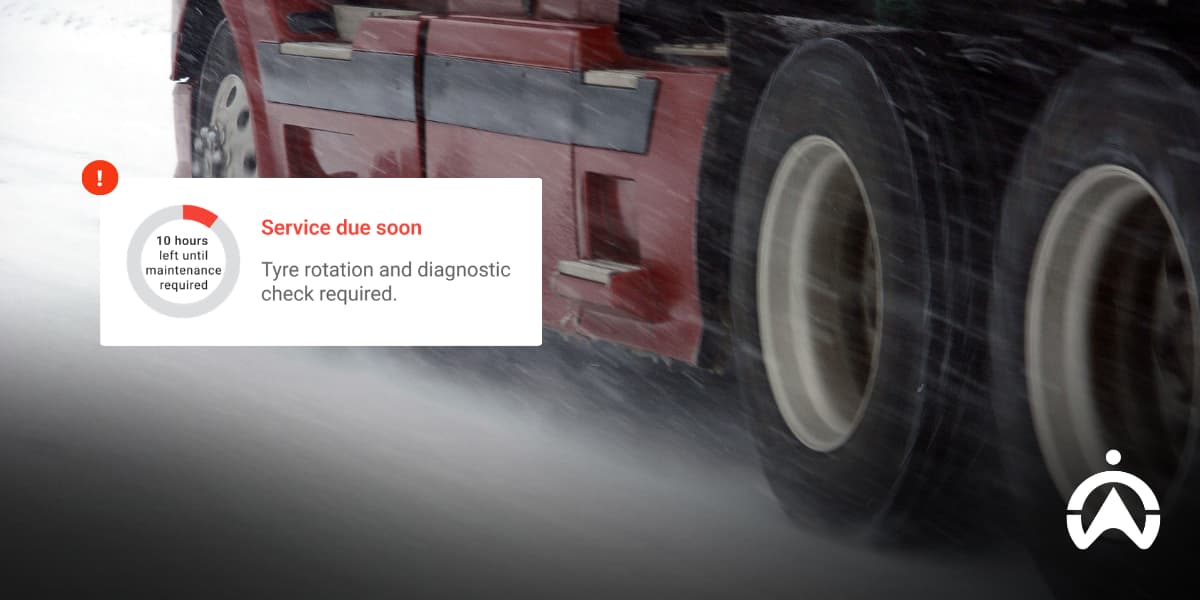
Close-up of truck tyres on a snowy road with maintenance alert, highlighting cold weather maintenance tips for your trucks and winter tyre checks

Operational efficiency

The winter months can put a serious strain on your operations. Drivers are likely idling more, fuel consumption rises, and maintenance demands tend to be higher than usual.

But this doesn’t have to be the case.

Operational efficiency can only be achieved with total fleet visibility, and fleet visibility needs a sophisticated fleet management platform like FleetWeb.

With complete oversight, you can quickly take the right steps to correct these operational strains. Additionally, with our automated and smart tools available to you, you can stay ahead of the winter blues and keep your trucks moving with minimal interruption.

Driver habits

How your drivers behave on the roads is already an immediate concern, but when winter conditions increase the danger levels, keeping an eye on them becomes even more crucial.

If your drivers are aggressive on the roads, they risk fuel waste, increase the risk of wear-and-tear, and essentially apply pressure on the truck’s performance overall.

In winter, drivers face slippery roads, poor visibility, and extra structural cold weather stress. All these factors lead to a reduced level of safety. With our AI-powered driver monitoring and scorecard features, you can successfully monitor your drivers and ensure they’re being responsible.

When your drivers aren’t being safe on the roads, you can use the scores and recorded events to actively coach them and give them data-driven feedback. Not only do you guarantee better safety for your drivers, but it’ll likely push them towards more careful, safer driving throughout the seasons.

Final takeaway

Weather changes can stir up anxiety about your trucks, their performance, your drivers’ safety, and the pressing importance of putting precautions in place. But when you’re well-prepared, there’s no need to worry.

Every step taken to achieve a safer fleet—whether big or small—means your fleet stays in an efficient and road-ready condition throughout the winter months. Partner with us, and we’ll provide all the technologies needed for you to achieve total oversight of your fleet’s performance, safety, and condition; from the inside out.

Let Cartrack help you keep your fleet running smoothly, no matter the weather. Contact our dedicated professionals to book a demo or find out more about our offerings!

Frequently asked questions about cold weather maintenance

Does putting cardboard on a windscreen stop frost?

Yes, putting cardboard on a windscreen can stop frost, and this method is considered quite a well-known practice. It’s not as reliable as a high-quality commercial windscreen cover, especially given that it could just stick to your windscreen if it rains or snows; but it works! Get a piece of cardboard that covers the whole windscreen for the best results.

Does putting a blanket over a car engine help?

Although this isn’t considered the most effective solution and is a possible fire hazard, yes, putting a blanket over a car engine can help. Covering a warm engine this way can successfully trap some of that warmth after it’s been on the road, but you’re better off buying the correct fuel additives and specialised battery blankets.

How to clean snow off a truck?

To clean snow off a truck:

  • Switch the truck on so you can activate the defrosters and heater. This helps melt some of the ice already on the truck
  • Clean the car with a telescoping broom. Start on the roof and work your way to the bottom
  • Use an ice scraper to clear the windows and mirrors

What to Do When Buying a Car from a Private Owner

Buying a car directly from a private owner is slightly different from buying one second-hand at a dealership. There are important quality features to check that’ll help you match up the car with what you’re paying (or should be paying). Determining the value involves looking at the history, inspecting the current condition, and trusting your instincts.

Then there’s the paperwork, which involves legal considerations and payment security. Online marketplaces like NamCars, MyProperty, and even Facebook are regularly flooded with used car deals. While this is often a quicker and more lucrative way to sell a car, some do it for dubious reasons like hiding mechanical faults or attempting to get more money than the car is worth.

Cartrack will walk you through the second-hand car purchasing process step by step so that you get the best deal when buying a car from a private owner.

What’s the first thing to check before buying a car from a private owner?

The first thing you need to establish before buying a car from a private owner is that they do actually own the car. The proof of ownership document is a MUST, and there are ways you can confirm if the NaTIS Vehicle Registration Certificate is real or fake.

Once you get to the private owner to inspect the car, ask them for the NaTIS Vehicle Registration Certificate. Then:

  • Hold it up to the light and inspect the paper texture; check for the official Roads Authority (RA) emblem and NaTIS watermark patterns embedded in the certificate.

  • The font shouldn’t be bold or underlined, and the text lines should be perfectly uniform without any signs of custom alignment or irregular type-spacing.

  • There’ll also be visible text or background tinting in the middle of the page. This must be 100% centred.

  • The ink on the front should also be visible on the back of the page, confirming a genuine, heavy-stock municipal print run.

  • “Vehicle Registration Certificate” should be clearly printed at the top, issued under the Ministry of Works and Transport framework.

  • Look for the specific Certificate Serial Number and System Issue Number which affirms the authenticity and chronological originality of the document.

  • Match up the Chassis Number (VIN) and Engine Number on the document with the physical chassis plate on the vehicle’s firewall, and cross-check it with the NaTIS registration disc on the car’s windscreen.

What paperwork is needed for buying a car from a private owner?

Besides the NaTIS Vehicle Registration Certificate (most important), you’ll also need an official NaTIS Change of Ownership Form (Form NCO). This will be filled out and signed by both you and the seller. Once complete, you must take this form, along with copies of both your IDs and a NamPol Clearance Certificate, to the nearest NaTIS registering authority for processing. They’ll update the national system to reflect that you are now the legal owner of the vehicle.

Optional paperwork worth considering for due diligence:

  • Stamped proof of bank account (from a registered Namibian commercial bank)

  • NaTIS Roadworthy Certificate (officially tested and stamped at a NaTIS vehicle testing station)

  • A sales agreement with details of the sale (signed by you, the seller, and preferably a witness)

  • Receipts and service log stamps that pertain to the vehicle’s maintenance history

  • A bank settlement letter if the car was financed and isn’t fully paid off yet (essential for clearing the financial institution’s title at NaTIS)

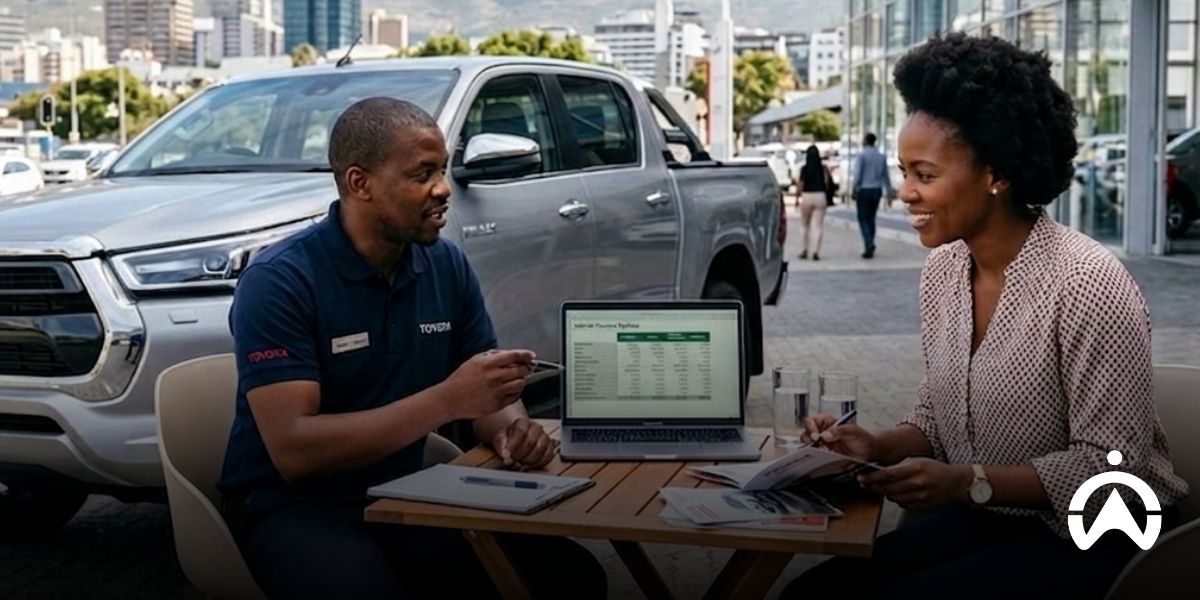
Two people reviewing documents and discussing a vehicle sale, illustrating what to do when buying a car from a private owner safely and confidently

How should you inspect a used car before buying from someone?

When inspecting a private owner’s used car before buying, use this checklist:

  • Uneven tyre wear & tear
  • Windscreen cracks (even tiny ones)
  • Buttons in the car like locks, windows and dashboard switches
  • Minor mismatches on paintwork
  • Scratches or bumps on panels
  • Oil stains where the car is parked

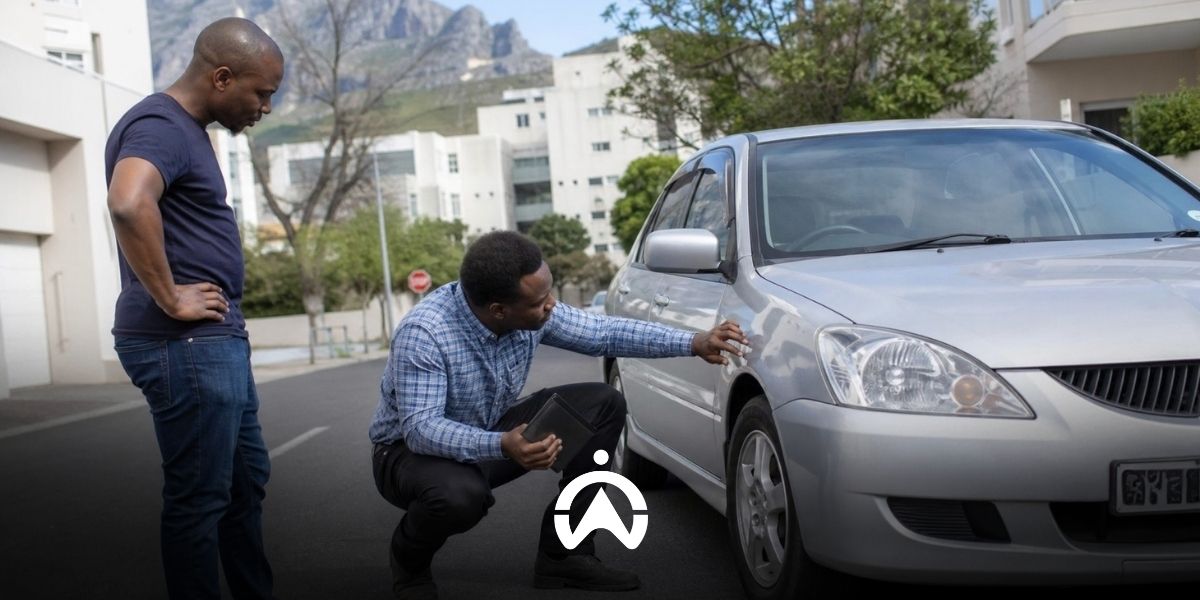
Seeing evidence of damage or a past accident might not cause you NOT to buy the car, but it’s relevant to bring up with the previous owner. They should be charging according to the car’s current condition and must declare if the car’s been in an accident.

What should you look out for while test driving a used car?

When test driving a used car (which is highly recommended before buying), make sure you do short-stop driving as well as long-distance driving. Short distances will give you a feel for the brakes & suspension, while long distances will allow you to listen out for rattling noises or car performance issues.

Suburban driving observations

Drive over a few speed bumps and note how the car’s suspension handles it. Also observe how the brakes handle stops at red lights and stop signs, and don’t forget to take note of how well the car pulls off from these points (clutch-related). You’ll also pick up if there’s engine hunting, which could indicate a damaged engine head or other less-serious problems.

Highway driving observations

Long drives let you check a few other important things, like whether the engine overheats or if the car makes rattling sounds. Pay close attention to the steering wheel when you do a highway drive, because vibrations could point to wheel alignment imbalances.

Post parking observations

If you can, park somewhere else after your test drive is over. Go back to where the car was parked initially and look for fresh oil stains. A car that leaks oil will have mechanical issues that need to be addressed with the previous owner.

Also check the handbrake by parking on an incline if possible (although you can also test this while driving around town). Test the indicators, lights, and hazards while you’re parked and safe, and feel free to get out of the car to see if they work externally.

SIDE NOTE: If you want to protect your newly-purchased car while it’s parked, check out Cartrack’s virtual car guard app!

Person handing over car keys during a vehicle sale, showing what to do when buying a car from a private owner and completing ownership transfer safely

What should you do if the previous car owner has a tracking device installed?

If the previous car owner has a tracking device installed, you can speak to them about either having it removed or having the tracking service transferred to your name. In the latter case, the device will simply remain installed, and you can contact the tracking service provider to change ownership.

If it’s a Cartrack device, we make this process simple. Just give us a call and we’ll do the heavy lifting on your behalf. 

Safety considerations for your new, used car purchase

If you just landed yourself a good deal on a used car, consider protecting it with a GPS tracking device if it doesn’t already have one.

It’s also highly recommended by many local influencers that all cars install a dashcam, as this offers a myriad of safeguards for motorists like you.

If you have any Cartrack products in your old car, speak to us about transferring them to your newly-purchased one, and we’ll schedule a visit.

Frequently asked questions about buying a car from a private owner

What can I reasonably expect from a used car with high mileage?

It’s reasonable to evaluate a high-mileage car based on its condition & age rather than its odometer reading. That’s because some cars (ones that aren’t necessarily ‘old’) are used for long-distance driving more than urban driving, which is actually a good thing in terms of wear & tear. Judge the age and general condition—together with the mileage—to accurately assess the car.

What is the most popular second-hand car?

The most popular brand of second-hand car is Toyota. They’re still a keen favourite among used car buyers in Namibia and other countries because of the reputation for longevity, reliability, and low fuel consumption. The Toyota Hilux is particularly popular in Namibia for these reasons.

How much value does a new car lose after purchase?

If you buy a car brand new, you can expect it to lose around 10% of its value as soon as you drive it off the lot. It will also lose another 10% to 15% within the first year of driving, depending on your driving habits and vehicle care routine.

The Future of Tracking Technology and Stolen Vehicle Recovery

The future of tracking technology and stolen vehicle recovery shifts from a reactive approach to a proactive one. This is done through the advancement of AI, telematics and smarter tech. These work together to outsmart thieves, making protecting your vehicle more and more simple over time.

Let’s look at the current stats. According to Namibian Police Force (NamPol) crime investigations, vehicle theft and fraudulent rental car scams are on the rise across major urban and retail hubs. With cross-border crime syndicates actively targeting popular double-cabs and sedans to sneak them over regional borders, asset safety is becoming an urgent concern. As the cost of living climbs, protecting fleet and personal vehicles from these escalating risks is more critical than ever.

To avoid being a statistic, you have to invest in a tracking and recovery solution that will outsmart thieves and is always one step ahead of them. And who better to choose than an industry giant who’s been in the game for 22 years with some of the highest tech tools and their own in-house recovery team? Yes, that’s right. It’s Cartrack.

Tracking tech: Before and after

When vehicle tracking technology just started out, it was simple tech that used passive radio-frequency (RF) systems that were mostly inactive until a vehicle was reported stolen. Then we upgraded to GPS/GSM technology that not only constantly & accurately tracks your vehicle’s location but also its speed and direction as well.

Now we have fully integrated AI telematics technology that provides a highly advanced monitoring system. These are some of the features of AI telematics systems:

  • Driver behaviour monitoring (harsh braking, speeding, rapid acceleration, etc.)
  • Efficient route optimisation
  • Vehicle maintenance alerts
  • Advanced Driver Distraction Warning (ADDW) from AI cameras
  • Sophisticated security capabilities (geofencing & remote immobilisation)
  • Trip histories
  • Automated logbooks
  • User-friendly mobile app

New tracking tech: from tracking to active monitoring

The older tracking technology would basically just sit there until someone stole your car. Newer advanced tech has a more proactive approach and tries to make your car “un-stealable”. AI-powered technology (cameras & tracking devices) actively monitors your vehicle; this includes trip history, driver behaviour and your car’s health.

So why is this important for the everyday driver? It’s valuable for two reasons… insurance and resale. 


Insurance

Having a vehicle in Namibia means you have to have insurance. And while it’s not a legal requirement, it’s a necessity on our roads. From theft to reckless driving, insurance makes sure that you’re covered if anything happens to your valuable asset.

Unfortunately, insurance is expensive, but losing or damaging your vehicle is even more expensive. When you install an insurance-approved tracking device and an advanced camera system in your vehicle, you have leverage to negotiate with your insurance provider to reduce your premiums.

Why is this? 

Let’s say you drive one of those grand double-cab bakkies that are notorious for getting targeted by syndicates. You call your insurance company to insure your new ride. Because your car is considered high-risk and you travel quite a lot, you’re given a price that makes your heart skip a beat or two.

But you just installed a Cartrack tracking device and our AI-powered dashcam in your car. They’ve now not only dropped the price of your premium, but you also have peace of mind knowing your bakkie is protected no matter where you are.

Resale

When you’re looking to rehome your fuel baby, you want to get the best price for it. But how do you prove that you looked after your car, drove safely, and never crashed it? AI-powered telematics actively monitors your driving behaviour and provides you with proactive maintenance alerts so you can keep your vehicle in tip-top shape.

This data can be pulled, and you can prove to an interested buyer that your vehicle is worth the price you want showing that they’ll be gaining a worthwhile investment!

🤖 Where to next?

Tracking has already developed so much from simply placing a dot on a map, but where could it possibly go from where we already are? Imagine if all the data that AI telematics constantly collects could provide you with a live “risk score” whenever you stop your vehicle.

Whenever you stop at a robot or park your car in a spot that experiences a lot of vehicle theft, you immediately get an in-cabin alert: “High-risk area; be cautious.” This will allow you to either park somewhere else or be more alert at the robot you’ve stopped at.

A connected security ecosystem

Vehicle tracking and recovery have evolved and are now a connected security ecosystem. You no longer just have a tracking device and hope that a recovery team will be able to get it back for you; your vehicle security has evolved. 

Thieves have become smarter and have shifted from breaking windows to hacking signals and can steal a car in seconds. This is why your security system needs to be smarter. Beyond a GPS tracker, with Cartrack you also get:

  • Cartrack Tag: This small, wireless tag works as an extra layer of protection that isn’t susceptible to jamming, and uses Cartrack’s proprietary RF communication network to provide location updates.
    ‍
  • Limp mode: Most modern cars already have a safety feature known as ‘limp mode’, which forces your car to slow down even if the thief is flooring it. If your car is stolen, at Cartrack we can activate limp mode remotely, which drops the speed down to a crawl, making it easier to recover.
    ‍
  • Geofences: These are virtual boundaries you can create, and if your car moves out of these zones, you’ll get an instant alert so that our team can recover your vehicle faster.

🤖 Where to next?

So what will the future hold for vehicle security ecosystems?

Picture a complete digital vehicle lockdown: your vehicle gets stolen, and with a push of a button on your app, you remotely shut down your vehicle. It goes into limp mode and starts automatically and safely pulling the car over; all the doors and windows close and lock. This keeps the car in lockdown until the recovery team arrives.


Why Cartrack is the best choice in vehicle protection & recovery

Cartrack is the best choice in vehicle protection & recovery because we’re future-proof. We have a track record to back us, and we have the latest technology to keep you and your vehicle protected. And on top of that, we have a specialised team at your disposal 24/7, 365 days of the year! 

Our best features

This is what you can get from one of the best tracking and recovery organisations in the industry:

  • Anti-jamming tech 🚫
  • Cartrack Tag 🏷️
  • Cross-border tracking 🛣️
  • Start prevent ⛔
  • Live tracking 👁️
  • AI cameras 📷
  • Driver monitoring 🚘
  • Accident detection 💥

And while it may be fun to think of where tracking technology and stolen vehicle recovery could go, you want the best of the best now. So give us a call and keep your vehicle and loved ones safe across Namibia’s vast open roads!

FAQs

Can I activate Limp Mode myself from the app?

No, you can’t activate ‘Limp Mode’ on your phone. This is for safety reasons, so only our dedicated recovery team will be able to activate it from our control room. By doing it this way, it’ll only be done when necessary; and in a safe way without placing anyone else on the road at risk.

Will AI telematics drain my car’s battery faster?

No, AI telematics won’t drain your car’s battery faster. Even though this tech is more powerful, it’s also more efficient. These devices will usually go into hibernation mode when the vehicle is off and will draw more power when activated in a recovery situation.

What happens if my car is stolen but the battery is disconnected?

If your car is stolen, it’s quite common for thieves to disconnect the battery to try and kill your tracking device. If you have a Cartrack tracking device, when the car battery is disconnected, our control room will get an immediate alert, and the device will still work for 3-7 days after.

How to Instantly Deal With Road Rage

To instantly deal with road rage, de-escalation is key. However, driving on Namibian roads is NOT for the faint-hearted. Between the corrugated gravel roads, stray kudu, speeding yellow-stripe taxis, oumas and oupas who can barely see, and those kitted-out overlanding bakkies who think they own the road, experiencing frustration while driving doesn’t take much.

Road rage, arguments, misunderstandings and provocation were accountable for an alarming number of attempted murders, murders, and assaults causing grievous bodily harm across the region, according to the Namibian Police Force (NamPol) annual crime reports and national safety audits.

If you don’t want to be a statistic, keep reading because we’re going to show you how to instantly deal with road rage and what tools Cartrack has to help keep you cool, calm and collected on the road!

From zero to sixty: why do people have road rage?

There are probably a thousand reasons why people have road rage. Common reasons are impatience, running late, reckless driving that puts their life at risk, traffic, and personal anger issues. But it still boils down to two things: a foolish action met with an aggressive response.

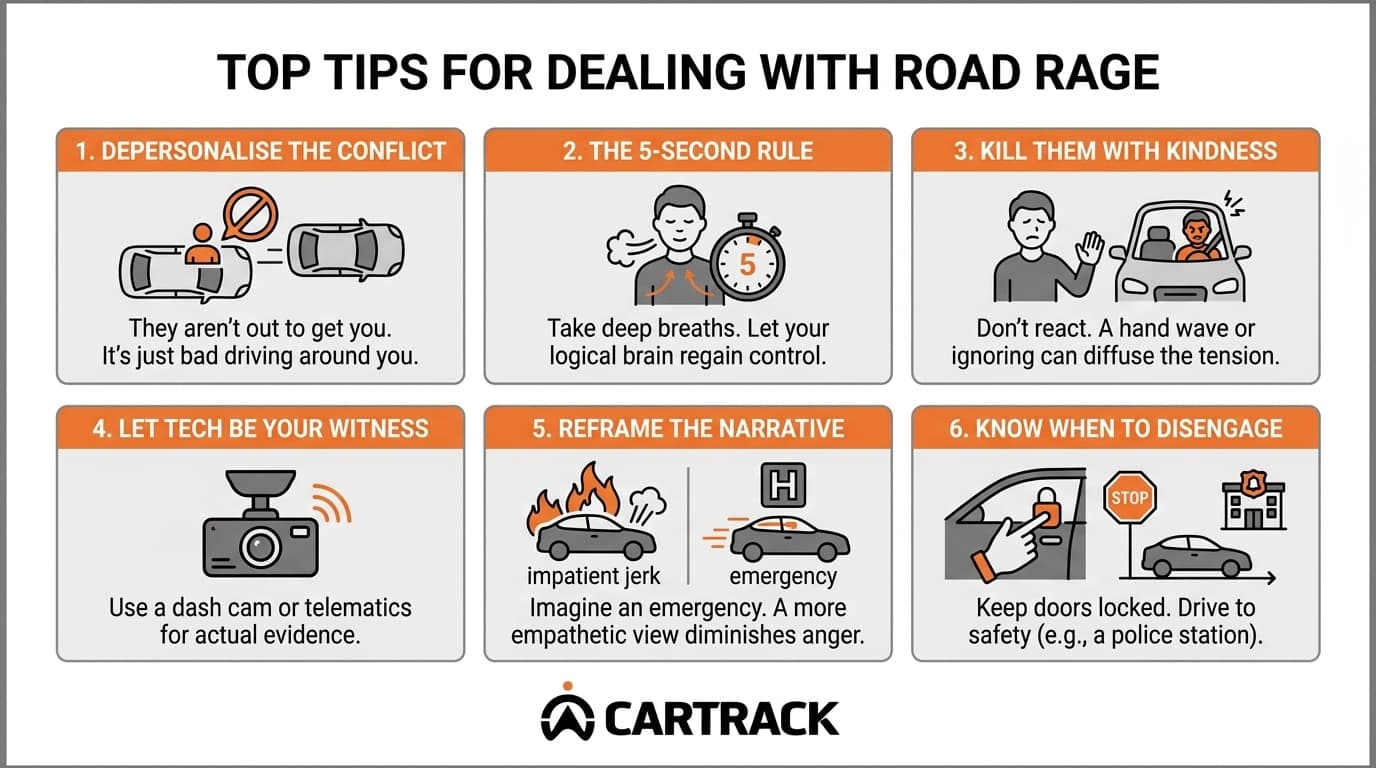
Top tips to dealing with road rage

We need to know exactly how to deal with road rage, especially in Namibia, where we have so many people on the road at all times. Things like diffusing the situation, taking deep breaths, using the latest safety tech, and changing your mindset can all help you deal with road rage.

Depersonalise the conflict

So many times when we get road rage, it’s because we feel like the person doing the aggressive/reckless driving is personally attacking us. But the truth is, they don’t know us, and this could have happened to anyone.

Tip: Remember that they aren’t “out to get you”; they’re probably just stressed out, running late, distracted, or just a really bad driver. Either way, don’t take bad driving behaviour from someone else as something that’s happening to you, but rather as something that’s happening around you.

The 5-second rule

When our stress levels rise and our adrenaline hits, our logical side of our brain shuts off. This leads us to make dangerous and impulsive decisions, and that’s what we need to stop from happening.

Tip: You can’t control those drivers and how they drive and behave. All you can do is control yourself and how you react. So when something happens, stop and take a few deep breaths for 5 seconds. This small delay will assist the logical side of your brain to gain control of the wheel again.

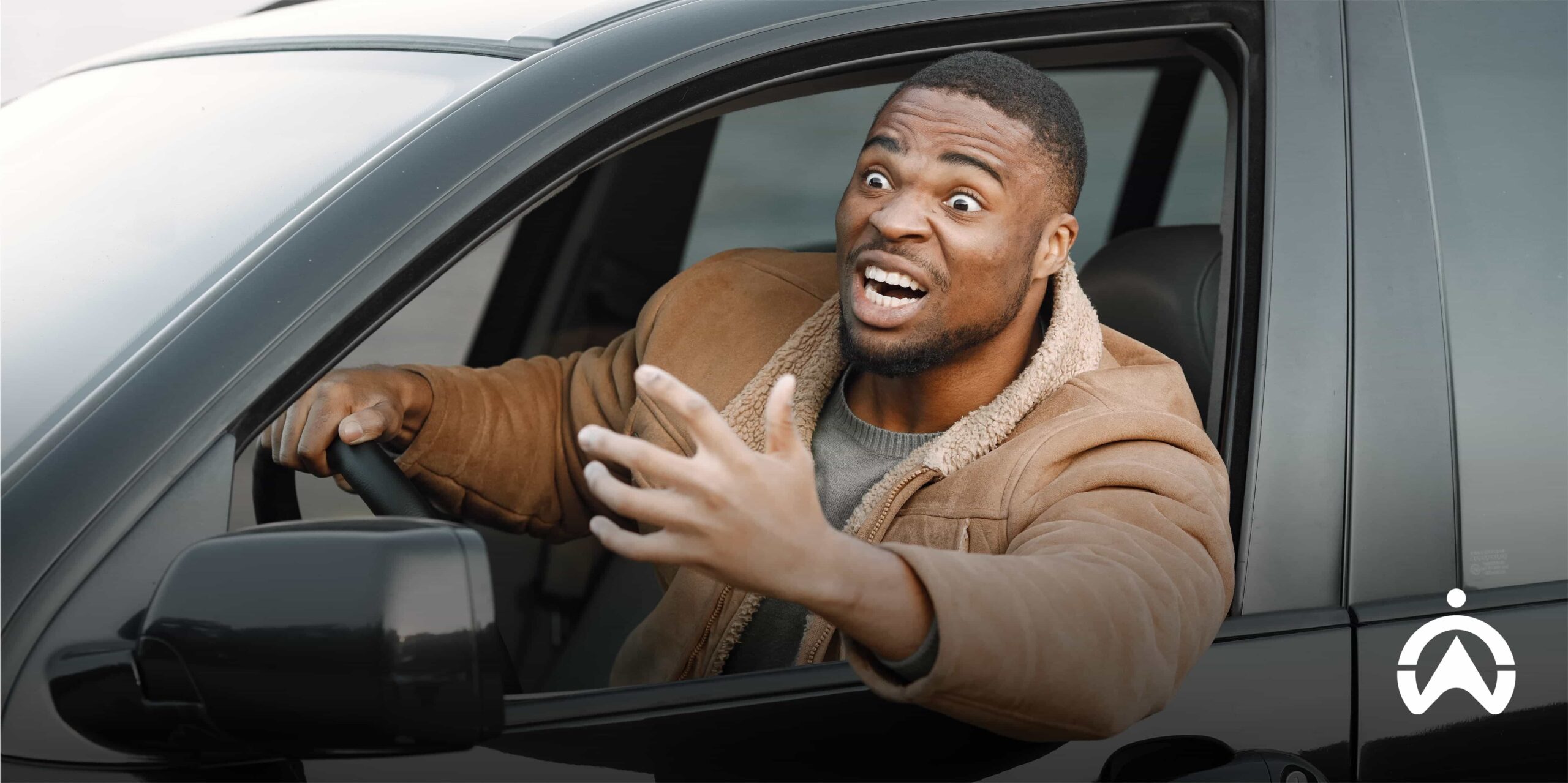
Man gesturing from the driver’s seat during a traffic dispute, showing how to instantly deal with road rage and avoid aggressive driving situations

Kill them with kindness

Aggression only feeds off of a reaction. Remember that school bully that stopped the second you started ignoring them? It’s the same here; if you don’t react and just ignore the other driver, you won’t be adding any fuel to the fire, and the situation should simply dissolve.

Tip: Try the “kill them with kindness” technique; it’s a brilliant way to diffuse a tense situation. If someone is making obscene gestures or yelling at you, put your hand up in an apologetic manner (yes, even if it isn’t your fault) or simply ignore them. When you don’t engage in the “fight”, the other driver is most likely to lose interest and move on with their day.

Let tech be your witness

Road rage can occur from the want to be right. But when you have the latest tech in your vehicle, you don’t need to engage further. You have actual evidence to prove your innocence.

Tip: Not only can installing a camera or a telematics system that monitors your driving act as a behavioural anchor for yourself, but you can also use data and the footage to back you up in the event of a reckless driving incident.

Reframe the narrative

When someone is driving like a maniac, we often assume it’s because they’re an impatient jerk. And yes, sometimes that’s exactly what they are, but occasionally it’s not the reason they’re driving like that.

Tip: So change the narrative. What if they just got a devastating phone call or are rushing to the hospital? Imagine the worst-case scenario, and it’ll help you have a more empathetic view on the situation, diminishing your anger.

Know when to disengage

Is your life worth being right or proving a point? Because unfortunately this is how a lot of road rage incidents end—in the unnecessary death of another. This is why it’s important to know when to disengage from a situation.

‍Tip: Never pull over or get out of your car to confront another driver. Keep your doors locked at all times, and if necessary, drive to your nearest police station to get help. Knowing when and how to disengage can be life-saving.

top tips for dealing with road age

How Cartrack can help you instantly deal with road rage

Cartrack can help you instantly deal with road rage by providing you with physical tools to protect yourself. AI-powered cameras, panic buttons, Cartrack Protector, and driver data from our GPS telematics device all work to help you handle road rage incidents.

AI-powered cameras

At Cartrack we have top-of-the-range AI-powered cameras that can help you immediately deal with road rage. Road rage is usually caused by dangerous driving behaviours, and while you can’t control how others are driving, you can control yours.

Our AI-powered cameras will instantly alert you if you’re distracted or fatigued while driving so you can immediately fix your mistake or know that it’s time to pull over. They’re also fitted with ADAS (Advanced Driver Assistance System) tech.

This tech has the following features:

  • Forward Collision Warning (FCW): This will alert you if a crash risk is detected
  • Automatic Emergency Braking (AEB): This applies brakes if you don’t react in time
  • Lane Departure Warning (LDW): Will warn you if the vehicle is drifting out of its lane
  • Blind Spot Detection: You’ll get instant alerts for vehicles in hard-to-see spots
  • Adaptive Cruise Control (ACC): Speed is automatically adjusted to help you keep a safe following distance

Having cameras in your vehicles also works as evidence for road rage incidents. You won’t have to fight to prove that you were in the right; you can easily view and download the footage from your Cartrack app!

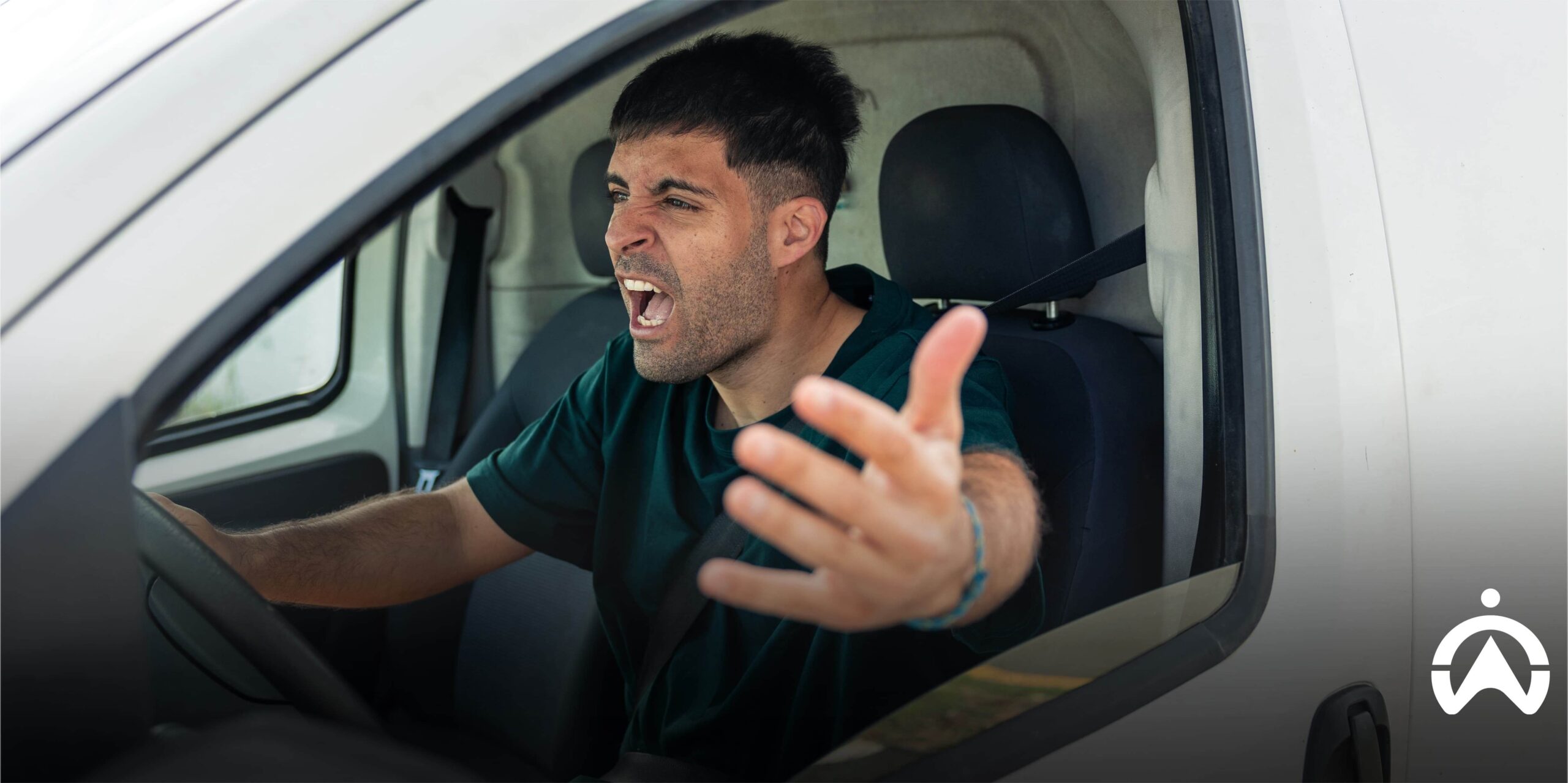
Driver reaching out through a car window during a tense road interaction, illustrating how to instantly deal with road rage safely and calmly

Panic buttons

If you’re ever in a road rage situation where the other driver is placing your life in danger and you can’t safely get away from them, you need a Cartrack panic button. Our panic buttons are placed where they can be discreetly (but easily) accessed.

Once you push it, our emergency control room is alerted, and they’ll contact you to find out what help you need and then dispatch the necessary emergency teams to your exact location.

GPS telematics

If you’re the one that’s causing road rage in others, having a GPS telematics system in your car can help you identify your driving faults. Driving data is pulled from the telematics system, and you’re then able to pull a report on the Cartrack app.

You can see exactly where and when you’re excessively speeding, braking harshly & cornering. You can then use this data to identify triggers (are you speeding and accelerating harshly every Monday morning to get to that 8am meeting?) and change your habits accordingly.

PS: Aggressive driving not only puts strain on your wear & tear parts, but you also use way more fuel compared to when you drive smoother. And with the current price of fuel, we ALL need to use every drop wisely! 

Main goal: Arrive alive, not first

Remember, at the end of the day the goal is to get to your destination safely. Being late or missing a meeting is NOT worth your life or the lives of others. So it’s time to make better choices on the roads in Mzansi and be part of creating a safe environment for everyone!

If you’re ready to get the tech that helps keep you cool, calm and collected on the road, then click here and check out our safety solutions for you and your family! 

FAQs

What should I do if another driver is following me?

If another driver is following you, do NOT pull over or drive home. This can put you directly in harm’s way. Rather drive to a police station or to a very populated area like a petrol station or shopping centre; this way you’ll have people around you so you’re not in a dangerous situation alone.

How can I tell if my driving is triggering others?

It’s sometimes difficult to know if your driving is triggering others, but if you’re someone that’s driving slowly in the “fast” lane, doesn’t use indicators, or pulls out in front of others, there’s a chance you’re triggering some people. Getting a telematics system installed from Cartrack will allow you to identify your reckless driving habits that cause frustration in others.

Should I record the incident on my phone?

It’s better to not record an incident on your phone in your hand because this can cause the other person to get more aggressive. It also requires you to not have both hands on the steering wheel. So rather install a dashcam in your vehicle to safely capture any incidents on the road.

ESG in Your Fleet Management and Understanding Your Carbon Footprint

Implementing ESG in your fleet management strategy and understanding your carbon footprint is incredibly important for fleets in 2026 and beyond. It’s a challenge for businesses to manage their carbon footprint while customer demands rise, and the need to stay ahead of their competitors intensifies.

Real-world studies have shown that adopting eco-driving strategies—those that focus on speeding, harsh acceleration, and idling—can cut your fuel consumption and CO₂ emissions by 5% to 12% almost immediately.  

This proves that you don’t need to replace your entire fleet with electric vehicles overnight to make a significant impact. By simply using data and software to improve how your drivers are handling your vehicles, you can significantly reduce your carbon footprint! 

What are the key ESG metrics for fleet performance reporting?

The key ESG metrics for fleet performance reporting are centred around lowering your environmental impact, improving driver safety, and upholding operational governance. The ESG metrics you should monitor are:

  • scope 1, 2, & 3 GHG emissions,
  • fuel and energy consumption,
  • driver safety score, 
  • driver turnover rates,
  • regulatory compliance rate, and
  • supplier ESG standards.

How can I integrate ESG principles into my fleet management strategy?

Integrating ESG principles into your fleet management strategy starts with taking actionable steps like prioritising driver safety, optimising routes, and introducing electric or hybrid vehicles into your fleet. By applying these practices into your daily operations, you’ll ensure the long-term success of your sustainability goals while minimising your fleet’s environmental impact.

Let’s take a deeper look into these principles… 

Corporate citizenship in fleet management

Corporate citizenship is the extent to which businesses are responsible for their actions and impact on their community, the environment and their employees. Environmental, social and governance (ESG) principles need to be embedded into the core of a company’s strategy.

A strong corporate citizenship is what builds a company’s reputation, develops customer and employee loyalty, and can result in an increase in shareholder interest and lower regulatory pressure.

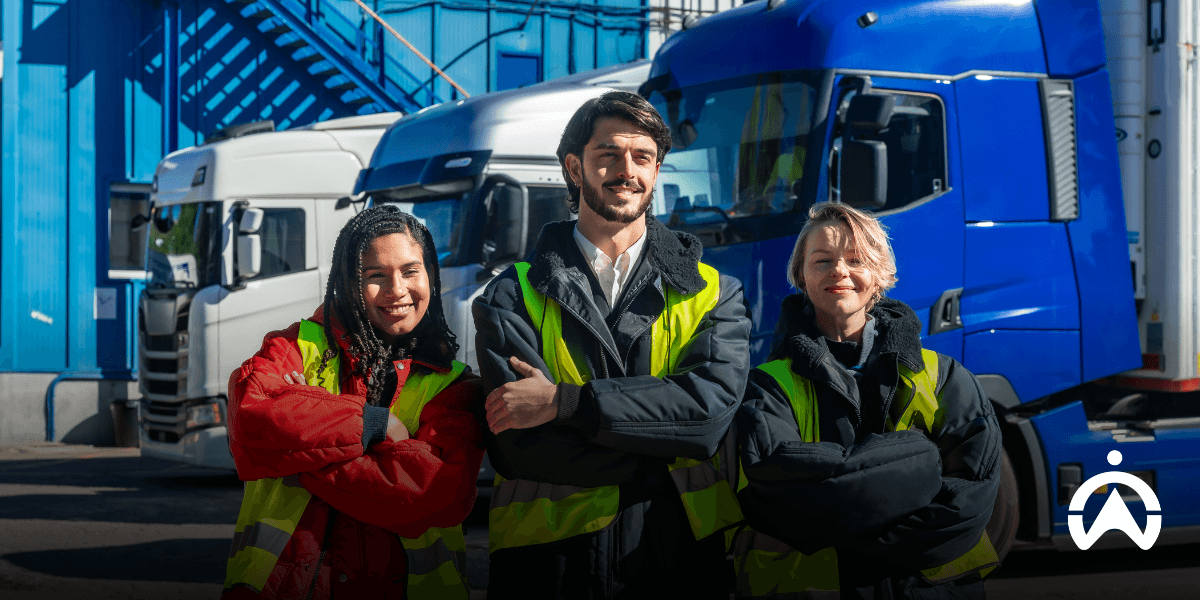
Three warehouse workers in high-visibility jackets standing in front of fleet trucks, highlighting ESG in fleet management practices.

The environmental footprint (the “E” in ESG)

According to research, “the transport sector accounts for approximately 16% of global greenhouse gas emissions… particularly in road transport, which remains the main contributor to these emissions”.

To successfully reduce your environmental footprint, here are some of the things you can implement in your fleet:

  • Optimise route efficiency: Digitalising route planning allows you to reduce the amount of time your fleet spends on the road and automatically finds them the most efficient routes to travel.
    ‍
  • Predictive maintenance: When your vehicles are regularly maintained, you’ll ensure that all your vehicles’ engines are operating at optimal efficiency with effective combustion. Having digital inspection reports and engine diagnostics will simplify this process for your fleet managers, and you’ll ensure your fleet is performing efficiently at all times.
    ‍

Social and community impact (the “S” in ESG)

Get the latest tech in your fleets to further your teams’ success—rather than using it to reprimand them. Shift your corporate mindset from blame to empowerment. Here’s how you can start:

  • Prioritising driver safety: Tech like driver scorecards and AI-powered cameras that can detect high-risk driver behaviour (like speeding or distracted driving) provide real-time, audible, in-cabin alerts so drivers can self-correct.
    ‍
  • Promote transparency & trust: Automatic and accurate reporting of working hours lets you guarantee fair compensation and legitimate overtime claims, eliminating any disputes between workers and management.

Governance and compliance (the “G” in ESG)

You need to make sure your operations remain objective and reliable to eliminate any bias in the workplace. This is done through data-driven decisions from a single source of truth and information.

This can be achieved through:

  • Regulatory compliance: Digital tools can help you ensure that your drivers aren’t exceeding governed working hours and that mandatory document renewals like licences and maintenance certifications are up-to-date.
    ‍
  • Privacy & data protection: You have to make sure that your fleet systems are GDPR compliant and offer “private mode” features for your drivers so that vehicle data during personal time is hidden.

Steps to implement sustainable fleet management practices

Take these steps to successfully implement sustainable fleet management practices in your business:

  • Assess your fleet
  • Introduce alternative vehicles into your fleet
  • Implement a telematics system
  • Train drivers to drive more eco-friendly
  • Install renewable energy sources
  • Set up a fuel management strategy

Assess your fleet

Before you start implementing any sustainable and eco-friendly practices into your operations, you have to first accurately assess your current fleet. Find out how much fuel your fleet is currently using, how the engines are currently performing, and what the average mileage of your fleet is.

Introduce alternative vehicles into your fleet

Mixing your fleet with hybrids, electric or hydrogen-fuelled vehicles is an expensive but great way to reduce your carbon footprint. If you’re feeling a bit hesitant to upgrade your entire fleet in Namibia (because infrastructure for these vehicles is still in its preliminary stage), start off with one or two vehicles to test their feasibility.

Hand holding an electric vehicle charging plug at a station, demonstrating how to lower your carbon footprint through green fleet management.

Implement a telematics system

Installing telematics systems in the entirety of your fleet is the best way to build a sustainable fleet. Telematics will provide you with insights on driver behaviour like speeding, idling and harsh braking, which all burn more fuel and increase your carbon footprint.

GPS tracking and AI-powered software assist with route optimisation so your drivers will use more efficient routes. Subsequently, you’ll consume less fuel and spend less time on the roads.

Telematics also gives insights into how your vehicles are performing. Preventative maintenance tools will ensure your vehicles are performing optimally at all times. Poorly maintained vehicles are less fuel efficient and have a shortened life span, which contributes negatively to your sustainability goals.

Train drivers to drive more eco-friendly

The cheapest way to build a sustainable fleet is by training your drivers to have more eco-friendly driving habits. The way your drivers handle the vehicles on the road directly impacts how much fuel they consume.

Train your drivers to practise driving habits like:

  • Smooth acceleration
  • Proper gear shifting
  • Keeping an optimal speed
  • No excessive idling

All of these can contribute to substantial fuel savings and reduced emissions.

Install renewable energy sources

If you have electric vehicles in your fleet, you should install solar-powered charging stations in your depots. When you invest in sustainable infrastructure in your business, you not only guarantee long-term savings; you also significantly reduce your business’ carbon footprint.

Set up a fuel management strategy

The best way to understand and minimise your fleet’s carbon footprint is by setting up a fuel management strategy. Using a combination of hardware and software, you can accurately monitor the fuel usage of each vehicle and machine in your business.

A comprehensive fuel management system includes:

  • Driver behaviour monitoring
  • Proactive maintenance
  • Fuel usage reports
  • Insights into preventing/spotting fuel theft and fuel card fraud

If you’re ready to understand your carbon footprint and successfully implement ESG in your fleet management, contact us today to get our comprehensive fleet management system and all our add-ons to help make your fleet greener!

Frequently Asked Questions

How to calculate my fleet’s carbon footprint accurately?

Accurately calculate your fleet’s carbon footprint with either a mathematical estimation or a telematics measurement. Estimating involves multiplying the total litres of fuel consumed by 2.68kg (diesel) or 2.32kg (petrol). Telematics is more accurate, providing real-time data on fuel consumption, idling and mileage, giving you automated reports that show accurate vehicle performance and monthly emission totals.

How can a fleet reduce its carbon footprint through route optimisation software?

Route optimisation can reduce your fleet’s carbon footprint by minimising your fleet’s fuel consumption on the road. Advanced route optimisation will use real-time data and GPS tech to automatically update your drivers’ routes, finding them the most efficient and shortest route possible.

How can telematics data reduce a fleet’s carbon footprint?

Telematics data can reduce a fleet’s carbon footprint by providing your business with relevant data that measures your sustainability. A telematics system will provide you with insights on driver behaviour, vehicle performance and fuel management insights, which all work to reduce your fleet’s overall carbon footprint.

Best Field Management Software for Landscaping Companies

Cartrack is one of the best field management software providers for landscaping companies, because we offer you an all-in-one digital ecosystem. We can bridge the gap between your office admin and on-site manual labour. For modern, growing landscaping companies in Namibia, you need software that gives you complete operational insights into almost every aspect of your business.

According to industry experts, the global landscape industry is estimated to grow at a 6.7% CAGR over the next few years. Having the best field management software for your landscaping company is a sure way to grow your business and give you an edge over your competitors.

This blog from Cartrack is going to explore the landscaping industry and how having the best field management software is the key to growth and success! 

The landscaping logistics dilemma

Landscaping businesses often face many logistical problems, like poor routing, the ever-increasing cost of fuel, rescheduling, unplanned maintenance and driver management. All of these issues can cause a business to fail, especially one in such a competitive field.  Landscaping companies need a permanent solution to avoid these logistical issues.

Running a landscaping business means you’re managing multiple teams, tracking equipment and scheduling various services across numerous locations. All while trying to maintain customer satisfaction, provide quality service and keep up with invoicing.

So how can you streamline the entirety of your operations? 

Field management software.

How does FMS help landscaping companies?

Field service software helps landscaping companies by placing almost everything from admin to team management on one, central, user-friendly platform. When you’re juggling multiple tasks in multiple formats using multiple platforms, things tend to slip through the cracks, and stress goes through the roof.

Let’s give you a scenario. You have 6 teams working on a Monday across Namibia. The weather is fine, and it’s a great day for landscaping. One of your teams is on their way to Mrs Jones for her 10 am garden service, but at 9:30 she calls you to reschedule because she has a family emergency. Now the team won’t be able to access her garden without her being there.

This is fine (kind of) because you had a last-minute call from a new customer in desperate need of a garden service. But now you have to scramble around trying to rework your teams. You need to see where each team currently is and figure out who’s closer to the new client and who can take that team’s originally scheduled job.

You have to quickly call each of your teams and tell them to change their route and send them their new job schedules and addresses.

However, all of this could be streamlined with an FMS. A comprehensive FMS—like the one from Cartrack—has an app that you and your team can work with. With this app, as the fleet manager or owner, you can see where your team is and how far they are with their current jobs and can change their schedules at the drop of a hat. 

And the best part? Your team is immediately notified on their app, so there’s no need for you to call them.

Having field management software in your operations improves how you run your organisation and how you and your team communicate with each other.  

Flowchart of landscaping field management software showing smart scheduling steps: rescheduling calls, viewing live maps, and reassigning jobs via a mobile app.

Get complete operational intelligence with Cartrack’s FMS

If you’re looking for the best field management software, Cartrack’s FMS gives you complete operational intelligence that helps you streamline every aspect of your landscaping fleet. Our world-class add-ons, like AI cameras, asset trackers and fuel monitoring systems, can completely upgrade your landscaping business.

Let’s take a deeper look at what Cartrack Namibia has to offer.

Fuel management system

The current cost of fuel is shocking to say the least. For all businesses globally, fuel is and always has been a massive cost & worry. At Cartrack Namibia, we understand this, which is why we have a top-of-the-range fuel monitoring system. 

In the landscaping industry fuel waste and theft can hinder the profits of your business. Cartrack Namibia has a few tools that you can make use of to stay on top of fuel usage in your landscaping operation, including MiFleet and highly accurate fuel sensors.

With MiFleet, you’ll get the following insights:

  • Fuel level monitoring and updates: spot unusual drops in fuel or any other alarming fuel issues immediately.
    ‍
  • Comprehensive fuel-use reporting: easily spot fuel waste and get budgeting support and expense estimates.
    ‍
  • Fuel-card integration and fraud detection: Verify that all fuel transactions are legitimate and match locations and trip history.
    ‍
  • Vehicle health and maintenance insights: Keep track of common problems that could add to fuel waste, like flat tyres or overdue servicing.
    ‍
  • Driver behaviour monitoring: These alert you to poor driving patterns that contribute to fuel waste, like idling.
    ‍
  • Web and mobile app accessibility: Easily lets you and your drivers take action no matter where any of you are.

Our range of fuel sensors are all connected to our telematics device. These include:

  • Fuel probe: This sensor is installed into your vehicle’s fuel tank to accurately (98%) monitor fuel levels.
    ‍
  • CAN bus: A clamp that’s attached to your vehicle’s CAN bus system to read the fuel levels with 90% accuracy.
    ‍
  • Fuel analog: A clamp that’s attached to your vehicle’s fuel wiring and sends voltage through the cable to the telematics device, with an accuracy of 80%.

Route optimisation

Landscaping businesses are constantly on the road and are needed at different locations at specific times. Being on time is a major influencer of customer satisfaction, which is why route optimisation is a must-have for landscaping companies to operate successfully.

Manual route planning is inefficient. It takes up time; mistakes are easily made, and making last-minute changes feels like ‘mission impossible’. Cartrack Namibia wants to make your business operations run smoother, which is why our state-of-the-art telematics and GPS systems are what you need to get your teams from A to B.

Cartrack’s route optimisation will find the most efficient route for your drivers to take. It will provide them with routes that:

  • Minimise travel time
  • Are the most fuel-efficient 
  • Inflict the least wear & tear on your vehicles. 

It does this by taking the following factors into consideration:

  • Weather conditions
  • Real-time traffic conditions
  • Each vehicle’s capacity
  • Delivery priorities 
  • Driver availability 
Landscaping professional using field management software workflows to install fresh rolled sod for a new lawn.

Precision scheduling

Having precision scheduling in your landscaping business is non-negotiable. Landscaping businesses are weather- and client-dependent, and in Namibia, where our weather changes instantly, you need a tool that keeps your business efficient despite changes.

Our field service management solutions are AI-powered. You’re able to schedule and reschedule jobs easily, and your landscaping team is instantly alerted on their app. This removes the need for you to manually make calls to your team, keeping your entire operation efficient.

Real-time data and insights

As a landscaping fleet manager, having real-time data and insights on your team(s) is crucial. Knowing where they are, when they finish a job, when they’re on the road or when they’re delayed is critical information needed to keep your operations efficient.

Cartrack’s field service management app is the key to success. Our accurate and advanced system gives you complete visibility over your entire operation, from customer updates to live job tracking. You and your team will have immediate real-time information, so that both ends can ensure every part of the business is running smoothly and efficiently.

Asset tracking

When you work in landscaping, you have valuable equipment spread across multiple job sites, and you’ve probably Googled “How to track lawnmowers and trailers in Namibia?” Being able to keep an eye on these assets is vital, providing not only operational control but also undeniable peace of mind.

Our GPS tracking devices will make sure all your vehicles in your landscaping fleet are safe and accounted for. With hijacking being a common concern for Namibians, making sure you have a tracking device in your vehicles that are constantly driving up & down quiet roads in the suburbs is a must.

The Cartrack tag is a non-wired portable tag that can be discreetly fitted on any asset you want to keep safe. It “pings” off existing GPS tracking devices in the location, so when you get your bakkies and vans fitted with our top-of-the-range tracking device, get the CT tags fitted onto your other movable assets, like lawnmowers, trailers and leaf blowers.

And the best part of having a tracking device with Cartrack Namibia? We have a dedicated 24/7 recovery team that will go out and try to get your assets, both big and small, back for you! 

Proof of service

Providing good customer service is the number one thing that’ll keep your landscaping company blooming. Every part of a job, from how the team looks to how they work and how they deliver the service, affects how your clients view your business.

Having a dirty, damaged service book for a customer to sign for proof of service is the last thing you want. With Cartrack Namibia, our field service management app is the perfect tool for this. Your team can let you know when a job was started and when they completed it. They can also take before-and-after pictures directly in the app and easily prove that the job was done up to standard.

This way you can ensure your teams are doing quality work and that your clients have proof of service in a seamless, clean and efficient way!

Automated job assignments

A common issue landscaping companies face is last-minute jobs. Now as the manager, you need to call up your team and figure out who you can send to that last-minute client.

Cartrack’s FMS uses AI to optimise your workflow and minimise delays and miscommunication. Our system assigns jobs intelligently based on location and priority jobs in their schedules. Once assigned, your team is immediately notified on the app and will accept the job on their side.

A professional using a lawn mower on a lush green lawn, demonstrating efficient field management for a landscaping company.

NRA-compliance

As the saying goes, there are two things in life that are inevitable: death and taxes. As a business in Namibia, submitting your taxes is incredibly important, and because your business is on the road, your drivers probably have manual logbooks for travel claims. However, these are only valid if they’re done properly and accurately.

And to do this, you have to manually record your vehicle’s odometer reading, determine your total kilometres travelled and calculate how much was for business use and which were for private use. All of this is a lot of paperwork and effort, and leaves room for errors.

Cartrack Namibia provides you with a digital logbook that makes your life so much easier. Our digital logbook:

  • Automatically logs all vehicle trips
  • Lets you easily mark personal and business trips on the app
  • Automatically creates and emails you your NRA-ready, tax-compliant logbook
  • Lets you download your NRA-ready reports so you can submit them. 

Cost control

Monitoring costs in your business is the best way to make sure you’re staying profitable. But manually keeping track of your costs can seem like an impossible task.

FMS helps you save on expenses associated with fuel, overtime and admin costs.

FMS with fleet management software

When you connect our field management software to our fleet management software, you’ll gain deeper insights into how your fleet is operating. Now with just field management software, you can already gain insights through features that help you save on fuel, like route optimisation.

However, integrating with our fleet management software, you’ll gain complete control of your operations by gaining insights on:

  • Asset utilisation
  • Which vehicles need maintenance
  • Reduce your carbon footprint
  • Identify bad driving habits 
  • Reduce fuel costs

High-end estate compliance

Working at high-end estates requires your team to follow strict rules and safety protocols. If you’re a small landscaping company, it can be even more challenging for you to get jobs from or within these luxury estates.

Additional features from Cartrack Namibia that can help with this are our AI-powered cameras and our Driver ID tags.

These can be your unique selling point to these high-end luxury estates. You can guarantee that only authorised drivers will be entering their properties and that the teams are being monitored at all times.

So, if you’re ready to optimise your landscaping business with the best field management software, then give us a call at Cartrack Namibia so we can help your business bloom! 

FAQs

What is a CRM for landscaping?

Customer relationship management for landscaping is basically a specific software that’s designed to manage scheduling, routing, invoicing, dispatching, leads, and client and staff data. This helps improve efficiency in your landscaping business and connects all your tasks onto a single platform.

How does field management software actually improve daily productivity?

FMS improves daily productivity by removing all manual paperwork and your team having to come into the office each time they complete a job or you having to call them every time a new job comes in. Everything can be done through the app, meaning your drivers can complete more jobs in one day.

Is it difficult to move from a paper-based system to a digital platform?

No, it’s not difficult to move from a paper-based system to a digital platform. The Cartrack Namibia field management app is designed to be user-friendly, so yes, an initial training session will be necessary to get them started. But once they know the ins and outs of the app, it should be a breeze!

How to Choose a Telematics Solution for OEM Partnership

Choosing a telematics solution for an OEM partnership is all about finding the smartest and most efficient ‘brain’ for your fleet vehicles. The right telematics partner will act as the best translator for your vehicles, providing and turning the most comprehensive insights into data that could take your business to new heights.

Global research predicts that original equipment manufacturer telematics will dominate with around 63% of the total market share this year. For you, this global shift is all about finding a manufacturer collaboration that provides the richest data integration and the smoothest connection between your vehicle’s original factory telematics (i.e., “brain”) and your management tools.

This is how you stay competitive.

Give your fleet the exceptional support it deserves for its foundation. Discover the key features of a telematics solution, see what questions you need to ask a potential provider, and evaluate Cartrack’s reliability as a long-term partner.

7 questions to ask when choosing a telematics system for an OEM partnership

The seven questions you should ask when choosing a telematics system for an OEM partnership are:

  1. Is my telematics provider reputable?
  2. Does my provider take an ‘API-first’ approach?
  3. Does the platform offer operational benefits?
  4. Is my provider’s platform easy to use?
  5. Is my provider scalable?
  6. Will the provider offer support to my company?
  7. How quickly will I see results?

By asking the right questions, you’ll easily separate the good from the bad and even the mediocre. The choice that you make in the end will impact the outcome of your business and, ultimately, the goods or services that are delivered to your customers in the end.

Let’s take a look at the 7 questions you’ll NEED to ask.

1. Is the telematics provider reputable and well-versed in OEM partnerships?

Your telematics provider must be reputable and well-versed. Not all telematics companies are able to handle OEM partnerships, so the right selection is crucial. An experienced provider gives your choice credibility and lets you breathe easier knowing that you’re dealing with a company that has experience and expertise.

A trustworthy provider will have a solid history of assisting with offering dependable, long-lasting solutions. This kind of relationship is crucial in an OEM partnership, where the telematics platform acts as an extension of the vehicle, which makes it an extension of the brand as well.

In this particular context, this is why it’s also important to acknowledge the brand integration that’s happening here. It’s important to see that your potential provider already has good relationships with bigger, established brands and other manufacturers so that you can expect the same for your partnership.

How does Cartrack deliver?

✅ Cartrack is reputable and well-versed. Cartrack currently stands at over 2.6 million subscriptions throughout 23 countries around the world, with longstanding business clients from SMEs to larger enterprises.

We’re in a fantastic position to support an OEM partnership, especially because of our flexibility and ability to provide reliability.

Our clientele also goes beyond just the companies; we’re there to support families who are looking to watch out for each other and ensure their safety.

Every kind of person and business has put their trust in us. 


2. Does my provider take an ‘API-first’ approach?

This is probably the most important question of all of them. Your provider must take an ‘API-first’ approach because this is the key to a smooth and successful connection and integration.

The whole point of the partnership is to create a more comprehensive and connected ecosystem, rather than having many disconnected tools that can’t work together and make your job harder.

An API-first approach is all about ensuring the door is built before the rest of the house comes along. The open and integration-friendly system is already in existence. When the time comes to integrate, a smooth and efficient integration process will be achieved.

How does Cartrack deliver?

✅ Cartrack takes an ‘API-first’ approach with our open and integration-friendly platform. This means that integration has always been front-of-mind for us. Integration readiness is the name of the game, which is why we have a fleet management system that’s designed for connection with other existing systems.

We have industry-standard levels of encryption and security, meaning your data is safe and only available to authorised users. And, if you take the steps to grow your business and scale it up, you’ll find no issue with us.

Our systems are prepared for new integrations if/as they come, and you don’t have to worry yourself with separate systems at all.

All of this means that you can build a telematics structure that can evolve with your business, as well as connect with whatever existing systems you already have in place.

3. Does the telematics platform actually deliver operational benefits?

There’s no point in creating this partnership if it doesn’t benefit you or your business, right? So while this collaboration supports the day-to-day business benefits like knowing where your vehicles are, it should also show you the full impact of telematics. 

Rich and comprehensive diagnostic insights are the real catch here. 

While just as important, detailed insights must go beyond simple live GPS tracking. The best in telematics will offer automation & AI-enabled features, route optimisation, driver behaviour monitoring, fuel management, risk control, predictive maintenance, and more.

All of these capabilities lead to massive business benefits, like reduced operational costs, improved safety, less downtime, and an overall happier and more secure business environment.

How does Cartrack deliver?

✅ Cartrack’s fleet management platform is stacked with tools and features that’ll improve your business, proving a successful partnership.

Not only do our systems produce some of the most comprehensive insights, but our platform is advanced enough that it seamlessly and easily processes that data into digestible, actionable feedback.

We also have numerous add-ons for our fleet platform, depending on what your business requires. This gives you the chance to customise your package and work according to your specific needs. You can get the best in cost management and performance.

4. Is my provider’s platform easy to use?

User-friendliness is a lot more important than you might think. A sophisticated system is nothing without a smooth user experience. This is especially important if you have a mixed fleet or fleet with various makes of vehicles, because the platform needs to be accommodating and easily handle variation.

A good platform and interface are what can make or break a connection between you and your telematics provider. It needs to be workable and easy for you and your employees to adopt from day one. Achieving this means your provider is the major differentiator in the competitive market.

How does Cartrack deliver?

✅ Whether you have traditional vehicles, electric vehicles, different vehicle makes and types, or all of the above, Cartrack can manage them all under one platform. Our telematics solutions don’t stop at one vehicle type, tackling pain points from safety improvements to range anxieties.

Our platform, FleetWeb, is an easy, sleek, and user-friendly platform that can be manoeuvred without the need for painful and tedious training. We offer easy onboarding, training, round-the-clock support, and helpful how-to guides online.

Our dashboard is intuitive and easy to navigate, alerts are customisable, the tools are straightforward, and our connected mobile apps are logical & clear. These are the keys to making vehicle monitoring and communication very simple.

5. Is my provider scalable and flexible?

Scalability and an integration-friendly approach are absolutely necessary for your company, especially if it’s a business you intend to grow and develop. If you decide to add, let’s say, 75 more vehicles to your fleet, will the partnership suffer? Will the technology continue to work smoothly without interruption?

You don’t need your business’ performance to drop or systems to break just because there’s development and growth. You also don’t need to deal with downtime, loss in revenue, or even gaps in data collection because of a software disruption.

How does Cartrack deliver?

✅ Cartrack is a flexible partner that’s been designed specifically to grow with your business. As mentioned, we’re an API-first company, meaning that you never have to worry about cross-platform confusion or having to introduce more systems to your fleet management.

We’re prepared to work with businesses of any size; our integration solutions are ready to scale with your operations, and our systems are cloud-based to easily manage business growth.


6. Will the provider offer my company sufficient support, even after sales?

Your provider should be prepared to offer onboarding and after-sales support, with semi-regular ongoing training to ensure you and your team are using the tools efficiently. Telematics solutions aren’t always easy to manage, and your provider should be patient enough to guide you through deployment, integration, etc.

You’ll also need the best in troubleshooting assistance, especially when it comes to the vehicle’s brain and the connected software.

The best kind of software is all about ongoing updating and optimisation. If you don’t have the right support, your business risks lower efficiency, slacking on compliance, and weakened safety standards.

How does Cartrack deliver?

✅ Cartrack can help you take control of your business and offer training on everything you’re looking to get acquainted with. As mentioned, we have an efficient onboarding process to help you and your workers quickly get acquainted.

We also have 24/7 support from our customer care team via phone, WhatsApp, and email. You’re also more than welcome to book a session with our professionals if you or your team needs refresher training down the line.

7. How quickly will I see results and ROI with this provider?

You’ll want to see relatively quick and noticeable ROI changes once the effects of a telematics solution are set in motion. According to research, businesses can start seeing changes in just 3 months. 

This is especially the case if you’re focused on implementing telematics solutions as quickly as possible with minimal adjustments or heavy training.

How does Cartrack deliver?

✅ Cartrack offers all the features you’d need to ensure you’re quickly seeing results. Here’s how:

Final takeaway: A fleet’s only as smart as its telematics

Choosing the perfect telematics solution for your OEM partnership is a bold, empowering, and strategic move. You want a partner that’ll give you the best in dependable data and the adaptability to evolve alongside your business.

Every aspect, from integration features to sustainable scalability, contributes to creating a solution that effectively strengthens what you have to offer. Cartrack could be your answer.

Don’t settle for basic diagnostics; take things up a notch with Cartrack by your side. Choose us as your long-term partner and keep your business ahead of the curve.

Frequently asked questions on telematics and OEM partnerships

What’s the difference between telematics and a black box?

A black box is more the actual device itself, simply recording and storing raw information. Telematics brings together the hardware, the data, and the software; it’s the whole environment. Telematics also analyses the data that’s been produced and turns it into digestible insights that can be used to improve business processes.

What are the different types of telematics sensors?

The different types of telematics sensors include:

  • Temperature sensors: used in cold chain logistics to measure temperature in cargo bays.
  • Fuel sensors: located in the fuel tank and are used to measure consumption and potential theft.
  • Door sensors: used to track how often a cargo door is opened and closed.
  • Pressure sensors: used to monitor the pressure in vehicle tyres.

What is the best vehicle tracking company in Namibia?

The ‘best’ vehicle tracking company depends on what criteria you may use to define it as ‘the best’. But, from a holistic viewpoint, Cartrack is considered one of the best. We’ve got:

  • an impressive global network
  • numerous longstanding clients
  • years of expertise
  • several future-forward tools and technologies, and
  • solutions for businesses of every size.

How to set up telematics?

To set up telematics, your best bet is to contact a telematics provider who can help you do just that. When you have a telematics provider to help, you can ensure that you get industry-grade equipment, the correct installation, proper configuration, and support & training.