What are Driver Scorecards? How Can They Improve Fleet Management?
Published
Reading time
9 minutes
Blog
Key takeaways:
Driver scores use a demerit model that starts each driver at a clean score. Unsafe events carry different weights that are subtracted from the score
Cartrack’s AI-powered driver scorecard system gives real time insights that help managers reduce accidents and costs
Safer driving improves a company’s reputation, lowers insurance costs, and increases profits
Scorecards make it easier to reward good drivers and grow a responsible, dependable fleet
Driver scorecards are digital reflections that tell you how good (or bad) your respective drivers are. It uses performance indicators together with a demerit system to help you determine which drivers are performing well, and which need training or disciplinary action. They turn performance into easy-to-absorb scores that you can use to incentivise your drivers.
We develop software technology that drastically reduces this horrible statistic. Want to know how? Read on to learn about our Cartrack Driver Scorecard system, how it works, and how it helps you avoid the legal and ethical implications resulting from fleet road accidents.
What are Driver Scorecards?
Driver scorecards give you a visual representation of how each driver in your fleet is performing on the road. With this in place, you can mostly prevent road incidents caused by bad driving. Get the most out of this system by addressing these issues with your drivers before they become serious problems that cost you money.
As we explore further, we’ll see what driver scorecards have evolved into. It used to be a manual rating system. However, now that they are AI-driven, the rating is very much automated, and leaves little room for error.
Using indisputable event logging, fleet managers quickly learn the best ways to incentivise their drivers. At the same time, drivers will know they’re being monitored on driving habits—both large and small—which leads to better driving overall.
Why are driver scorecards essential in managingNamibian fleets?
Driver scorecards are essential in managing fleets because they help you to identify risky driving behaviours. Namibia’s roads are considered among the most dangerous in the world. For fleet managers, this can mean serious losses through accidents, insurance hikes, and cargo loss. By analysing various behaviours, fleet managers can manage and reduce this risk significantly.
Look at the table below and see for yourself how driver scorecards can curb bad driving and prevent accidents. Overall, this can have a massive impact on any fleet, whether truck drivers, lift providers, or delivery vans.
Driver Monitoring Feature
How It Works
How It Prevents Accidents
Speed tracking
Records driving speed
Stops speeding before crashes happen
Harsh braking alerts
Warns when brakes are used too hard
Helps drivers keep safe distance
Fatigue detection
Finds signs of tiredness
Reduces risk of drivers falling asleep
Distraction alerts
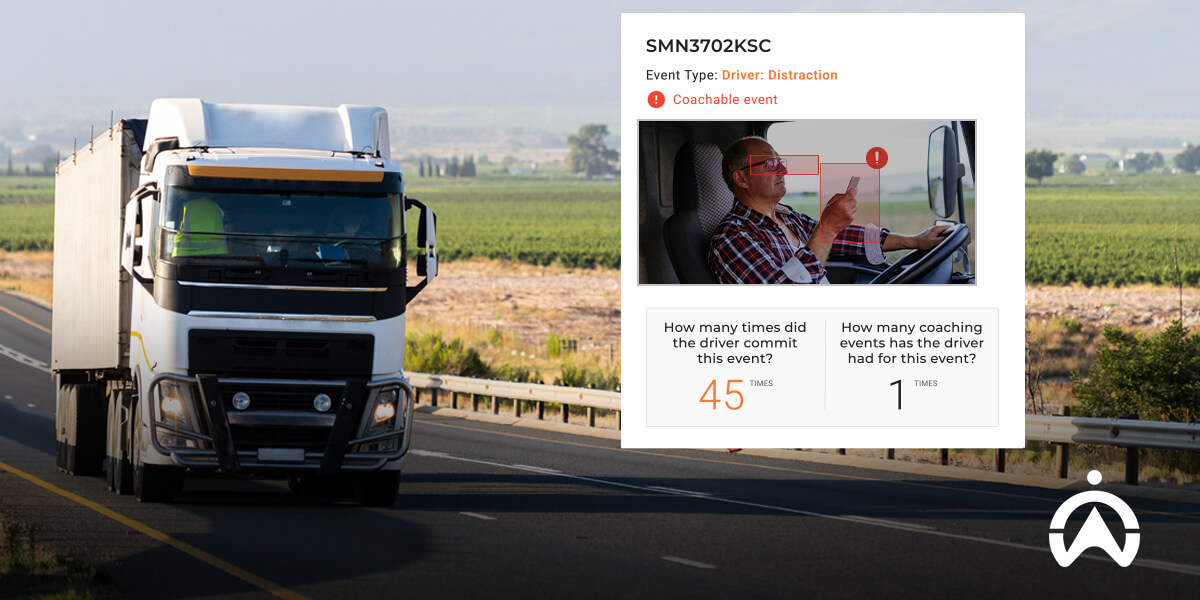
Spots phone use or lack of focus
Keeps eyes on the road
Seat belt reminders
Checks if seat belts are on
Protects drivers and passengers
Route tracking
Shows the safest and fastest paths
Avoids risky roads
Collision warnings
Alerts when too close to another car
Prevents rear end crashes
Driver scorecards
Rates driving behaviour
Encourages safer habits
As a fleet manager, how much easier would driver coaching be if scoring each of your drivers was possible? In many ways, coaching with driver scorecards is actually twofold. First, you get alerted whenever your driver reaches a critically low driving score. Second, your drivers are less likely to drive badly, because they know they’re being evaluated constantly.
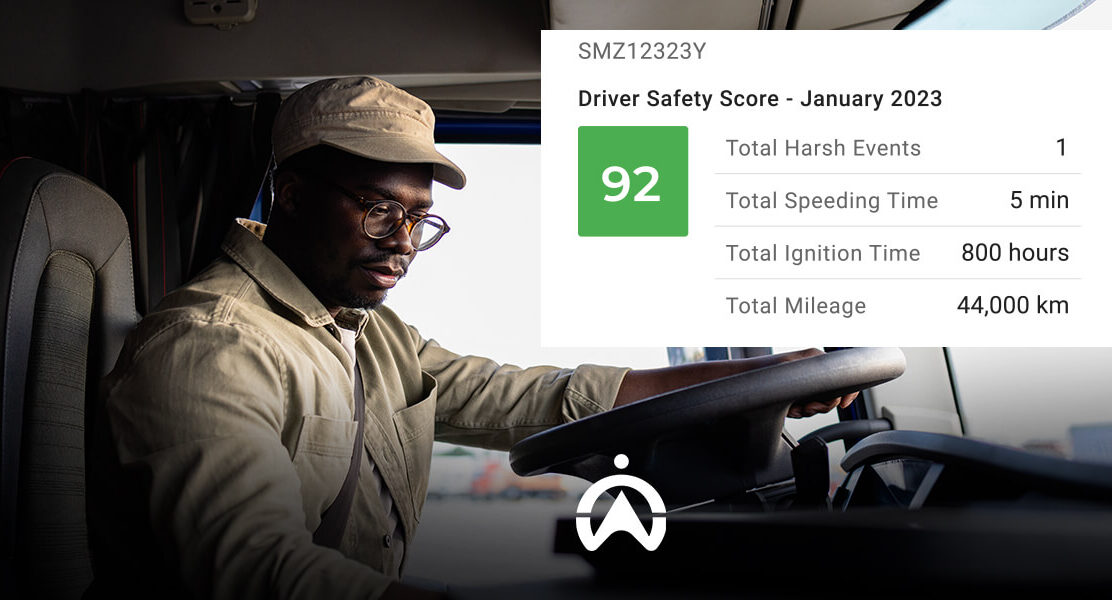
Each driver’s score starts at 100 and goes down every time an unsafe event happens. Each event has a weight that shows its danger level. The system totals the event weights for every trip, or over a period of time that you as the fleet manager determine.
It then converts that risk into a normalised score where 100 is best (indicating no incident). In other words, a lower score means a more high-risk driver. Here’s an example of the danger categories and weights you might decide to implement:
Low 1
Medium 3
High 10
Very High 32
Critical 100
What behaviours are tracked for driver scoring?
Driver scorecards track risky driving habits that ultimately lead to accidents, increase costs, and harm your company’s reputation. Each behaviour is given a weight based on how dangerous it is. Safe trips and good driving habits keep scores unchanged (and high), while risky actions lower the score (of which the fleet manager will be made aware).
Similar to the previous table, this table outlines the scoring system together with an example of the risky driving habit. Remember, this is only an example. You can choose your own rating system based on the specific needs of your fleet.
Driver Monitoring Feature
How It Works
How It Prevents Accidents
Speeding
Driving more than 10 km/h over the limit
High (10)
Harsh braking
Sudden, unnecessary hard stops
Medium (3)
Harsh cornering
Taking turns too fast
Medium (3)
Tailgating
Following too closely
High (10)
Distracted driving
Using a phone, eating, or adjusting radio
Very High (32)
Ignoring traffic signs
Rolling through stop streets or red lights
Critical (100)
Fatigue events
Long driving hours without rest
High (10)
Harsh acceleration
Sudden, aggressive take-offs
Low (1)
How do they benefit a fleet company?
Driver scorecards benefit a fleet company by ultimately decreasing the likelihood of accidents. This has a chain effect of improving the company’s delivery times, protecting their cargo, and saving them money. But a more important benefit is the effect this has on your company’s reputation, which becomes one of reliability, dependability, safety, and trust.
Reputation
A good brand reputation means your customers trust you. It also means you’re more likely to get more customers that use your services. A company’s reputation is priceless, because it ultimately determines its survival.
Profits
At the end of the day, you’re paying a relatively small amount of money to potentially increase your company profits by a HUGE amount. By avoiding accidents and paying lower insurance premiums, don’t you think it’s time you got a bird’s eye view of how much risk your drivers are exposing your business to?
Start tracking your drivers and witness the difference in safety.Get in touch with Cartrackand get the best driver scorecard system in Namibia.
NOTE: This scorecard is completely FREE with any of our fleet management solutions!
Healthy Competition
Healthy competition comes from using driver scorecards because they let you compare your drivers fairly. When drivers see their scores, they’re encouraged to do better than their peers. This creates a positive push to improve, without needing constant management pressure. Over time, it builds pride, accountability, and stronger team spirit across your fleet.
Safety
An increase in safety has both monetary AND ethical benefits. By protecting your drivers, you’re also protecting every other driver that comes into close proximity to them and the vehicles they operate. Driver scorecards can have a positive effect on the general safety of our roads.
Compliance adherence
Although we haven’t mentioned it yet, road compliance saves you a lot in other ways too. Regular traffic fines could become a thing of the past, giving your fleet a much better record in the eyes of traffic authorities.
Growth potential
When you’re saving money and growing your reputation because of better driving, your company’s growth potential will quickly start to rise. As you manage your driving team and assemble a group of responsible, accountable, and dependable drivers, you’ll soon be considering the expansion of your business!
How does Cartrack’s scorecard work?
As we’ve seen, a good driver scorecard system works by tracking unsafe driving events and giving each driver a score that shows their level of risk. Fleet managers can quickly see who needs coaching and who’s performing well. This also makes it easier for you to improve safety and reduce costs across all of your vehicles.
How does this system differ from other, outdated scorecard systems? The scorecard from Cartrack adapts to your needs by showing real time insights and clear reports. These are easy to use, and unlike older systems that give limited data, Cartrack’s system is dynamic and flexible. This system comprehensively lets you set targets and track progress in ways that suit your business fleet down to small details.
There’s no one-size-fits-all when it comes to scoring your drivers. Tailor-design your own package and then tweak your system to suit your fleet needs. Contact a driver scoring expert at Cartrack today tobook your demo.
Frequently Asked Questions about driver scorecards
How can drivers improve their driving score?
Drivers can improve their score by practising safer driving habits. These include keeping to speed limits, braking smoothly, and avoiding sharp cornering. Regularly checking their score helps drivers to track progress, so this should be encouraged. It serves as a powerful motivation for them to become better, safer, and more dependable drivers.
How long does it take for a driver to improve their score?
The time it takes for drivers to improve their driving scores depends on how quickly they correct risky habits. Consistency is key here. With noticeable improvements, drivers could improve their scores within a few weeks. Because the score updates every time new trips are logged, their actions immediately influence the scorecard results, showing steady progress over time.
Can fleet managers adjust the score at their own discretion?
No, fleet managers can’t manually change a driver’s score, as it’s based on the objective telematics data generated by the AI-driven system. This ensures fairness and consistency among all of your drivers. However, managers can use these insights to coach your drivers. So, you can set improvement targets and support better performance without interfering directly with the scoring process.
Can a driver’s score be used for disciplinary procedures in labour court?
Yes, a driver’s score may be used in disciplinary processes in labour court. However, this is only if the evidence is supported by accurate data, clear policies (set out by your company), a reasonable attempt at training, and consistent enforcement. In Namibia, this means your company must ensure the scorecard is applied fairly and in line with labour law.
Other articles for you
Truck Leasing for Start-Up Businesses – What You Need to Know
Blog
7 minute read •
Leasing trucks to start-up businesses is proving to be a very lucrative opportunity. Many new businesses are desperate for trucks, but are often being barred from getting them because of strict bank specifications. We’re seeing a preference for leasing trucks instead of owning them, because the benefits seem to outweigh the drawbacks. Namibian businesses, especially smaller […]
Get AI Cameras for Seatbelt and Phone Detection for Drivers
Blog
7 minute read •
Getting AI cameras for seatbelt and phone detection for drivers is the perfect way to transform safety protocols in your fleet. AI detection can monitor poor driving habits, alert drivers so they can quickly correct their actions, and keep records of offences so you can coach your drivers if they repeatedly commit them. Namibia recorded 2,793 road crashes, […]
Your trucks work hard to travel long distances, carry heavy loads, and traverse roads that are often treacherous & damaged. Looking after your trucks is a wise investment that’ll pay you back in productivity and lower overheads, but only if you know what condition they’re in at all times. The trucking and logistics sector plays a vital role in […]
 South Africa
 Botswana
 Kenya
 Malawi
 Mozambique
 Nigeria
 Swaziland
 Tanzania
 Zimbabwe
 Hong Kong
 Indonesia
 Singapore
 Malaysia
 Philippines
 Thailand
 New Zealand
 Vietnam
 Poland
 Portugal
 Spain
 United Arab Emirates