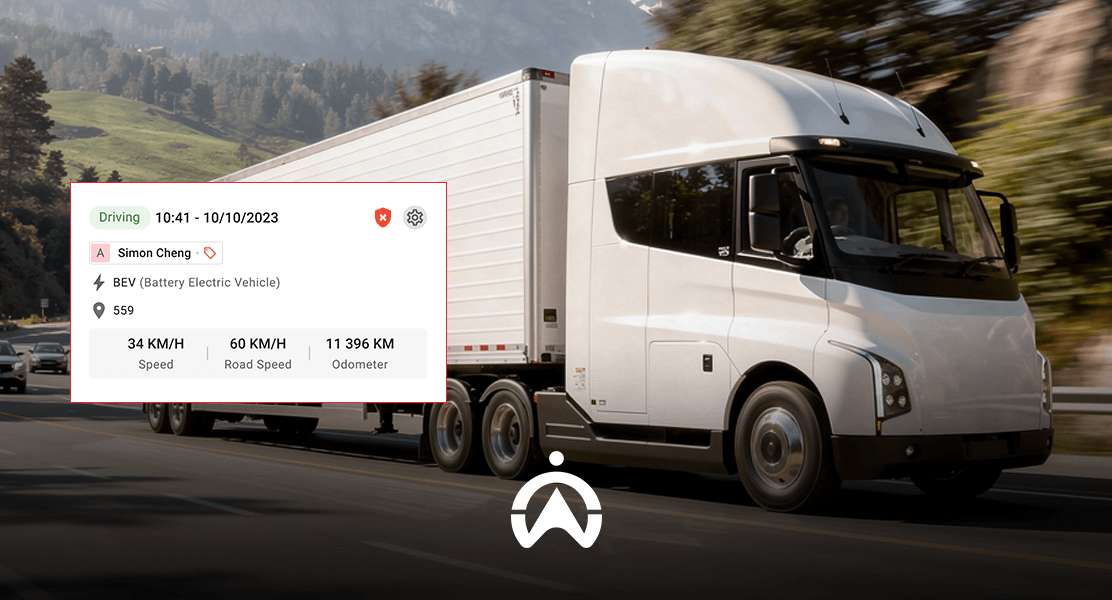
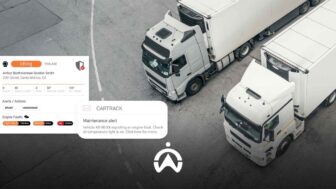
Thieves might not want your electric car for parts, but they’ll definitely steal it for the cargo inside
High-tech GPS tracking is the backbone of modern fleet software and helps you manage your battery life and range
You can use smart data to predict when your vans need a service instead of just guessing
Smart routing and driver coaching help you hit your green goals and keep your team much safer on the road
According to Auto Evolution, electric vehicles are stolen significantly less often than regular internal combustion engine (ICE) vehicles. So why the need for GPS tracking on these greener vehicles? Cartrack has designed GPS tracking for all types of cars, but why bother with electric vehicles? Isn’t vehicle tracking a theft prevention method?
The answer is, “Yes”, but not exclusively. GPS tracking actually has a vast range of uses other than vehicle recovery, which is why we emphasise the need for it in electric fleets. Let’s have a look at 6 reasons why electric fleets need GPS tracking, and how these vehicles benefit from technology that ISN’T included in their default designs.
Is GPS tracking necessary for electric vehicle companies?
We’ve noted that electric vehicles are less vulnerable to theft, but this doesn’t mean they NEVER get stolen. Most car theft is done with the intention of selling parts rather than having the stolen car. For this reason EVs are less likely to be stolen because the parts aren’t desired on the black market.
But we should mention that this is likely to change in the near future. While car brands like Teslaare among the least likely to be stolen, they are in a sense vulnerable to being ‘hacked’.
How do thieves target electric vehicles?
Thieves that do want to target an EV will do so through a high-tech relay attack. This involves two devices that ‘tie’ a signal together in order to access the vehicle. They can unlock and start the vehicle and easily steal the car.
But if not for the parts, why steal an electric vehicle in the first place?
Why do some electric vehicles get stolen?
This may not seem like relevant information for fleet companies, but it is! EVs will most likely be targeted for their cargo rather than the vehicle itself. If you own EV trucks or vans, keeping your vehicle’s cargo safe with GPS tracking is a MUST!
As more companies undergo electrification of their fleets, GPS tracking becomes essential in keeping cargo AND vehicles safe. But actually, it goes beyond theft prevention. Keep reading.
In the case of EVs, GPS also assists with valuable management points like battery data, range anxiety, and vehicle maintenance.
Integration with telematics
Managing an electric vehicle fleet without telematics means going back to the days where fleet managers used a pen & clipboard to assign their drivers. Those days are long gone (or at least they should be), and have made way for digital fleet management.
Telematics is the data you get from your vehicles. Fleet management software is what translates that data into valuable insights that enable you to excel in your decision-making processes. The base for all this data? Yep, you guessed it: GPS tracking.
EV fleets are no exception, as you’ll soon see.
EV battery data
Trip information and battery data go hand in hand. An EV battery status must correspond with how much driving a vehicle has been doing. GPS tracking for electric vehicles is an inseparable part of managing battery data and spotting battery issues.
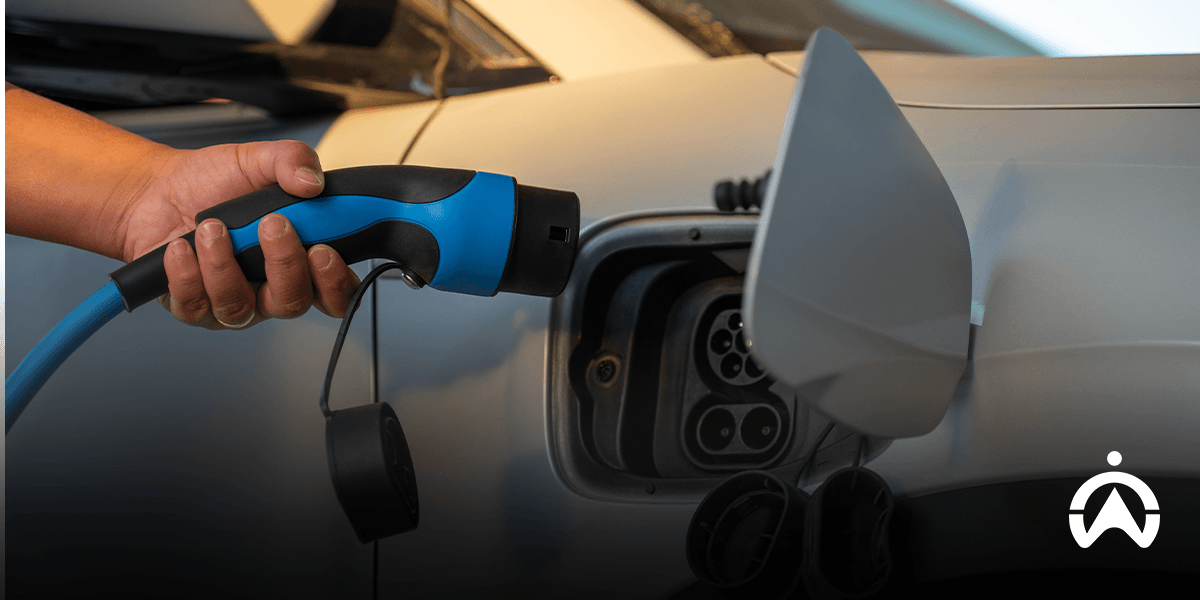
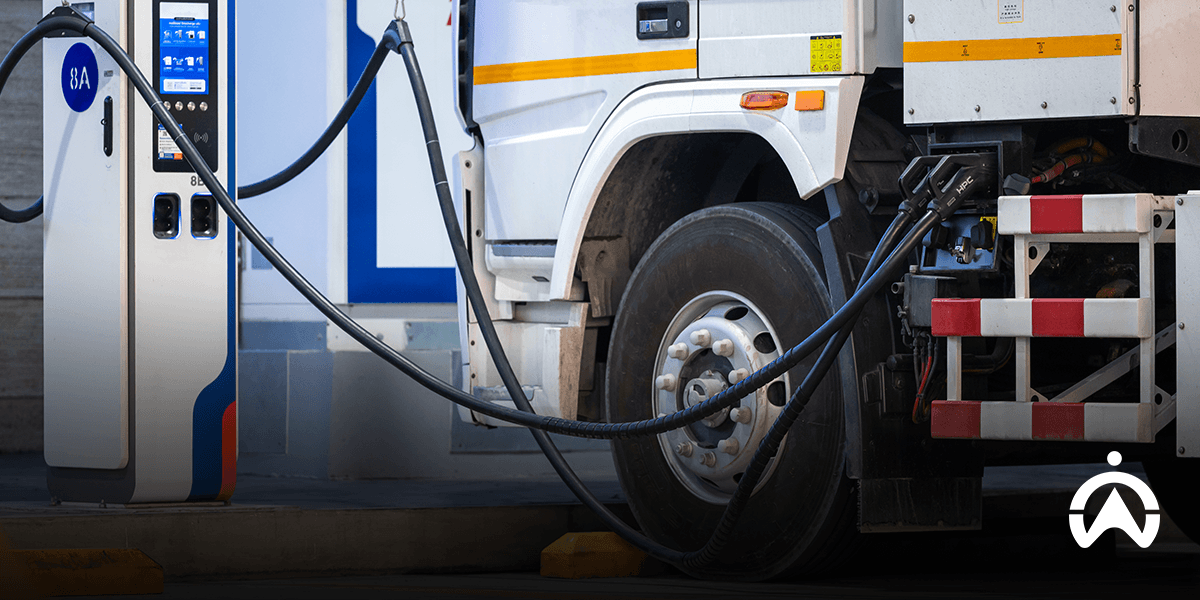
Charging stations (range anxiety)
GPS tracking is at the core of route optimisation for any fleet. Getting your vehicles to their respective destinations quicker means more efficiency and a stronger reputation for reliability. A nice byproduct of route planning & optimisation for EV fleets is the ability to plan charging sessions by pinpointing charging stations.
This eliminates what’s known in the industry as “range anxiety”. Just one more reason to get GPS tracking for your electric vehicle company.
Maintenance for electric vehicles
Electric vehicles need significantly less maintenance than ICE vehicles. It’s a great selling point, but what about when they DO need maintenance? The truth is, we’re not as familiar with electric vehicle health because this technology is relatively new.
GPS tracking works as an integral part of predictive maintenance scheduling. And yes, it’s exactly what it sounds like: software that predicts when your vehicles will need to go in for a service. So instead of guessing when your EVs need maintenance, you’ll have a booking schedule that’s accurate to the condition of each vehicle—all thanks to GPS tracking and other IoT devices.
GPS tracking is also used for coaching
The third reason EV fleets should adopt GPS tracking is for the purpose of driver training. While GPS tracking might not be the obvious hero in this technology, it works in the background to make it possible.
Driver monitoring for EV fleets
You can’t exactly monitor your drivers for targeted driver coaching if you don’t know where they are most of the time. GPS tracking tells your fleet software where each driver is, and combined with vehicle cameras, tells you what they’re doing.
Vehicle monitoring to save costs
GPS tracking also plays a part in vehicle diagnostics to help you understand what each driver is doing with regards to the vehicle they’re driving. Are they idling too long? Are they driving recklessly? Did they make it to their destination? Thanks to GPS, you can manage your drivers much better and even coach them on driving habits.
Last-mile benefits of GPS tracking for electric vehicles
Cartrack has a superb last-mile application called ‘Delivery’. It’s an optional part of our software offering that helps to finalise deliveries or fleet-related tasks. This application relies heavily on GPS tracking because it helps you manage schedules, locations, and routes for your drivers.
To keep costs down and productivity up, fleet managers are turning to applications like Cartrack’s Delivery. GPS tracking devices have to be fitted to each vehicle to optimise the function of this application. Not just to keep those scooters safe from theft, but to help manage one of the most important delivery processes of the company—the last mile.
Thanks to GPS tracking for EV fleets, the last mile (notorious for being the most expensive part of the delivery process) can be optimised through:
Better route planning for increased range
Avoiding traffic and damaged roads
Better communication with customers on delivery progress
Fewer breakdowns
Maximised ESG goals
If you’ve made the shift to electrify your fleet, you’ve already taken a huge step to raising your ESG score. This puts you ahead of your competitors because you’re leading the way within your industry and making a real difference in the impact fleet companies have on the environment.
But it’s possible to FURTHER enhance your ESG results. Check it out.
Is ESG worthwhile? What’s in it for you?
ESG isn’t just about being compliant with a set of new rules. Pursuing ESG sincerely WILL put your company ahead of its competitors long term, because many companies will (and already do) only do business with those that are perceived as responsible corporations.
ESG is also worthwhile when you consider how it impacts the safety and wellbeing of your staff. This is the social aspect of ESG (the “S”), and this aspect has become a financial strategy that’s continuously paying off in terms of staff satisfaction, productivity, and retention.
The role of GPS tracking in ESG
Where does Cartrack come in? What’s the connection between GPS tracking for electric vehicle companies and ESG?
GPS tracking is the basis for conceptualising accountability in your drivers
GPS tracking is the starting point in determining your carbon footprint on the environment
GPS tracking is what forms the foundation of driver coaching
GPS tracking is necessary for better route optimisation (which means less mileage)
GPS tracking gives you the data you need to make better decisions and manage corporate risk better
Tracking the safety of MORE than just the vehicle
The 6th and final reason electric vehicle companies should adopt some form of GPS tracking is because it’s not just the vehicle you’re tracking. As a fleet manager or company owner, it’s vital to protect your drivers and their passengers.
Remember: GPS tracking falls into the background when it comes to other driver safety components, so as we consider any fleet safety feature from Cartrack, bear in mind that GPS tracking forms the skeleton for them all!
How does GPS tracking protect EV drivers?
Leaving out important driver safety features like AI cameras and collision detection, GPS tracking further protects electric vehicle drivers as follows:
It allows for faster responses in emergency situations
It sends you alerts when your drivers are in certain high-risk areas
It calculates safer and quicker routes
GPS tracking | The skeleton of EVFMS
It’s safe to say that fleet management software wouldn’t exist as we know it today without GPS tracking.
It’s the lifeblood of so many applications that have become INDISPENSABLE to EV fleets across the globe.
Do EVs in Namibian fleets need GPS tracking?
YES, EVs in Namibia should absolutely implement GPS tracking into their fleets. Not only is it an integral part of almost all other fleet management strategies, but it also keeps your assets & drivers safe in a country where crime is an everyday reality.
Whether you’re electrifying your fleet or already have, contact Cartrack todayto optimise your business and get more out of your electric vehicles.
Frequently asked questions about GPS tracking for electric vehicle companies
Should I get a GPS tracker for my personal EV?
Yes, adding a GPS tracker to your personal electric vehicle is an extra layer of security. Even if you have insurance, a tracking device gives you a better chance of recovering your car if it gets stolen. Bear in mind that it’s not just your car you’re tracking, it’s often you and your family too.
Do some EVs come with built-in GPS?
Yes, almost all EVs come with a built-in GPS for purposes of navigation and smart range estimation. The default GPS used in electric vehicles is a mechanical necessity, but it doesn’t come with a recovery service, so getting a tracking device installed from a company like Cartrack is a sure way to recover your car if it does get stolen.
Does Google Maps have an EV mode?
Yes, Google Maps has a mode specifically designed for EV. It prioritises charging stations (and their availability) and AI navigation (for quicker routes to save your battery). As EVs become more popular, Google continues to update their EV Map mode to accommodate new charging stations and other navigational priorities.
What type of tracking device is best for electric vehicle fleets?
The best tracking device for EV fleets is one that collects quality data for the purpose of operational efficiency and informed decision-making. It should also integrate with existing EV technology, other fleet management systems, and built-in EV features. Most importantly, it should come with a vehicle recovery service in case of theft.
Other articles for you
Truck Leasing for Start-Up Businesses – What You Need to Know
Blog
7 minute read •
Leasing trucks to start-up businesses is proving to be a very lucrative opportunity. Many new businesses are desperate for trucks, but are often being barred from getting them because of strict bank specifications. We’re seeing a preference for leasing trucks instead of owning them, because the benefits seem to outweigh the drawbacks. Namibian businesses, especially smaller […]
Get AI Cameras for Seatbelt and Phone Detection for Drivers
Blog
7 minute read •
Getting AI cameras for seatbelt and phone detection for drivers is the perfect way to transform safety protocols in your fleet. AI detection can monitor poor driving habits, alert drivers so they can quickly correct their actions, and keep records of offences so you can coach your drivers if they repeatedly commit them. Namibia recorded 2,793 road crashes, […]
Your trucks work hard to travel long distances, carry heavy loads, and traverse roads that are often treacherous & damaged. Looking after your trucks is a wise investment that’ll pay you back in productivity and lower overheads, but only if you know what condition they’re in at all times. The trucking and logistics sector plays a vital role in […]
 South Africa
 Botswana
 Kenya
 Malawi
 Mozambique
 Nigeria
 Swaziland
 Tanzania
 Zimbabwe
 Hong Kong
 Indonesia
 Singapore
 Malaysia
 Philippines
 Thailand
 New Zealand
 Vietnam
 Poland
 Portugal
 Spain
 United Arab Emirates