
How Digital Twins Are Truly Boosting Your Fleet Management Today

Digital twins are truly boosting your fleet management by offering the best in simulative, virtual technology that helps improve your business overall. It goes a step beyond telematics, offering even deeper analyses and insights into each of your fleet vehicles. Better insights = more informed business decisions and bigger cuts on business expenses!

As of early 2026, we’ve seen a powerful infiltration of digital twin technology in logistics. A recent global analysis shows that 92% of organisations using digital twins are seeing an impressive return on investment (ROI) exceeding 10%. Over half of these users are seeing an increase of at least 20% thanks to enhanced asset performance.

Elevate your fleet with revolutionary technology and maintain your edge over the competition. Keep reading this blog to understand digital twin technology, explore the pros & cons, and discover how Cartrack can help you move towards a more innovative future for your fleet.

What are digital twins doing to improve your fleet management?

Digital twins are improving operational processes and helping you save money when it comes to your fleet management. When you implement this kind of technology, you’re staying competitive and looking towards the future of ingenuity. These technologies allow you to look forward and predict certain issues, improve workflows, and collect enough intricate data for you to confidently make business changes.

What is digital twin technology?

Digital twin technology is a detailed, constantly updated virtual replica of something that exists in real life. This could be an object, environment, or process. It doesn’t matter how intricate or complex the systems are; digital twins can manage them from a minuscule level to a process in its entirety.

Digital twins reflect live behaviours and leverage AI, sensors, collected data, and interactive tools to forecast future performance.

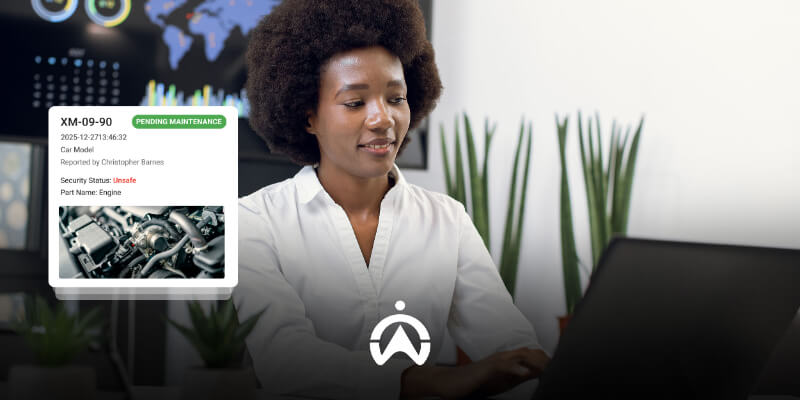
In the case of fleet management, each of your fleet vehicles has its unique virtual counterpart, driven by IoT data transmitted from the actual vehicle. The twin analyses this data against:

  • route pressures,
  • historical failure patterns,
  • driver behaviours,
  • typical operating conditions, and
  • environmental factors

to predict the health of components and test potential changes.

Why is digital twin technology so important?

Digital twin technology is so important because of its impact and growth that propel creative innovation. It’s looking as though this kind of technology is about to soar in popularity, as businesses want to comfortably make changes and see predictive outcomes without facing serious risk.

Looking at this from a fleet management perspective, potential failures in your fleet can be predicted before they happen, and new software, hardware, or any other update can be tested in simulation first.

💡 Think of it this way: 

You know how pilots test their flight and safety skills in a simulation before actually flying a plane? Digital twins are the same thing, but for your fleet. In a flight simulation, pilots test out emergency situations, what flying might be like in different instances & weather conditions, and take-off or landing procedures.

With digital twins in fleet management, you’re predicting downtime and maintenance, testing changes in things like routes and schedules, and monitoring operations for optimisation. This highlights the major benefits of digital twins: allowing you to test changes before implementation and making more accurate predictions.

What is digital twin technology used for?

Digital twin technology is used for:

  • replicating intricate situations and scenarios,
  • modelling environments and infrastructure,
  • testing changes,
  • risk management,

and so much more.

It can really open the door for strategic enhancement, encourage positive & predictive change, and cut down on the costly mistake of trying something out in the real world.

Some of the industries that benefit from this technology include:

  • healthcare,
  • entertainment,
  • transportation & automotive,
  • manufacturing,
  • aeronautics,
  • energy, and
  • urban planning.

The 4 types of digital twins

The types of digital twins are:

  1. ‍Component/Part twins: This refers to simulations or copies of single parts within the bigger system or environment. It mimics and monitors a very tiny but important part of something greater. For example, a valve or blade within a machine. This is perfect for monitoring core parts of a greater machine and can help in supporting predictive maintenance.
    ‍
  2. ‍Asset twins: This refers to copies of several (two or more) parts that are working together. It displays how these parts interact in real time, as they run as part of a bigger, complete system. Asset twins essentially take a closer look at how something works as a complete thing. A good example of this is an engine.
    ‍
  3. ‍System/Unit twins: This is a reflection of how many parts come together to form something whole, like a car production line. It looks at how these parts interact, making it a perfect opportunity to monitor, identify performance gaps, and see where operational enhancements can be made.
    ‍
  4. ‍Process twins: This refers to constructions of the entire build or process to achieve complete efficiency. It’s a replica of the whole production, not smaller parts (as we’ve covered in the previous digital twin types). This simulation is the best for maximising operational efficiency, helping your business increase production and generally manage resources better.
How Digital Twins Are Truly Boosting Your Fleet Management Today

Are digital twins actually useful?

Yes, digital twins are actually useful. Telematics is an already powerful system that provides crucial information and vehicle diagnostics. Digital twins take it a step further by adding an extra, even deeper layer of monitoring and proactiveness. Real-time hypothetical and “what-if” situations can comfortably be played out without worrying about potential risks.

If we look at it in simple terms, fleet management insights operate more like a dashboard, showing you what’s happening right now (with the ability to access past information). Digital twins have more of a focus on a simulation that communicates what will happen, making it easier for you to test a change before actually applying it in real life.

What are some pain points that digital twins resolve?

Some of the pain points that digital twins resolve include slow & congested operational processes, poorly planned routes & schedules, and inadequate services or products. Thanks to the in-depth data collection & predictive insights, combined with AI and IoT, there’s room for growth, development, and change.

These are some of the tangible benefits:

Improved & accelerated operational processes

By implementing this technology, you can run simulations to check whether any changes you want to make could work in the real world. You can also check for general defects in a product or service you provide, because sometimes there are issues you might overlook when examining it yourself.

This is a great opportunity to use the data provided to improve your business operations.

Optimisation & predictions

You can optimise facets of your business, like schedules or routes. Digital twins give you a complete & total overview of your assets, and the information collected from IoT devices will reflect how the parts of your vehicles are working. Because of this, you can immediately see when there’s an issue and address it immediately, or take advantage of the predictive maintenance. 

You don’t have to deal with the fallout once the costly breakdown has happened.

Better products and services

Because you’ve tested and run the product/service through simulation, you know what’s working and what could work. The consistent data means you can take a proactive approach and not allow yourself to be disappointed by potential failures in the real world.

Happier customers & a solid reputation

The evident successes of digital twins will bring about happier, more loyal customers, boosting your business reputation. Optimised processes and improved performances mean customers get the best in the services they receive.

Less downtime

As mentioned earlier, digital twins make it far easier for your business to anticipate potential breakdowns and necessary servicing. You can be far better prepared so that you handle mishaps quickly or even steer clear of them entirely.

Are there downsides to using digital twins in fleet management?

Yes, there are some downsides to using digital twins in fleet management. While the upsides prove to be of massive value to your business, it’s still important to understand that factors like data overload, security concerns, and technical complexity can make this technology daunting.

Consider these challenges:

Data overload

For this technology to work optimally, consistent, high-quality, and complex data is needed at all times. That information is also coming from so many sources at any given time, which adds to its complexity. Being inundated with this level of data can be quite overwhelming, and if you don’t have fleet software that’s organised, this can make data collection a difficult and fragmented process.

Combatting this means ensuring cohesion (i.e., having a comprehensive fleet management platform) and an integration-friendly platform that’ll accommodate this technology.

Security organisation & concerns

When you’re dealing with this much operational data, the topic of sensitivity and security is a major concern. In situations where that data includes people’s personal information, there’s even more pressure to ensure safety policies are fulfilled. Collected information should always be protected and handled with complete care, especially according to industry standards.

Technical complexities

Specialised engineers and professionals are required for the building and maintenance of digital twins. From data analysis & synthesising to rendering and continuous software development, specialised expertise is clearly necessary. Above this, it also means that staff members would need to be trained on this technology and the data management that comes with it.

The best way to tackle this is to team up with a technology company that would provide the best services and support for an implementation of this magnitude.

Flexibility & scalability

You must ensure that you’re confident and stable enough to continually invest in the technology. The more your business grows, the bigger the data and complexity demands will become. Ensure that you have strong strategies and systems in place that will allow that growth to happen smoothly.
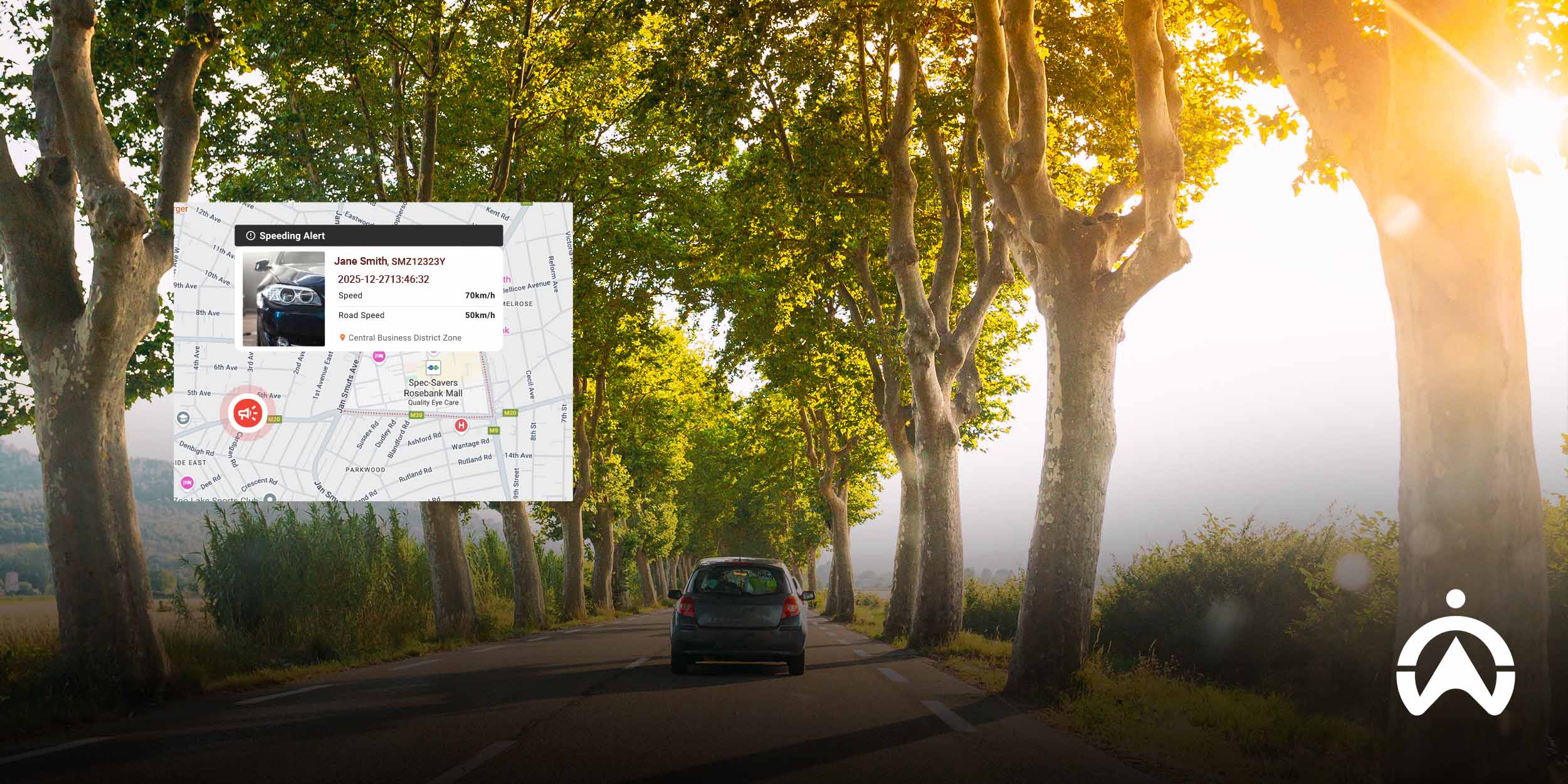
A car driving on a tree-lined road at sunset with a digital twin map overlay showing a speeding alert for fleet management monitoring.

Does Cartrack support digital twin integration?

Yes, Cartrack does support digital twin integration. We use an API-first approach (making us integration-friendly), although we won’t build the digital twin itself. Cartrack’s API integrations allow you to seamlessly connect to other systems, making it a perfect solution for your fleet management transformation.

What digital twins need is powerful telematics, a consistent stream of vehicle data & diagnostics, and smooth integration. Cartrack meets all those needs, providing the real-time flow of data that’s required while supporting fleet improvement through its SaaS platform. All of Cartrack’s tracking units are IoT devices that are integrated into your vehicle telematics. We can be the perfect source for your twin technology groundwork.

It’s important to note that we’re not a digital twin platform; we’re a twin-ready infrastructure designed to support your fleet management growth and evolution. We recognise the importance of embracing future-forward technologies like these twins, and that’s why we’re prepared to be your long-term partner for steady growth and reliable, accurate data.

Final takeaway: Digital twins as a means to revolutionise fleet management

Fleet data is the backbone of positive change and business growth, and that’s why adopting digital twin technology is the key to even bigger growth. While a giant step forward for your business, you also need a dedicated and supportive partner that’ll provide the necessary framework to keep the twins running.

We have your back. Alongside the required data and insights, we’re also locally focused and available 24/7, 365. You’ll get everything you need to push your smarter decisions and technological growth forward.

With Cartrack, you have the solid foundation to explore advanced innovations like digital twins to keep you prepared for what’s next. Speak to one of our professionals and turn your fleet data into insightful business decisions today!

Frequently asked questions about digital twins

Who is the father of digital twins?

The father of digital twins is Dr Michael Grieves. He was working at the University of Michigan and came up with this technology as part of his concept for product lifecycle management (PLM) in 2002. He initially dubbed this “mirrored spaces model”, then “information mirroring model”, but settled on “digital twin” in 2011.

What skills are needed for digital twins?

Skills needed for digital twins include:

  • Computer programming, preferably Python
  • Familiarity with AI tools and simulation modelling
  • 3D rendering tools, like CAD
  • Data science and analytics
  • (Preferably) Cyber security

There are also other soft skills that are important to consider, like being an active problem-solver and someone who can confidently work in a team.

What is the future of digital twins?

The future of digital twins essentially points towards even better, more automated, and AI-driven simulations that present predictions with more precision. It’s said that digital twins will:

  • become immersive,
  • become widely adopted,
  • become a service (like SaaS) so that businesses don’t have to build from scratch, and
  • be used as a means for job training, so time isn’t wasted.
How to Use GPS Tracking Correctly

Use your GPS tracking correctly by maximising its functions and features. With the right company, GPS tracking isn’t just about knowing where your car or fleet is; it’s about strengthening safety & achieving real power and competitiveness in your business.

GPS tracking isn’t only a smart business choice anymore. While businesses are the largest adopters of trackers and are seeing staggering drops in fuel and accident-related expenses, personal trackers now make up 38% of the global tracking demand. People are welcoming tracking and location sharing as a necessary safety measure to protect their cars and loved ones.

Don’t fall behind; stay ahead of your competition by having a clear grasp of everything GPS tracking has to offer. Keep reading to find out more about GPS tracking, the solutions on the menu, and why Cartrack should be your #1 choice for a long-term partnership.

What’s the best way to use GPS tracking?

The best way to use GPS tracking is by installing hardwired trackers into your vehicle(s) & taking advantage of the handy features from the connected platform and/or app. Taking this approach is truly using your GPS tracking correctly, reaping benefits like improved safety, a consistent overview, and smoother, more affordable operations.

What is GPS tracking?

GPS (Global Positioning System) is a navigation system that helps you determine the location of your vehicle, but also helps you navigate your way on the road and use the best routes to do so. When you use a GPS tracker, it pinpoints your position by using the signals from a few satellites to narrow it down as accurately as possible.

This is done through trilateration, which takes the latitude, longitude, and altitude from satellites to calculate your device’s position. A GPS network usually has about 24 satellites at any point to work efficiently, although there could be more to ensure even stronger accuracy. This is the foundation of GPS tracking.

Each satellite transmits its own position using radio waves. The tracker then acts as a receiver of signals from the satellites and then transmits that information to get the exact position (within a few metres). This information, i.e., your position, then shows up on your platform, whether it’s your fleet platform, your phone app, your device, etc.

Why should you use a GPS tracking system?

You should use a GPS tracking system because it does wonders for your safety and presents some great applications. As an individual, you have eyes on your car at all times, and if you’re partnered with a reliable tracking company like Cartrack, you’re likely to have stolen vehicle recovery (SVR). If you’re stuck in an unsafe situation, emergency response teams can also find you quickly.

As a business owner or fleet manager, fleet visibility is guaranteed. Again, if you’re partnered with a supplier like Cartrack, you can monitor your vehicles & ensure your drivers are safe while maximising the benefits of the features of GPS tracking and telematics.

Is GPS tracking actually accurate?

Yes, GPS tracking is actually accurate & reliable, assuming it’s done using a high-quality device and the conditions are clear. Under normal circumstances, a GPS tracker will be rather precise & have a small variance of between 3 and 10 metres. Devices that are higher grade and used for businesses might even be accurate up to 1 metre.

Location reporting loses its accuracy when there’s something that blocks the signal. Disrupted signals are usually caused by very tall buildings, terrible weather, and poor-quality/badly installed devices. Although, thanks to the progression of technology, we’re seeing stronger connections and less interference by these typical signal blockers.

How can GPS tracking improve your personal and business activities?

GPS tracking can improve your personal and business activities by providing live location insights that promote safety improvements and better business choices. On a personal level, you can ensure the safety of your car and the protection of your loved ones. On a business level, you can focus on better workflows and extra protection for your drivers & cargo.

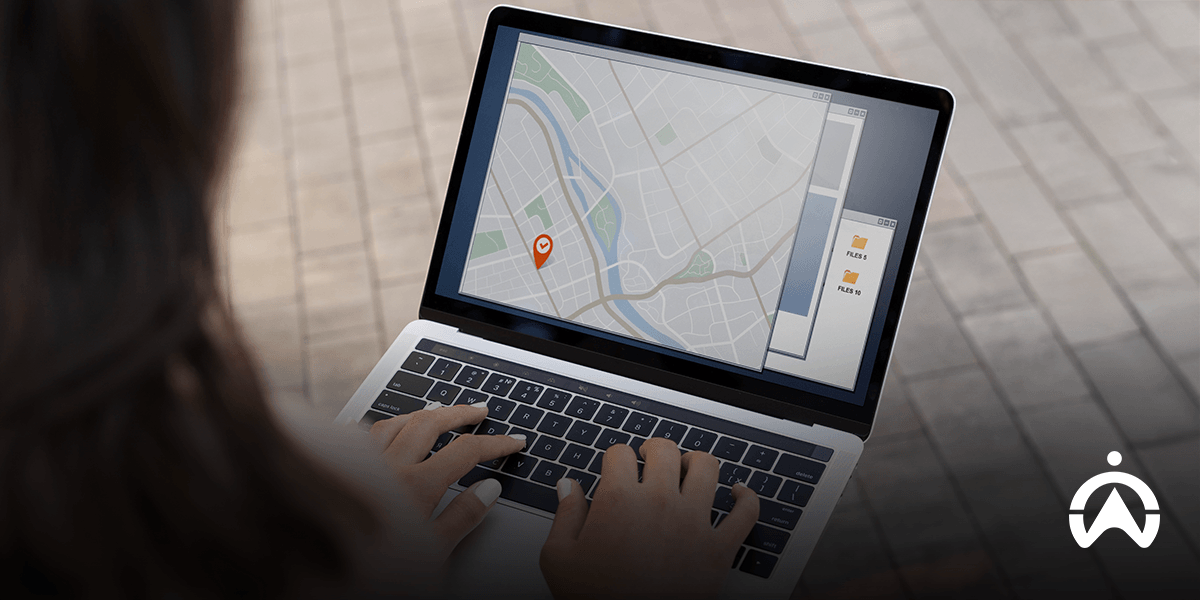
A person using a laptop to monitor GPS tracking software with a location pin and data folders visible on the screen.

Using GPS tracking correctly for individuals

Using GPS tracking correctly for individuals means putting the focus largely on security. Considering that Namibians worry daily about general safety, it’s likely you’re looking for a simple but effective solution to keep you and your family protected. When you use a GPS tracking solution correctly, you should be getting features like location sharing, immediate notifications, and more.

Take a look:

📍Location sharing & live tracking: When it comes to elderly family members or teenage drivers, you’re undoubtedly very worried about their movements and whereabouts. When you’re on the road, you probably want to know that you’re protected if the unexpected happens. With the right tracking solution, you’ll have complete knowledge about where your car or loved ones are when they’re on the road.

If you’re the victim of car theft, you can know where your car is while it’s on the move. You can also share your location with family members and vice versa, for peace of mind and easy, quick contact in an urgent situation.

💬Notifications: If an accident or urgent situation happens, delayed notifications are the last thing you need. The right tracking solution sends notifications immediately, whether triggered by strange activity, a loved one, or you. This means a very quick response by the control room, which is especially important for stolen vehicle recovery (SVR) efforts.

🚨Crash sensor technologies: Many tracking solutions come with some form of sensor technology that detects when a crash has happened. As explained in the point above, if you or a loved one is involved in an accident, the control room will immediately be notified. They’ll call to see if you’re alright and direct emergency services your way if necessary.

📃Trip histories and reports: Trip reports make it much easier for you to get information and insights for whatever you need. In some cases, you might need the data for tax purposes. This then makes compliance and other matters effortlessly achievable, without hassle.

Using GPS tracking correctly for businesses

Using GPS tracking correctly for businesses means improving safety, increasing operations, and achieving massive cost savings. When you implement tracking solutions the right way, you have the potential to transform the way your business operates.

Let’s see what this means:

🛠️Less downtime: When you operate from a proactive instead of a reactive approach, you achieve stronger uptime. Detailed insights can help you spot the issues before they happen and plan for servicing ahead of time. From a real-time perspective, you can also respond immediately if a breakdown or unexpected issue occurs while your drivers are on the road.

💰Reduced expenses: Through GPS tracking, you can optimise your fleet routes, monitor your drivers, schedule maintenance, and spot general waste of fuel, time, and resources. Because there’s less waste, it means there’s less money being poured into wasteful consumption. Maximising GPS tracking helps you save tremendously.

🦺Risk management: Ensure your drivers & cargo are monitored at all times, and know exactly where they are. Get alerted to route deviations & movement outside your geofenced locations, unauthorised vehicle movement, and other improper vehicle or hardware device tampering. Also expect SVR from a quick and responsive team.

Keep your drivers accountable. Through GPS tracking with telematics, combined with AI-powered cameras, you can keep an eye on your drivers and their on-road habits. Get notified of poor driving habits and use the recorded events to give drivers constructive feedback or coaching.

GPS tracking, together with telematics, means you’ll receive the best, most detailed, and most accurate insights technology has to offer. This way, you maximise your tracking features and get access to automated reports and trip histories. These are the keys to simple regulatory and compliance matters.

🤩Happy customers: This is very simple; smoother operations mean satisfied customers. When processes are running smoothly, communication is effective, and emergencies are handled efficiently, you build a strong relationship with your customers and a solid brand reputation. Happy customers mean loyal customers.

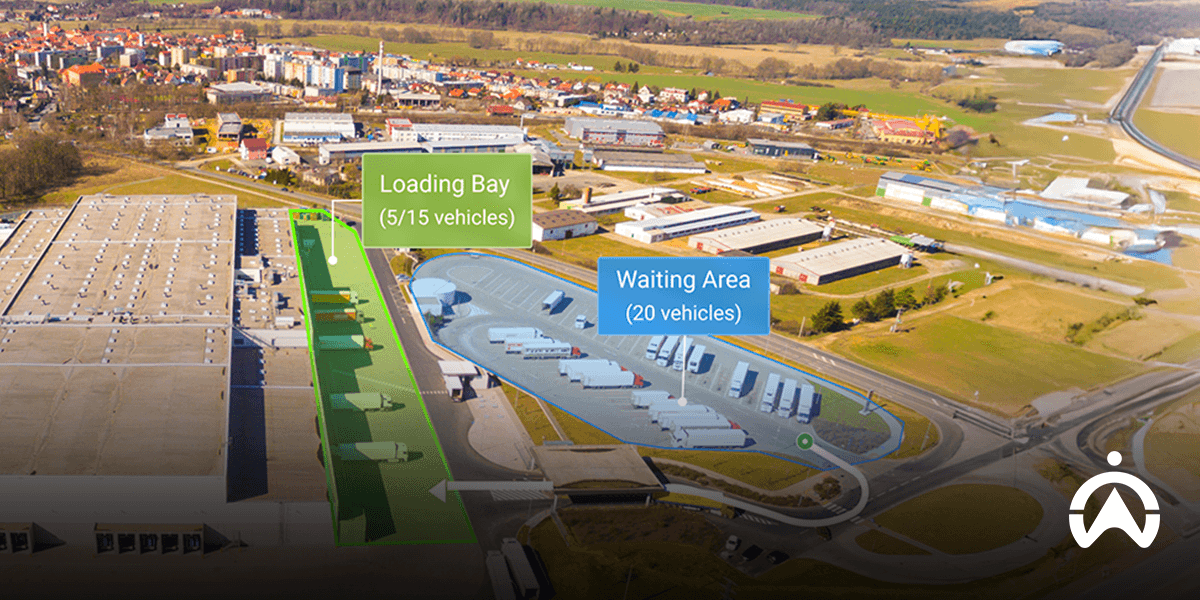
Aerial view of a logistics distribution center and fleet of trucks using GPS tracking for dock scheduling.

How to choose the right GPS tracking solution?

To choose the right GPS tracking solution, consider some important steps like identifying pain points, comparing potential providers, and deciding on your non-negotiable features. These will help you narrow down your options. Always be sure to check the fine print, and remember that the cheapest option isn’t always automatically the best.

These are some considerations and questions to ask:

  • ‍Pain points and the need for a tracker: Take a moment to think about why you want a GPS tracker for your car(s) and ask yourself some important questions.As an individual, are you thinking about the safety aspect? Are you trying to keep an eye on an elderly or teen family member? As a fleet manager, are you wanting to maintain better visibility and control of your fleet? Are you trying to decrease operational expenses?
    ‍
  • ‍Non-negotiable features: Jot down the features and tools that you’re looking for. Are you looking for a passive or active tracker? Is your tracker going to be a hardwired device or a portable tracking device? Will you incorporate anti-jamming and backup technologies? Does the associated platform working with your tracking device allow for third-party integrations?
    ‍
  • ‍Comparing potential providers: If you have some providers in mind, compare them by looking at offerings, prices, and other variables. Is your preferred option a well-known, highly ranked company? Is local support and training offered? Does the company secure your data according to industry-level encryption standards?
    ‍
  • ‍After the sale’s been made: The best solutions will have an accompanying support system that goes beyond just the sale. Will the company you choose provide you with regular software updates for the platform or app? Will the partnering company ensure an installation that doesn’t affect your car’s warranty?

Why is Cartrack one of your best GPS tracking choices?

Cartrack is one of your best GPS tracking choices because we offer everything you could need at an affordable price. Our reputation precedes us. Thousands of people and companies have put their trust in us to keep them safe, meet their needs, and provide the best in advanced technologies. Whether you’re an individual or a business, you’ll know you’re covered.

Here at Cartrack, we understand what using your GPS solution correctly & optimally can do for you, and we’re here to help you achieve the best results possible. Firstly, our solutions are affordable, offering budget-friendly monthly rates for both individual packages and fleets. Our hardware installation is FREE, and you’ll have access to round-the-clock, localised support when you need it.

Every single package comes with access to the mobile app, customer support, and SVR. For fleets, you can choose which fleet deal aligns best with your business and customise your package to include all kinds of sophisticated add-ons. From safety, risk management, and admin & compliance to integration and industry-specialised sensors; we have it all. You don’t have to look any further!

Final takeaway:

Getting the most out of GPS tracking and using it correctly means fully embracing and experiencing its features and perks. By doing that, you open up a world of benefits that could change your perspective on safety and optimisation.

Cartrack not only provides you with the right GPS tracking package but also helps you use it correctly, offering the best in accompanying tools and software to suit your needs. Whether you’re a business or an individual, we’re prepared to help (down to delivering after-sales support!).

Use your tracking technologies and tools to your full benefit. Join the over 2.6 million Cartrack subscribers globally and secure your customised GPS tracking package today!

Frequently asked questions about proper GPS tracking

What to do if the GPS location is wrong?

If your GPS location is wrong, carry out a few fixing methods to see what could be the cause. You can try to restart the tool or (depending on what device you’re using) select the on/off button for GPS tracking. If you’re in a crowded or densely forested area, try to get somewhere that’s clear and open.

Can a cell phone detect a GPS tracker?

Depending on the tracker type, yes, a cell phone can detect a GPS tracker. If we’re looking solely at GPS transmitting trackers, then that’s far more difficult to track with your phone. You have a better chance of catching a tracker that’s Bluetooth-powered, like an AirTag. These send notifications to your phone and allow you to scan for nearby devices.

What blocks GPS tracking?

Jammers, certain structures and environments, and specific materials can block GPS tracking. Signal jammers can drown out and “impair” satellite frequencies. Structures and environments, like tall concrete buildings or terrible weather, can disturb signal strength. And certain materials, like foil or even silver, can catch or retain radio waves, disturbing how they’re transmitted.

How to Monitor EV Battery Health With Telematics

Telematics monitors your EV battery health by using the vehicle data it captures to keep track of the State of Health (SoH), the State of Charge (SoC), and the thermal data. If you want to prevent range anxiety and improve battery health, you should be keeping an eye on these metrics.

According to a comparative study that was conducted in 2025 on more than 30,000 electric vehicles and the lowest-performing 1% of the group saw a battery health drop of 80.8%. However, the average battery health for the majority of the EVs aged at around 4 to 5 years old, maintained 93.5%

What this data proves is that the performance gap isn’t caused by age and usage. It shows that operational habits are the main cause of battery health decline. This is where telematics comes in. Telematics data will give you a comprehensive overview of your entire fleet so you can make sure your EV vehicles are always performing at their best and that they’ll last you a long time.

Why should you monitor your EV’s battery health?

You should monitor your EV’s battery health so that you can protect your investment. EVs are significantly more expensive compared to your normal ICE vehicles. The parts of these vehicles also cost a pretty penny, and when you keep a watchful eye on your battery health, you can ensure that your asset is going to last you a long time.

When you monitor your EV’s battery health, you can get the most out of your driving range and make sure everything is working as it should, ensuring the safety of the driver. Another benefit is that you can prevent battery degradation, and you’re ultimately protecting your vehicle’s resale value.

Another major reason you should monitor your EV’s battery health is because you can resell EV batteries. They’re often used for home solar backups. Telematics gives you reports that let you prove that your EV batteries still have a high SoH so that you can get the most value out of the batteries you’re selling.

What is EV battery degradation?

EV battery degradation is just the simple and natural process of your battery’s ability to hold a charge over time. We’ve all experienced this with our cellphones; when it’s new, it could last you two days, but after a few years, you’re charging it multiple times a day. For electric vehicles, battery degradation directly affects your driving range and performance.

How to prevent EV battery degradation

It’s important to note that most battery degradation happens in the first couple of years, and then it’ll slowly decline after that. To minimise battery degradation, you can do the following things:

  • Don’t charge your EV to 100% or let it drop to 0%. Keep the battery charge between 20% and 80%.
    ‍
  • Avoid parking your EV in spots where it’ll be exposed to harsh temperatures.
    ‍
  • Do regular battery health checks; this way you’ll pick up on a minor issue that could be affecting your EV’s battery.
    ‍
  • Predictive maintenance on your vehicle will keep it running at its best.
    ‍
  • Limit DC fast charging because it heats up your batteries too much.
    ‍
  • Don’t let your EV sit idle at a constant high or low battery percentage.
    ‍
  • Drive smoother; driving aggressively will accelerate the wear on your vehicle and battery.
    ‍
  • Keep software updated. Make sure you’re installing any updates to your EV software, as these updates can improve the battery management system (BMS) of your EV.
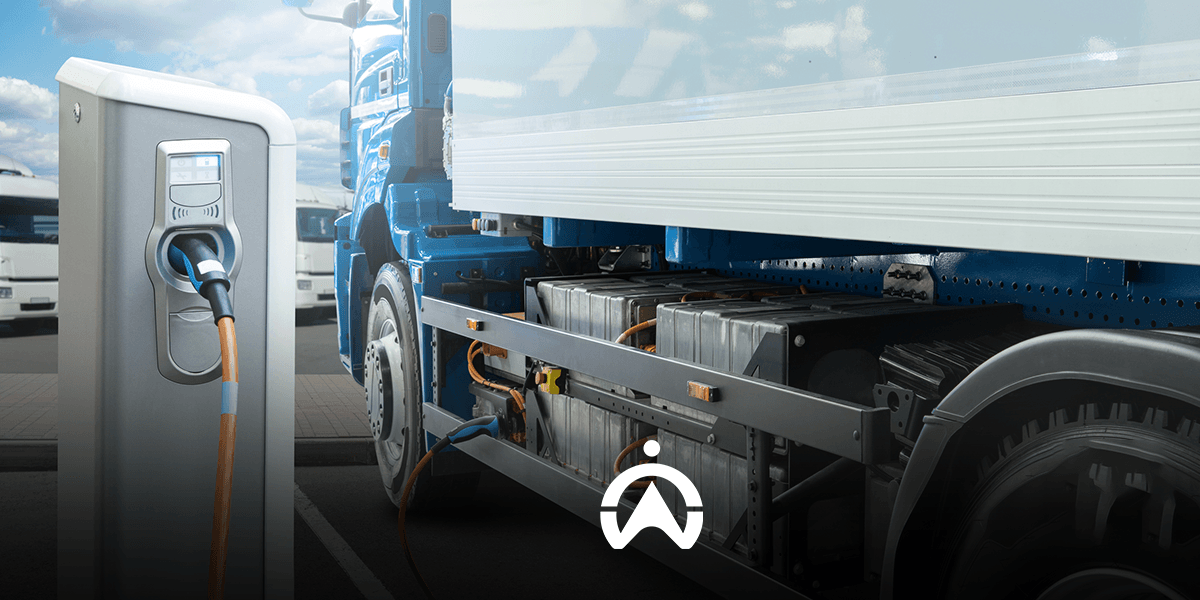
Commercial semi-truck refueling, illustrating the transition to fleet telematics systems that monitor EV battery health.

How is telematics used for EVs?

Telematics is used for EVs by tracking and monitoring your EV in real time; it’ll track energy usage data and charging time slots. But above that, a telematics system can optimise your entire EV fleet, thanks to features like maintenance alerts and energy consumption reports.

How can a telematics system optimise your EV fleet operations?

A telematics system can optimise your EV fleet operations by giving you complete insights into how your EVs are performing. With the insights provided you’ll be able to schedule vehicle charging during quiet periods and identify which electric vehicle in your fleet is best for each trip that’s needed each day.

Real-time GPS tracking lets you adjust schedules on the go, and the detailed reports you receive will provide you with the evidence you need to improve any strategies and productivity. Having a telematics system for your EV fleet not only assists with battery health, but it also transforms the way you manage your entire operation.

Key features of a telematics system for EVs

The key features of a telematics system for EVs include battery monitoring, charging insights, route optimisation, driver behaviour, predictive maintenance and range prediction. If you’re unsure as to why you need a telematics system for the EVs in your fleet, here’s a breakdown of the features you’ll get.

Real-time battery monitoring

The most important thing you need to do if you have an EV in your fleet is that you have to keep track of SoC, SoH, temperature and voltages. Without these insights, the integrity of the batteries is compromised. By monitoring the battery health, you’ll be able to keep them in the best condition for as long as possible. We know EVs are expensive, so this makes sure you get the most out of your vehicle.

Charging status alerts

To power your EVs, their batteries need to be charged. As a fleet owner you need to know the charging status of each and every EV in your fleet. A telematics system will send you notifications for all types of charging statuses (completed, interrupted, and low battery.)

Charging insights

You also need charging insights on your EVs. With telematics you’re able to get insights on each electric vehicle’s charging history, and on top of that you can create a proactive charging schedule. By having a proactive charging schedule, you’ll never be behind schedule because some of your EVs didn’t get charged the day before.

Range prediction

Range anxiety is a real problem for anyone who owns an EV. Telematics is the solution to ease your worries with predictive insights. These insights will let you know how far your EVs can travel by looking at energy use, charging habits, and the terrain that’ll be travelled. This way you’ll know exactly when your vehicle needs to be stopped to get recharged.

Diagnostics and predictive maintenance

Parts for electric vehicles are not exactly cheap. But when you connect your EVs with a telematics system, you’ll get alerts on all exterior, system and battery issues so you can schedule maintenance before they affect your fleet. A simple thing like having underinflated tyres can cause a major decrease in the KMs your EV will get.

Driver behaviour

From the stats mentioned at the beginning of this blog, we see that the longevity of your EV’s battery is directly linked to driver behaviour. Telematics will give you comprehensive insights on exactly how your drivers are handling your EVs; are they speeding, taking corners aggressively or braking harshly? This data will allow you to give your drivers proper coaching to handle the EVs, and you can ultimately improve the lifespan and performance of your EVs.

Route optimisation

You want to get the most KMs out of your EVs, and you can achieve this with a telematics system. Thanks to advanced GPS tech, telematics can help plan the best routes for your EVs to take, making sure they avoid traffic, unkept roads and unnecessarily long routes, all of which contribute to decreased energy use.

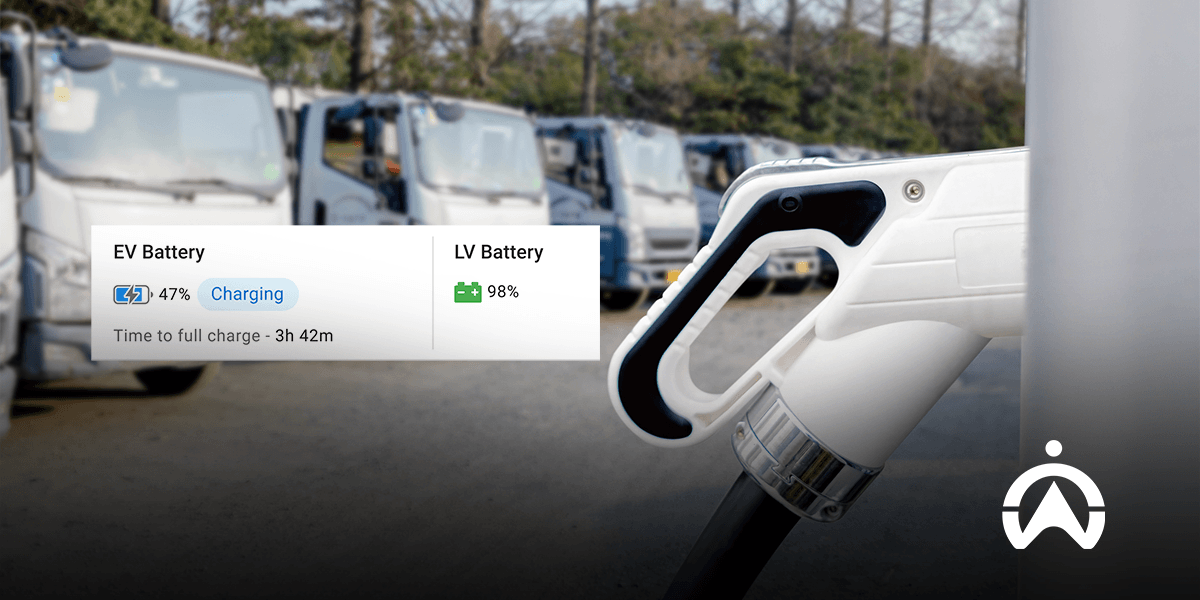
Close-up of an electric vehicle charging connector with a telematics display showing EV battery health at 47% and LV battery at 98%.

How to do an EV battery health check

To do a detailed EV battery health check, there are a few things you need to do, such as check the battery health, the actual EV range, and the SoH and install a telematics system. By following this procedure, you’ll be able to make sure your EV’s battery health is in tip-top condition.

  • Battery capacity: Charge your 400 kWh truck to 200 kWh and see if the SoC goes to 50%. This is how you can check the battery management system in your vehicle.
    ‍
  • EV range: Monitor if your vehicle’s actual range at a full charge is the same compared to the estimate given by WLTP.
    ‍
  • Monitor the SoH: Your EV has a built-in battery health monitoring system. To access this information, you’ll need an on-board diagnostic device, which can tap into the BMS and check the overall health of your battery.
    ‍
  • Telematics system: Installing a telematics system in your EV is one of the most accurate ways to test your EV battery health. It’ll use in-vehicle sensors and GPS to record real-time data on the battery status, charging patterns, and energy utilisation.

Why choose Cartrack as your EV fleet partner

You should choose Cartrack as your EV fleet partner because our telematics software is designed to work on any fleet. It doesn’t matter if your fleet is fully EV or if it’s mixed. You’re able to use one single platform for all of them. And we don’t just work with your LMVs or trucks; we can work on your electric scooters, forklifts and buses too.

With Cartrack, we’ll provide you with:

  • Real-time battery management
  • Predictive maintenance
  • Mixed fleet efficiency
  • Driver behaviour monitoring and scoring
  • Asset protection
  • ESG reporting

If you’re ready to optimise your EV fleets and improve their battery health, contact us today to help your electric fleets go further. 

FAQs

Are EVs and hybrid cars the same?

No, even though they are often grouped together, EVs and hybrid cars are not the same.

  • Electric vehicles are solely powered by an electric motor and a battery pack.
  • Hybrid vehicles are powered by a combination of an electric motor and a petrol engine

What are the negatives of buying an electric car?

There are a few negatives of buying an electric car; these are:

  • A high initial cost to buy the vehicle
  • Limited driving range compared to a ICE
  • Charging times can be lengthy
  • Expensive repairs
  • A lack of charging infrastructure in public spaces

Are there any challenges when implementing telematics?

The possible challenges you can face when implementing a telematics system in your fleet are upfront costs and complete system integration. You’ll also need to train your staff on how the telematics system is going to work and how to use it.