How vehicle maintenance can be monitored through engine management systems

Taking care of your employees and your fleet makes a huge difference to your business. A healthy-running vehicle can benefit the business with reduced breakdowns and downtime while increasing productivity and profit.

What is vehicle maintenance?

This is the continuous process of repairing, servicing and maintaining vehicles owned by a business, an organisation and everyday motorists. The aim is to make it safer for drivers to operate these vehicles while enhancing their daily functions.

Businesses that have fleets often overlook the need for professional fleet maintenance, but many realise that it will cost them money, time, and productivity if fleet management and maintenance are not made a priority.

The importance of effective maintenance

Much like when you go to the doctor for your annual check-up, your vehicles need a similar treatment to make sure everything is running as it should. If one organ doesn’t work right, it affects the whole body, the same goes for a broken spark plug, piston rings, or cylinder head, if one thing is out of tune, it affects your entire vehicle.

Keeping up with the maintenance of your fleet can help you avoid unexpected breakdowns and unscheduled time off, which could ultimately affect the safety of your drivers and the productivity of your business.

A business will gain many advantages from adequate and proper maintenance, including:

  • Fuel and financial savings as mechanical systems affect fuel consumption and efficiency
  • Lowering long-term maintenance costs
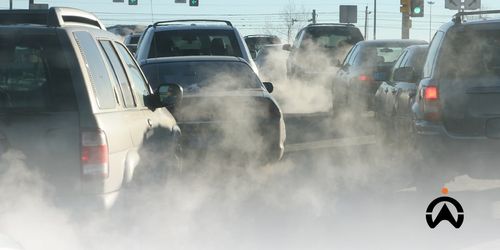
  • Minimising harmful exhaust emissions and protecting the environment
  • Increasing vehicle dependability and lowering the risk of mechanical breakdowns or downtime
  • Increasing the longevity and resale value of your vehicles

Regular servicing will also extend the life of your vehicle’s mechanical components. Keeping up with or neglecting regular vehicle maintenance can make the difference between your vehicle being safe, fuel-efficient and running smoothly or not.
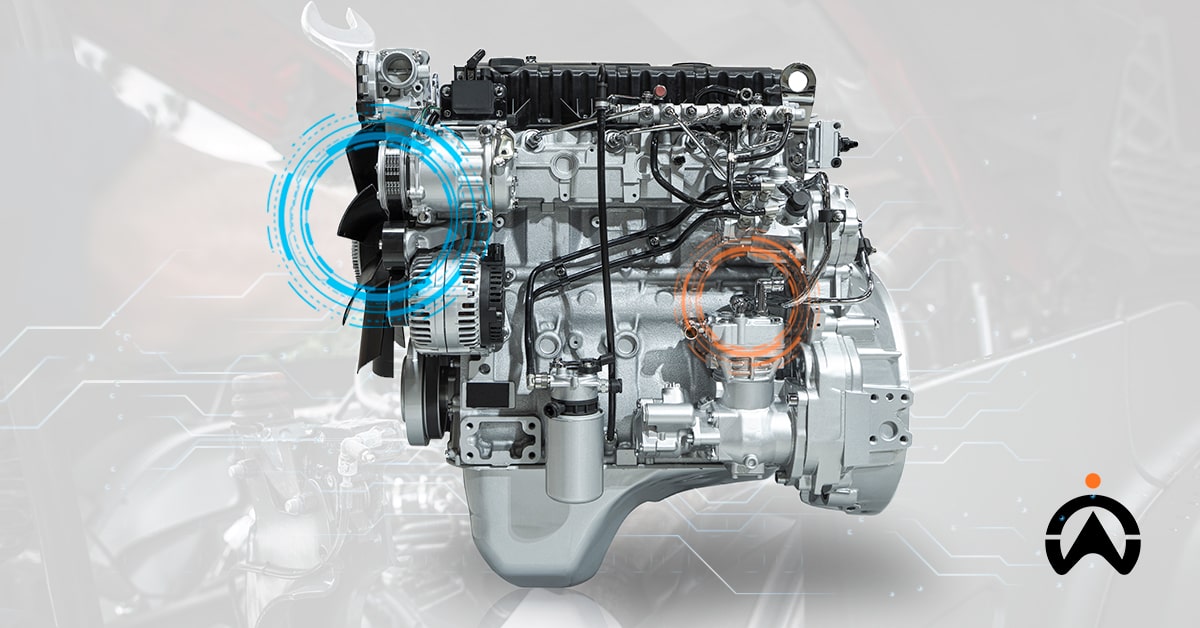
Engine Vehicle maintenance
The importance of effective maintenance

Basic automotive maintenance of your vehicle

It is best to trust trained automotive professionals or mechanics with the maintenance of your vehicles in order to avoid doing it on your own. They are equipped with the skills and knowledge necessary to identify issues, fix them, and safely get you and your drivers back on the road.

Motorists and fleet drivers can sometimes take matters into their own hands by performing simple preventive maintenance such as checking water and oil levels to keep their vehicles from breaking down. To meet the car manufacturer’s recommendations, it’s usually best to keep fleet vehicles under the care of the business’ mechanics or a third-party service provider.

Engine parts that need to be checked regularly to ensure safety on the road

Depending on how damaged the vehicle might be, various internal parts have to be checked and either fixed or completely replaced.

From minor to major, check these vehicle parts for an early heads-up on any maintenance issues:

  • Oil 
  • Tyres (ensure correct tyre pressure)
  • Battery
  • Air filter
  • Oil levels

Finding and fixing vehicle problems early can help avoid the risk of breakdowns or accidents. These are only a few essential vehicle elements to inspect. The full list is unpacked in more detail below.

Different types of vehicle maintenance plans explained

To keep your vehicle longevity up, your car requires regular tender loving care. Car owners must pay special attention to how they maintain their vehicles.

Depending on the time of year and the season, there are several things you should check to help increase the life and performance of your car. Some of these auto parts require routine maintenance, while others only require long-term care. For clarification, the car brand can determine which parts you need to frequently inspect.

A vehicle service includes a collection of maintenance check-ups done regularly by a service centre (mandatory and specialised) and the vehicle owner, to ensure road vehicle safety.

The two most popular servicing options are:

Minor vehicle service – Taking care of your car’s minor issues, like changing the oil, oil filters and brake pads, among other things.

Major vehicle service – This includes a more extensive range of services and is much more focused than a minor service, as described in the list below.

Each of these servicing types can inspect many parts of the vehicle, including:

1. Minor servicing

  • Brake & warning lights
  • Front & rear brakes
  • Horn inspection
  • Wiper blades operation & condition
  • Engine oil & leaks
  • Prop shaft joints
  • Tyre pressure check

2. Intermediate servicing

  • Brake & clutch pedal (squeaks & adjustments)
  • Brake & handbrake inspection
  • Road check
  • Radiator maintenance
  • Battery & terminal
  • Hydraulic fluid levels
  • Cooling systems levels & leaks
  • Fan belt inspection
  • Replacement of filters
  • Accelerator pedal check for throttle opening

3. Major servicing

  • Dyno diagnostic test
    (before & after service)
  • Brake & warning lights inspection
  • Check all tyre pressure (spare wheel included)
  • Complete road test
    (rattles, wind noise, steering, straight, braking stability & noises)
  • Battery & terminals
  • Hydraulic fluid levels
  • Power steering fluid (replaced every 80 000 km)
  • Gearbox levels checked & inspected for leaks
    ‍

While minor servicing can be done at any time, the intermediate service should be conducted after 20 000 km, while major servicing is recommended after 40 000 km, both by skilled mechanics.
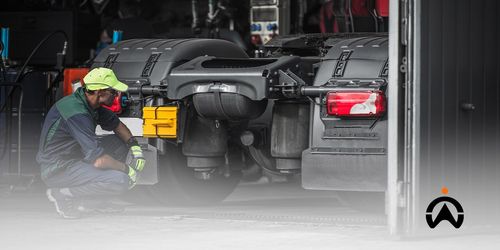
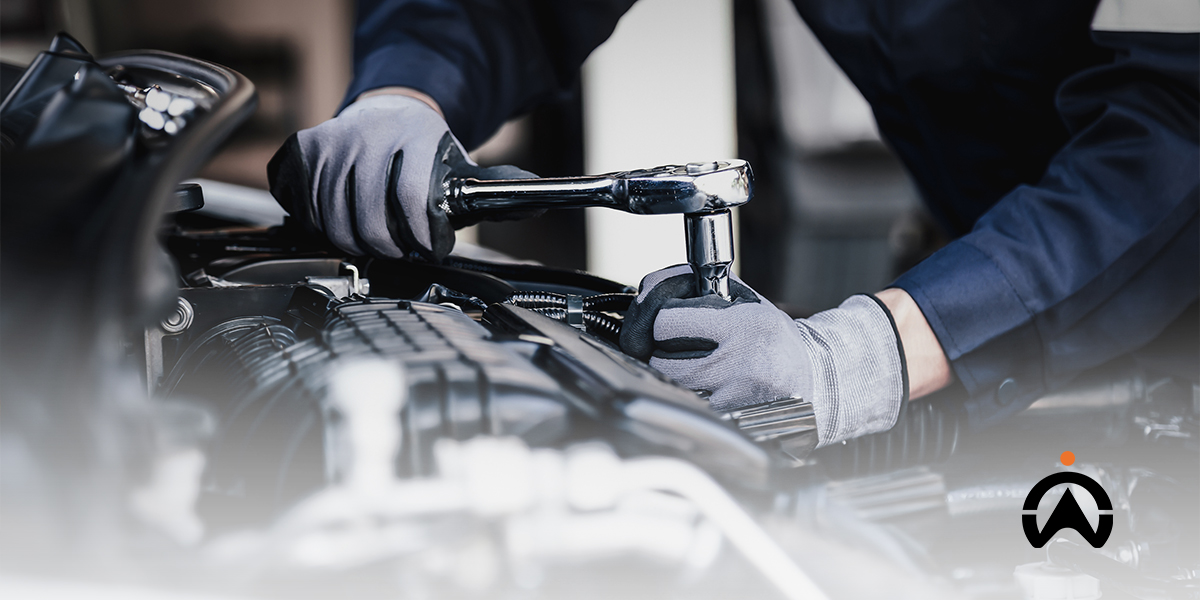
Engineer working on Car Vehicle Maintenance
Different types of vehicle maintenance plans explained

Literally trust your senses

For a more practical approach, one of the best methods of knowing about and keeping track of your car is by checking the car brand’s manual, usually located in your vehicle’s glove box.

In a business setting, your drivers can check the fleet vehicle whenever they operate it and inform their managers before any further damage is done, after all, prevention is cheaper than cure.

If you a driver has enough experience driving fleets, they can simply use their senses to identify aspects that need maintenance and report these accordingly:

Smell

Foreign smells are not a good sign. It is important to monitor any mechanical smells coming from inside the vehicle, as these can be early warning signs of a mechanical or engine issue.

Some potential causes:

  1. Moist smells could indicate that there are some leaking liquids, which can lead to bigger mechanical issues if not detected and resolved. Any leaking, whether moist smelling or not, is not a good sign. Quickly try to identify the source of the leak, which could be one of these liquids;
  • Engine oil
  • Antifreeze
  • Transmission fluids
  • Power steering fluid

To fix the damage, visit your local mechanic.

  1. A range of smokey odours could be electrical. With this, it’s best to turn off the vehicle, open the bonnet, unplug the batteries, and call your local mechanic or get professional assistance immediately.
  2. When the fuel tank venting becomes blocked or if there has been an overflow, fuel smells may appear.
  3. If your engine smells like oil or exhaust fumes, this may be caused by:
  • Too much engine oil
  • Oil has grown old and is burning
  • Overheated oil

Sound

Strange noises while driving frequently go unnoticed due to everyday background noises like traffic, radio, passengers, etc. If the vehicle is damaged, you will hear various squeaks, squeals, bangs, and rattles each time you drive.

  1. Strange clicking while turning from the front wheels indicates that the front shaft is about to fall apart. Inform managers before it breaks off completely.
  2. A fan-belt squeal might indicate the need for another. Replacing it is the safest option.
  3. Rhythmic clicking while driving from the wheel could be the result of faulty bearings or, more likely, just large stones lodged in the tread pattern.
  4. If you have been driving steadily for a while and notice a change in engine tone, your engine is likely overheating. Stopping or varying the engine speed should be enough if there is no severe problem. Otherwise, pull over to the side of the road and let the vehicle cool before checking the water and radiator levels.
  5. Backfiring while driving normally indicates issues with the engine and might damage the car’s exhaust or intake. This needs to be thoroughly investigated. Reducing the speed, turning off the vehicle and immediately informing your fleet manager is the smart way to go.
  6. Engine knocks indicate that a lower gear needs to be selected. If it keeps happening, you should reduce speed, stop and check your engine, oil and gear shafts as soon as possible.

How often should a business service its fleet?

How often is too often? Vehicle wear and tear can often build up over time, resulting in mechanical failures, so maintaining and looking after your fleet vehicle(s) regularly is highly recommended to avoid getting into an accident.

When should you service your vehicle? This will depend on a few factors, like its age, how far it is driven each day, the surfaces and quality of the roads and sites they drive on, and how often you maintain it.

Using your vehicle in poor operating conditions will also be a determining factor. These circumstances include risky driving at high speeds, frequent stopping and starting of the car, and towing of caravans and/or loaded trailers. A vehicle used in these circumstances might need more maintenance than one that is only driven short distances and doesn’t operate frequently.

The majority of vehicles also have a maintenance schedule, and different manufacturers may have different maintenance schedule requirements. These recommended service times and maintenance procedures may be found in the vehicle’s service book. 

In the world of transportation and logistics, you can’t always check on the status of every vehicle in your business. A fleet management system is often the answer for easy monitoring and tracking of fleet vehicles. The onboarded software can keep up with your business regardless of the fleet size and inform the manager of which vehicles require mechanical attention. 

Importance of fleet management systems in vehicle maintenance 

The purpose of a fleet management system is to assist with vehicle maintenance to ensure it is used efficiently so the lifespan of the vehicle can be maximised. 

Vehicle maintenance, unfortunately, comes with inevitable downtime. Because of this, fleet managers often work to find the balance between planning and managing vehicle maintenance. Fleet maintenance management software can help with this, efficiently managing downtime while reducing costs.

To keep your vehicles on the road for longer, your car requires regular love and care, so car owners must pay special attention to how they maintain their vehicles.
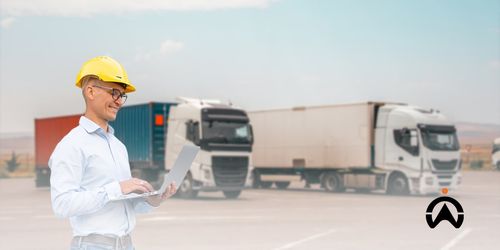
Fleet manager with maintenance schedule Vehicle Maintenance
Importance of fleet management systems in vehicle maintenance 

Fleet maintenance software and its role

Fleet maintenance software is a fleet application that offers actionable insights concerning vehicle diagnostics, safety, risky or unsafe driver behaviour, fuel consumption, and so much more.

Maintenance software forms part of the fleet management system that handles everything from ensuring assets are kept healthy. With alerts sent to fleet managers whenever something gets damaged, informing them of what vehicle parts need to be repaired or replaced, to actively monitoring fleet use on a day-to-day basis, ensuring everything is running smoothly.

Maintenance software benefits 

Out of the long list of advantages, this software provides the most popular use for fleet maintenance.

Here are additional benefits that managers can use to further improve and monitor the health of their fleet:

  1. Preventative maintenance

Managers can create preventive maintenance tasks like checking adjustments, cleaning, lubrication, repairs and replacements, and track when they should be performed by date, distance travelled, hours worked, or fuel used.

  1. Repair and upkeep

Track unforeseen repairs using the fleet platform to stay on top of them. This will help you keep track of how often your fleet gets repaired and how much repair costs are per vehicle. This can help managers assess if the vehicle is worth the frequent maintenance costs or if they should replace it and acquire a new one.

  1. Maintenance history

You can analyse costs and maintenance history by looking at a detailed history of the work that has been done. A thorough maintenance history offers reports on vehicle efficiency and guides you in future decision-making.

  1. Parts inventory

Easily manage your vehicles, assets, and parts maintenance with up-to-date information about each item’s health and whether it’s been damaged, repaired, or replaced. This can save you from unexpected breakdowns and asset downtime.

  1. Maintenance reporting

Reports play a key role in determining whether or not your fleet maintenance strategy is working. You can export a variety of reports or even create in-depth custom reports for your fleet, comparing one to another to see a difference in performance.
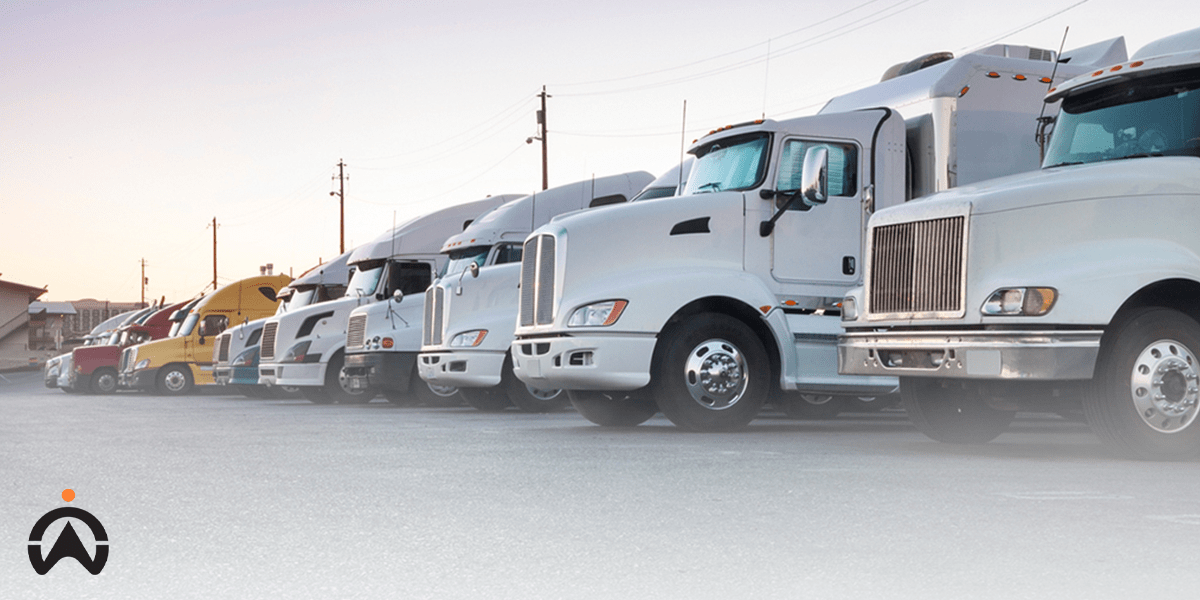
Group of trucks in depot Vehicle Maintenance
Maintenance software benefits

Complete fleet maintenance with Cartrack’s fleet solutions

Get automated maintenance alerts and receive licence renewal updates so you can ensure every vehicle in your fleet is well-maintained and roadworthy. Cartrack’s software solutions ensure vehicle longevity while preventing unnecessary downtime and improving productivity.

Visit www.cartrack.com.na for more information.
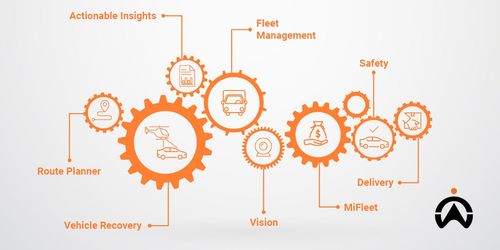
How Cartrack helps digitise fleet management administration

Fleet administrators work in offices overloaded with stacks of paperwork and data that they need to compile, keep and search through manually. Thanks to digitisation, this chaos and confusion can simply be solved! 

The emergence of fleet management software has allowed for the shift from manual to digital fleet management. Fleet administrators can now say goodbye to browsing through heaps of paperwork by streamlining the entire fleet operation and using data analysis to ensure smooth fleet operations. 

Firstly, what is vehicle fleet management?

Fleet management is a term of paramount importancefor any business that relies on commercial vehicles to operate – whether it be cars, buses, vans, or trucks. This is because fleet management refers to the measures taken to manage all fleet vehicles and assets to operate a fleet business efficiently, in a timely manner, and within set budgets and profits. 

The fleet management process ensures that a fleet business reduces operating costs to increase profits, improves its reputation by improving efficiency and customer satisfaction, and ensures fleet compliance.

Fleet management is therefore purposeful because it allows the fleet businesses to maximise productivity and profits with minimal associated risks and operational costs. Effective fleet management is achievable through the combination of vehicle or GPS tracking, fuel consumption management, monitored driver behaviour, and vehicle maintenance – all this is in the hands of a fleet administrator or manager. 

Let’s take a moment to step into the shoes of a fleet administrator

 What a typical fleet management administrator job looks like

A fleet administrator is an individual responsible for overseeing a fleet business’s vehicles and operations. Fleet administrators possess the ability to ensure fleetbusinesses reduce fleet operation costs while increasing profits. This is an essential and critical role as the success or failure of a fleet business lies in the hands of a fleet administrator’s ability to effectively manage the fleet. 

Although the precise job description of a fleet administrator varies based on the business industry, size, and type. Below is a list of some of the tasks a fleet administrator is responsible for:

  • Fleet analysis, reporting, and optimisation
  • Ensuring driver and vehicle safety
  • Ensuring vehicle maintenance and services
  • Managing and organising business admin and reports
  • Monitoring fuel consumption
  • Controlling and managing operation costs
  • Assigning tasks and ensuring timely delivery

Challenges faced by modern fleet administrators.

With all the demands and responsibilities, fleet administration management requires managers to ‘wear many hats’ in their role. As a result, this is accompanied by challenges encountered on a daily basis, such as: 

  • Fuel management: One of the biggest operational cost challenges for fleet administrators is managing fuel consumption. Both internal factors such as driver behaviour and external factors such as fluctuations in the fuel market price affect the ability of fleet administrators to manage fuel costs and consumption.
  • Vehicle maintenance and driver safety: It is the responsibility of a  fleet administrator to ensure the safety of both vehicles and drivers. It can be challenging for a fleet administrator to keep up with each fleet vehicle’s maintenance, and monitor each driver’s behaviour- whether it is for one or 100 vehicles and drivers.
  • Admin overload: Whether big or small, fleet operations generate a lot of data. Searching through large amounts of information can be time and energy-consuming, and runs the risk of misplacing or losing important information. 

Luckily, there is fleet management software that helps fleet administrators overcome these challenges by digitising and automating the fleet management processes. 

Fleet-Manager-with-calculator-and-pc-/-laptop
What a typical fleet management administrator job looks like

Digitise vehicle fleet management with fleet management software

Fleet management software is the technology that helps fleet administrators gain an overview of the entire fleet operations to efficientlycomplete fleet-related tasks in a productiveand timely manner.The purpose of fleet management software is to maintain an accurate and up-to-date overview of vehicle and asset GPS location, vehicle diagnostics, and identifying risky or unsafe driver behaviour while simultaneously reducing manager workload and admin.

With fleet management software, fleet management has never been more simple! Fleet administrators can now track, monitor, and manage:

  • Vehicles, assets, equipment, and drivers
  • Vehicle maintenance and repair
  • Fuel consumption and operation costs
  • Driver behaviour and road safety
  • Tasks, driver routes, and completion rates
  • Fleet compliance 

Fleet administrators are therefore able to save time, money, and energy while collecting fleet-related data that is converted into easy-to-understand and easy-to-use reports and actionable insights.Fleet managers use this information to make informed decisions regarding the fleet operation, coordinate the fleet operation and reduce operational costs while ensuring maximum safety, efficiency, and compliance with fleet regulations. 

Fleet management software also ensures that drivers are rewarded and recognised for their good work ethic and safe driving habits. With data stored on a cloud-based platform and easily accessible in real time, fleet administrators can use it anytime whether to reward, train or expedite employees. 

Fleet-manager-trucks-vehicles
Digitise vehicle fleet management with fleet management software

5 advantages of fleet management software for fleet administrators

Digitisation has had a positive impact on fleet management. With the use of fleet management software, fleet administrators can:

  1. Improve driver and vehicle safety

Safety is a priority in fleet management, luckily vehicle and driver safety have improved thanks to digitisation. Fleet management software helps fleet administrators tackle safety concerns such as accidents, driving in unsafe areas, and unsafe driver behaviours. Fleet management software enables fleet managers to plan maintenance in advance and take vehicles that are at risk off the road, reducing the chance of breakdowns and potential accidents.

  1. Improve driver efficiency

One of the main benefits of the switch from manual fleet management to fleet management software is that it has improved fleet efficiency. With a birds-eye view of driver routes, fleet administrators can inform and instruct drivers to follow certain routes that lead to the safest and quickest deliveries while using the least amount of fuel- bravo! 

This results in cost savings that can increase profitability and gives the business a competitive reputation.

  1. Monitor operation costs and fuel consumption

Typically, fuel costs account for most of the operating costs in a fleet business. The excessive use of fuel even in small amounts, add up quickly and steal from the business profits. Fleet management software has helped fleet administrators ensure that no drop of fuel goes to waste.

  1. Get alerts on vehicle maintenance

Using fleet management software to track and stay up-to-date on vehicle maintenance such as routine oil changes or tire rotations simplifies the job as fleet administrators can receive real-time alerts on when a vehicle inspection is due –  leaving less room for downtime and more for work time.

  1. Track vehicles and assets

Telematics fleet management allows for GPS tracking of fleet vehicles and assets, and route optimisation so it is easier for fleet administrators to track assets and vehicles. This not only saves the fleet administrator time and guesswork but also saves fuel costs by reducing the chances of drivers getting lost and wasting fuel and time.

How Cartrack helps digitise fleet management administration 

Cartrack is a software-as-a-service (Saas) platform that helps small, medium, and large businesses digitise fleet management to optimise fleet utilisation, driver and vehicle safety, risk management, as well as workforce optimisation while using data to grow the business. 

Following are some Cartrack fleet management software and solutions that a business can use to shift from manual to digitised fleet management: 

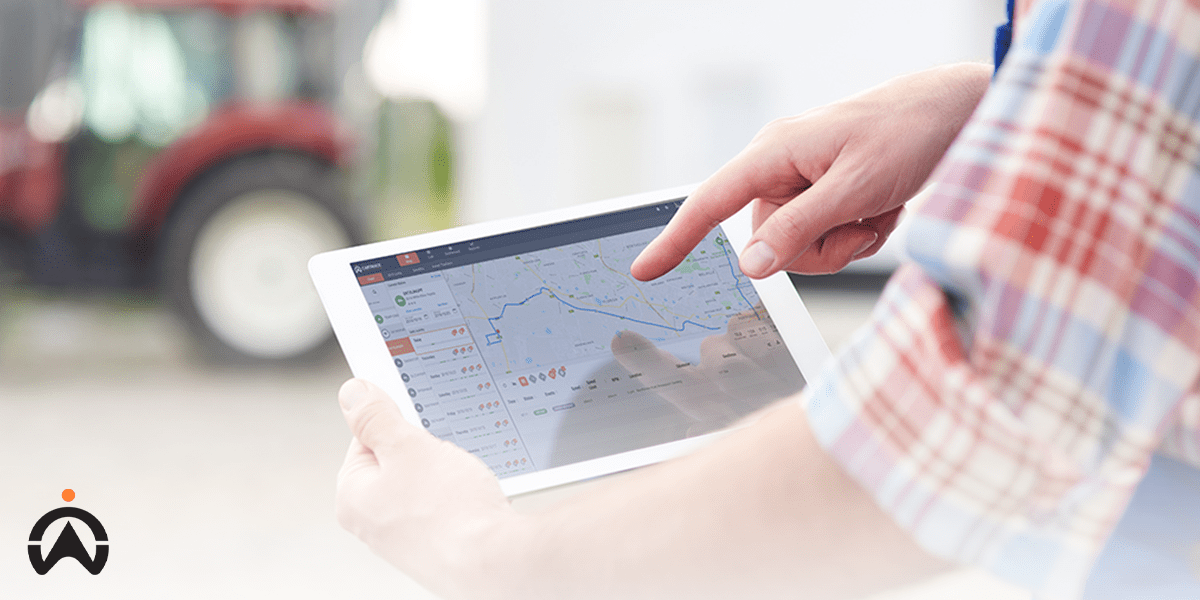
Fleet-manager-tablet-map-geofence
How Cartrack helps digitise fleet management administration

Web-based software

Cartrack’s easy-to-use and all-in-one platform empowers fleet administrators or managers to streamline the entire fleet operation from team and task management to controlling operation costs. With fleet telematics software, fleet administrators can track the current and historical location of fleet vehicles and assets from anywhere and at any time. Fleet administrators not only save time and energy on admin but also never lose data thanks to Cartrack’s web-based platform that stores data and gives access to historical data.

Reports and actionable insights

Cartrack’s fleet management system has a powerful onboard telemetry device that is responsible for monitoring the vehicle and driver behavioural patterns according to predefined settings, including GPS positioning. This data is obtained by the fleet management system and is designed to accurately and efficiently assist fleet administrators in managing  fleet vehicles, driver behaviour, completion rates, and even fuel consumption. Fleet administrators have the option to select from a range of over 40 standard reports including mileage, driver scorecard, speeding, and productivity reports. 

Automated and real-time alerts 

With Cartrack, fleet administrators can pre-set vehicle violations such as driving over the road’s speed limit, driving over the vehicle’s set speed limit, harsh braking, cornering, acceleration, and entering and exiting geofences or no-go zones and receive real-time alerts when any unauthorised violations occur. 

Fleet maintenance with MiFleet

MiFleet is Cartrack’s easy-to-use administrative and vehicle cost accounting software that can efficiently manage fleet vehicles, drivers, and operating costs. Fleet administrators enjoy the full benefits of MiFleet when tracking devices are installed in fleet vehicles. However, this software can be used for fleet management whether or not the fleet is equipped with telematics technology. One of the great advantages of MiFleet is fuel consumption monitoring. This enables fleet administrators to reduce fleet running costs by quickly detecting any discrepancies caused by fuel theft or uneconomical driving.

Routing 

Routing is a software application that allows fleet administrators to easily set and manage predefined routes for drivers to follow. Fleet administrators receive alerts in real time of any route deviations. Keeping vehicles on their planned routes reduces wastage in operating costs and ensures that drivers are sticking to the task at hand and all cargo stays on the correct course.

Contact Cartrack and digitise fleet management administration

Cartrack is committed to providing solutions that make fleet management as simple as possible while in-turn empowering fleet operations to run smoothly and successfully. 

Contact Cartrack today and get in control of your fleet. 

Boost driver safety and empower fleet drivers to improve their driver behaviour

From the products we deliver to the drivers who transport them, discover actionable fleet safety tips and efficient ways fleet managers can empower drivers to drive safer.

For many fleet businesses, drivers are instrumental in keeping everything up and running. Safety affects the entire business, so how drivers behave can have a huge impact on a business’s finances,  reputation and even customer relationships.

It is the responsibility of your fleet managers to follow safety regulations set out by the business. To develop a solid safety culture throughout the business you need the right fleet system and process to ensure your drivers are productive, safe and compliant.

Drivers and their place within a fleet

If you’ve ever wondered ‘who is a fleet driver and what is their purpose?’ Well, their skills are sought-out and contribute to the business like every other employee. Fleet drivers work to keep the business running and are often the middleman between the business and customers. They are employees who drive cars, trucks, or other vehicles, picking up and dropping off cargo, people, various items or raw materials within a factory, site or on the road.

To be eligible to transport items, the following qualifications are required:

  • Valid driver’s licence (depending on vehicle type)
  • Clean driving record
  • Optimal customer service skills
  • Proficient defensive driving techniques

While transporting, drivers can become distracted, practice unsafe driving behaviour or face many challenges that might hinder or delay delivery. These issues could be anything from dealing with vehicle maintenance problems, like tyre punctures, or unforeseen criminal activity that puts the driver’s life, other motorist and cargo in possible danger.

This brings up the age-old question asked throughout the transport industry: How do we keep our drivers safer?

 Fleet management software and safety within the fleet

Effective driver management through fleet systems can save your company considerable time and money, all while modernising your fleet with some technological help. While fleet systems are mainly targeted at bettering a manager’s daily responsibilities, it’s important to also use technological innovations to positively impact fleet drivers. 

Fleet management software can be seen as a driver management tool that has the power to not only optimise delivery workflow but also improve driver skills, awareness and behaviour on the road, all benefits drivers can use to better their driving performance.
‍

Fleet owner trucks Driver Behaviour & Driver Safety
 Fleet management software and safety within the fleet
‍

Which driver management technique is best for managing fleet drivers?

As a fleet owner or a fleet manager, it’s important to protect your fleet – namely, your drivers and vehicles. To do this, you need to know exactly which behaviours to address; and which technique you can use to help improve them.

Here are four useful techniques to help fleet managers better manage their fleet: 

1. Learning management system (LMS) 

This prepares drivers with basic course materials for all circumstances aligned with driver safety, including how to handle traffic, road law compliance and weather conditions. Fleet drivers occupy more time on the roads than average commuters, so fleet management is needed to maintain safety measures for the sake of the drivers, vehicles in use and the transported items.

2. Fleet management systems (FMS)

This is known as a fleet manager’s no.1 method of managing operations. It can help you optimise and streamline your entire operations. It provides advanced data and insights that help managers monitor and enhances driver behaviour, vehicle safety and good maintenance practices. This results in a more efficient, higher-performing fleet that can continue to grow as a business.

3. GPS vehicle tracking

Asset monitoring systems play an integral part in your driver management and make keeping track of fleet vehicles that much easier. This system uses GPS location technology to help you pinpoint your vehicles and give you driver and vehicle behaviour insights. Most Industry-leading vehicle tracking systems can automatically present this information on a user-friendly interface, which fleet managers can view via desktop, tablet and mobile.

4. Fleet driver safety programs

These are often the first steps in improving driver behaviour and implementing road safety practices. Safety programs are available through in-house personnel or subcontracting third-party references through accredited institutions. The purpose of these programs is to foster morale and instil mandatory driver training skills.

5 key elements of effective fleet management

To avoid losing money in the case of accidents or general poor productivity, businesses should invest in a fleet management system and a fleet safety program. The long-term investment of this pays off through better accountability, improved fleet safety, and promotes fewer collisions which all result in reduced operating costs.

These are a few key elements that contribute to an effective fleet safety program:

1. Hiring responsible drivers

An effective fleet safety program begins with the driver recruitment process. Start by finding the right drivers that meet the business’s fleet driver standards. Having a skilled driver with experience in driving fleet trucks would be beneficial.

The idea is to build a reliable and safe team of skilled drivers who understand the importance of fleet safety and prioritise it as much as possible. Hiring drivers who are like-minded in terms of work ethic, attitude and driving skills might result in having a low fleet driver turnover rate.

2. Having a comprehensive driver training program

After assembling a team of safe and reliable drivers, the next step is to train them.

Cartrack has a fleet management training course for fleet managers looking to maximise productivity, as well as offers training facilities for drivers to better improve their driving skills and behaviour.

The training of drivers not only reduces the possibility of accidents on the road but also sets a standard for safe driving among the fleet, ensuring smooth operations. 

3. Monitoring driver performance and behaviour

Effective fleet safety programs require the use of high-end fleet management software that allows fleet managers to efficiently monitor all fleet activity. Regular monitoring of driver performance and driver behaviour ensures all drivers are following the fleet safety guidelines and driving safely.

As a Cartrack customer, you’d have the benefit of using an AI-powered camera system that monitors drivers while on the road. With this, you could get a full view of your drivers, vehicles and cargo in transit, and receive alerts on any risky driving behaviour or possible collisions. 

You can also use driver scorecards to review their performance, which makes it easier for fleet managers to identify drivers who require further coaching.

4.  Vehicle maintenance

Having routine inspections of fleet vehicles is also an essential part of proper fleet management. Now that you’ve trained your drivers to exercise safe driving behaviours, you need to equip them with vehicles that are in tip-top shape.

This will help prevent unforeseen breakdowns and accidents that result from faulty equipment or poorly maintained parts. Plus, regular vehicle monitoring will lower maintenance costs.

5. Keep a continued focus on fleet safety

The importance of overall fleet safety needs to be repeated regularly. With constant use of safety procedures, this idea will become the norm and integrate itself into the business’s culture.

Sharing important fleet safety metrics with your drivers, fleet managers, and safety officers frequently is also recommended. Seeing the benefits that the safety program brings will validate the effectiveness of the fleet safety program. The habit will continue and be properly implemented into the training programs of new drivers.
‍

Delivery vehicle Driver Behaviour & Driver Safety
5 key elements of effective fleet management
‍

Why is improving fleet driver behaviour important?

Your drivers are the most valuable assets of your fleet business. How they behave on the road is a direct reflection of your business culture. Bad driving paints a negative picture for potential customers driving alongside the branded vehicle. And bad customer service does the same thing since drivers are often the first interaction customers receive from a business after ordering/partnering with them.

So, if you wish to streamline your operations and take your business a step further, you must improve fleet driver behaviour first through driving behaviour monitoring and training.

For this, you need to know exactly which behaviours to address; this way, you can adjust your coaching accordingly, and be effective in instilling a safe driving mindset among your employees. This will be most effective if you remember that not all drivers struggle with the same thing and learn at different paces.

How do you create better driving within your fleet?

By putting driver safety and empowerment at the centre of training programs!

A successful training program results in fleet drivers who can recognise their risky driving behaviours and can swiftly correct them. Taking initiative puts fleet drivers in the best position to help keep their fleet on track during challenging times and gives their managers one less thing to worry about.

This long-term investment pays off through: 

  • Better accountability
  • Promotes fewer collisions
  • Reduced operating costs

Safety needs to begin with fleet managers, implementing a few techniques will help to improve performance and create safer drivers:
‍

  1. Identify driver behaviours

The more a driver is distracted while on the road, the more likely an accident will occur. Though driving for hours on end all day might be tiring, a self-aware, conscious driver is always better than one who isn’t.

Identify the drivers’ distractions accordingly, whether it’s dangerous actions like cell phone use, fatigue etc. With Cartrack’s smart AI-powered cameras, these behaviours can be quickly identified and help: 

  • Prevent accidents
  • Improve driver behaviour
  • Provide video proof for incidents 
  1. Improve performance

The key to creating better drivers is to improve performance. A fleet management system can store driver information, enabling easier reporting on accident rates and behaviour, which helps identify risk and reduce costly repairs, vehicle downtime and insurance premiums. 

Having a system in place that enables you to understand the causes of safety challenges means a better chance of finding and implementing possible solutions. Fleet driver management software keeps your driver records up-to-date, organised and easily accessible for these purposes.

  1. Communicate better

A good management system doesn’t just help to inform you about your drivers’ live locations, it also helps by cutting the middleman out and communicating directly with drivers.

In the past, manager-to-driver communication was inefficient and mostly required manual communication through calling/texting. Luckily fleet management software has upgraded this process to GPS live locations, instant communication and other benefits that include:

  • Easily assign jobs to drivers according to proximity to the client
  • Optimise delivery routes for fast delivery and cut costs
  • Receive live alerts when jobs are completed
Fleet manager with laptop/device Driver Behaviour & Driver Safety
How do you create better driving within your fleet?
‍

Work and reward method

Sometimes, something as simple as rewarding drivers who practise safe road behaviour is all the motivation needed to encourage self-awareness and improvement.

Just telling your crew to drive safely is sometimes not enough to improve fleet driver behaviour. Aside from instructions, you should also consider instilling good driving habits that can be measured up to notable results. Then, reward good driving habits.

A reward program that provides incentives or bonuses for their commitment is an effective way of attracting and retaining motivated, engaged, and high-performing drivers.

Just keep in mind that change doesn’t occur overnight, improving your fleet drivers’ behaviour needs patience from both sides. 

To that end, a vehicle management system, which is based on telematics technology, like Cartrack’s complete fleet management solutions, can make all the difference. This can bring real-time insights that can help you develop a driver safety training plan and so much more.

Focus on safety with Cartrack

Cartrack gives you the opportunity to focus its provided fleet management features towards driver safety and empowerment.

Fleet managers can get more out of Cartrack by taking part in their fleet management training program and gaining the necessary skills to better manage and improve their fleet. 

Visit www.cartrack.com.na for more information.

How fleet managers can improve employee productivity and increase efficiency with actionable insights

Have you ever wondered how fleet businesses keep their operations running smoothly, productively, and profitably?

From dispatch to delivery, operation costs to business profits, there is a lot of work involved in fleet management. Behind every productive and successful business is an efficient fleet manager with the best fleet management software.

‍Firstly, what is fleet management?

The term fleet management refers to the management and supervision of vehicles such as cars, trucks, or vans that are used for business purposes. Fleet management does not only refer to a single task but a process involved in overseeing the entire fleet operation, from employee performance to fleet performance.  

The fleet management process includes:

  • Managing fleet vehicles
  • Tracking task completion rates 
  • Improving driver safety and productivity
  • Ensuring vehicle maintenance
  • Analysing fuel costs and managing fuel consumption
  • Optimising routes for on-time deliveries 
  • Using actionable insights to make strategic decisions 

All these tasks are undertaken to increase employee productivity, ensure fleet operations run smoothly, improve customer experience and increase profits while reducing operational costs and time wastage. 

To better understand fleet management, let’s take Bill as an example. Bill is a fleet manager for a small fleet business in the health industry.
‍

What is a fleet manager and what do they do?

As a fleet manager Bill is responsible for all aspects of the fleet business, this includes directing and managing fleet vehicles, resources, and costs. This role requires efficient use of time, and excellent leadership and decision-making skills to effectively oversee fleet assets and increase fleet performance. Even though Bill’s daily routine may differ slightly from that of other fleet managers who work in different fleet industries, they all share common responsibilities which include:

  • Managing, overseeing, and supervising fleet operations
  • Hiring quality drivers and monitoring driver behaviour and performance
  • Creating and managing driver tasks and schedules to maximise productivity
  • Ensuring the fleet remains compliant and avoids unnecessary setbacks
  • Implementing fleet management strategies to reduce fleet costs and increase productivity
  • Creating and using detailed reports
  • Organising paperwork and administration 
  • Ensuring regular vehicle maintenance for operational efficiency and minimising downtime
  • Meeting customer expectations and ensuring a high level of customer satisfaction 

It’s challenging for Bill and other fleet managers to efficiently manage their fleet’s daily tasks while boosting profits. Therefore, they use fleet management software to help them manage small, medium, or large fleets efficiently. This type of system allows them to receive reports, data, information, and actionable insights designed to improve fleet operations and productivity.

Let’s gain a deeper understanding of this fleet management software.

Table with meeting, papers, computers discussing actionable insights
What is a fleet manager and what do they do?

Who uses fleet management software and why? 

Fleet management software is a computer software that simplifies the work of a fleet manager by using GPS tracking so managers can: 

  • Track fleet vehicles and assets 
  • Monitor driver behaviour and performance 
  • Measure task completion rates 
  • Manage and reduce operation costs 
  • Schedule regular vehicle maintenance
  • Ensure fleet compliance

Manually managing all the above can be challenging whether it is one vehicle or an entire fleet. Businesses use fleet management software to simplify the fleet management process by gaining a birds-eye view of the entire fleet operations with an all-in-one platform. This way, Bill or any other fleet manager can improve safety, reduce fleet costs, increase vehicle lifespan, receive real-time fleet alerts, optimise routes, and increase customer satisfaction – all remotely, from his fingertips. 

Fleet management software is useful for any company that needs commercial vehicles and drivers to conduct everyday business. This includes businesses in the following industries:

  • Food transportation 
  • Public or private transportation 
  • Construction
  • Health and emergency services
  • Courier and package delivery services

With the use of fleet management software, fleet managers in the above industries can successfully manage a fleet business by efficiently overseeing driver behaviour, internal and external factors that impact fuel prices, customer expectations, and vehicle maintenance – just to name a few. 

Fleet insights connected in country
Who uses fleet management software and why? 
‍

4 benefits of fleet management software

There are multiple ways that fleet management software benefits fleet operations. Let’s unpack four of these:  

  1. Fleet management provides fleet visibility: Fleet management software integrates vehicle telematics to provide fleet managers with a complete view of all fleet activities. Fleet managers can use real-time visibility or historical data to make data-driven and informed decisions regarding deliveries, routes, tasks, costs, and safety, as well as exonerate drivers or expedite insurance claims.
  2. Fleet management reduces fuel costs and consumption: Fuel costs alone can amount to approximately 40% of fleet expenses. With fleet management software, fuel costs and consumption can be reduced by using GPS vehicle tracking to detect fuel wastage and find solutions, for example:
  • Idle time: A bus wastes 3.5 litres of fuel per hour of idling, a medium-heavy truck wastes 3 litres, and a large sedan wastes 1.5 litres.  With fleet management software, fleet managers can detect idling and educate drivers about the need to reduce idle times.
  • Delivery time: Quickturnaround times translate to less mileage and less fuel used. Fleet managers can use fleet management software to optimise the most efficient routes, access driver and vehicle information, and monitor traffic and weather.To ensure drivers have quicker turnaround times.
  • Driver behaviour: Speeding, harsh braking, and cornering are some of the driver behaviours that waste fuel. Fleet management software allows fleet managers to monitor driver behaviour and receive real-time alerts in the case of poor driver performance.

With Cartrack’s easy-to-use Mi-Fleet software, fleet managers can easily manage and control fuel transactions, pinpoint fuel wastage, and detect fuel fraud. This saves fuel, money, and admin. 

  1. Fleet management increases employee productivity and safety: Managers can ensure fleet operations are both safe and productive by using fleet management software that manages vehicle maintenance, reduces downtime, improves driver behaviour, optimises routes, monitors vehicle and driver safety, and boosts employee efficiency.
  2. Fleet management increases customer satisfaction: In the age of fast internet, online shopping, and same-day delivery, customers have become less patient and have high expectations. 61% of shoppers would like to have their items delivered within three hours of making an online purchase. With GPS tracking as a fleet management solution, fleet managers can increase customer expectations by optimising routes and ensuring that drivers remain on course with delivery schedules. GPS tracking further allows customers to track their deliveries in real-time while fleet managers can keep drivers updated on any emergencies or changes to deliveries. 

Any fleet industry or size can reap these benefits if a fleet operation is efficiently managed. For fleet managers to effectively manage a fleet business, teamwork and well-maintained assets are vital. In contrast, having a non-functional team and ill-maintained assets can lead to an unfulfilled fleet manager role and an unsuccessful business operation. 

Top-four productivity challenges fleet managers face

Productivity is the key to a successful business story. As a fleet manager, Bill’s job is to maximise the fleet’s productivity. The productivity of a fleet operation is dependent on a fleet manager’s ability to efficiently manage the fleet. However, fleet managers may struggle to effectively meet their responsibilities and efficiently manage a fleet operation because their role is dependent on the productivity of employees, the state of the business assets and resources, as well as external factors such as inflation rates. 

These are the top four productivity challenges that fleet managers face: 

  1. Time and energy spent on admin and paperwork: The administrative overload from fleet management tasks such as invoicing, creating reports, creating driver schedules, scheduling vehicle maintenance, and following up with drivers and customers can be challenging and time-consuming. Fleet management software provides an efficient, cost-effective, and paperless way to handle admin by digitising and automating day-to-day operations on one cloud-based platform 
  2. Unplanned vehicle downtime: The time vehicles spend off the road due to incidents such as breakdowns, collisions or delays in maintenance and service schedules, hinders the fleet operations productivity and profits. Rather than waiting for unplanned vehicle downtime, fleet managers can use fleet management software to perform vehicle diagnostics and automate maintenance schedules and reports to keep their vehicles on the road, maximising productivity and ultimately profits.
     
  3. Unsafe driving: Unsafe driver behaviour such as speeding, harsh braking, cornering, and fatigued driving increase the risk of accidents and damaged goods. This means more time and costs spent on repairing vehicles, insurance claims, and replacing and re-delivering customers’ products. By using real-time alerts of poor driver behaviour and driver scorecards for performance-based feedback and training, fleet managers can improve driver behaviour and boost productivity.
  4. Unclear communication:  Another big one is communication or the lack thereof, especially on tasks, schedules, and pick-up and drop-off locations which can lead to an unmotivated and unproductive work environment, as well as time and costs wasted on wrong deliveries. Fleet managers must ensure drivers are well-informed, well-rested, and well-trained.  Fleet management software can automate certain tasks and managers can use actionable insights to improve fleet productivity and efficiency.  
    ‍
Fleet manager with computer / tablet
Top-four productivity challenges fleet managers face
‍

Actionable insights to improve fleet management and employee productivity

Actionable insights can be defined as data and information about a business that can be used to make business decisions and achieve business goals. This refers to data and information that can be translated into action (whether decisions or performance). When used effectively, actionable insights lead to improved employee productivity and business growth.  

This way, Cartrack can help fleet-based businesses get more productivity out of their employees, assets, and resources. 

Top-three actionable insights by Cartrack to help improve employee productivity:

1. Contextualised metrics for strategic decision making:With the use of the fleet’s operational, administrative and financial data, Cartrack produces tangible data so fleet managers gain insight into the fleet operation that they can actually use to make accurate strategic decisions.

For example, the fleet’s operational, administrative and financial data can be used to determine the cost per job. If the cost per job is too high and outweighs the profit per job, fleet managers can use this information to decide on cost changes and direct actions to reduce fuel consumption, optimise routes or decrease idling time.

2. Comparable metrics to pinpoint challenges and solutions: This allows fleet managers to compare metrics across drivers and vehicles to pinpoint leakages, identify challenges and solutions to tackle them, and spot where to optimise time and increase productivity. 

For example, fleet managers can compare cost differences per task per vehicle based on driver behaviour, vehicle maintenance costs, fuel costs, and cost per kilometre. If one vehicle’s costs are significantly higher than others, fleet managers can pinpoint the challenge and tackle it.

This information can be used to further empower, educate or train the driver to use assets, resources, and time more productively.

3. Instant insights to spot unproductiveness:This helps fleet managers instantly find the information needed and stay in the know of any unproductive areas of the fleet operation. Whether it is time per delivery, data on a specific vehicle, or driver behaviour – fleet managers can receive instant insights in case they need the information urgently.

Cartrack gives fleet managers an overview of fuel consumption, unproductive idling, safety, and vehicle utilisation on a dashboard, all within just one click. Fleet managers can further use the filters to specify what information is needed- this saves hours that would be spent analysing data.

 Improve employee productivity with Cartrack today

Get actionable insights to improve employee productivity with Cartrack’s easy-to-use platform that gives you an overview of your fleet’s operation. 

Get a quote today and say goodbye to the downtime! 

How to stop vehicle idling and save fuel and business costs

Is idling bad for your car? It sure is. Now imagine if you have an entire fleet idling, it surely will put a dent in your business’s bottom line – and quickly too.

Whether drivers leave the engine running while unloading deliveries, stuck in traffic, taking a roadside phone call, warming up the interior in the winter months or cooling it down in the summer, every second of idling costs.

This is how idling vehicles in your fleet costs you, and we’ll give you ways to cut down on idling and save.

What is vehicle idling?

Idling is when a driver leaves the vehicle engine running when the vehicle is parked. Every day millions of cars and trucks idle unnecessarily, which can have many implications. 

What is an example of idling? 

This could be in stop-and-go traffic, drive-through lines, or loading docks. As well as running the vehicle to power heating, air conditioning, and electronic devices. 

If you are a fleet manager, with multiple drivers and vehicles, you’ll want to keep tabs if they are keeping your vehicles on for aircon, offloading while the engine is on, or idling too much in traffic.

So, what is the problem with idling? 

Idling for more than 10 seconds uses more fuel and produces more emissions, contributing more to smog and climate change than stopping and restarting your engine does. Idling also contributes massively to the general wear and tear of a vehicle, a lot more than you’d imagine. 

Let’s dive into this a bit more. 

What is vehicle idling?

‍How does an engine idle?

On a modern fuel-injected engine, the engine idle is controlled by the engine control unit (ECU) and electrically operated by a simple throttle stop, known as an idle screw. This screw stops the throttle linkage arm from completely shutting the butterfly valve that allows air to enter.

The throttle stop allows the butterfly valve to sit slightly open, which will then let a minimum amount of airflow reach the combustion chamber. This opening is just enough to allow a specific amount of airflow through to keep the engine running when there is no physical throttle input from the gas pedal. 

Then there’s the idle air control valve or IAC valve, which uses sensors that communicate with the ECU to adjust airflow into the engine to achieve the desired engine speed at idle.

This is something to look at next time you think of warming up the engine. 

‍5 reasons to stop your car from idling

  1.  Less wear and tear on parts

An hour of idling daily adds up to around 102 998 km of engine wear over a year. And that’s just for one vehicle.

According to the American Trucking Association, such wear can increase maintenance costs by almost $2,000 per year and shorten the life of the engine.

The reason is that excessive idling puts a huge amount of stress on your car’s parts. An engine running at idling speed causes twice the wear on internal parts compared to driving at regular speeds.

How does idling harm vehicle engines and systems? 

Idling can cause fuel to wash away the oil which lubricates the motor, causing friction that ages the engine prematurely. Modern engines have fuel consumption regulating sensors, and idling doesn’t warm the engine well enough to enable the sensors to respond, as the fuel-to-air ratio is too rich. Partially combusted fuel can damage engines, spark plugs, and exhaust systems.

A software platform provides driver scorecards that can help increase your vehicles’ lifespan, by decreasing bad driving habits like idling, reducing accidents, and boosting your operational efficiencies. This fuels smart business overall. 

No matter the size of the vehicles in your fleet– parts and maintenance aren’t cheap. You could be using money spent on repeated repairs elsewhere, to grow your business and expand your resources.

  1. Limit health risks

Idling creates the same amount of pollution as when the car is moving. These pollutants have been linked to negative health implications and diseases including asthma, heart disease, chronic bronchitis, and cancer. 

Some studies have even reported that acute exposures have resulted in hospitalisation due to respiratory conditions while cardiovascular health conditions result from chronic exposures to pollution. 

In addition, when sitting in an idling vehicle, there is no air flow to vent the emissions. Therefore, fleet managers should also take measures to stop idling for their Drivers’ health, as they will be exposed to vehicle pollution more so than when the vehicle is moving. 

  1. Protect the environment

According to a recent Convoy survey, reducing carbon emissions remains a critical concern. In 2022, 38% of dispatchers, drivers, and owner-operators feel pressure to reduce carbon emissions in their businesses — a 3% increase from 2021. 

Research by the U.S. Environmental Protection Agency found that transportation produces 29% of U.S. greenhouse gas emissions, the highest of any sector. 

For every 10 minutes your engine is off, you’ll prevent one pound of carbon dioxide from being released (carbon dioxide is the primary contributor to global warming). 

One wasted litre of combusted diesel fuel throws 2,64kg of CO2 into the atmosphere. 

  1. Save on fuel costs

An idling car uses between 0.76 to 2.65 litres of fuel an hour. An idling diesel truck burns approximately 4 litres of fuel an hour. 

With SA prices for unleaded fuel topping R26.31 a litre at a point this year, that can be up to R69.70 an hour wasted. 

One of the most impactful ways for trucking companies to create sustainability is by using less fuel. Taking measures to drive fewer miles and reduce idling is a way to reduce fuel consumption idling, and thus save on costs. 

Cartrack’s smart dashboard on the software platform shows you how much fuel your fleet uses for unproductive idling. 

  1. Cut business costs 

As mentioned, idling increases maintenance costs for general wear and tear, as well as additional fuel expenditure.

This will have a direct impact on your bottom line, and overall business profits. 

5 reasons to stop your car from idling

4 ways to reduce vehicle idling with a fleet platform

  1. Driver behaviour reports 

A fleet management platform provides data reports about driver behaviour such as idling, rough driving, speeding, braking, and cornering. If excessive idling is identified, then fleet managers can implement actions to stop this from happening.  

The software reports can also show you which drivers are idling longer than others, so you can notify these drivers accordingly. 

  1. Educate and motivate your drivers

Some people believe restarting the vehicle burns more fuel than leaving it idling, and your drivers could be among them. 

According to the Environmental Defense Fund, idling for 10 seconds wastes more fuel than restarting the engine. 

Debunking these beliefs will encourage your drivers to switch off their engines whenever the vehicle is stationary for more than 10 seconds.

When it comes to fleet management, standard operating procedures for engine idling must be part of a training programme and safety culture. 

Fleet managers should teach drivers about engine idling impacts, and how to avoid idling– to help build best practices at the onset. Ultimately, it will motivate and empower them to improve their driving.

  1. Optimised routes 

By analysing the data provided, you can track where the most idling is taking place and why, and optimise your routes to prevent this.

Traffic congestion is another main cause of increased idle time. 

You can use telematics software to optimise your drivers’ travel routes to avoid heavy traffic where possible, thus reducing idling. 

Cartrack Delivery’s route optimisation feature uses GPS and algorithms to evaluate all the possible routes for drivers to take. The telematics software assesses multiple variables when determining the best routes, including current traffic, accidents, and roadblocks. 

Drivers can adjust their routes in progress or before they start their trips. 

  1. Geofencing

You can use geofencing to reduce the time your truck idles, by putting a geofence around common idling areas. When one of your vehicles enters the geofenced area, the telematics software will send you an alert to show how long the vehicle remains in the area.

 Idling on a construction site as an example

It is common for heavy-duty equipment on construction sites to spend significantly long periods with the engine idling, due to the nature of the work– and more than necessary. In these cases, idling should be monitored with the help of idling insights from a fleet platform. Fuel is one of the largest expenses for heavy equipment and vehicles in the construction industry, which is more of a reason for it to be kept under control.

Idling on a construction site as an example

 Save on the fuel and running of your fleet today

Idling can be an expensive problem for your business, but there’s a simple fix. While making drivers aware of more cost-effective habits goes a long way, our GPS and fleet vehicle tracking software can help limit idling.

What’s more? A customisable software dashboard helps you easily monitor other key metrics that matter to your business. Improve your fuel consumption, idle rates, driver safety, fleet running costs, productivity, vehicle usage, and more.

Contact Cartrack today to find out how our expert fleet management solutions can help, as well as the latest fleet technology trends.

What is vehicle telematics and how can it benefit my business?

Step into the world of modern fleet management and get unique insights into your fleet vehicles and drivers through telematics solutions. This article will help you get the most out of your fleet and fully understand what telematics systems can do for you.

The telematics industry strives to benefit and make changes to every business it touches, and its efforts are evident. Telematics has grown immensely in recent years, encouraging businesses to implement telematics solutions to improve safety, increase efficiency, and most importantly, reduce costs.

This has seen the demand for innovative technology, prompting more businesses to grow curious about what telematics can be used for and how it can benefit them.

This blog will answer all your questions and give you the information you need to make an informed decision about telematics.

What is telematics
What is telematics?

What is telematics?

Telematics (also known as fleet telematics) is a system used to collect GPS fleet tracking data along with a range of vehicle-specific information and store it in a database. It integrates both wireless telecommunications and information technology (informatics) to process, deliver actionable data and efficiently convey information over vast networks.

Telematics is often associated with fleet management and vehicle GPS tracking devices. With these fleet systems in mind, telematics can be defined as an onboard communication system where all fleet software can interact with one another and share vital information.

Telematics can also be seen as a new method of integrating all types of data, from vehicle equipment to driver behaviour.

How do telematics systems work?

For a telematics system to work, it needs a few items:

  • A communication device (mobile phone, computer, laptop and/or tablet)
  • Fleet communication software
  • GPS tracking device
  • Engine interface
  • Input/output interface
  • SIM card
  • Accelerometer
  • Alert/notification

Telematics systems function by connecting a GPS fleet tracking device, or other data logging tool, to an asset. The tool collects critical performance data about the asset, like real-time engine diagnostics, vehicle location, and vehicle activity.

After being collected, the device transmits the data to a data centre where it can be analysed, interpreted, and compiled.

Fleet managers can access the uploaded data via the software of the telematics system once it has been uploaded. However, the method of doing so may vary depending on the particular telematics solution.

How are telematics devices installed?

Telematics is implanted via the vehicle’s on-board diagnostic (OBD) II port, or CAN-BUS port, typically located under the steering wheel.

GPS tracking devices and fleet management telematics are installed in discrete places so they are hard to locate and tamper with. Here are three types of units available and their hiding spots:

Plug in: These are devices that can be easily plugged into any fleet vehicle’s cigarette lighter, like Cartrack’s compact mobile unit. Since these devices have to be plugged-in to function, they could be very easy to spot.

‍Hardwired: These devices are installed directly into the vehicle and connected to the vehicle’s power supply (battery). Because they are not attached to the OBD port, they can be easily hidden in the vehicle.

Battery operated: These have a battery or solar charger of their own and can operate independently from the vehicle, so they can be easily placed anywhere in the vehicle. These types of devices often have powerful batteries that could last for months at a time.

After installing telematics units, the device collects GPS fleet tracking data and a range of vehicle-specific information where fleet managers can implement smart solutions to achieve, automate and improve the following:

  • Manage route optimisation
  • Ensure the safety and compliance of the drivers
  • Help identify and improve bad driving habits
  • Receive notifications for preventative maintenance
  • Reduce idling, fuel and maintenance costs
  • Manage assets’ utilisation
  • Help drivers comply with policies and regulations
  • Reduces carbon footprint

A centralised server receives the information from the units via General Packet Radio Service (GPRS), 4G or 5G mobile data and cellular networks or satellite communication, and displays it through a secure website (usually the telematics system’s platform) accessed through tablets or smartphones.

Telematics and vehicle tracking systems

Vehicle tracking is the most common use of telematics in most industries, especially in trucking and transportation.

This technology is preferred in vehicles because of the notable benefits it offers. The ability to map the exact location of the vehicle, its speed, and its maintenance status, all through the use of GPS systems, combined with onboard diagnostics.

Here’s a list of additional information gained through telematics.

  • Location
  • Fuel Usage
  • Maintenance issues
  • Fuel consumption
  • Idle time
  • Instances of harsh driving (e.g., hard braking or cornering)
  • Speed and rapid acceleration

To make good use of this information, the telematics system analyses the data for certain events and patterns and creates reports on specific drivers and fleet vehicles, specifically for the convenience of fleet managers.

Telematics integration with vehicles

from fleet manager to fleet driver

Telematics integration with vehicles

Typically, trucks, trailers and other fleet vehicles are sold without tracking systems installed and are fitted with GPS tracking devices soon after they have been sold. If the vehicles don’t come pre-equipped with this technology, many aftermarkets offer GPS and telematics unit installation.

Some car dealerships also partner with telematics providers or vehicle tracking companies, such as Cartrack, to provide a seamless end-user experience and sell vehicles already fitted with Cartrack’s tracking units.

How to positively use telematics technology in your fleet

You have now gathered a basic understanding of telematics software and decided to implement it into your business, great! To properly use this technological game-changer, here are a few key areas where telematics can boost your business.

1. Safety tracking

Fleet telematics allows you to track vehicle location, speed, seatbelt use, as well as driving behaviour. You receive a digital record of every aspect of your fleet vehicles’ operations, which can provide insight into where and what improvements can be made to prevent accidents and improve driver safety.

2. Better payroll management

A telematics solution can help you reduce instances of overtime and timesheet fraud by monitoring your fleet’s electronic time logs and allocating resources based on real-time information. You can optimise your drivers’ routes so that no driving time is wasted. You’ll also know exactly how long and how far a vehicle has driven, making payroll calculations easier.

3. Trailer and asset tracking

Telematics can be used for more than just monitoring vehicles. You can attach a GPS tracking unit to trailers, expensive equipment, and non-motorized assets to prevent them from becoming lost and help find them faster if they are stolen.

You can also create alerts to be sent to you if a trailer or other non-motorized asset is moved without your permission.

4. Insurance risk assessment

With the permission of the owners, telematics can be used by insurance companies to monitor driver behaviour, allowing them to better determine risk factors and adjust insurance premiums accordingly. If additional help is needed in sorting out insurance, Cartrack helps motorists find affordable insurance by viewing the current insurance package used and providing you with 14 quotes with better rates.

How is it used in everyday life?

The telematics solutions market is projected to reach $62.6 billion by 2025, up from an estimated $29.9 billion in 2020. With this amount of money on the table, it’s safe to assume not just the transportation and freight industries reap the benefits of this system. Almost every industry has space in their regime to integrate telematics into their business and some of them use this technology a little bit differently than the rest.

Here’s a look at the industries making the most of telematics today.

  • Heavy machinery: Maintains heavy equipment and prevents theft with the use of telematics and asset tracking safety features.
  • Public Security: Monitors the location and driving speed of emergency vehicles to improve officer safety and increase response times.
  • Fleets: Trucks and various fleet vehicles are monitored to ensure shipments arrive at their destination safely and on schedule.
  • Construction: Performance diagnostics, fuel usage, and maintenance schedules are all reported on through the use of telematics.
  • Oil & Gas: Oil, gas extraction and transportation activities are monitored to improve efficiency and worker safety.
  • Refrigeration: The temperature of cold or heat-sensitive products is monitored to reduce spoilage and ensure safe consumption.
  • Executive fleets: Improve luxury vehicles’ maintenance to reduce breakdowns, unscheduled repairs, and part replacements.
  • Landscaping and lawn care: Monitors the performance of employees and equipment to improve productivity and customer service rates.

Generators: Generator conditions such as fuel level, battery voltage, and coolant temperature are monitored to ensure it is in healthy conditions and can run for longer.

How does telematics benefit the fleet business?

Telematics works to help fleet managers conduct their vehicles, drivers and other fleet employees. With telematics, GPS devices work to track your vehicle, trailers and assets successfully while also gathering vehicle data such as a full trip history of your vehicle and other actionable insights fleet managers can use to improve vehicle and driving conditions.

Other noticeable improvements telematics can make in fleet management are as follows:

  • Boost fleet efficiency

With actionable insights from our telematics and fleet data, you can track your drivers’ progress, improve communications and streamline your workflow.

  • Eliminate toll and fuel-card fraud

Telematics will automatically verify fuel-card payments whenever they are made by matching fuel sensor data, vehicle location history and fuel-card recipes. Making sure each driver is using their authorised cards at all times.

  • Always know exactly where your assets are

With our GPS units, you don’t only know the exact location of your assets but also ensure the cargo is accounted for from dispatch to delivery. For extra safety measures, you’ll receive alerts and footage whenever the cargo door is opened and the cargo itself.

  • Actionable insights on the conditions of your fleet

From the petrol intake to driving behaviour, telematics gives fleet managers all the information they need regarding their fleet. They also receive real-time alerts used to address maintenance issues immediately before they escalate. This allows you to keep your vehicles operational for longer, saving money on large repair bills, avoiding critical safety violations, and protecting your Compliance, Safety, and Accountability (CSA) scores.

  • Real-time tracking

Easily track the progress of your deliveries with automatic job status updates via SMS or email with electronic signature and photo sent, for that little layer of assurance and safe delivery.

  • Accurate dispatching schedules to ensure on-time deliveries

Use the Cartrack communication app for easy information transfer from fleet manager to fleet driver. Say goodbye to incorrect customer information, ensuring faster deliveries and happy customers.

  • Have Streamlined communication

Fleet telematics can drastically improve communication between drivers and fleet managers or administrators in a business. Improved communications, combined with accurate vehicle location, can help you accurately estimate arrival times and improve customer satisfaction.

  • Decreased fuel costs and operational expenses

Telematics can assist in uncovering waste areas, such as vehicle idling or fuel leakage, and allow fleet managers to rectify them quickly, improving fuel efficiency in the business and the bottom line. It can also assist management in planning the most efficient route for each driver to save wasted miles.

  • It increases driver safety

Accidents are always harmful to businesses and could be worse for drivers’ health and safety. Telematics can be used to improve driver behaviour and promote overall road safety. Fleet management software collects telematics data on your team’s driving habits and ranks your drivers according to their safety scores. You may then teach your drivers safer driving habits and improve the overall safety of your fleet.

Telematics and fleet management software can calculate distance driven and fuel expenses for different drivers in different jurisdictions automatically. They can also automate calculations for International Fuel Tax Association reports, increasing administrative efficiency, lowering calculation errors, and decreasing your company’s chance of being audited.

How does telematics work with other fleet software

How does telematics work with other fleet software?

Businesses are increasingly relying on telematics and fleet management software to assist them in managing their fleets.

Fleet management software, a branch of telematics, is popular among modern companies as a way to manage the vehicles in their possession. Fleet management systems allow them to gain a comprehensive view of the health, profitability, and productivity of their entire fleet.

Many fleet managers use both fleet management systems and telematics to simplify and efficiently compile gathered information.

What is fleet management software?

Fleet management software is a large information database where you can keep track of everything and anything linked to your fleet. These records may include:

  • Purchased or leased vehicles
  • Vehicle information
  • Maintenance plans
  • History of parts and service
  • Compliance documentation (insurance, licences, tax)
  • Fuel transaction logs
  • Operating costs
  • Financial data

The purpose of using both telematics and fleet management technologies is to reduce the administrative processes associated with managing all fleet lifecycle information. This helps make sense of a fleet in terms of operating costs and total cost of ownership, as well as ensure that you are operating legally, complying with regulations, and effectively maintaining assets.

As such, these fleet systems usually have quite comprehensive reporting tools that can set alerts and send emails while perfectly integrating with third-party systems that offer financial solutions like Cartrack’s SARS-compliant logbook feature.

Are both systems needed?

If you’re asking yourself if the use of both telematics and fleet management software is truly needed to optimise your business, the answer is yes. These systems work together to improve fleet efficiency and productivity and provide several benefits that can easily be observed as soon as the technology is integrated into a business.

The benefits include:

  • Creating risk analysis by combining driver behaviour information with data on accident rates, medical history and fines
  • Safety monitoring
  • Elimination of costly idling
  • improved routes for travel
  • Streamlined processes by eliminating administrative time
  • Improved accuracy by eliminating redundant data entry

By incorporating telematics and fleet management software into business practices, you can reduce investment and operating costs in a variety of areas, including fuel purchasing, leasing, maintenance, accident management, and accounting.

Gain fleet insight with Cartrack

Use Cartrack’s fleet management solutions as well as the telematics technology to have your whole fleet under your control and watchful eye. Be informed about all the comings and goings of your fleet at any time and location.

Contact us on our website and take the first step in achieving fleet efficiency.

Drive a greener future for your business

Every year, the need for companies to be environmentally aware grows and besides the ethical and legal concerns around climate change and its effects, being environmentally sound is beneficial to the bottom line of your business.

Did you know you that the average passenger vehicle gives off about 4.6 metric tons of carbon dioxide per year? Imagine how much carbon dioxide your fleet gives off.

Fortunately, vehicle telematics, such as those provided by Cartrack, has evolved to such a degree that it can now actually help you reduce your impact on the environment and save you money in the process.

CO2 Monitoring 

As a start, it’s important to get your Co2 emissions under control. The information that you retrieve from GPS fleet tracking technology can help you track exactly the carbon emissions of each vehicle in your fleet, and understand how these vehicles are contributing to poor air quality. Combined with driver performance data and location tracking, you can gain a comprehensive picture and take the appropriate steps to rectify this situation.

Improve Driver Behaviour 

Technologically advanced and accurate vehicle tracking allows you to better monitor driver conduct behind the wheel. Through fleet tracking data and in-depth analysis, you can gain an understanding of the way your drivers behave on the road and proactively take action to reduce behaviour that affects your environmental compliance and overall productivity. This includes actions such as speeding, harsh turning, sudden braking and tailgating, all of which waste fuel and increase Co2 transmissions.

Enhanced Route Planning 

You would be surprised just how much optimising routes can be both financially and environmentally beneficial. By using real-time tracking data, fleet managers can determine what the optimal route is for trucks from base to destination. This technology gives you the ability to alter the chosen route as circumstances may change, which ultimately reduces the amount of time that your vehicles spend stuck in traffic, which eats into your fuel and also releases harmful pollutants into the air.

Reduced Engine Idling 

As mentioned above, it is important to introduce measures that reduce engine idling and fuel use, and which ultimately drastically reduces your CO2 output. While you can’t change traffic congestion, you can use fleet management as a means to identify instances of idling. Cartrack can provide you with alerts and reports that allow you to plan ahead and target routes that avoid heavily congested roads and peak hours.

Long term benefits 

Implementing fleet management is a win-win situation for companies, as beyond reducing their environmental impact, they also save costs and ramp up efficiencies within their fleet. Road safety is improved, and your vehicles will perform far more efficiently, for far longer.

Let Cartrack be your environmental partner

As one of the leading fleet management companies and with superior technology at our disposal, Cartrack has the tools and means to help you reduce your environmental impact. Contact us today to get peace of mind that your business is environmentally sound.

What to know when buying a second-hand car

Buying a car can be an experience that’s full of excitement, but also much trepidation. This is especially so when it comes to buying a second-hand car, as many of us aren’t aware of what to look out for, what the best deals are, or even how to go about buying a used vehicle. While the car you are buying may be used, that doesn’t mean you have to get second-hand service or an inferior vehicle.

These handy tips will help you when buying a second-hand vehicle:

 Buy according to your budget and needs 

Before we go buy a car, we’ve all got grand ideas about what we want- the colour, the model, the year. Those thoughts shouldn’t be our main consideration though; our first focus should be on buying something affordable and within our budget. Even if you may have to conduct some small repairs to the car you buy, it may be worth it in the end.  The car should fit in with your lifestyle and what you need in terms of areas such as interior space, finishes and engine power. If you are completing a trade-in, find out the trade-in value of your car beforehand and never accept the initial price as different dealers offer different incentives. Remember to never buy the first thing that you like and to always try to negotiate a better deal.

Shop around and do your research 

If you’re shopping for clothes, you will usually try a few options before deciding on what shirt or pair of jeans you want to buy, and the exact same principle applies to buying a second-hand car. In fact, considering that it is such a large purchase, you should especially take care to look at various options. It is advisable to make a list of your desired cars and to thoroughly research each one – you should consider and actually test drive at least three options. Besides doing your research through online forums, you could also ask friends and family about similar cars in order to get an idea about car prices of specific ages and with different kilometres clocked up.

What will it take to maintain your new car? 

It’s equally important to know what you’re in for when it comes to maintaining your new car. Find out what a typical service for the vehicle will cost if the car is no longer under a motor plan and if the replacement parts for the car will be easily accessible where you live.

 Decide whether to buy privately or through a dealer 

Decide beforehand whether you would like to buy a car through a private seller or through a car dealership. While you will probably get a better price through a private seller, a dealership will offer you more assurance in terms of a verifiable record of the car’s history as well as a service plan.  A dealership could also organise financing for the purchase, which would make the purchasing process that much easier.

 Ask all the right questions 

The more you know about your new purchase, the more assurance you will have that you have made the right decision. If you’re buying from a private seller, you should ask questions such as these:

  • Why are you selling the car?
  • How often was the car serviced?
  • Has the car been on many long road trips?
  • Has the vehicle been in any serious accidents?

If you’re buying from a dealer, don’t worry about asking a question that seems silly. They are the experts in this field and should give you sound advice.

Cartrack will protect your new purchase 

 No matter what car you purchase. Cartrack will ensure that your new “baby” is protected from would-be car thieves. With a 100% recovery rate in Namibia, you can have #PeaceOfMind that your car is protected by our superior and world-class recovery team.

Why your business needs Mi-Fleet

Administrative work: it’s the biggest hassle and burden in most of our lives, whether we’re talking about domestic admin “work” such as cleaning your house and doing your taxes, or admin work related to your business.

In a business, there is always important, yet time-consuming admin work that needs attention and you’ve probably often thought to yourself more than once: can’t somebody else do it? Well, when it comes to business owners with a large fleet of vehicles, the answer is yes, there is a “somebody else” who can do it for you. It’s a solution from Cartrack that exists in a digital space, and it’s called Mi-Fleet.

This easy-to-use administrative and vehicle cost accounting software will help relieve the administrative burden of your fleet – all on one platform.  It will efficiently manage your fleet, drivers and related operating costs and ultimately transform them to be more informative and effective.

What’s more, through automated integration with Cartrack’s Fleet Management solutions, you can unlock and optimise the full potential of Mi-Fleet’s benefits for your business:

  • Better Information Management – you will enjoy a clean, re-designed interface that creates faster and more efficient data input and lets you effortlessly analyse your information
  • Actionable Data – you can access tools that process your information into smart actionable management reports, so you’re empowered to make knowledgeable decisions
  • Valuable Alerts – you’ll always be in the loop thanks to timely and auto-generated alerts for vehicle maintenance, permit renewals and more via the platform, e-mail or SMS. These reports, which include key information such as cost per kilometre driven, cost per vehicle and historic maintenance, allows you to make well-informed and timely resolutions around your biggest cost drivers
  • Up-to-date Obligations – with all your back-office obligations kept up to date, you will have better control of your fleet

It’s also good to know that Mi-Fleet isn’t rigid; you can tailor it according to your business needs. This includes setting up different permission groups with defined hierarchies, which will mean that everyone in your organisation has access to information that they require, without compromising data security.

And, you will always know how much your fleet is really costing you thanks to the snapshots of important information that can be gathered by configuring dashboard graphics. Ultimately, by inputting vehicle information and costing into one place on the cloud, you can gain access to your fleet anytime, anywhere and have total control.

Contact Cartrack Namibia today to find out how Mi-Fleet can help ease the administrative hassles in your business and unlock its full potential.

The future of vehicle tracking

Over the last 20 years, vehicle tracking has developed in leaps and bounds to the point where it is an integral part of both vehicle security and the modern management of vehicles within a fleet. As GPS technology develops even further, vehicle tracking is bound to become an even more important aspect of both the vehicle industry and modern commerce.

Here’s a glimpse into what the future holds for vehicle tracking:

Automated Driving

With automated driving soon to become ever-more present, GPS-enabled vehicle tracking systems will ensure that this new industry is more efficient and reliable. Vehicle tracking will allow you to simply enter the coordinates of the destination you’re going to and determine the best route of travel. In the meantime, as you travel without having to steer the vehicle, you will be able to concentrate on more important things such as preparing for your presentation or even getting a much-needed nap to re-energise yourself.

Geofencing features

 Geofencing is already an important feature of vehicle tracking, and in future, its use and importance will only grow. Geofencing allows you to define the areas that vehicles within your fleet can travel to and from, with instant alerts provided when vehicles stray from this geofenced area.  Areas are measured and geographical limits are marked using an advanced GPS vehicle tracking system, with certain systems utilising web mapping services such as Google Maps and others basing their calculations on the latitude and longitude defined by users.

Augmented Reality

The way we engage and interact with our car will change significantly in future, and GPS tracking will play a vital role in this regard. In particular, augmented reality will become ingrained in the functioning of many vehicles, which will help create a more seamless, safer and stress-free driving experience.  Sensors that can recognise the presence of pedestrians near the vehicle and alarms that are issued to signal over-speeding and the entry of a vehicle into a restricted area are some of the features that will be created and integrated into the GPS-based vehicle tracking system. Thanks to technological improvisation, you will also be able to view directions on your windshield, eliminating the need to glance down at a GPS screen.

Vehicle Sharing

Ridesharing has become increasingly popular over the last few years. In the future, this service will become even more sophisticated thanks to the development of vehicle tracking technology. It is predicted that there will be an integrated approach between different fleets, which will make it easier for each cab service to allow for the sharing of passengers. Further, two or more passengers will be able to share a vehicle on the same route, which will result in a cheaper fare for rides. These trends have already been implemented in major cities around the world.

Cartrack will be there for you into the future

As a leading vehicle tracking and fleet management company that is on the cutting -edge of the latest technology, Cartrack is perfectly primed to help provide leading vehicle tracking solutions that are in line with the latest developments. Contact us today to find out more.