South Africa
 Botswana
 Kenya
 Malawi
 Mozambique
 Nigeria
 Swaziland
 Tanzania
 Zimbabwe
 Hong Kong
 Indonesia
 Singapore
 Malaysia
 Philippines
 Thailand
 New Zealand
 Vietnam
 Poland
 Portugal
 Spain
 United Arab Emirates

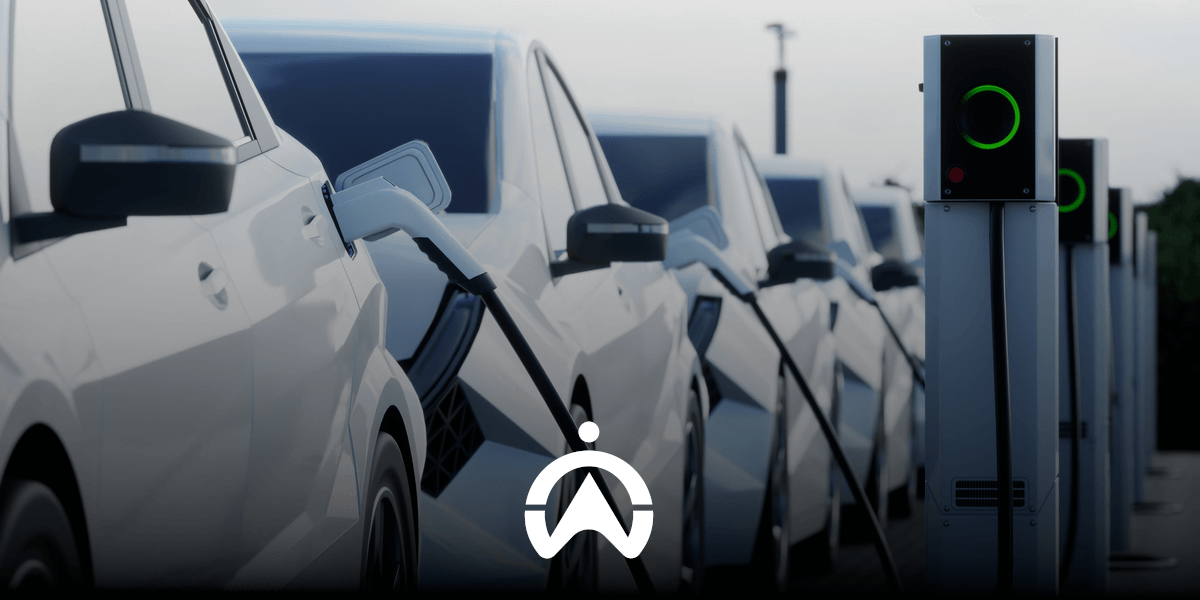
Going green is a hot topic on everybody’s lips right now. Is it possible to create a more sustainable fleet by looking at the pros and cons of electric vehicles?
Get the latest statistics and insights about EVs, how they work, why they’re the best option for the environment, and how Cartrack’s fleet management platform can help you optimise your green fleet mission.
In this article, you will:
- Learn the difference between ICE vehicles and EVs
- Get the hottest EV-related statistics
- Discover the pros and cons of electric vehicles
- Get answers to the most frequently asked EV questions
- Find out how Cartrack Namibia can optimise your EV-based fleet
The power of electricity: Unveiling EVs
Electric vehicles have taken the world by storm, offering a range of benefits that internal combustion engine vehicles just can’t. First, though, it’s crucial to understand exactly how these two vehicle types differ in key areas and why this matters.
Electric vs ICE: Know the difference
There are more differences between EV and ICE vehicles than there are similarities when it comes to the inner workings. They look relatively the same on the outside, with a bonnet, boot, seats, and a steering wheel. But what goes on beneath that bonnet is where the main difference lies.
ICE is short for internal combustion engine, as these vehicles use fossil fuels like petrol or diesel to power their engines. EVs are completely different. Instead of fuel powering an engine, EVs use electricity from a rechargeable battery to power an electric motor. This main difference along with several others plays an important role in influencing modern society’s tendency to switch to EVs. These include:
- Emissions and compliance
- Maintenance
- Range
- Cost
- Noise
- Efficiency
Whether you’re looking to buy a personal vehicle or purchase replacement vehicles for your fleet, factors like cost, maintenance, efficiency, and range most likely play a significant role in your personal choice of vehicle type.
The pros and cons of EVs: What you need to know
What are the biggest positives and negatives of electric vehicles? Familiarise yourself with the good and the bad to develop a balanced perspective.
The perks
- Reduced emissionsOne of the main reasons why electric vehicles are becoming so prevalent on roads worldwide is because they offer a viable countermeasure against climate change with notably fewer harmful emissions.
- Energy efficiencyWhen it comes to converting either electricity or petrol to energy, the conversion rate for electricity is much higher, making it more energy efficient. While petrol vehicles only convert about 12% – 30% of the energy stored in petrol to power, EVs convert over 77% of the energy stored in the grid to vehicle power making it the no-brainer option when it comes to choosing an energy-efficient vehicle.
- Lower fuel & basic maintenance costsDid we say lower fuel costs? Let’s rephrase that: EVs use no fossil fuels, which means you’ll not be emptying your bank account at a petrol station every few weeks. Electric vehicles also don’t use other fluids like engine oil, and due to regenerative braking, the brake’s wear and tear is reduced significantly.
- A quieter ride with instant torquePowered by a battery instead of an engine, EVs make very little noise, creating a great travel experience. An EV’s torque is generated by magnetic fields and an electric current instead of gas combustion and turning the crankshaft, which takes more time.For Context, let’s compare the Tesla Model 3 Performance with the high-performance Audi RS3. While the Audi’s 0-60 mph acceleration is just under four seconds, the Tesla smashes this performance with an impressive 3.1 seconds.
The downsides
- The environmental impact of manufacturingWhile driving an EV has minimum harmful emissions, there are debates about the impact its manufacturing process has on the environment. The electric vehicle battery requires lithium mining, which in itself causes carbon emissions, habitat destruction, and pollution. However, climate change activists see this as a necessary evil to reach the greater good of net zero.
- EV Energy sourcingOne of the biggest issues EV drivers experience is limited energy sourcing, also known as insufficient charging stations. Just like ICE vehicles’ fuel tanks eventually empty out and need to be refilled, an electric vehicle’s battery must be charged to continue travelling. If there are not enough charging stations, the battery can run empty without the option to recharge, and the driver can end up stranded.
- They’re priceyWith EVs not yet being produced at the scale of ICE vehicles, their general production costs are still high. Additionally, manufacturing lithium-ion batteries and electric motors is far more expensive than producing an internal combustion engine. With technology progressing, this may change soon, making EVs more affordable shortly.
- Limited rangeThe electric vehicle range depends on the make and model. So, while some EVs have a decent range, others need to be recharged frequently, making them less practical for long-distance travel. In the end, however, a petrol or diesel-powered vehicle still gives you a little bit more, and there are just so many more options to fill up along the way, unlike EVs.
Discover the hottest EV stats right now
There’s nothing like good old statistics to provide some insight on a topic you may not be a hundred per cent familiar with. In terms of market growth, models, and stats by geographical location, there’s lots to learn about EVs.
Market growth
- In close to a decade, EV use and popularity have experienced incredible growth. The BNEF 2023 Electric Outlook Report recorded 20 million EV vehicles on the road in June 2022 after recording just over 1 million in 2015.
- In 2022, 14% of all new vehicles sold globally were electric, a significant increase from around 9% in 2021 and less than 5% in 2020.
- By 2024, it is forecasted that 25% of all new passenger car registrations will be electric, exceeding 17 million units in sales globally.
Models
- The Tesla Model Y was the world’s most popular plug-in electric vehicle with worldwide unit sales of roughly 771,300 in 2022. However, the Tesla Model 3 is the most desired EV, with 1,852,356 global monthly searches.
- The BYD Atto 3 claims the third spot among the most popular EVs in Australia, with 3,216 units sold in 2023.
- The Nissan Leaf was the world’s best-selling electric car from 2011 to 2014 and in 2016
Country-based EV stats
- In 2020, Norway had 81.0 electric vehicles per 1,000 residents, the highest in the world. The country also has the largest fleet of plug-in EVs per capita globally. In 2021, 15,5% of all vehicles in Norway were fully electric, spectacularly outperforming the EU average of 0,8%.
- In 2020, China grabbed the top spot for the world’s largest market for electric vehicles. The International Energy Agency’s Global EV Outlook 2023 also reports that 40% of global EV sales are made in China.
*Statistics sourced from Statista and IEA
Which vehicle brands make electric vehicles?
With the EV landscape developing at a record pace, you might be surprised at how many electric car companies there currently are. Many of us are only familiar with trusted household brands like the ones mentioned above, but there’s a whole new world of EV brands ready to explore. Here is a mix of new and trusted brands that make the most popular EV models right now.
- Tesla
- BYD
- Rivian
- Kia/Hyundai
- General Motors
- Lucid
- Ford
- Mercedes-Benz
- BMW
- Fiat
- Alfa Romeo
- Ferrari
- Toyota
Other noteworthy brands involved in the manufacturing and development of electric batteries, charging stations, and EV-related technology include Volta Charging, Electra Vehicles, WiTricity, and Proterra Inc.
Origin and history of EVs
When looking at the ultra-modern exterior design of electric vehicles, it seems impossible to imagine that these machines date back almost two centuries. The first EV model prototypes were created in 1835, though in the late 19th and most of the 20th century, ICE vehicles took centre stage, with the mass production of internal combustion engines being cheaper at the time.
Here’s a fascinating breakdown of how electric vehicles came to be:
- The first version of a full-sized EV was developed in 1832.
- The first electric production car was built by Thomas Parker, using a high-capacity rechargeable battery.
- In 1996, General Motors created one of the most well-known EVs at the time, the EV1.
- EVs finally took off in the 21st century due to the need to reduce CO2 emissions
Today, Tesla is one of the most popular EV brands, with household brands like Toyota, Ford, BMW, and Nissan also sporting their own EV models.
The environmental need for electric vehicles
While the invention of the electric vehicle happened almost 200 years ago, the need for an alternative to ICE vehicles only peaked relatively recently. Climate change plays a significant role in global policy and the need to preserve the planet.
Climate change influences energy efficiency
The impact of climate change on energy efficiency is undeniable. As our planet warms, energy systems become increasingly vulnerable, highlighting the critical role of energy efficiency in mitigating climate change. By reducing energy consumption and emissions, we can alleviate pressure on the environment and address the challenges posed by a changing climate.
The U.S. Environmental Protection Agency emphasises this connection, recognising energy efficiency as “the most cost-effective way to address climate change.” In most cases, efficiency measures demonstrably reduce energy waste, save money, and facilitate the expansion of renewable energy sources. This makes energy efficiency a key strategy for addressing climate change and its broader impacts on the environment, economy, and human health.
What is Net Zero?
Imagine a world where the greenhouse gases we emit are matched by the ones we remove, creating a stable equilibrium. That’s the essence of net zero, a crucial goal to combat climate change. It’s about reducing our greenhouse gas emissions as close to zero as possible. This involves two key strategies:
Emission reduction: We need to drastically reduce the amount of greenhouse gases we release into the atmosphere. This means transitioning from fossil fuels, investing in energy efficiency, and adopting sustainable practices across industries.
Emission removal: Even with significant reductions, some emissions will remain. Net Zero acknowledges that and seeks to “balance the books” by removing these remaining emissions from the atmosphere. Technologies like tree planting and carbon capture are exploring ways to achieve this.
Achieving net zero is a global challenge that’s gaining momentum. The UK has set an ambitious target of reaching net zero by 2050, and many other countries follow suit. This collective action demonstrates a growing understanding of the urgency to adopt more energy-efficient ways to travel.
Can EVs reduce global warming?
According to the United Nations, oil, gas, and fossil fuels are the biggest contributors to global carbon emissions, accounting for 75% of greenhouse gas emissions and 90% of CO2 emissions worldwide. ICE vehicles mainly operate on fossil fuels, making them a top suspect, while EVs emit notably fewer harmful emissions.
Based on this fact alone, there’s no doubt that EVs have the potential to reduce global warming or climate change and make the world a greener place. The more EVs on the road, the fewer greenhouse gas emissions and harmful air pollution, helping us breathe easily and keep the world clean.

The most frequently asked questions about Electric vehicles
As EVs have not been on the road for that long, there are bound to be quite a few questions. Here are some of the most interesting frequently-asked questions about EVs.
1. Do electric cars have engines?
While we’re used to associating a vehicle’s ability to move with an engine, an EV’s design is based on different technology and uses a rechargeable battery instead. Because there is no internal combustion engine, there is also no fuel tank, fuel line, or fuel pump, and the EV doesn’t emit exhaust from a tailpipe — all crucial components needed for a traditional vehicle engine.
2. What are the biggest problems with electric cars?
Nothing in life is perfect, and while the EV comes pretty close, it does still pose some problems. You never know, these may be solved in future as technological development progresses, but for now, it’s good to familiarise yourself with the following shortcomings, like a lack of charging infrastructure, the very real issue of range anxiety, and the fact that it takes a while to fully charge an EV, especially in cold temperatures.
3. Are EVs and hybrid cars the same?
Electric vehicles and hybrid cars are not the same. Ane, while it’s easy to distinguish between ICE vehicles and EVs, things get a bit more complex when it comes to EVs versus hybrids. Not to worry, though, here’s a breakdown that’ll get you up to date in no time.
- EV (Electric Vehicle): Powered solely by an electric motor and battery pack, EVs offer a clean and quiet driving experience. Their reliance on charging infrastructure, however, is still developing in some areas.
- FCEV (Fuel Cell Electric Vehicle): These vehicles use hydrogen fuel cells to generate electricity, resulting in zero tailpipe emissions and water vapour as the only byproduct. While highly eco-friendly, hydrogen refuelling infrastructure is currently limited.
- PHEV (Plug-in Hybrid Electric Vehicle): Combining an electric motor with a gasoline engine, PHEVs offer both electric driving for shorter distances and the flexibility of a gas engine for longer trips. They can be charged externally, reducing reliance on gas stations.Basically, there are two types of hybrids and a fully electric vehicle. The main difference is that EVs are solely powered by a battery and electric motor and don’t use an alternative fuel source.
4. Where does the EV’s engine sound come from?
EVs have no engines, so where does that consistent, low-key hum actually come from? The engine sound is not generated by any part of the vehicle’s mechanics — it comes from a sound file added to the vehicle to add that sound we’ve come to associate with vehicle movement.
The Hyundai Ioniq 5 N, for example, features ten internal and external speakers as part of a system that generates fake exhaust sounds to mimic the experience of driving an ICE vehicle.
5. What kind of batteries are used in EVs?
The lithium-ion battery is the most well-known option for electric vehicles. Still, other battery types are also successfully powering EVs these days:
- Nickel-metal hydride batteries (more common in hybrid vehicles)
- Lead-acid batteries
- Ultracapacitors
6. Do EV batteries pose any safety risks?
When it comes to fire risks, EV batteries are generally considered safer than internal combustion engines. However, it’s crucial to know that lithium-ion batteries are highly flammable and that EV batteries should under no circumstances be detached, exposed to extreme conditions, or damaged. Continued improvements are being made to ensure increased battery safety for EV users as EV technology moves forward.
7. What are the pros and cons of Tesla?
Apart from the general pros and cons of EVs, Teslas also have some unique to the brand:
- Ever heard of Sentry Mode? This is Tesla’s version of a home alarm system that gives the driver a live view of what’s happening around the vehicle, accessible on the Tesla app. It’s definitely a great perk in terms of safety
- Teslas are not immune to problems that may require expensive repairs, which affects the insurance premium you’ll have to fork out if you decide to get one. The repair costs combined with high premiums may cause you to think twice before you buy.
Even if you’re not planning on buying a Tesla anytime soon, having insight into EV features, technology, and vehicle types may help you make smart decisions in future, with a booming EV market becoming a crucial component to reaching Net Zero worldwide.
Are EVs a good fit for your fleet? 3 reasons why you should consider going green
Since the popularisation of EVs, they have also been implemented in fleets across large parts of the world. Take a look at why transitioning to EV vehicles has some notable perks for your business.
1. Eliminate fuel costs
For fleet operators, “filling up” often translates to a major headache which is fluctuating fuel prices and ever-growing expenses. Budget control remains a constant battle, and transitioning to EVs offers a promising solution to minimise fuel spend.
2. Reduced fleet maintenance
Forget just slashing fuel costs – electric vehicles (EVs) revolutionise fleet maintenance. Fewer fluids mean less downtime and lower costs, especially for large fleets. Plus, real-time data and proactive maintenance keep your EVs humming, maximising uptime and fueling your business growth – all while going green. It’s not just a fuel swap, it’s a strategic shift to efficiency and cost-effectiveness.
3. Enhanced vehicle efficiencies
Electric vehicles (EVs) hold a trump card for transportation, logistics, and trucking: instant torque. While diesel engines have power, they can’t match the immediate acceleration from a standstill that EVs offer (check CarThrottle for the science).
This translates to major benefits for your fleet. Large trucks can reach cruising speeds faster, requiring less initial power, leading to significant charging cost savings. Whether hauling passengers or freight, instant torque equals efficiency and savings.
Cartrack Namibia can help you grow a greener fleet
Our industry-leading fleet management technology is constantly evolving, and we’re geared for the future with features that can help you utilise and optimise the implementation of EVs in your fleet.
- Be proactive about EV maintenance and optimise your savingsThe Cartrack fleet platform allows you to follow a strict predictive maintenance schedule, which prevents unnecessary breakdowns, repairs, and vehicle downtime, whether you have ICE vehicles, EVs, or a mix of both. Sticking to a broad maintenance routine can greatly help reduce operational costs, improve your ability to budget, and free up more money to spend on other fleet-related needs.For example, instead of engine maintenance, keeping an eye on an EV’s battery health and lifespan is crucial, as battery replacements are costly. Dedicated telematics data at your fingertips provides up-to-date information about your EV’s health. The fleet management platform also offers a range of useful insights by offering accurate data on vehicle and engine health and driving behaviour, while the dedicated MiFleet platform helps you manage all fleet-related costs, including registration and licensing fees, promoting compliance and helping you avoid late payment penalties.
- Never worry about range anxiety or vehicle downtimeWhile it’s quick to fill up a petrol or diesel tank, it does take a while to charge an EV, and as we discovered earlier, extreme temperatures can also unnecessarily prolong these charging times. In a fleet context, charging time equals vehicle downtime, significantly impacting fleet operations.Cartrack’s fleet management platform can help you make up for lost time by optimising all other aspects of your operation with advanced tools for route planning and optimisation that also allow route planning around crucial charging stations. Additionally, you can schedule charging times into your fleet’s workflow, monitor your EVs’ battery life in real time, and ensure you’re always aware of all range statuses so a fleet car doesn’t end up stranded with an empty battery.
Contact us today to optimise your EV fleet management needs
If you’re ready to start adding EVs to your fleet, we’re ready to make your greener fleet system the best it can be. Contact Cartrack Namibia and choose the most sustainable fleet management option.