EV Route Optimisation: How to Get the Best Routes
Optimising your EV (electric vehicle) routes keeps your business and logistics operation running smoothly. With route optimisation, you can easily manage and predict your EV’s charging requirements and energy consumption. The key to getting the best routes is to invest in a powerful fleet management platform that can combine the necessary tools to maximise efficiency.
Range limits, charging times, and fluctuating energy use are just some of the factors that make EVs unique in their challenges. Research highlights that customised EV route planning can massively slash energy use and operating costs. In fact, smart routing can reduce energy consumption by around 31% in real-world simulations, proving that strategic route and charging planning maximise fleet efficiency.
As the move to electrify fleets grows, it’s essential to know what planning is required to keep rising costs and downtime at bay. In this blog, we’ll tackle the importance of EV route optimisation, implementing the right tools, and why Cartrack’s platform is your best choice.
How do you get the best routes for your EV fleet?
You get the best routes for your EV fleet by adopting EV fleet software and using its specialised features. EVs have their own set of unique needs and vulnerabilities, and unlike internal combustion engine (ICE) vehicles, factors like charging habits and battery limits need to be considered for total productivity.
EV routing doesn’t just stop at finding the fastest route; it ensures vehicles can complete their journeys within battery limits. This keeps vehicles on the road longer, lowers operating costs, and improves reliability. Comprehensive data is also crucial to effective route optimisation. It allows you to make informed decisions, avoid range issues, and quickly adapt routes when conditions change.
By combining extensive data with smart charging planning and dynamic rerouting, you truly enhance operational reliability. These features ensure your routes are not just quick but also efficient, safe, and customised for EV operations.
What is EV route optimisation?
EV route optimisation combines technology and smart planning to get the best, fastest routes for EVs. This type of planning accounts for operational requirements, such as maintaining low energy consumption and ensuring that charging points are always nearby. In contrast to ICE vehicles, EVs need battery performance feedback, information on charging stations, range limits, and the like; which is why route planning is so crucial.
Why does optimising EV routes matter for fleets?
Optimising EV routes matters for fleets because there are so many factors to keep in consideration—it’s not just about planning the fastest journey. Route optimisation has a direct impact on factors such as overall fleet costs, service punctuality, battery health, and range anxiety. The smallest inconsideration could ultimately mean serious downtime.
Key insight points include:
- Energy consumption varies by terrain, speed, and load: If the terrain is rough or uneven, energy consumption will likely be higher. This should always be anticipated when planning a route.
- Long idle time and traffic drains EV range: Depending on the nature of your business, your EVs might stop and start or idle quite often during trips. This will drain the battery quicker than normal, so it’s important to take note of this.
- Poor planning leads to unnecessary charging stops and higher charging costs: Opting not to prepare routes means you risk your EVs making unplanned stops or using chargers that weren’t planned for, which creates major downtime and could negatively impact the vehicle battery.
- Optimisation protects battery lifespan: Route planning is an obvious must with EVs. Apart from other benefits, optimisation actually extends the lifespan of your battery and vehicle, minimising battery deterioration.

Which factors drain EV range the fastest?
The factors that drain EV range the fastest include extreme temperatures and terrain.
Have a look at the different factors:
- Extreme temperatures: Extreme temperatures going either way will cause your EV to consume more energy from battery thermal controls.
- Weight: If the vehicle is bearing a heavy weight from the load it’s carrying, it means the vehicle requires more energy to function (move, accelerate, or even maintain speed).
- Terrain: Rough or uneven terrain uses up a lot more energy, especially if there are uphill or many short stops.
- Speed: Going faster in an EV uses more energy than when maintaining a steady or cruising speed.
Can free apps optimise EV routes for fleets?
Technically, yes, free apps can optimise EV routes for fleets, but they definitely fall short. Google Maps, Waze, and other navigation apps are more suited for individuals and personal trips.
These are some of the limitations:
- Trip-based, not fleet-wide: Free apps like these are usually more accommodating towards single trips taken by individuals, not many trips taken by numerous drivers at a time.
- No driver allocation or job scheduling: Unlike fleet management platforms, free apps won’t assist with task delegation and potential changes that need to be dealt with urgently.
- Limited charging network visibility: Free apps might be able to show where charging stations are, but they don’t offer the necessary extra features like charger type or provider.
- No TCO insights, no cost, or energy reporting: Fleet management platforms offer detailed reports and insights, which are not offered by free navigation apps.
- No integration with EV telematics or maintenance data: One of the most important features of a fleet management solution is integration, especially considering how important range, battery health, and vehicle status data are. Free apps don’t allow for precise planning and proactive maintenance.
What makes EV route planning different from ICE route planning?
EV route planning is different from ICE route planning in that it needs to account for key factors like charging, range, and traffic times. On the other hand, ICE vehicles are more focused on refuelling and the network that exists around that.
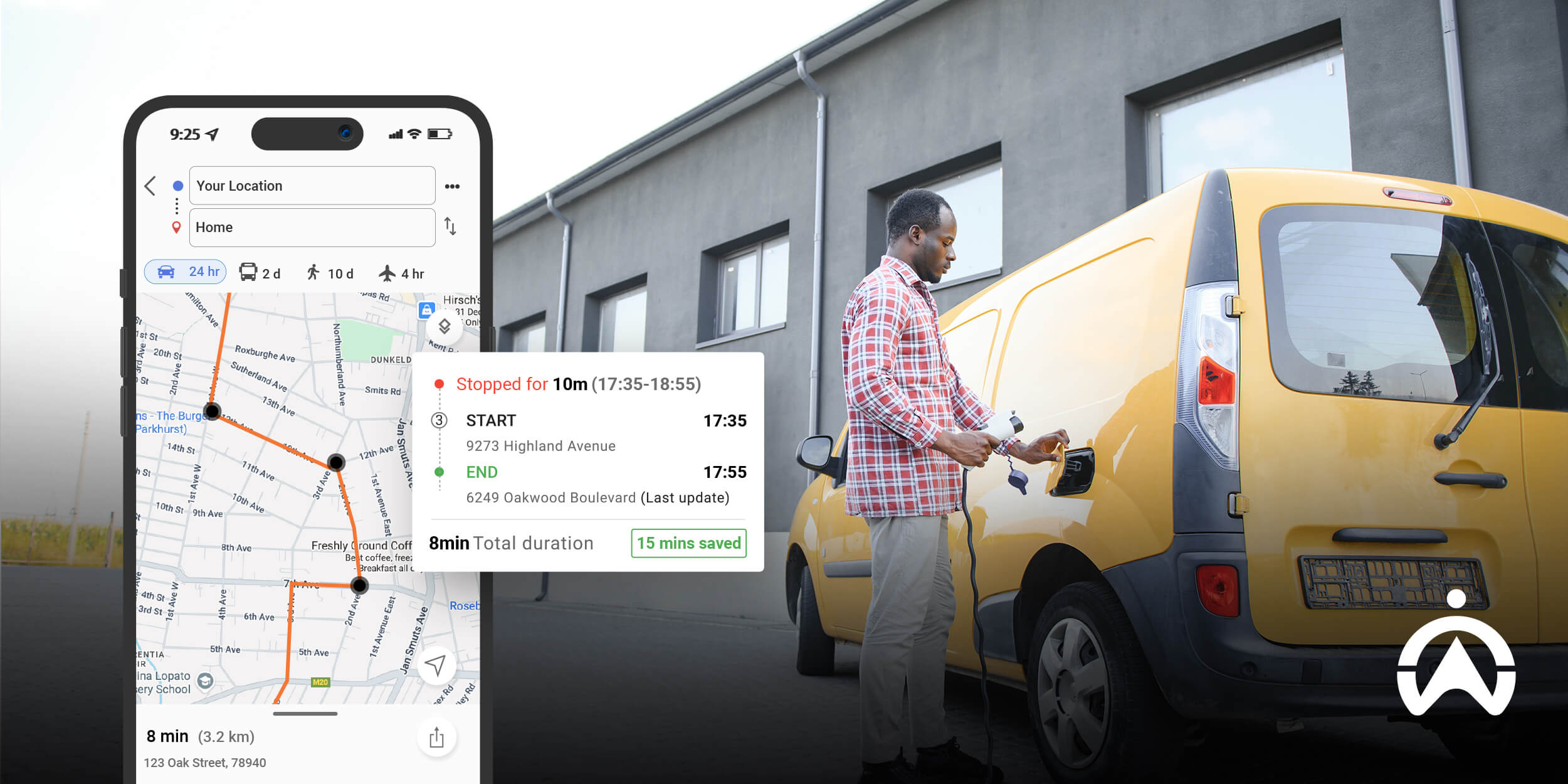
Take a look at this table to compare considerations quickly:
How does EV route optimisation software help?
Route optimisation software helps by bringing technology and careful planning together to ensure optimal operation. Because there are specific factors to think about that don’t apply to ICE vehicles, route optimisation systems that support EVs must implement practical alerts, consistent & live data, and advanced algorithms.
Sophisticated systems, like Cartrack’s, provide key features like:
Real-time battery and energy forecasting
Before routes can be optimised, battery and energy should always be visible, and the data should be continuously collected for projection and predictive purposes. These consistent updates, along with forecasts based on elements like traffic and weather, can help you confidently plan trips without worrying about range challenges.
Charging stop scheduling
The software should be able to help you pre-emptively plan charging stops, even before the battery runs dangerously low. It comfortably balances charging speed, station availability, and estimated SoC (state of charge) to prevent long detours and unplanned stops.
Live traffic and terrain predictions
An electric vehicle’s range isn’t constant. The amount of energy used is affected by regular stops, inclines, and traffic congestion. To choose routes that minimise energy loss and help preserve the vehicle’s range, optimisation software must take into account real-time traffic and terrain data.
Charging cost avoidance by planning cheaper stations ahead of time
Not all charging points are quite the same. Some cost more, charge slower, or get crowded during peak times. But with route optimisation tools, you can spot cost-effective stations and plan your charging stops wisely, leaving you to save money while preserving exceptional service quality.
The EV route optimisation cycle (step-by-step checklist)
The EV route optimisation cycle isn’t something that can be done just once; it requires continuous effort to maintain that strong level of efficiency. For your fleet, this means working consistently on maintaining the accuracy of routes, ensuring they remain cost-effective, and making them flexible enough to adjust to changes that occur in the real world.
Look at this quick 6-step checklist when optimising:
- Check real-time SoC (state of charge) and battery health
- Analyse energy forecast (load, terrain, weather)
- Plan a route with charge stops
- Assign jobs to drivers and vehicles
- Monitor routes live and update automatically
- Review energy usage and trip analytics
Final takeaway
EV route optimisation has become an essential and competitive advantage for fleets. Without accurate and energy-efficient route planning, the reality is your fleet will battle high costs, unreliable schedules, delays in charging, and faster battery wear. On the contrary, optimised electric vehicle routes provide predictable performance, improved cost management, and consistent quality of service.
As electric vehicle fleets and electrification expand, depending on manual planning and basic navigation tools won’t properly address the complexities associated with EV driving conditions. If your business is focusing on efficiency and sustainability over the long term, investing in route optimisation and the correct tools that Cartrack can provide isn’t merely an option, but rather a requirement.
Never worry about EV range again. Get reliable routes, protected battery health, and lower operating costs with Cartrack’s EV-ready fleet software.