Car Safety Features That You Should Have Today
Car safety features that you should have today include collision prevention & detection, GPS tracking, high beams, braking systems, and a host of other advanced additional options. While unbelievably important, you can no longer stop at seatbelts and airbags. In today’s world, all car safety features go beyond the traditional ones.
The Insurance Institute for Highway Safety (IIHS) 2026 Safety Benchmark shows that cars with Automatic Emergency Braking (AEB) and Forward Collision Warning (FCW) brought down the number of car wrecks by 50%. The number of injuries is also reduced by just about the same percentage! This shows just how important tech-forward car features can be.
Familiarise yourself with the importance of safety for both you and your car, but also consider key features that are more than just the in-vehicle perks. In this blog, we’ll let you in on the most crucial car safety features, how features have evolved, and what Cartrack can do to maximise your car safety.
What safety features are important for a car to have?
Safety features that are important for a car to have are things like seatbelts, airbags, and windscreen wipers, but also Automatic Emergency Braking (AEB), Electronic Stability Control (ESC), and adaptive cruise control (ACC). The best in care safety should always be a combination of traditional features and newer, more tech-advanced features.
What is a safety feature?
A safety feature is something that’s been created or designed to protect you from harm and prevent potential damage. These technologies are designed to predict potential risks and react appropriately, help you during distressing moments, and ensure the safety of you & your family.
What is the most important safety feature on a car?
This question is a bit tricky to tackle with total confidence. Firstly, there isn’t just one “most important safety feature”, and secondly, you have to look at this question from different perspectives.
Are you trying to measure safety by prevention, survivability, or both? Either way, it’s generally believed that seatbelts and airbags are the most important safety features.
Following this, it’s the headlights and windscreen wipers. And from an advanced tech perspective, look for Automatic Emergency Braking (AEB) systems, which predict a potential crash and slow the car down. Electronic Stability Control is another important modern consideration, which stops you from losing control when your car skids.
What are the top safety criteria for your vehicle checklist?
Here’s a quick and easy checklist for your new car purchase or car inspection:
Collision protection and impact prevention
- Seatbelts: Ensure your seatbelts pull and retract easily and that they aren’t frayed. While traditional, it’s still important to mention, especially given how frequently people forget to buckle up before hitting the road. Seatbelts help by massively reducing injuries and stopping dangerous ejection from the car.
- Airbags: Verify they’re in place to protect you and your passengers from hard surfaces in the event of an accident. Airbags started with two in the front seats, increasing to about six in the early 2000s. Now, we see anywhere from seven to sixteen airbags installed carefully around the interior of the car.
ADAS (Adaptive Driver Assistance Systems)
- ACC: Always check that these detection systems are working before you drive off. Adaptive Cruise Control automatically slows down your car to keep a safe distance, usually matching the speed of the car that’s in front of you. It’ll use something like a camera, radar, or sensor to comfortably adapt to the change in speed.
Collision avoidance
- AEB: Check that your car is equipped with this emergency function and can initiate braking. Automatic Emergency Braking is a system that brakes or slows the car down if it detects that a crash is about to happen. It’ll also detect that you’re likely not responding quickly enough.
- ESC: Confirm that this is present in your car. Electronic Stability Control stops you from losing control when the car skids. It works by looking at the angle of the steering wheel & the direction your car is going in, then quickly recalculating and adjusting if the car starts to swerve.
- Blind spot monitoring: Look for sensors or cameras that can give you alerts when there are vehicles in your blind zones. Blind spot monitoring warns you about cars that are out of view. There are different ways for the alerts to show up, but they usually manifest as a beep or an icon that flashes in your sideview mirror.
What cars have good pre-installed safety features?
Cars that have good pre-installed safety features include compact sedans, compact SUVs, and mid-sized luxury cars. Beyond the successes in crash and safety tests, these cars are typically considered the safest because of the advanced tech used in their safety features.
- 🚗 Compact sedans: These are usually praised for their rear seatbelt reminders, ADAS, lane assist alerts (lane-keeping & lane departure), high-beam lights, and collision intervention warnings.
- 🚙Compact SUVs: These are praised for their strong structural designs, numerous airbags, and integration of advanced technologies (like ACC, collision warnings, & the like), even in their most basic models.
- 💎Mid-sized luxury cars: These typically set quite the standard when it comes to high-quality and precise safety features. Most models are pre-equipped with all the safety benefits you could want in a car, with the most recent models also including perks like more airbags (especially side & knee ones), AEB, and driving assist features (distance control & curve management).
How does modern technology support older drivers?
Take a look at how modern technology supports older drivers with this problem vs. solution table:
Although these safety features may be important regardless of age, we must keep our elderly drivers at the centre of the safety conversation.
Natural age-related changes start to happen as time passes, like vision becoming poorer, reaction times becoming slower, and loss of muscle strength. The safety features in a car must accommodate those changes while keeping drivers comfortable.
How can you protect your senior loved ones on the road? Speak to a Cartrack professional about our safety solutions and perks.
Much like children, the elderly are extremely vulnerable people when they’re on the roads. Their vulnerability makes them prone to serious injury and a loss of direction sense, which is why it’s important to pay attention to and consider certain safety features.

EVs vs ICE cars: Which wins on safety?
When looking at EVs (electric vehicles) and ICE (internal combustion engine) cars, it’s EVs that truly win on safety. When you break it down, EVs are less likely to catch on fire, are sturdier and stronger in their build, and their safety technology features tend to be far more advanced.
Here’s why:
- Extra crumple space: EVs don’t have an engine in the front of the car like ICE vehicles. Because of this, we see an advanced energy-absorbing structure. In the case of a head-on collision, the car crumples in a more effective, less impactful way, ensuring better protection for the cabin and passengers.
- Stability and anchoring: EVs have heavy battery floors, which create an anchor that has a very low centre of gravity. This design makes EVs nearly immune to rolling over in an accident, which is something traditional ICE vehicles are prone to.
- Fire hazard chances: Despite popular belief, recent data shows that ICE vehicles are actually more likely to be a fire hazard compared to their EV counterparts, thanks to the former’s highly flammable fuels and hot exhaust systems.
Can Cartrack help you keep your car safe?
Cartrack can absolutely help you keep your car safe. We understand that safety extends beyond in-vehicle alerts and warnings, and while pre-installed safety measures are great, they’re not always enough. We take security and protection to the next level, adding onto what’s already existing and giving you complete peace of mind. This is where we excel.
Why should you choose us?
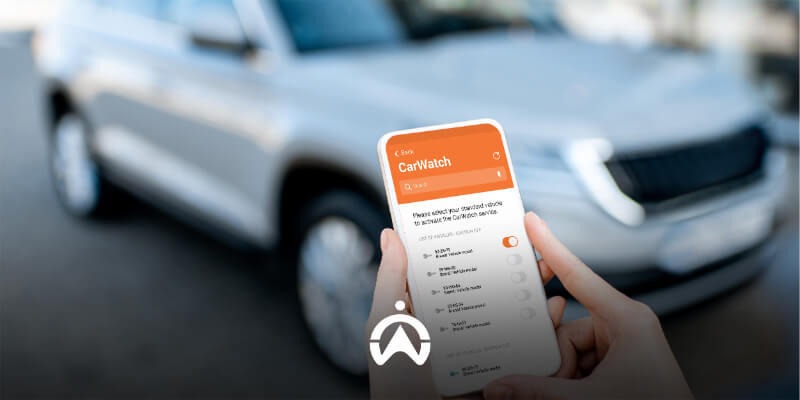
When you choose Cartrack as your provider in car safety, you’ll get access to the Cartrack app and its many features. Secure your vehicle for a low monthly fee—plus free tracker installation! The app will show you where your car is at all times, thanks to our live GPS tracking.
You can location-share with loved ones, and they can reach you quickly if an accident or incident occurs. Our app is easy to use, making it ideal for you and all members of your family.
What Cartrack-specific safety options are available to you?
We have numerous safety and security solutions that go beyond standard features. Our Vision solutions add an extra layer of security, offering Road and Dual Vision dashcams. The Road is a simple road-facing dashcam, while the Dual option is both road- and cabin-facing.
Invest in our backup wireless tracking device, the Cartrack Tag, which is immune to remote jamming. All of our traditional hardwired GPS tracking devices have anti-jamming detection, and in the case of remote jamming, the signal will switch to the Tag, which works on a radio frequency that alerts our control room about your car’s movement. This helps our teams move in to retrieve your car even quicker!
What about accidents and car recovery?
Our safety and security measures for you also extend to the car itself, and in the case of theft, we have extremely responsive stolen vehicle recovery (SVR) teams all across the country that are ready to help you.
Knowing your car’s exact location means there isn’t an uncoordinated scramble to get emergency services quickly enough.
Final takeaway: Getting the best protection for your car
When you’re choosing a car, you’ve got to direct your focus towards the latest in safety tech, but for the right reasons. The right tech isn’t just to flaunt; it’s about securing complete confidence and calm. Specialised & sophisticated features that were once seen as expensive extras are now the most crucial tools for you and your family.
Cartrack lifts you to new safety heights. Your car’s features manage some aspects of on-road safety, and we manage the others. We give you all the extra safeguards and benefits that go beyond just driving, giving you total visibility, solid support, and complete satisfaction.
Drive smarter, drive safer, and ensure you and your family are completely protected. Chat with our dedicated professionals today and choose a package that suits your needs!