How to Manage Your Waste Collection Trucks with GPS Tracking
To manage your waste collection trucks with GPS tracking, team up with a provider that offers the ideal GPS tracking solution for your fleet and business needs. Managing this kind of fleet goes far beyond the job itself; it’s about upholding the accountability and efficiency needed to complete these jobs well.
Your waste collection fleet likely faces some intense daily pressures, from rising fuel costs to very tight schedules and customer complaints about missed collections. Research shows that GPS-enabled route optimisation can cut your total fleet mileage by as much as 20%, leading to lower fuel consumption, less unnecessary travel, and better service performance.
Real-time data consistently pours in, so why would you not leverage it for a better and improved fleet management strategy? That’s the strength of a reliable GPS solution for your waste management team. This blog takes a look at the right GPS tools to track waste fleets, and how Cartrack can help you maintain control and run your operation seamlessly.
How GPS tracking improves waste collection route efficiency
GPS tracking improves waste collection route efficiency by combining technology and careful planning to create the best, most optimised routes for your fleet. It’s a prime example of taking vehicle insights and turning them into actionable knowledge. GPS tracking also keeps you in the know, allowing you to act quickly if there are unexpected delays or hiccups.
What is GPS tracking in waste collection management?
GPS tracking in waste management uses GPS data to keep track of your vehicles and the waste they carry, monitoring their movement, routes, and other operational data. Tracking at a fleet management level helps you gather the information necessary for informed decision-making.
Tracking can be active or passive. Passive tracking keeps your data stored to be analysed later. Active tracking presents insights in real time, allowing you to make changes on the go if unexpected stops or rerouting take place.
Why waste collection fleets are uniquely hard to manage
Waste collection fleets are uniquely hard to manage because of daily challenges like frequent stop-and-starts, high risks, and public accountability. You can overcome these and other waste management obstacles by tapping into GPS tracking and the optimisation it provides.
Here are some particular challenges you may be facing:
- Fixed schedules vs unpredictable real-world conditions: Collection routes are usually laid out ahead of time, but factors like traffic or construction can potentially slow down your productivity.
- High stop-start driving and fuel drain: Collections translate into a high number of stop-and-start journeys. Couple that with the layout of an urban area, and you get substantial fuel consumption.
- Public accountability and service-level pressure: The pressure to deliver, and to do so timeously, can be overwhelming. Missing stops or being late could potentially lead to complaints and threaten contractual agreements.
- Heavy vehicles, safety risks, and compliance demands: The vehicles themselves are large and carry heavy loads while being expected to comply with health and safety rules.
- Assets—trucks, bins, containers, drivers, depots: Coordinating and overseeing multiple interlinked assets across vast areas takes effort and attention.
How GPS tracking helps you manage waste collection trucks more effectively
GPS tracking helps you manage waste collection trucks more effectively by supporting route optimisation, improving running operations, monitoring driver behaviour, and other daily processes. This is essential for you to keep your business running smoothly, especially when unexpected stops or delays occur.
Let’s look at how tracking helps you better manage your waste trucks:
Real-time visibility across your entire waste fleet
Real-time visibility across your entire waste fleet means you have eyes on every single one of your vehicles in the fleet. This isn’t just about location or vehicle movement; it’s about you being able to respond quickly and effectively when unforeseen challenges arise.
This level of visibility is even more important when you consider Namibia’s electricity issues, accessibility to townships, and metro area layouts. These can easily affect service delivery and interfere with planned routes.
Sticking to a planned route is always great practice, but real-world problems will pop up, and live data feedback keeps you in the loop when these problems happen. You can handle missed stops, delays, or other interruptions quickly, as GPS tracking supports faster corrective action. It’s better for you to immediately solve the issue instead of dealing with complaints afterwards.
Smarter route planning and fewer wasted kilometres
Smarter route planning and fewer wasted kilometres are the key to optimising your operations. GPS tracking can help you optimise routes by analysing traffic patterns, data from previous trips, and real-time conditions—all to improve your travel times and fuel wastage issues.
Being able to cut back on fuel wastage, especially for stop-and-start journeys, directly impacts the cost of your fuel. It improves your overall expenses and makes fuel usage a more predictable cost. This supports your daily planning and prevents some of your trucks from being overworked while others sit idle.
Improved driver accountability without micromanagement
Improved driver accountability without micromanagement is possible, as tracking gives you total visibility and understanding of your drivers’ behaviours from a distance without having to excessively interfere. By managing this way, you give your drivers space to work independently without sacrificing oversight and supervision.
When challenges arise (like poor driver behaviour), well-recorded data is available for you to review and use in coaching feedback. This could effectively lessen the tension between you and your drivers, because genuine facts will always serve as the strongest evidence.
This evidence is also crucial regarding proof of service: if a complaint has been made by customers or the municipality, the GPS tracking history will confirm that your driver’s job has been completed.
Better asset utilisation and vehicle uptime
As briefly mentioned, tracking will help you maintain better asset use and vehicle uptime. With clear trip histories that show you which vehicle’s used when, you get an overview of the vehicles that are being overused or underutilised, allowing you to balance out their use.
Predictive maintenance also plays an important role here. When you better understand how a vehicle is being used, through factors like distance travelled and fuel usage, you can ensure that the vehicle’s service is scheduled before breakdowns happen.
GPS tracking use cases in waste collection operations
GPS tracking use cases in waste collection operations will show you firsthand the vital role it plays in daily operations. Despite waste collection functions varying according to area, service, and other elements, the beauty of GPS tracking is that it’ll undoubtedly improve processes across every use case—including yours!
Let’s look into each of the use cases in more detail:
Managing municipal waste collection routes
Managing municipal waste collection routes is made much easier with the help of tracking, helping you to keep an eye on the vehicles and ensure they’re taking the correct routes. Schedules and service windows are very tight, so when you’re monitoring these aspects, you ensure the tasks are successfully completed.
Through consistent tracking, historical journey logs will reveal everything from missed pick-ups to recurring problems that interfere with the smooth running of your business. This is particularly crucial in Namibia, where missed waste collections frequently result in public complaints and heightened scrutiny of municipal services.
These insights contribute to the improvement and optimisation of your routes and processes. Additionally, it creates a much more consistent service for municipalities overall.
Tracking commercial and industrial waste pickups
Tracking commercial and industrial waste pickups means working within an agreed-upon timeframe. Contractually, there are goals that you and your drivers need to meet and obligations that you’ll need to fulfil; tracking will confirm that these goals and obligations are carried out.
Tracking is also an excellent added layer of security for tasks that might be a greater risk. You’re able to stay close and heavily monitor these trips, pick-ups, and drop-offs without worrying about extra organisational woes that come with high-risk tasks.
Of course, you can quickly handle any dispute or complaint with the support of the evidence that tracking provides.
Monitoring dump trucks and landfill trips
Monitoring dump trucks and landfill trips doesn’t have to be complicated, especially when you consider the fact that waste collection goes far beyond the pavement pick-ups. Movement still has to happen between collection points and disposal sites, and GPS tracking insights can help you with better task allocation and turnaround times to keep up productivity.
Container and bin tracking across multiple locations
Container and bin tracking across multiple locations is difficult when you don’t have a clear overview of vehicle movement. Waste trucks cover extensive ground, and tracking is highly valuable to keep track of movements and usage patterns, while also bringing down the number of lost/misplaced bins and containers.
Having precise location data enhances your planning for container servicing, relocation, or replacement. This way, you can allocate resources effectively where they’re needed most, while keeping service levels high.
GPS tracking features that matter most for collection fleets
GPS tracking features that matter most for waste collection fleets include driver behaviour monitoring, live vehicle tracking, and smooth integration with fleet management systems. Not all tools and platforms will meet your standards, but it’s important to know what to look for if you want the best for your fleet operations.
Here’s a look at some essential features you should keep in mind:
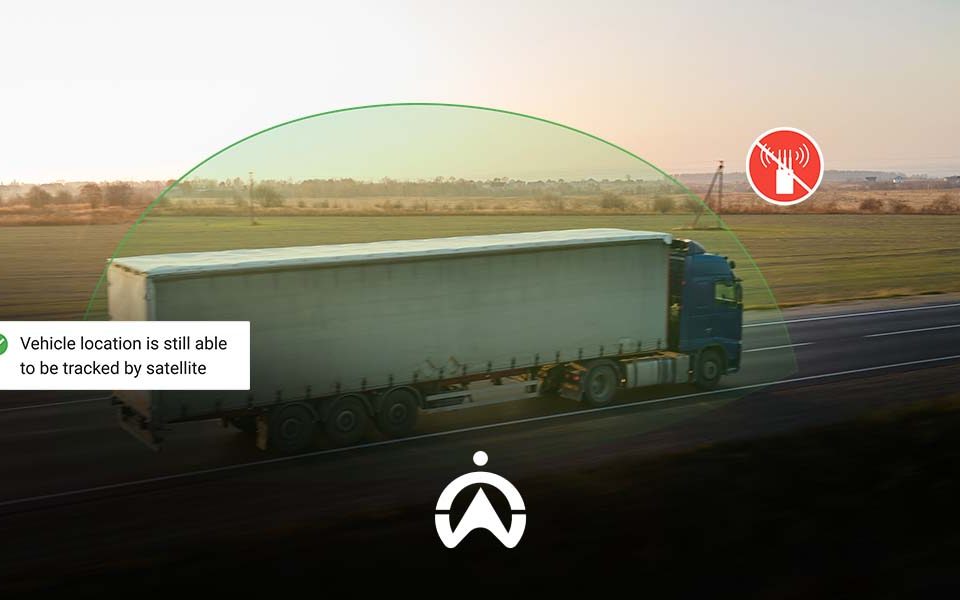
- Real-time tracking and trip history: Live tracking is the key to total visibility. The best tracking solution has consistent tracking with a strong connection, even in areas with low connection. It should also have an accurate and detailed trip history log. These are functions that aid you in immediate intervention when necessary.
- Route replay and proof of service: You should be able to review and retrace a journey in detail, especially in the case of any dispute, complaint, or need for confirmation. Route replay also serves as proof of service, providing evidence of collections or other municipally related queries.
- Driver behaviour monitoring for heavy vehicles: Because your waste collection trucks are under a lot of pressure to move quickly from place to place and handle heavy loads, your drivers must navigate their routes with care. Driver monitoring systems can help correct aggressive driving behaviours and support safer habits.
- Alerts, reports, and compliance support: Automated alerts are probably one of the most important features. These update you when there are route changes, holdups, or anything else that halts productivity. Detailed reports also simplify your compliance processes, especially if you can choose and filter information accordingly.
- Integration with broader fleet management tools: Integrating GPS tracking with fleet management tools is the most effective approach for waste management. This structure allows you to monitor vehicles, drivers, and performance data all from one unified platform instead of having to manage numerous disconnected tools.
GPS tracking vs manual waste fleet management
Looking at GPS tracking vs manual waste fleet management will show you just how significant the role of live GPS tracking is, especially regarding automation and optimisation. The table below highlights how GPS-enabled systems make daily tasks easier and strengthen supervision in waste collection operations.
Take a look:
How Cartrack supports your fleet management
Cartrack supports your waste collection fleet management by offering all the tools that you’d need to see successes: live GPS tracking, adaptable solutions, detailed insights, and complete visibility and control. Not all systems are equal, and Cartrack’s is one that certainly stands out above the rest.
Our live and continuously-updating GPS tracking keeps a close eye on your waste collection trucks while they’re working. This visibility makes it easier to see that the correct routes are being taken, enables quick reactions to any potential delays, and guarantees that there’s constant oversight during the working day.
Our versatile platform means that whether your fleet is small and straightforward or larger and complex, you’re guaranteed comprehensive insights and a strong fleet management solution. You can carry out daily tasks with ease and even improve operations through implementing data-driven changes.
Cartrack’s got all the necessary tools that you’ll need to improve safety and reliability in waste collection. You have access to highly accurate information that’s time-stamped, which means the early detection of operational risks. Overall, expect to improve your planning and maintain service standards on every occasion.
Final takeaway: the importance of visibility and control in route optimisation
The bottom line is that GPS tracking solutions are your best bet if you’re looking to manage a highly successful, safe, and optimised waste collection fleet. There needs to be confidence and certainty when managing this kind of fleet. Tight schedules, public scrutiny, and increasing costs have made GPS tracking an absolute necessity.
Cartrack is your trusted, long-term partner. Our GPS tracking solutions are meant to go up against real-world challenges (and come out on top!). At Cartrack, we empower you—as municipalities and private operators—to carry out your services with confidence and control.
Stop losing time and fuel to inefficient waste routes. Reduce delays, improve service delivery, and manage your fleet more successfully with Cartrack GPS tracking.