Supply chain and logistics: How to start a cold chain business
Published
Reading time
9 minutes
Blog
As the seasons change from one temperature to another, cold chain logistics provides a temperature-controlled environment that ensures fresh produce from storage to delivery.
In this article:
Cold chain logistics are temperature-controlled networks that ensure the preservation of medicines, pharmaceuticals and food products.
Explore the key elements of cold chain logistics and learn how to maintain them in your business.
Learn about the future of the cold chain industry and how it’s grown into a multi-million dollar market
Cartrack provides a complete fleet management solution where, cold-chain monitoring, real-time visibility and streamlined compliance are within reach from one platform.
The fresh produce at your local market, the skin care products you use daily, along with those important meds in your cabinet, all have one thing in common, they were moved from one location to another through cold chain logistics.
You might be asking yourself, “what is cold chain logistics?” Many of the products you buy are a part of cold chain logistics in one way or another. Without the use of this innovation, fresh produce wouldn’t survive the trip to wholesalers or even to your doorstep.
Supply chain management explained
For smaller operations or local deliveries, cold chain transportation management occurs in-house and is simpler to operate, but for a larger company that works internationally, globally delivering temperature-sensitive products becomes complicated. This creates an opportunity to partner with third-party logistics companies that have expertise in cold chain transportation.
This is where supply chain management comes in. A cold chain is a temperature-controlled cold chain network. It’s a system that takes preservation seriously and treats products with recommended cold temperature levels. This allows customers to receive the highest quality products regardless of the season or weather.
Practical use for cold chain storage
Cold chain logistics (also known as chill chain logistics) is the technology and process that allows for accurate planning and safe transport of temperature-sensitive goods and products along the supply chain.
Some standard products requiring cold chain transportation are:
Meat
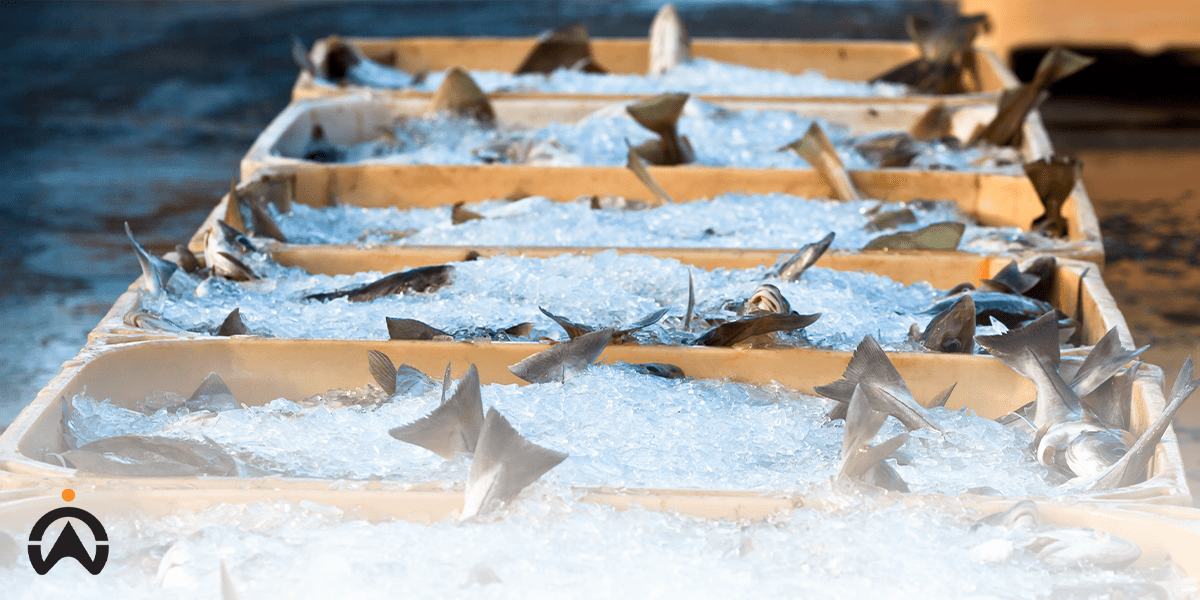
Seafood
Produce
Dairy products
Medical supplies
Pharmaceuticals
Floral industry
Efficiently starting a cold chain business means using certain technologies and science to evaluate and accommodate the link between temperature, perishability and transportation.
Practical use for cold chain storage
The future of the cold chain industry
This industry has grown to be a multi-million dollar market valued at USD 209.2 million in 2021. With an increased demand for product sustainability, the global cold chain logistics market size is forecast to reach staggering heights of USD 464.0 million by 2028, all thanks to the pharmaceutical and food industries’ expansion in 2022 due to the global pandemic we faced.
When to use cold chain logistics
Cold chain involves a process that isn’t just used when transporting or storing goods. It impacts every step of the cold supply chain, from procurement, storage, and delivery right down to end users.
Even after the goods have been safely delivered, many products are further kept at a constant temperature and stored in refrigerators or cool areas to preserve the item until consumed, used or expired.
A rise or fall in temperature during any of the supply chain phases can be bad news for the goods and the customers who have consumed/used them, particularly with expiry-sensitive produce. The shipper and their client have a lot on the line and might lose money when cold products go bad.
Key elements of supply chain management
To keep everything running smoothly, a cold chain business needs hands-on logistics managers who oversee each part of the cold chain process and receive crucial insights.
To maintain the shipment’s integrity and avoid product losses/damage, key elements of the cold chain have to be constantly monitored.
1. Packaging
Packaging is mainly used to protect products while in transit. Packaging for cold chain products should keep them from getting damaged while allowing storage containers to maintain the goods at their required temperatures.
2. Temperature monitoring
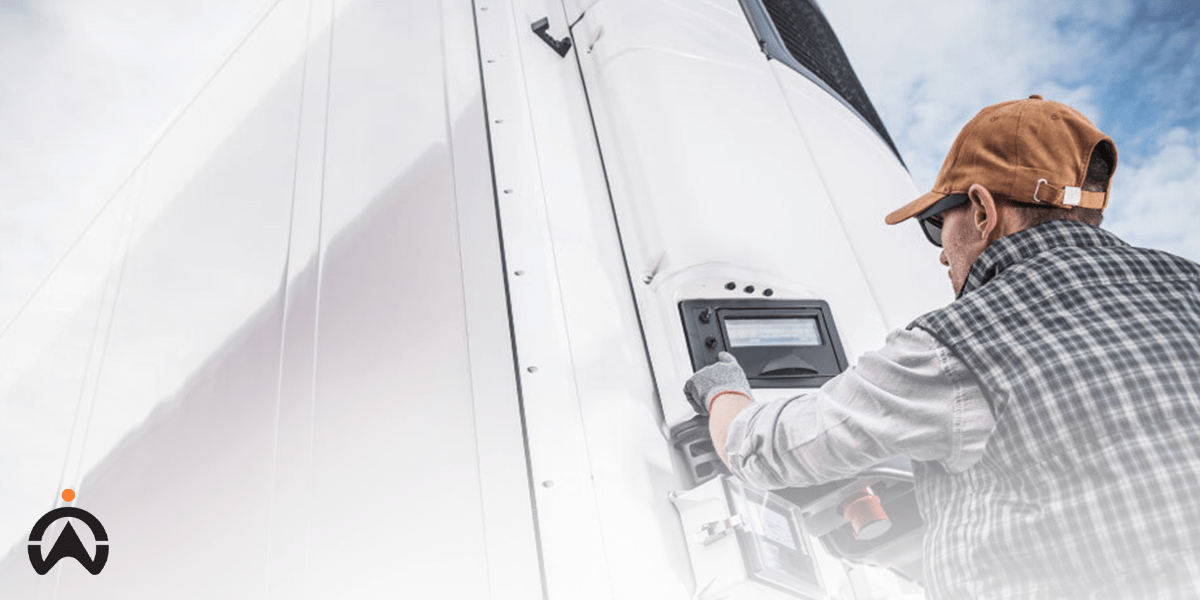
Products that need constant cold conditions also require regular temperature tracking. Temperature monitoring does more than maintain a constant degree. It can keep track of humidity levels and show when and for how long a package was kept at different temperature levels.
3. Transport
Products are kept at their appropriate temperatures from the time they leave the manufacturer until they reach their destination using various types of refrigerated transport units.
4. Storage
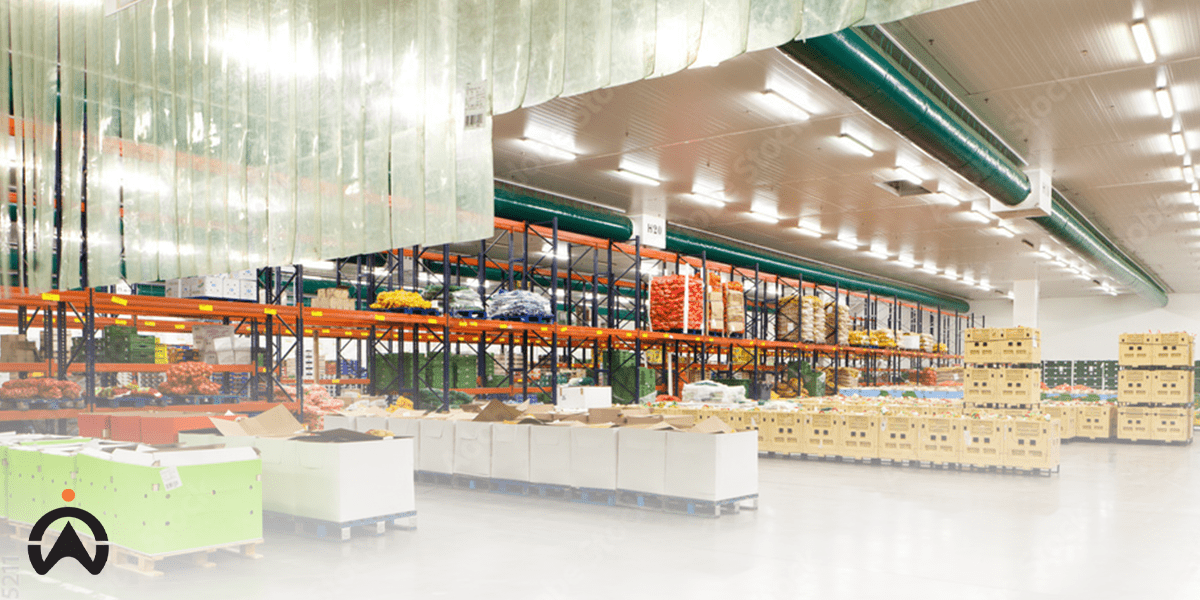
To keep food or medication at the proper temperature along the supply chain, cold storage rooms are equipped with insulation against outside temperatures.
Key elements of supply chain management
How do you provide a temperature-controlled environment?
Since different food cold chain products have different temperature requirements, cold chain logistics can provide you with temperature-controlled facilities like warehouses and transportation that can cater to different temperature needs.
These are the standard degree settings recommended:
Deep freeze meat and seafood
-30° C and -18° C (-22° F and -0.4° F)
Frozen meat and seafood
-18° C and 0° C (-0.4° F and 32° F)
Pharmaceutical drugs etc.
2° C and 8° C (36° F and 46° F)
Chill fruits, veggies, and dairy products
7° C and 14° C (44.6° F and 57.2° F)
Ambient fresh produce etc.
14° C and 24° C (57.2° F and 75.2° F)
Although these are the recommended safe temperatures for certain foods, there is some leeway as some goods can handle the slight temperature change. If the change is steep and frequent, that’s when items get spoiled.
Cold chain technologies in the supply chain
So, to make sure goods don’t get compromised and stay in pristine conditions no matter the phase in the supply chain, the pharmaceutical, medical and food industries all heavily rely on cold chain logistics.
There are several methods to keep goods at proper temperatures. To determine the right refrigeration method, these factors are used:
Duration of transit
The size of the packaged shipment
The weather/outside temperature
After the right method has been chosen, the following modern cold chain solutions can be applied.
1. Shipping containers
To ensure shipments don’t experience fluctuating temperatures, businesses have to swiftly move shipments through the supply chain using shipping containers to ensure the products won’t experience undesirable temperatures.
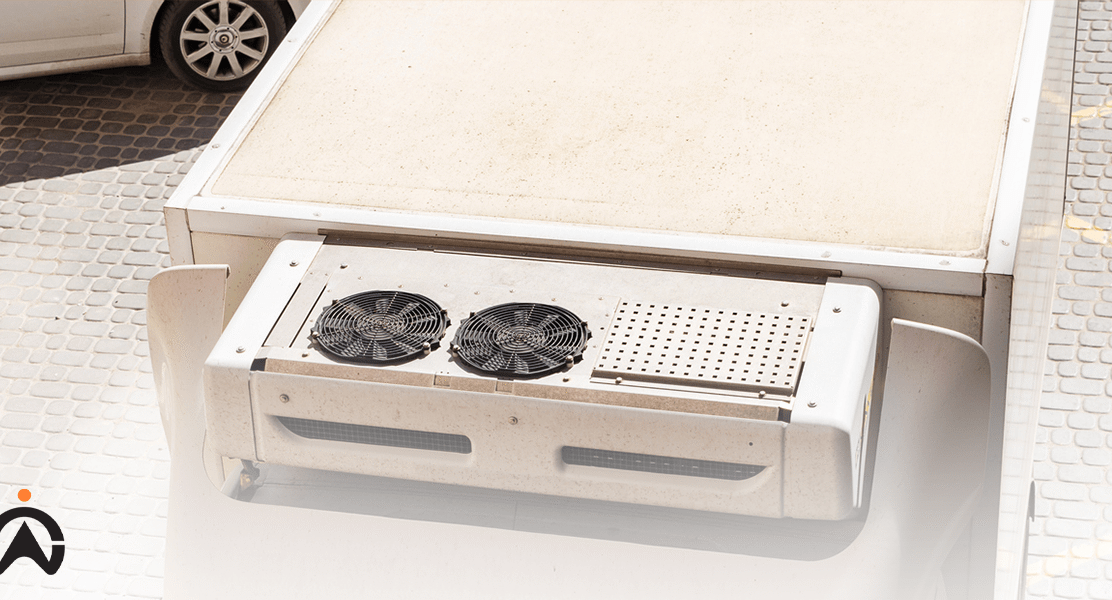
Shipping containers (reefer containers or vehicles) are refrigerated units with a temperature-controlled onboard cooling system. These are insulated vans, semi-trucks or standard ISO containers that can also be modified to keep products warm if needed.
2. Cooling technologies
These are methods used to keep already cold products at the same temperature.
Gel packs: Frequently used in medical and pharmaceutical deliveries.
Dry ice: It can keep items frozen for a long time, particularly used for food, pharmaceuticals, and hazardous materials. Instead of melting when exposed to air, it sublimates.
Liquid nitrogen: Used primarily to transport biological cargo (organs, tissues, etc.). The extreme cold keeps things frozen for a longer time.
Eutectic plates: Also called cold plates, they are used similarly to gel packs, but cold plates are reusable.
Quilts: Insulated quilts can be wrapped around or placed over freight and are used to keep temperatures constant, so frozen items will remain frozen for a longer time.
Common cold chain logistics challenges
Despite all the tips, tricks, and devices mentioned above, running a cold chain business efficiently is not easy. Maintaining a constant temperature throughout cold chain storage is not always as easy as it sounds.
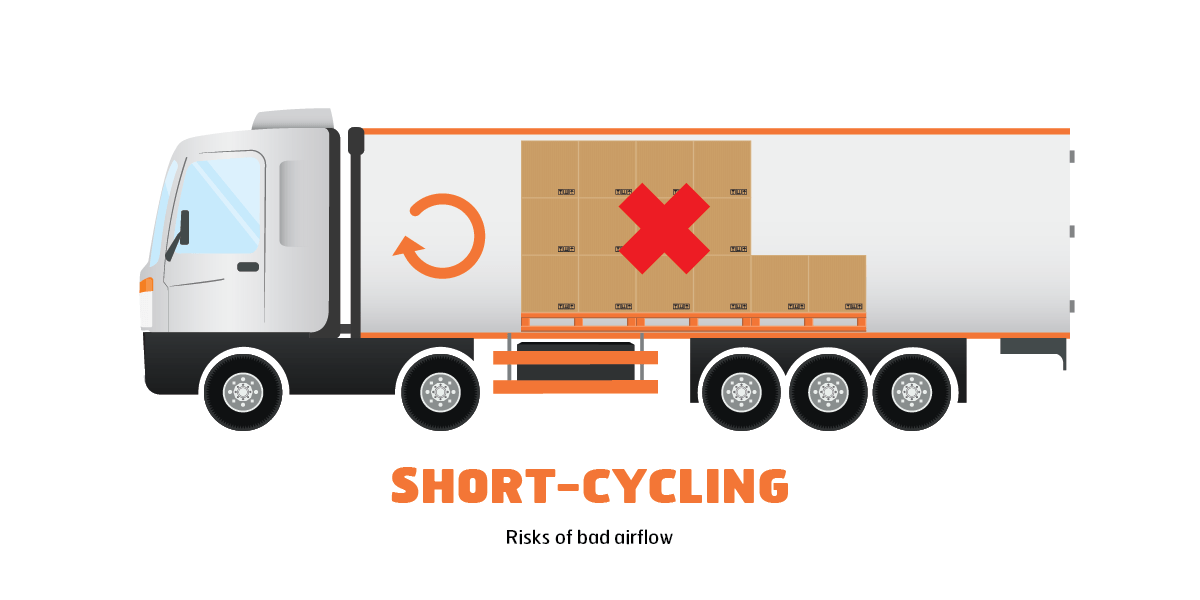
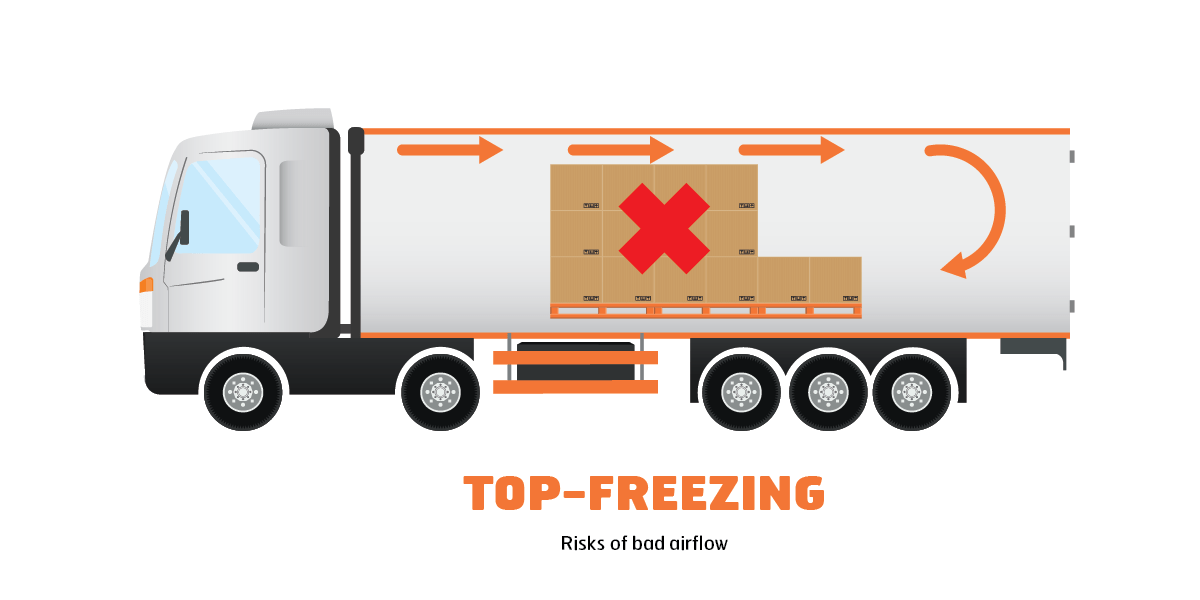
Bad airflow While good airflow maintains a uniform temperature in your freezers, trucks, and trailers, and distributes air evenly within the area, bad airflow, however, can cause issues like short-cycling, promote humidity, and might have different temperatures throughout the storage and more.
(mock images)
Hot spots Appear when a shipment is not cooled throughout at a uniform temperature, and certain parts of the shipment are at different degrees.
Hot spots
Top-freezing Is when your shipment is placed too close to refrigerated air in a storage or transportation unit. It can cause frost damage to your products.
Top-freezing
Why is cold chain logistics important?
This allows customers to experience and purchase different goods that come from all over the world. The more customers demand to experience otherworldly products, the more the cold chain logistics companies grow.
While some products can withstand environmental shifts, others can’t. While transporting, quality, flavour, consistency, and safety are all on the line.
The end customer might not notice the prime wagyu beef they bought spent two hours in the wrong temperature range, but they may be at risk of food poisoning or associated illnesses if products are not treated accordingly by the cold chain.
With goods coming from all over the globe, cold chain management simply minimises the risk of temperatures exceeding safe levels during storage or transportation and provides manufacturers and suppliers with better control over their products.
Starting different cold chain jobs in the industry
Want to know how you can start a cold chain logistics business? Or want to join a cold chain logistics startup? If this topic has piqued your interest and you’re looking into different careers within this industry, here are some career paths in cold chain logistics you could partake in:
Rent out cold storage to companies selling perishable products
Cold chain consulting
Provide cold/refrigerated transport services for road, rail, air, and water
Manufacturing refrigerated trucks and vans
Construction of cold storage
Equipment manufacturing or supplying to cold store owners
Technology suppliers to temperature-controlled logistics services
Starting different cold chain jobs in the industry
Smart cold chain management
Leave your on-the-ground cold chain operations to Cartrack.
Get 24/7 protection with temperature sensors that remotely monitor temperature, automated alerts on temperature variations sent via email/SMS and our AI-camera system will help with real-time visibility of your cargo and drivers while on the road.
For optimum control over your fleet and the goods you transport, get Cartrack.
Truck Leasing for Start-Up Businesses – What You Need to Know
Blog
7 minute read •
Leasing trucks to start-up businesses is proving to be a very lucrative opportunity. Many new businesses are desperate for trucks, but are often being barred from getting them because of strict bank specifications. We’re seeing a preference for leasing trucks instead of owning them, because the benefits seem to outweigh the drawbacks. Namibian businesses, especially smaller […]
Get AI Cameras for Seatbelt and Phone Detection for Drivers
Blog
7 minute read •
Getting AI cameras for seatbelt and phone detection for drivers is the perfect way to transform safety protocols in your fleet. AI detection can monitor poor driving habits, alert drivers so they can quickly correct their actions, and keep records of offences so you can coach your drivers if they repeatedly commit them. Namibia recorded 2,793 road crashes, […]
Your trucks work hard to travel long distances, carry heavy loads, and traverse roads that are often treacherous & damaged. Looking after your trucks is a wise investment that’ll pay you back in productivity and lower overheads, but only if you know what condition they’re in at all times. The trucking and logistics sector plays a vital role in […]
 South Africa
 Botswana
 Kenya
 Malawi
 Mozambique
 Nigeria
 Swaziland
 Tanzania
 Zimbabwe
 Hong Kong
 Indonesia
 Singapore
 Malaysia
 Philippines
 Thailand
 New Zealand
 Vietnam
 Poland
 Portugal
 Spain
 United Arab Emirates